

At Acibadem, What Happens After Discharge and When You Return Home

At Acibadem, discharge means your team has decided recovery can continue safely outside the hospital. Before you leave, you receive a discharge summary, a medication plan, and follow-up guidance. Once home, your job is to follow the written plan, keep your records organised, and complete the follow-up arrangements, remotely with Acibadem, with your local doctor, or both, depending on your treatment.
Maybe you are already thinking about the flight home, or wondering how your care continues once you are back in your own bed, in your own time zone. That question is reasonable, and it has a practical answer. Leaving the hospital does not mean your care stops at the door.
This guide explains what happens after discharge and when you return home if you are treated at Acibadem: what the discharge process involves, what you should carry with you, how the journey home is planned, and how follow-up is organised once you are back in your own country.
At a glance
- Best for: International patients preparing to leave hospital and travel home
- What you receive: A discharge summary, medication plan, relevant test reports, and follow-up guidance
- Support available: International patient services, interpreter support, and care coordination
- Before you fly: Confirm fitness to travel, medicines, documents, and transport arrangements
- After you return home: Follow the written plan, keep records accessible, and complete follow-up as arranged
What happens after discharge and when you return home: the short version
Discharge is a handover, not an ending. When your treating team decides you are ready to leave, the work shifts from the hospital doing things for you to you following a written plan, with the hospital, your companion, and often your local doctor supporting you. Understanding what happens after discharge and when you return home comes down to three stages: the paperwork and instructions you receive before leaving, the journey itself, and the follow-up that continues after you land.
Each stage has its own decisions. Before you leave, the priority is understanding your instructions while interpreters and your care team are still in the room. During the journey, the priority is travelling in a way that matches your actual condition. After you return home, the priority is continuity, making sure the plan written in Turkey is carried out where you live.
What discharge means at Acibadem, and what it does not
Discharge is the point at which your hospital team judges that the next stage of your recovery can be managed safely outside the hospital. It does not mean you are fully recovered. It means your condition is stable enough, and your instructions are clear enough, for recovery to continue at your hotel, temporary accommodation, or home.
The decision is clinical. It is based on how your treatment went, how you are progressing, and what your written plan asks of you. If you feel unready, say so before the paperwork is finalised: the conversation is easier while your team can still adjust the plan, extend observation, or arrange extra support.
Before you leave, your team usually reviews your medicines, wound or dressing care where relevant, activity limits, eating and hydration advice, the warning signs specific to your treatment, and your next follow-up steps. For international patients, Acibadem’s international patient services can also coordinate the non-medical side: interpreter support, medical documentation, transport arrangements, and the timing of your return journey. That coordination matters more than it sounds when you are recovering in a country whose systems you do not know.
Discharge is also not a one-way door. If a genuine clinical problem develops while you are still in Turkey, you can be reassessed and, where needed, readmitted. Being discharged does not close your file.
What you should receive before leaving the hospital
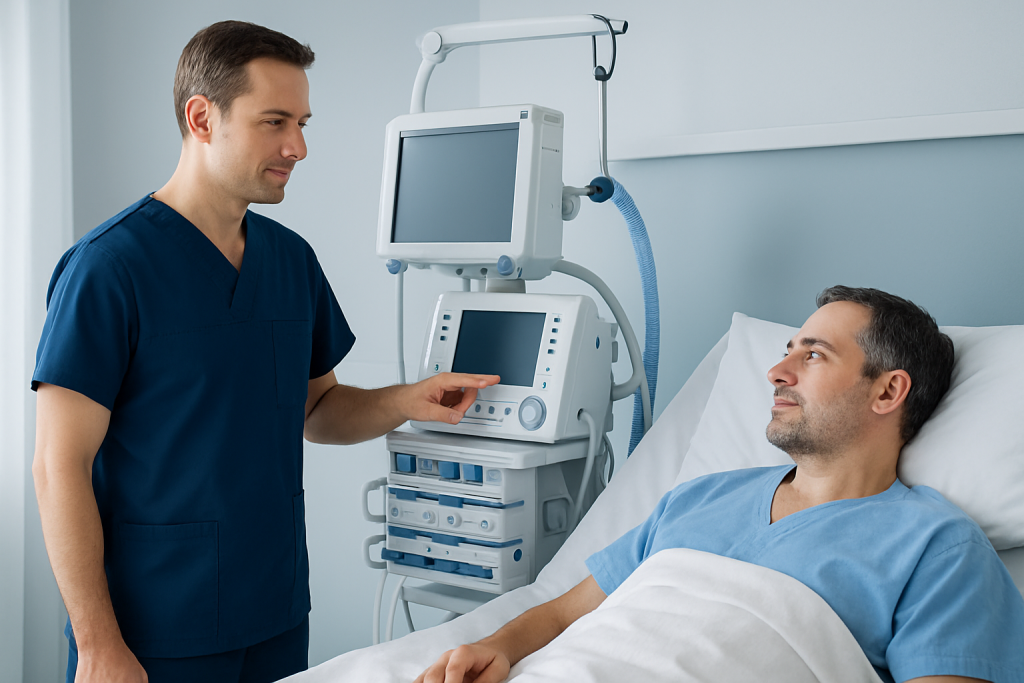
Your discharge papers are the single most important thing you take home. They are the record of what was done, what your recovery plan is, and what any doctor who treats you later needs to know. A typical discharge pack for an international patient includes:
- A discharge summary or medical report describing your diagnosis, treatment, and course in hospital
- A medication list with names, doses, and timings
- Instructions about eating, bathing, activity, and rest
- Guidance on how urgent and non-urgent concerns should be handled
- Follow-up appointment details and timing
- Copies of key scans, laboratory reports, or pathology where relevant
Review everything before you leave, not later in a taxi or an airport lounge when you are tired. If something is unclear, ask for it to be repeated in plain terms; interpreter support is available if English is not your preferred language. Having a companion or care coordinator listen alongside you makes the instructions much easier to remember accurately. For a fuller breakdown of the documents themselves, see what international patients receive at discharge before returning home.
How long does discharge usually take?
There is no fixed timetable, but the gap between “you can go home” and actually leaving is often several hours. Final medical checks, pharmacy preparation, document printing and translation, insurance or payment paperwork, and transport arrangements all take time, and for international patients there are usually more documents involved, not fewer. Treat discharge day as a slow day. Do not book onward travel so tightly that a two-hour delay becomes a crisis.
Planning the journey back to your hotel, the airport, or home

The hours after discharge are usually more tiring than people expect. You may have felt comfortable on the ward and then notice fatigue, soreness, swelling, or reduced mobility once you are moving around, carrying bags, and standing in queues. Plan transport around how you actually feel, not how you hope to feel.
Before leaving the hospital, ask your care team the practical questions: Can I travel by standard car? Should I avoid long walks? Do I need a wheelchair or help at the airport? If flying is part of your plan, confirm explicitly that your doctor considers you fit to travel, and ask about timing, hydration, movement during the flight, and any restrictions that apply to your situation. Fitness to fly depends on your treatment and your individual recovery, so no general guide, including this one, can answer it for you.
Many patients stay in Istanbul or another Turkish city for a few extra recovery days between discharge and the flight. That buffer is often sensible: it separates the strain of leaving hospital from the strain of travelling, and it keeps you close to your treating team while the earliest part of recovery settles. If mobility at the airport is a concern, airport assistance when returning home after surgery explains what can be arranged and how far in advance to request it.
Medicines, recovery, and daily routines once you are home
Once you return home, recovery becomes part of ordinary life, and the most useful approach is a simple one: take medicines exactly as prescribed, follow your written instructions, rest when you need to, and do not add over-the-counter remedies or supplements unless your treating doctor has said they are appropriate for you. Any change to your medicines, starting, stopping, or adjusting, is a decision for the doctor responsible for your care, not something to improvise at home.
Two practical issues catch international patients out more often than any clinical one. The first is medicine logistics: carrying prescriptions across borders, understanding foreign packaging, and finding local equivalents if a course runs longer than your supply. Your discharge medication plan is designed to prevent exactly these problems, so check it against your actual bag of medicines before you leave the hospital. The second is timing: if you cross several time zones, dose schedules written in Turkish local time need translating into your home routine. Adjusting a medication schedule across time zones covers how to plan this with your team before you travel.
It also helps to know what ordinary recovery tends to look like. Depending on your condition and treatment, some tiredness, reduced appetite, discomfort, bruising, or disrupted routine can be part of the expected course. What counts as expected, and what does not, is specific to your treatment, which is why your discharge papers list the warning signs that apply to you rather than a generic list. Keep those papers somewhere easy to find, keep medicines in their original packaging, set alarms for doses, and show the instructions to anyone helping with your care so they know what your plan says too.
How follow-up works after you return to your country
Follow-up is where the question of what happens after discharge and when you return home becomes a long-term arrangement rather than a travel plan. Depending on your treatment, your follow-up may involve a review before you leave Turkey, remote check-ins with your Acibadem team after you return, in-person care with your local doctor, or a combination of all three. The exact pattern depends on the procedure, your recovery progress, and whether further tests, imaging, or rehabilitation are needed.
Acibadem’s specialist teams and international patient services organise the handover side of this: preparing medical reports your home doctor can use, clarifying when follow-up bloods or imaging are due, and setting out how remote reviews work. How this is structured in practice, what can be done remotely, what needs a local clinician, and how results move between the two, is explained in how Acibadem handles follow-up after you return home.
On your side, the single most useful habit is early handover. If a local doctor will be involved in your ongoing care, give them your Acibadem records as soon as you are home, before any appointment, not at it. Book recommended reviews, tests, or rehabilitation promptly rather than waiting until something prompts you. A clean handover prevents the common failure points: duplicated tests, gaps in wound checks or rehabilitation, and confusion about who is responsible for the next step.
If problems come up after you are home
Most recoveries follow the written plan, but not all do, and it helps to understand in advance how concerns are handled rather than working it out under pressure. The structure is straightforward. Urgent problems are always a matter for local medical services in your own country, distance makes anything else impractical, which is why your Acibadem records matter: they let local clinicians see quickly what was done and what medicines you are on. Non-urgent questions and expected reviews run through the follow-up channel set out in your discharge papers, whether that is a remote review with your Turkish team or an appointment with your local doctor.
Your discharge papers list the warning signs relevant to your specific treatment, and a general overview of how post-treatment symptoms are usually categorised is available in warning signs after returning home from treatment. The point of knowing the structure is confidence: you are not guessing at two in the morning, because the plan already says how each kind of problem is routed.
What about the “3 day rule”?
If you have read about a “3 day rule” in hospitals, that phrase usually refers to a United States insurance requirement: a minimum inpatient stay before certain follow-on care is covered by Medicare. It is not a clinical rule about recovery, and it does not describe how discharge decisions are made at Acibadem or in Turkish hospitals generally. Your discharge timing is set by your treating team based on your condition, not by a fixed number of days.
Step by step
- Review your discharge instructions before you leave. Ask your care team to walk through the summary, medicines, restrictions, and warning signs while you are still at the hospital. If anything is unclear, ask for plain-language explanations or interpreter support so nothing is left to guesswork later.
- Collect all medical documents and prescriptions. Leave with the reports, prescriptions, and follow-up plan you need, in printed and digital form where possible. These documents are what make continuity of care work once you are home.
- Confirm fitness to travel and your transport plan. Before heading to a hotel or airport, check whether your doctor has travel restrictions or specific advice for you, walking, lifting, sitting for long periods, hydration, and whether airport assistance should be arranged.
- Set up your home recovery routine. Organise your medicines, rest area, meals, and support from family or friends. Small preparations, dose alarms, water within reach, documents in one place, reduce day-to-day friction.
- Follow your medication and care plan exactly. Take medicines only as directed; changes of any kind belong with your treating doctor. Follow instructions for dressings, bathing, diet, and activity even once you start feeling better.
- Keep track of how recovery compares with the plan. Your discharge papers describe the expected course and the warning signs specific to your treatment. Checking against them daily is more reliable than checking against how you hope to feel.
- Complete the follow-up arrangements early. Book recommended reviews, tests, or rehabilitation promptly and share your records with any local doctor involved in the next stage, so there are no gaps between your care in Turkey and your care at home.
Your checklist
- Discharge summary collected, in print and digitally
- Medication names, doses, and timings understood
- Copies of test results or imaging obtained if relevant
- Follow-up appointments or remote reviews confirmed
- Fitness to fly or travel discussed with your doctor
- Airport or transport assistance arranged if needed
- Warning signs specific to your treatment reviewed
- Local doctor sent your records if ongoing care is needed
- Important contact details saved and easy to find
Key takeaways
- Discharge means recovery can continue safely outside the hospital, not that recovery is complete.
- Your discharge pack, summary, medication plan, reports, follow-up details, is the backbone of everything that follows, so understand it before you leave.
- Plan the journey home around your real condition: fitness to fly is an individual decision your doctor makes, not a rule of thumb.
- Follow-up may be remote with Acibadem, local with your own doctor, or both; early handover of records prevents gaps.
- Urgent problems at home are handled by local medical services; planned questions run through the follow-up channel in your discharge papers.
Frequently asked questions
Can I go back to the hospital after being discharged?
Yes. Discharge is not a one-way door. While you are still in Turkey, you can be reassessed and, where clinically needed, readmitted. Once you are back in your own country, urgent problems are handled by local medical services, and your Acibadem records help those clinicians understand your treatment quickly.
What is the 3 day rule in a hospital?
The phrase usually refers to a United States Medicare requirement for a minimum inpatient stay before certain follow-on care is covered by insurance. It is an insurance rule, not a clinical one, and it does not apply to discharge decisions at Acibadem. Your discharge timing is based on your condition and your treating team’s judgement.
How long does a hospital discharge usually take?
Often several hours from the decision to the moment you leave. Final checks, pharmacy preparation, document printing and translation, insurance or payment paperwork, and transport all take time, and international patients usually have extra document steps. Plan discharge day loosely rather than booking onward travel tightly around it.
What should I expect after hospital discharge?
Expect recovery to continue gradually rather than finish at the hospital door. Depending on your treatment, some tiredness, reduced appetite, or discomfort can be part of the expected course. Your discharge papers describe what is normal for your situation, what limits apply to activity, and how your follow-up is organised.
Can I fly home immediately after leaving the hospital?
That depends on your treatment, your recovery, and your doctor’s assessment. Always confirm fitness to travel before taking your return flight. Some patients need extra recovery days in Turkey or specific precautions during the journey, and many find a short buffer between discharge and flying makes the trip far easier.
Will my doctor at home know what treatment I had in Turkey?
Only if you share your records with them, so do it early, before your first local appointment rather than at it. Acibadem discharge documents are written to support continuity of care, so your home medical team can see what was done, what medicines you take, and what follow-up is due.
Is it normal to feel tired or emotional after discharge?
Many patients feel tired, unsettled, or less confident once they leave the structure of hospital care, particularly after travelling abroad for treatment. Recovery often has ups and downs. Your discharge papers describe the expected course for your treatment, which gives you a realistic benchmark rather than a hopeful one.
Who helps with practical issues like transport or language support?
Acibadem’s international patient services coordinate the practical side of discharge, including interpreter support, documentation, and transport-related arrangements. These arrangements are easiest to organise before you leave the hospital, while your team is together and the details are fresh.
Add us as a Preferred Source to see more of our trusted health content across Google Search, AI Overviews and Discover.

Update history
- PublishedJune 25, 2026
- Medical review approvedSeptember 13, 2026
- Last content updateSeptember 12, 2026
References2
- Being discharged from hospital: NHS nhs.uk
- After Surgery: MedlinePlus medlineplus.gov
More Patient Guides

At Acibadem, How We Explain Expected Clinical Outcomes and Treatment Success Information
Expected clinical outcomes at Acibadem are explained in clear, realistic terms so you understand likely benefits, limits, risks, and next steps in…

At Acibadem, How Families and Companions Are Supported During Treatment Travel
At Acibadem, family support during treatment travel in Turkey includes interpreters, planning help, visitor guidance, and practical support for companions.

At Acibadem, How Our JCI-Accredited Hospitals Support Safe International Care
JCI-accredited hospitals at Acibadem support safe international care in Turkey with standardized quality, interpreters, coordination and follow-up.

At Acibadem, What Our International Patient Package May Include Before You Travel
International patient package at Acibadem may include medical planning, travel help, interpreters, and stay support in Turkey before you travel.