

How Acibadem Handles Follow-Up After You Return Home
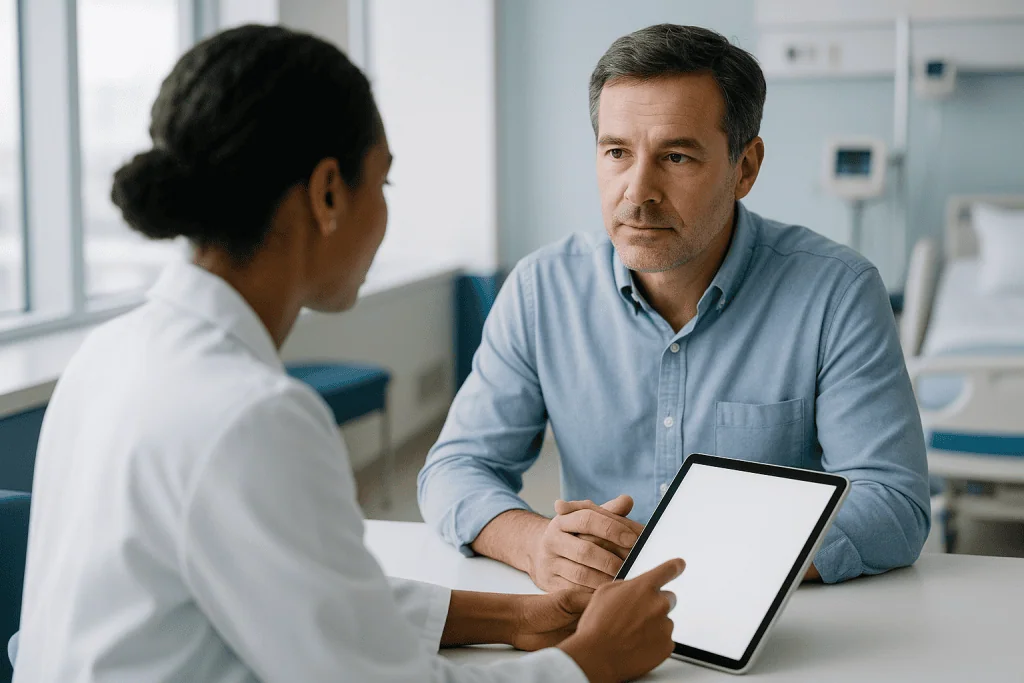
Follow-up is planned before you leave Turkey, not improvised afterwards. You travel home with a written discharge summary, a medication list, and an agreed channel for sending updates and results. Remote review covers documents, progress and planned check-ins; physical examination, tests and urgent problems belong with local clinicians, whose findings your treating team can then review alongside your records.
Going home is a milestone, not an ending. The stitches, the medicines and the recovery plan all travel with you, and so do the questions. What matters is that you leave Turkey knowing exactly how the next weeks are organised, what you will be asked to share, and where local care fits in.
This guide explains how Acibadem handles follow-up after you return home: what you receive before discharge, how remote check-ins are coordinated, what can genuinely be reviewed from a distance, and what cannot. It also covers the practical question many patients ask first, how the journey home itself is planned.
At a glance
- Best for: International patients planning recovery and communication after treatment in Turkey
- Main support: Written discharge documents, planned remote check-ins, help routing reports and questions, interpreter coordination
- Before you fly: Confirm your medication list, activity limits, follow-up timing and the agreed channel for updates
- After you return: Share progress, local test results and requested photos through that channel; keep a simple recovery log
- Honest limit: Remote follow-up reviews information; it does not examine you. In-person care stays local
What follow-up means once you are back home
Follow-up after treatment abroad is a practical process, not a single appointment. It means keeping your recovery connected to the team that treated you: reviewing your discharge summary, taking medicines as prescribed, completing any advised tests near home, and updating the hospital on your progress at agreed points. For most patients, the reassuring part is not any one document: it is knowing in advance who reads your updates, what information is useful, and roughly when the next review should happen.
The way Acibadem handles follow-up after you return home starts before you leave the hospital. The plan is set at discharge: when your next review is expected, which documents to keep close, whether photos or reports may be requested later, and what your written instructions say about activity, wound care and medicines. That structure matters most in the first tired days after landing, when you do not want to be working anything out from scratch.
It also helps to think of this as shared care with two halves. Your treating team in Turkey knows the details of your procedure and hospital stay. Your local doctor is the person who can examine you, take blood, change a dressing or remove sutures. Follow-up works when these two halves fit together, and the bridge between them is your written documentation, kept complete and easy to hand over.
What you usually receive before discharge
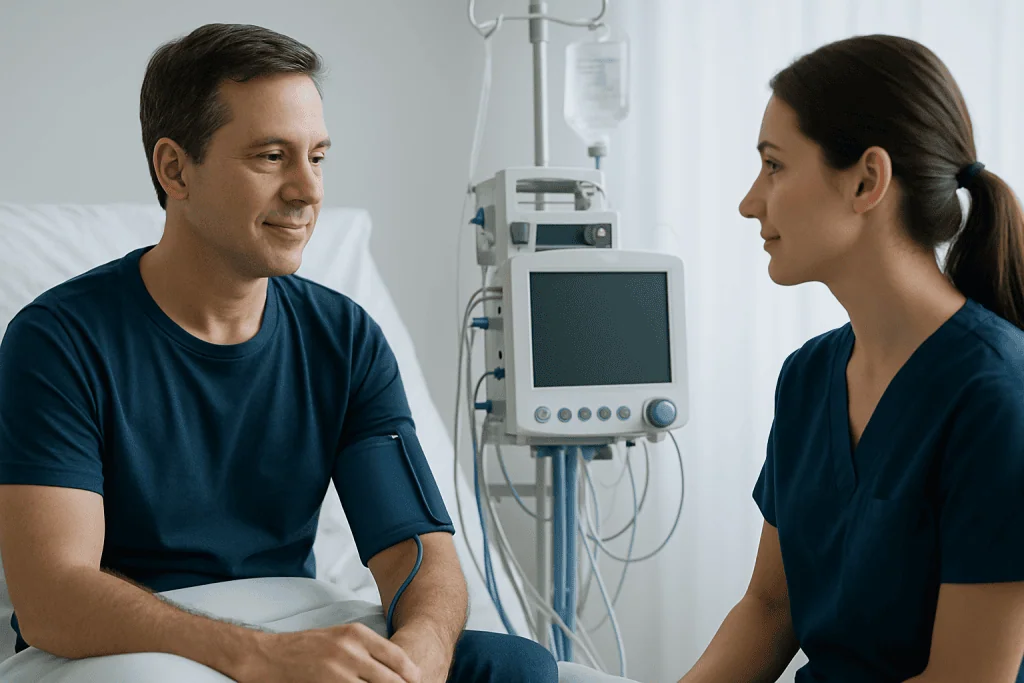
Before you travel, you should expect a discharge summary or package covering the essentials: your diagnosis, what treatment was carried out, medicines to continue and for how long, wound-care or dressing instructions, activity restrictions, and the recommended timing of your next review. If pathology, imaging or laboratory reports are part of your record, ask before departure how and when these will be shared, and in what format.
For international patients, practical clarity matters as much as clinical detail. Reports in English, imaging on digital media, a legible medication list and simple instructions you can show a doctor at home are all worth confirming while you are still in the building. Patient services can coordinate translation and interpreter support so that nothing in the summary is a guess. The broader discharge process, including what the summary contains and how fitness to travel is assessed, is covered in more depth in our guide to discharge, follow-up and flying home.
Three questions are worth asking directly before you leave: Which channel do routine follow-up questions go through? When should your first check with a doctor back home take place? And if sutures, dressings, blood tests or rehabilitation are needed later, what is the expected timeframe, in writing, not from memory?
- Keep your discharge summary in both digital and printed form.
- Check that your medication list is complete, legible and matched to what is in your bag.
- Ask for written guidance on travel, bathing, exercise, work and follow-up timing.
How do you actually get home?
The journey itself is part of the plan. Your treating doctor advises on when travel is reasonable for your specific procedure, and that timing varies widely, some treatments allow flying within days, others need a longer local stay before a long-haul flight is sensible. The considerations behind that decision are explained in when is it safe to fly home after surgery in Turkey.
Practically, you travel with your discharge summary and medication list in your hand luggage, not your hold luggage. If you will need wheelchair support, priority boarding or help through security, this is arranged in advance rather than requested at the gate; our guide to airport assistance after surgery walks through how those services work. If your medicines include anything controlled or injectable, carry the prescription documentation with them.
One detail that catches people out: crossing several time zones can quietly disrupt a medication schedule that was straightforward in Istanbul. It is worth planning dose timing for the flight and the first days home before you board, see managing a medication schedule across time zones. Any actual change to a medicine, its dose or its timing is a decision for your treating doctor, so raise timing questions before discharge rather than adjusting on your own.
How remote follow-up is typically coordinated
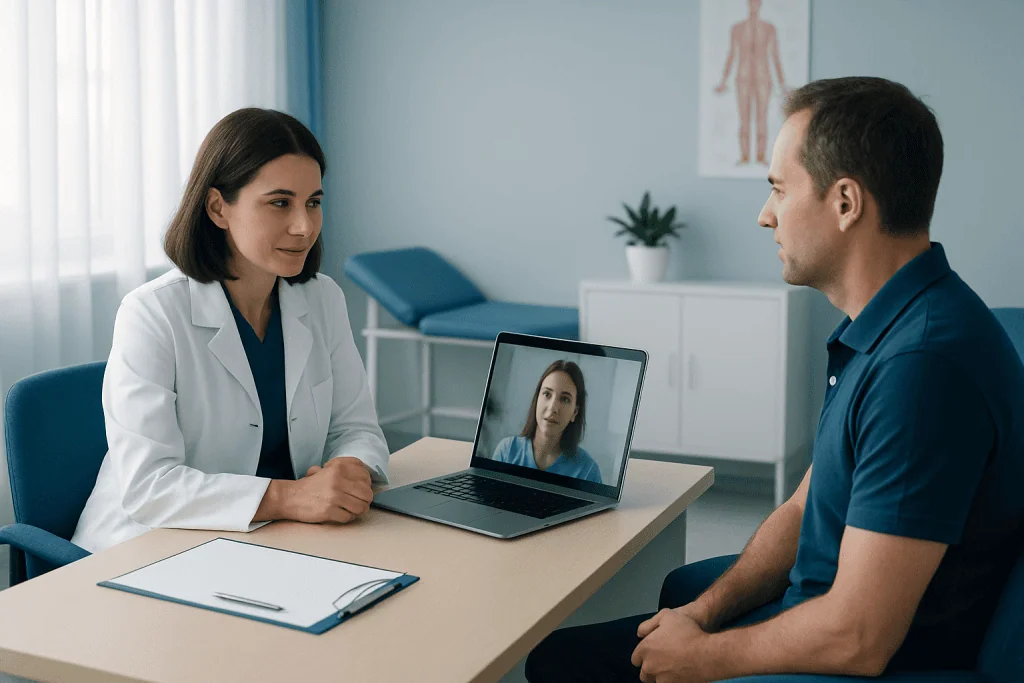
Once you are home, follow-up usually runs through the communication method agreed before discharge. Depending on your treatment, this may involve sending short progress updates, answering a set of recovery questions, sharing test results from your local clinic, or providing wound photos if your team has specifically asked for them. The purpose is straightforward: to check that your recovery is following the expected course and to clarify instructions where something is unclear.
Acibadem supports the logistics around this for overseas patients. In practice, that means helping route your question to the department that treated you, assisting with language needs, and making sure reports reach the treating doctor for review. This coordination matters most when several specialists were involved, because multidisciplinary treatment often means more than one doctor contributes to the follow-up plan, and a report sent to the wrong desk helps no one. A fuller picture of how these check-ins run week by week is in our guide to remote follow-up after returning home from Turkey.
Remote review works best when the information you send is organised. A useful update includes your full name, treatment date, the specific question, current symptoms, temperature if relevant, and any new local test results or medication changes. Photos should be well lit, in focus and dated. A calm, structured message with the right attachments almost always gets a clearer answer than a long, undated thread.
What can and cannot be reviewed remotely
It helps to be precise about what distance medicine can honestly do. The table below reflects how follow-up tasks typically divide between remote review and local, in-person care.
| Task | Handled remotely | Handled locally |
|---|---|---|
| Reviewing your discharge summary and reports | Yes: this is the core of remote follow-up | Useful for your GP to hold a copy too |
| Discussing planned recovery progress | Yes, at agreed check-in points | |
| Reviewing local blood test or imaging results | Yes, once you share the reports | Tests themselves are done at a local clinic or lab |
| Wound photo review, when requested | Partially, photos inform, they do not examine | Any hands-on wound assessment |
| Dressing changes, suture or staple removal | No | Yes, local nurse, clinic or GP |
| Physical examination | No | Always in person |
| Urgent or rapidly changing problems | No, not designed for this | Yes, local services assess first |
This division is not a limitation of any one hospital; it is the nature of care at a distance. Remote follow-up reviews information. It cannot palpate an abdomen, listen to a chest or feel the warmth of a wound. Understanding that boundary early is what makes the whole arrangement safe and useful.
Your role in making follow-up smooth
You do not need to manage everything alone, but your own organisation makes a measurable difference. Keep all reports, prescriptions, discharge notes and hospital contact details in one folder, physical and digital. If your recovery plan includes blood tests, imaging, dressing changes or physiotherapy near home, book them early; our guide to planning follow-up blood tests after returning home covers how to time these and get results back to your treating team.
A simple recovery log helps more than most people expect. Note pain levels, appetite, sleep, temperature if advised, wound changes, and anything relevant your discharge summary asks you to watch. When a check-in comes around, a dated log gives your doctors a far more accurate picture than memory. If you came home with new prescriptions, keep the original documentation together with the medicines themselves, and arrange repeat supplies or local equivalents through your prescribing or local doctor rather than substituting on your own.
If English is not your first language, ask a family member or companion to help you keep records and send updates consistently. Acibadem can assist with interpreter coordination, but the most useful messages are short, factual and complete. Two clear paragraphs with the right attachment beat ten fragmented messages every time.
Where local care fits, and why it stays essential
Remote aftercare has real value, and it has real limits. A doctor reviewing your update from Istanbul is working from what you send; a doctor in the room with you is working from examination. Both have a place in recovery after international treatment, and the follow-up plan you receive at discharge is built on that assumption: routine progress and results can be reviewed at a distance, while anything that needs hands, instruments or urgency is a matter for clinicians where you live.
This is why your discharge documents include the warning signs relevant to your specific procedure, written down while you can still ask questions about them. Every operation and treatment has its own expected course and its own signals that something needs in-person attention, and general lists on the internet are a poor substitute for the procedure-specific guidance in your own summary. Keep that page where you, and anyone caring for you, can find it.
It is also why sharing your discharge summary with a GP or specialist at home early, rather than only when something goes wrong, is one of the most useful things you can do. A local doctor who already knows what was done in Turkey can act faster and more accurately if you ever need them, and their findings can then be reviewed by your treating team alongside your record. Continuity is strongest when both halves of your care can see the same information.
How Acibadem supports continuity of care
For international patients, continuity is often about coordination as much as medicine. After you return home, Acibadem’s role is to keep the connection between you and your treating department working: routing questions to the right doctor, making sure reports and results reach the people who need to see them, and supporting communication in your language where needed. In a large group with multiple specialties, that coordination matters, treatment that involved surgeons, physicians, imaging and rehabilitation teams generates a record with several authors, and follow-up has to reach the right one.
In practical terms, this may mean clarifying which report to send, confirming that a local blood result has been received and reviewed, or arranging the timing of a planned remote check-in. If your treating doctor requested follow-up tests in your home country, patient services help make sure the results come back to the appropriate department rather than sitting unread in an inbox. That reduces mixed messages and saves you from guessing.
Expectations should stay realistic, and we would rather state that plainly than imply otherwise. The way Acibadem handles follow-up after you return home is designed to guide recovery, review results and support decisions. It does not replace hands-on examination when one is needed, and it is not a substitute for local emergency services. The strongest position is to use Acibadem for continuity and clarity while staying connected to a trusted local doctor for physical review. That combination, not either half alone, is what safe aftercare looks like.
Step by step
- Confirm your discharge plan before leaving Turkey. Ask for a written plan covering medicines, wound care, activity limits, procedure-specific warning signs and the expected timing of follow-up. Confirm which channel routine questions go through and how out-of-hours matters are handled.
- Organise your records in one place. Keep the discharge summary, prescriptions, imaging, lab results and hospital contact details together, printed and digital. This single folder serves your treating team, your GP and anyone else involved in your care.
- Plan the journey home properly. Follow your doctor’s guidance on travel timing, carry documents and medicines in hand luggage, arrange airport assistance in advance if you need it, and sort out medication timing across time zones before you fly.
- Book local support early. If you are likely to need blood tests, dressing changes, physiotherapy or a local doctor review, arrange these in your first days home so appointments line up with the timeline your treating team recommended.
- Send updates through the agreed channel. Keep them concise and complete: treatment date, current status, the specific question, and any requested photos or test reports, dated and attached.
- Keep your local doctor in the loop. Share your discharge documents with your GP or specialist at home from the start, so local clinicians understand what was done in Turkey and can support your recovery with full information.
Your checklist
- Printed and digital copy of your discharge summary
- Complete medication list with timings and duration
- Procedure-specific warning signs written down in plain language
- Hospital and patient services contact details saved
- Any required photos, reports or test deadlines noted
- Local doctor or clinic identified for in-person review
- Travel timing and activity restrictions understood
- Interpreter or family support arranged if needed
Key takeaways
- Follow-up is planned before you leave Turkey, with written instructions, an agreed communication channel and expected review points.
- Acibadem coordinates remote communication, report routing and language support after you return home.
- Remote review handles information, documents, results, progress. Examination, tests and hands-on care stay local.
- Organised records and concise, dated updates get faster, clearer answers than fragmented messages.
- Sharing your discharge summary with a doctor at home early makes both halves of your care stronger.
Frequently asked questions
How do I return home after treatment?
Your treating doctor advises on travel timing for your specific procedure: it varies widely between treatments. You travel with your discharge summary, medication list and prescriptions in hand luggage. Wheelchair support, priority boarding and help through security can be arranged in advance, and medication timing across time zones is worth planning before the flight.
Will my care stop once I leave Turkey?
No. The hospital stay ends, but the recovery plan continues through your discharge documents, planned review points and the communication channel agreed before departure. Follow-up is structured before you leave, not improvised after a question comes up.
How do I know whom to contact after I get home?
This is set out before discharge: routine questions and follow-up updates go through an agreed channel that routes them to the department which treated you. If anything about that arrangement is unclear, the time to ask is before you travel, while the team is in front of you.
Can follow-up really be done remotely?
Parts of it, yes, reviewing documents, discussing progress at planned check-ins, and going over results from local tests. Its limit is physical: remote follow-up reviews information but cannot examine you, so dressing changes, suture removal, tests and any urgent problem remain in-person, local matters.
What information should I include in a follow-up update?
Your full name, treatment date, the specific question, current symptoms, temperature if relevant, and any new local test results or medication changes. If photos were requested, send them well lit, in focus and dated. Short, complete and organised beats long and fragmented.
What happens to blood tests or scans I have done at home?
You have the tests at a local clinic or laboratory, then share the reports through the agreed channel so your treating department can review them alongside your record. Patient services help confirm that results reached the right doctor rather than sitting unread.
What if I need help in my own language?
International patient services can assist with interpreter coordination and translated communication, which is particularly useful when discussing reports or instructions after you return home. If a phrase in your discharge summary is unclear, ask for clarification rather than guessing.
Do I still need a doctor in my own country?
Yes, and it is worth involving one early. A local GP or specialist provides physical examination, routine tests and hands-on care that no remote arrangement can replace, and a doctor who already holds your discharge summary can act quickly and accurately if you ever need them.
Add us as a Preferred Source to see more of our trusted health content across Google Search, AI Overviews and Discover.

Update history
- PublishedJune 22, 2026
- Medical review approvedAugust 31, 2026
- Last content updateAugust 31, 2026
References1
- CDC Travelers' Health: Medical Tourism wwwnc.cdc.gov
More Patient Guides
Private MRI, CT and Check-Up Costs in Turkey: How Scans Are Priced
How private MRI, CT, PET-CT and full check-up packages are priced in Turkey, modality, region, contrast, reporting, and what a…

Cataract Surgery Cost in Turkey: Per-Eye Prices and Lens Options
Cataract surgery in Turkey is priced per eye and the lens decides the quote. Biometry, both eyes on one trip, and what…
Lip Filler Cost in Turkey: Per-ml Prices Explained
Lip filler in Turkey is priced per millilitre with licensed hyaluronic acid brands and physician injectors. Volume, product, dissolving, safety and what…
Botox Cost in Turkey: Per-Area and Per-Unit Prices
How Botox is priced in Turkey, per area or per unit, brand, physician injectors, medical indications, and what a serious…