

Wisdom Teeth Removal Cost: Simple vs Surgical Extraction Pricing
Key Takeaways
- Surgical wisdom tooth extraction runs EUR 130-250 per tooth in our guide range, versus roughly GBP 250-600 in the UK and USD 300-800 in the US.
- The X-ray sets the price: soft-tissue, partial bony, and full bony impactions each step up in surgical time and fee, with horizontal lower teeth the most demanding.
- Sedation is usually the largest optional add-on, many surgical extractions can be done painlessly under local anesthesia alone if budget matters.
- Insurers often class surgical extraction as a 'major' service with lower reimbursement, so written pre-authorization before surgery is worth the paperwork.
- There is no age limit on removal, 30 is not too old, but fully formed roots and denser bone after the mid-twenties can lengthen surgery and recovery.
- Dry socket affects roughly 2-5% of extractions, favors lower wisdom teeth, and is far more likely in smokers, so ask whether complication visits are included in your fee.
Surgical wisdom tooth extraction sits at EUR 130-250 per tooth in our guide range for international patients, compared with roughly GBP 250-600 in the UK and USD 300-800 in the US. A simple extraction of a fully erupted wisdom tooth generally costs less than a surgical one. Your final price depends on impaction depth, anesthesia choice, imaging, and how many teeth come out.
The panoramic X-ray hums its slow half-circle around your head, and thirty seconds later the dentist is pointing at a ghostly tooth lying sideways under your gum like a passenger asleep on a train. “That one,” she says, “is going to be a bit more involved.” And with those five words, the price just changed.
Wisdom teeth are the great pricing puzzle of dentistry. Two teeth in the same mouth, removed on the same afternoon, can carry very different fees, one comes out in minutes with forceps, the other needs an incision, a little bone removal, and stitches. Most cost articles online blur that distinction. This one won’t.
Below, we separate simple from surgical extraction properly: what each involves, what genuinely drives the fee, what insurers usually pay, and what to do if the quote lands harder than the anesthetic.
Why two wisdom teeth in the same mouth can cost very different amounts
Dentists don’t price wisdom teeth by the tooth: they price them by the difficulty of getting them out. A third molar that has fully erupted, stands upright, and has straightforward roots behaves like any other back tooth: it can usually be loosened and lifted with instruments under local anesthetic. That is a simple extraction, and it sits at the low end of any fee schedule.
Its neighbor may be a different story entirely. Wisdom teeth are the last to arrive, typically between ages 17 and 25, and by then the jaw is often out of room. According to the Mayo Clinic, an impacted wisdom tooth may emerge only partially or stay trapped entirely, angled toward the next tooth, toward the back of the mouth, or lying horizontally. Reaching it means opening the gum, sometimes removing a small amount of bone, and often sectioning the tooth into pieces. Same mouth, same patient, roughly triple the chair time, and the fee follows the chair time.
This is why an honest quote is impossible without imaging. The X-ray, not the tooth count, tells the dentist which column of the price list you’re in. It’s also why a phone estimate of “about X per tooth” should be treated as a placeholder, never a promise. Any clinic worth trusting will give a firm figure only after seeing your roots, your nerve position, and your angle of impaction.
What counts as a simple extraction?
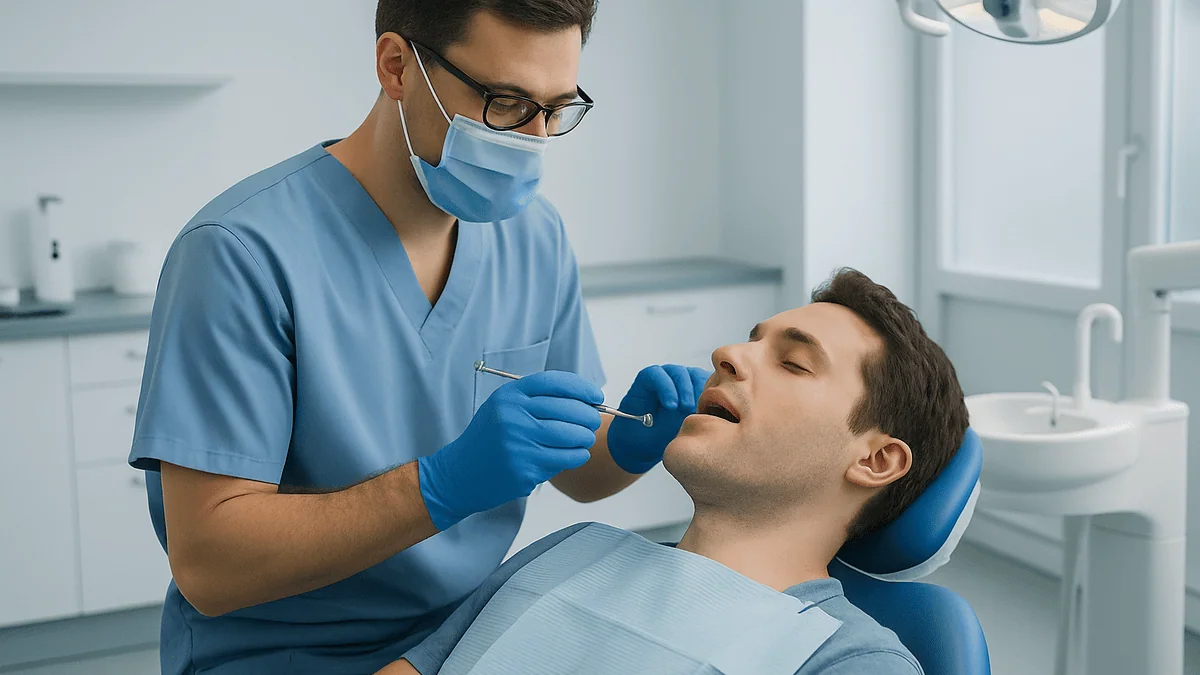
A simple extraction is one where the whole tooth is visible above the gumline and the dentist can remove it without cutting. The sequence, described by MedlinePlus, is unglamorous and quick: local anesthetic to numb the area, an elevator instrument to loosen the tooth in its socket, forceps to deliver it, gauze to control bleeding. Many are finished within 20 to 40 minutes, most of which is waiting for the numbness to take hold.
For a wisdom tooth to qualify, three things usually need to be true:
- It has fully erupted through the gum, so there’s something to grip.
- It sits reasonably upright rather than tilted into its neighbor.
- Its roots are uncomplicated, not curved, fused to bone, or wrapped near the nerve canal in the lower jaw.
Upper wisdom teeth clear this bar more often than lower ones, because upper jawbone is generally less dense and upper third molars tend to erupt more completely. Lower wisdom teeth are the classic troublemakers.
Because a simple extraction needs no operating room, no sedation team, and no suturing in most cases, it carries the lowest overhead in the building. If your dentist looks at your X-ray and says “this one’s simple,” that is genuinely good financial news, and it’s worth asking whether it can be done in the same visit rather than booked as a separate surgical appointment.
What makes a wisdom tooth extraction "surgical"?
The word “surgical” earns its keep the moment a scalpel becomes necessary. Per the Cleveland Clinic’s description of the procedure, a surgical extraction typically involves an incision to lift the gum tissue, removal of any bone covering the tooth, sectioning the tooth so it can come out in pieces, cleaning the socket, and closing with stitches, often the dissolving kind.
Each of those steps adds cost in a traceable way:
- Time. A deeply impacted lower wisdom tooth can take 45 minutes or more on its own, versus minutes for a simple case.
- Personnel. Complex impactions are often referred to an oral surgeon rather than handled by a general dentist, and specialist fees run higher.
- Anesthesia. Surgical cases are more likely to involve sedation, which adds a separate professional to the room.
- Imaging. When a lower tooth sits near the inferior alveolar nerve, a 3D cone-beam CT scan may be ordered on top of the panoramic X-ray.
- Follow-up. Suture checks and a review appointment come bundled, or billed, depending on the clinic.
None of this is upselling; it’s anatomy sending an invoice. A tooth lying horizontally under bone simply cannot be removed the cheap way. The useful question isn’t “why is surgical more expensive?” but “which of my four teeth actually need the surgical approach?”, because frequently the answer is not all of them.
How much does surgical wisdom tooth removal cost?
Here is where the numbers land, per tooth, based on published market data as of the last review. The spread between countries is real and mostly reflects labor costs, clinic overheads, and how dental care is funded, not differences in the procedure itself.
| Procedure | Turkey market average | Our guide range | UK typical | US typical |
|---|---|---|---|---|
| Surgical wisdom tooth extraction (per tooth) | EUR 100–200 | EUR 130–250 | GBP 250–600 | USD 300–800 |
Prices last reviewed: August 2026. These are guide ranges for international patients, based on published market data – not a quote. Your exact price depends on your clinical assessment; you will receive a personalised treatment plan and fixed quote after consultation.
Two reading notes. First, these figures are per tooth: a full clearance of four impacted teeth multiplies accordingly, though many clinics discount when all four come out in one session. Second, the top of each range typically reflects the hardest cases: full bony impaction, proximity to the nerve canal, or sedation folded into the fee. A partially erupted tooth needing a modest incision usually prices nearer the bottom.
Simple extractions of fully erupted wisdom teeth are not shown because they follow ordinary extraction pricing, which varies too widely by clinic to generalize honestly, but they reliably cost less than the surgical figures above.
What's included in the price, and what often isn't
Two quotes that look identical can be hundreds apart in practice, because clinics draw the line between “included” and “extra” in different places. Before comparing numbers, compare contents.
A complete surgical extraction fee should reasonably cover the consultation and examination, local anesthesia, the surgery itself, sutures, post-operative instructions, and at least one follow-up visit. Ask specifically about the items that most often appear as separate lines:
- Imaging. A panoramic X-ray is sometimes bundled; a cone-beam CT scan almost never is.
- Sedation. IV sedation or general anesthesia is usually the single largest add-on, because it requires an anesthetist or sedation-trained clinician.
- Emergency reviews. If you develop dry socket at day four, is the dressing visit free or billed?
- Medication. Prescriptions after surgery are typically filled at your own pharmacy, at your own cost.
For international patients, add the travel math: flights, two to four nights of accommodation (you’ll want a review before flying home), and travel insurance that actually covers planned dental treatment abroad, many standard policies exclude it.
The cleanest protection is a written, itemized treatment plan naming each tooth, the technique for each, the anesthesia type, and a fixed total. “From” prices advertised online are marketing, not commitments. A fixed quote issued after clinical assessment is the only number worth budgeting around.
Does the type of impaction change the price?
Substantially, impaction classification is the closest thing dentistry has to a difficulty rating, and fees track it closely.
Clinicians describe impacted wisdom teeth along two axes. The first is depth: a soft-tissue impaction has cleared the bone but remains under the gum; a partial bony impaction is still partly encased in jawbone; a full bony impaction is entirely buried. Each step down means more bone removal, more time, and a higher fee. The second axis is angle. The Mayo Clinic notes that impacted third molars may grow toward the second molar, toward the back of the mouth, at a right angle, effectively lying down, or straight up but trapped within the jaw. Horizontal and mesioangular (forward-tilting) impactions are typically the most demanding, because the tooth must be sectioned and removed in pieces around its neighbor.
Lower teeth add one more variable: the inferior alveolar nerve, which runs through the lower jaw and supplies feeling to the lip and chin. When roots sit close to this canal, surgeons work more slowly, may order 3D imaging first, and occasionally stage the procedure differently to protect the nerve. The NHS lists temporary numbness as a recognized, usually short-lived complication of lower wisdom tooth removal, and avoiding it is precisely the kind of care that justifies the upper end of a fee range.
In short: the deeper, the more tilted, and the closer to the nerve, the higher the price, for defensible clinical reasons.
Sedation and anesthesia: the quiet price multiplier
Ask what drives the biggest gap between a low quote and a high one for the same tooth, and the answer is often not the surgery at all. It’s what you’re feeling, or not feeling, while it happens.
There are broadly three levels. Local anesthesia alone numbs the area completely while you stay awake; it’s the standard for most extractions, including many surgical ones, and it’s usually built into the base fee. Conscious sedationinhaled, oral, or intravenous, keeps you relaxed and drowsy, often with little memory of the procedure; the Cleveland Clinic describes it as a common option for wisdom tooth surgery, and it adds a meaningful separate charge because it demands extra training, monitoring, and recovery time. General anesthesia, where you’re fully asleep, is reserved for the most complex cases or for patients who cannot tolerate treatment awake; it typically requires an anesthetist and sometimes a hospital setting, making it the most expensive route by a wide margin.
Here’s the honest part most price pages skip: sedation is a comfort and anxiety decision far more often than a clinical necessity. Plenty of full bony impactions are removed under local anesthetic every day, safely and painlessly, pain and awareness are separate things, and local anesthesia handles the first completely. If budget is tight, asking “can this be done under local?” is the single most effective question for lowering your total without compromising the surgery itself.
Is it cheaper to remove all four wisdom teeth at once?
Per tooth, usually yes. Per appointment, obviously not, so the answer depends on which number you’re optimizing.
The economics favor a single session. Consultation, imaging, anesthesia setup, and facility time are largely fixed costs; spreading them across four teeth instead of one shrinks the per-tooth overhead, and many clinics reflect that with a combined fee lower than four separate procedures would total. If sedation is involved, the saving grows, because you pay for one sedation episode instead of two or four. There’s a recovery argument too: one week of swelling and soft food beats going through the cycle twice.
The case for staging is also legitimate. Removing one side at a time lets you chew on the other while healing, which some patients strongly prefer. And clinically, not every mouth needs a full clearance, if two teeth are impacted and two are healthy and cleanable, removing only the problem pair is both cheaper and better practice than reflexively taking all four.
Where people get burned financially is the middle path by accident: removing one symptomatic tooth now, then paying full consultation, imaging, and anesthesia fees again a year later when its twin flares up. If your X-ray already shows that a second tooth will predictably cause trouble, ask for a combined quote up front. The dentist’s radiograph is, among other things, a forecast, use it to make one plan instead of two.
Will dental insurance cover wisdom teeth removal?
Often partially, rarely fully, and the deciding word in your policy is medically necessary.
Most dental insurance plans treat extractions as either “basic” or “major” services. Simple extractions usually fall into the basic tier with higher reimbursement percentages; surgical extractions of impacted teeth often land in the major tier, where plans commonly cover a smaller share after your deductible, up to an annual maximum that a four-tooth surgical case can exhaust in one day. Some medical (not dental) insurance policies contribute when impacted teeth are removed in a hospital under general anesthesia, since that crosses into medical territory, worth checking if your case is complex.
Three practical moves before you book:
- Request pre-authorization. Send the clinic’s treatment plan and X-ray to your insurer and get the covered amount in writing before surgery, not after.
- Check waiting periods. New policies frequently exclude major services for the first 6 to 12 months.
- Ask what triggers “necessity.” Documented pain, infection, cyst formation, or damage to the adjacent tooth typically qualifies; purely preventive removal of symptom-free teeth may not.
In the UK, wisdom tooth removal that meets clinical guidelines is available through the NHS at set banded charges, though waiting times vary and purely preventive removal generally isn’t offered. Wherever you are, the paperwork rule holds: coverage confirmed in writing beforehand is coverage; anything verbal is hope.
How do I get my wisdom teeth removed if I can't afford it?
Skipping treatment on an actively infected or damaging wisdom tooth is the one option that gets more expensive with time, untreated problems can progress to abscess, decay in the adjacent second molar, or cyst formation, each costlier to fix than the original extraction. So the goal is lowering the price, not postponing the tooth.
Realistic routes, roughly in order of savings:
- Dental schools. University clinics offer extractions performed by supervised students or residents at substantially reduced fees. Quality oversight is strong; the trade-off is time, since appointments run long and waitlists exist.
- Public and community options. Community dental clinics with sliding-scale fees, public dental services, and, in the UK, NHS treatment for clinically necessary removal all reduce out-of-pocket cost dramatically.
- Choose local anesthesia. Declining optional sedation is often the largest single saving available without changing the surgery at all.
- Ask about payment plans. Many clinics split fees over months; confirm whether interest applies.
- Treat selectively. If only one tooth is symptomatic and the others are genuinely healthy, a staged plan spreads cost over time legitimately.
- Consider treatment abroad. The guide ranges above show why some patients combine travel with dental care, though for a single extraction, travel costs can erase the saving, so this math works best when multiple procedures are needed.
Whatever the route, get the infection assessed promptly even if the extraction waits: that consultation is the cheap part.
Is 30 too old to have wisdom teeth removed, and does age change the cost?
No: 30 is not too old, and neither is 50. There is no age ceiling on extraction; if a wisdom tooth is causing pain, repeated infection, decay, or damage to its neighbor, removal is appropriate whenever the problem appears. Plenty of third molars behave for decades and then declare themselves in someone’s forties.
What changes with age is not eligibility but biology, and it does nudge cost and recovery. In younger patients, wisdom tooth roots are often not fully formed and the surrounding bone is more forgiving, which tends to make surgery quicker and healing faster, one reason the Mayo Clinic notes that many clinicians favor addressing problematic impacted teeth in younger adulthood. Past the mid-twenties, roots are complete, bone is denser, and roots may sit closer to the nerve canal in the lower jaw. Practically, that can mean longer surgical time, a greater chance of needing 3D imaging, and a somewhat slower recovery, factors that push a case toward the upper portion of a fee range rather than the lower.
The honest framing: age is a cost modifier, not a barrier. An upright, erupted wisdom tooth at 45 can still be a simple, inexpensive extraction; a deep horizontal impaction at 19 can still be a demanding surgical one. The X-ray outranks the birth certificate. If you’re 30-plus and a dentist has recommended removal, the recommendation stands on the tooth’s merits, waiting rarely makes the surgery easier or cheaper.
Do wisdom teeth always need to come out?
No, and any cost discussion should start by asking whether you’re buying something you need. A wisdom tooth that has erupted fully, bites properly against its opposite number, and can be reached with a toothbrush is a functioning molar, not a pending invoice. The NHS is explicit on this point: wisdom teeth are generally removed only when they’re causing problems, not as routine prevention.
Clear indications for removal include:
- Repeated pericoronitis, infection of the gum flap over a partially erupted tooth
- Decay in the wisdom tooth or the adjacent second molar that can’t be restored, often because the position makes cleaning impossible
- Gum disease developing around the tooth
- Damage or resorption affecting the neighboring tooth
- A cyst or, rarely, a tumor forming around an unerupted tooth: a complication Mayo Clinic lists among the reasons impacted teeth are monitored
For impacted teeth causing no symptoms, the evidence is genuinely mixed. Some clinicians favor early removal on the logic that surgery is easier in young bone; others favor watchful waiting with periodic X-rays, since many impacted teeth never cause trouble. Honest answer: high-quality evidence hasn’t settled which approach is better for symptom-free teeth, which is why recommendations differ between countries and dentists.
Financially, that means a second opinion on a “remove all four” plan for painless, problem-free teeth is a reasonable, not rude, thing to seek. Monitoring costs an X-ray; unnecessary surgery costs considerably more, in every sense.
The recovery costs nobody puts on the quote
The fee on the treatment plan ends when the stitches go in. Your actual costs run about a week longer.
Time off. After simple extractions, most people work the next day. After surgical removal of impacted teeth, plan for two to three days of real downtime, swelling typically peaks around day two or three, and up to a week before you’d want a client-facing meeting or physical work. The Cleveland Clinic puts full soft-tissue recovery at roughly one to two weeks. If you’re paid hourly or self-employed, that’s a line item.
The soft-food budget. Yogurt, soup, eggs, smoothies: a week of them. Cheap, but worth stocking before surgery when driving to a store is the last thing you’ll want.
Pharmacy costs. Any prescribed medications and over-the-counter pain relief your dentist recommends come out of pocket, plus gauze, ice packs, and a salt-water rinse routine.
The complication contingency. Dry socket, the loss of the healing blood clot from the socket, affects roughly 2 to 5 percent of extractions per the Cleveland Clinic, and lower wisdom teeth are its favorite location. It’s not dangerous, but it’s painful and needs an extra visit for a medicated dressing. Smoking sharply raises the risk, which makes not smoking for at least the first days after surgery the rare health advice that also protects your wallet. Ask upfront whether complication visits are included in your fee; the answer varies more than you’d expect.
When to see a doctor or dentist about a wisdom tooth
Some wisdom-tooth symptoms can wait for a routine appointment. Others cannot, and knowing the difference matters more than any price comparison in this article.
Book a routine dental visit if you have intermittent aching at the back of the jaw, a partially erupted tooth that traps food, mild gum tenderness that comes and goes, or you simply haven’t had your third molars assessed on an X-ray. Pericoronitis, inflammation of the gum flap over a partly erupted tooth, often flares and settles, but each episode is a signal worth evaluating rather than enduring.
Seek prompt care within a day or two for persistent pain that over-the-counter relief doesn’t touch, visible swelling of the gum or cheek, a bad taste with discharge near the tooth, or bleeding that doesn’t settle after an extraction.
Treat as urgent, same day, emergency care if neededif you develop:
- Fever alongside facial or jaw swelling
- Difficulty swallowing or difficulty opening your mouth (trismus)
- Swelling spreading toward the eye, under the jaw, or down the neck
- Any trouble breathing
These can indicate a spreading dental infection, which is a medical emergency, not a scheduling question. The NHS and Mayo Clinic both flag spreading swelling and fever as reasons for immediate assessment. After an extraction, also return promptly for throbbing pain that begins two to four days post-surgery, the classic timing of dry socket, or numbness in the lip or chin that persists. Cost anxiety keeps many people at home in exactly these moments; infection care delayed is infection care made more expensive.
Questions to ask before you accept any quote
A ten-minute conversation before booking prevents most billing surprises after. Bring these to the consultation and expect clear answers, hesitation on any of them is information in itself.
- Which of my teeth are simple and which are surgical? The answer should reference your X-ray, tooth by tooth, not a blanket rate.
- Is this quote fixed, and what would change it? Legitimate answers exist, an unexpected root fracture, for instance, but they should be named in advance.
- What anesthesia is included, and what does each upgrade cost? Get local, sedation, and general priced separately so the choice is yours.
- Are imaging, sutures, medications, and follow-up visits inside the fee? Itemized beats bundled for comparison purposes.
- Who performs the surgery, a general dentist or an oral surgeon, and how often do they do impacted lower molars? Volume matters for complex impactions.
- How close are my lower roots to the nerve, and does that change your plan? A thoughtful answer here is worth more than a discount.
- If I develop dry socket or an infection, is the review visit covered?
One closing opinion, earned over many cost articles: the cheapest quote and the most expensive quote are both usually the wrong pick. The right pick is the itemized, fixed quote from the clinician who looked at your imaging the longest and explained it in plain language. Wisdom teeth come out once; buy the explanation, not just the extraction.
Frequently asked questions
How much is it out of pocket to get a wisdom tooth pulled?
For a surgical extraction, expect EUR 130-250 per tooth in our guide range for international patients, around GBP 250-600 in the UK, and USD 300-800 in the US without insurance. A simple extraction of a fully erupted wisdom tooth costs less. Imaging, sedation, and follow-up visits may be billed separately, so ask for an itemized, fixed quote after your X-ray rather than relying on advertised starting prices.
What's the difference between a simple and a surgical wisdom tooth extraction?
A simple extraction removes a fully erupted tooth with elevators and forceps under local anesthetic, with no cutting. A surgical extraction is needed when the tooth is impacted, partly or fully trapped under gum or bone, and involves an incision, sometimes bone removal, sectioning the tooth, and stitches. Surgical cases take longer, are more often done by oral surgeons, and cost more as a result.
Will dental insurance cover wisdom teeth removal?
Usually partially, if the removal is medically necessary, for pain, infection, decay, or damage to neighboring teeth. Many plans class surgical extraction as a major service with lower reimbursement and annual maximums that a four-tooth case can exhaust. Purely preventive removal of symptom-free teeth may not be covered. Request written pre-authorization from your insurer before surgery, and check for waiting periods on new policies.
How do I get my wisdom teeth removed if I can't afford it?
Start with dental schools, where supervised students or residents perform extractions at substantially reduced fees, and community clinics with sliding-scale pricing. In the UK, clinically necessary removal is available through the NHS at set banded charges. Choosing local anesthesia instead of sedation is often the biggest single saving. Many clinics offer payment plans. Don’t postpone an infected tooth, untreated problems cost more later.
Is 30 too old to have wisdom teeth removed?
No. There is no age limit, wisdom teeth are removed whenever they cause pain, infection, decay, or damage to neighboring teeth, whether you’re 19 or 55. After the mid-twenties, roots are fully formed and bone is denser, which can make surgery somewhat longer and recovery slower, but the procedure remains routine. If a dentist has recommended removal at 30, waiting rarely makes it easier or cheaper.
Is it cheaper to remove all four wisdom teeth at the same time?
Per tooth, usually yes. Consultation, imaging, and anesthesia are largely fixed costs, so one session spreads them across four teeth, and many clinics discount combined removals. You also recover once instead of repeatedly. That said, if only one or two teeth are actually problematic and the others are healthy and cleanable, removing just the problem teeth is both cheaper and better clinical practice.
Does sedation cost extra for wisdom teeth removal?
Almost always. Local anesthesia is typically included in the base fee, while IV sedation or general anesthesia adds a significant separate charge because it requires extra training, monitoring, and sometimes an anesthetist. Sedation is usually a comfort choice rather than a clinical necessity, many surgical extractions are done painlessly under local anesthetic alone. If cost matters, ask specifically whether your case can be done under local.
Do impacted wisdom teeth always have to be removed?
No. The NHS advises removal only when wisdom teeth cause problems, repeated gum infections, decay, gum disease, damage to the neighboring tooth, or cysts. For impacted teeth causing no symptoms, evidence is genuinely mixed: some clinicians favor early removal while bone is more forgiving, others favor monitoring with periodic X-rays. If you’ve been advised to remove four painless teeth, a second opinion is reasonable.
How long is recovery after surgical wisdom tooth removal?
Plan for two to three days of real downtime, with swelling peaking around day two or three, and roughly one to two weeks for soft tissue to heal, per Cleveland Clinic guidance. Most people return to desk work within a few days. Budget for soft foods, any prescribed medications, and possible extra visits, dry socket, affecting roughly 2-5% of extractions, needs a medicated dressing and typically appears two to four days after surgery.
Why is a lower wisdom tooth more expensive to remove than an upper one?
Lower wisdom teeth are more often impacted, sit in denser bone, and lie near the inferior alveolar nerve, which supplies feeling to the lip and chin. Surgeons work more carefully around it, may order 3D cone-beam imaging first, and often need to section the tooth. All of that adds time and expertise, pushing lower teeth toward the upper end of fee ranges while erupted upper teeth are frequently simple extractions.
References
- Wisdom tooth removal: NHS
- Wisdom teeth removal: Cleveland Clinic
- Dry socket: Cleveland Clinic
- Tooth extraction: MedlinePlus
This article is for general information only and is not a substitute for professional medical advice. Please consult a qualified doctor about your individual situation.

More from the Blog

What Happens During a Tooth Extraction? Numbing, Loosening the Tooth and Closing the Socket
A tooth extraction procedure has three stages. First, the dentist numbs the tooth and surrounding gum with a local anesthetic injection, so you feel…

How Halitosis Is Diagnosed: Breath Assessment, Gum Checks and Finding the Source
Halitosis diagnosis starts with a clinician smelling the breath from the mouth and nose separately and rating it on a standard scale, then examining…

Can a Sinus Infection Cause Tooth Pain? Why It Happens and How to Tell It from a Dental Problem
Yes. A sinus infection can cause tooth pain, usually a dull ache across several upper back teeth. Those roots sit just beneath the floor…

Mouth Care After Wisdom Teeth Removal: Gentle Rinsing, Brushing and Keeping the Socket Clean
Mouth care after wisdom teeth removal means protecting the blood clot in each socket for the first 24 hours, then gently brushing the other…

What an Orofacial Pain Treatment Plan Combines: Dental, Physiotherapy and Pain-Management Care
An orofacial pain treatment plan usually combines three strands: dental care to rule out tooth, gum and bite causes and sometimes provide a custom…

How Long Does a Root Canal Take? Visit by Visit, Tooth by Tooth
Most root canals take 30 to 90 minutes of chair time per visit, and many are finished in a single appointment. Front teeth, with…