

Dental Implants After Tooth Extraction: Timing and Process

A dental implant can sometimes be placed on the same day a tooth is extracted, but only when the socket is clean, infection is controlled and enough healthy bone exists to hold the implant firmly. Otherwise, clinicians typically wait around 6–12 weeks for soft-tissue healing, or several months if bone needs to heal or a graft must mature. Your surgeon's examination and imaging decide which path applies to you.
Some people leave the extraction appointment with an implant already in the jaw. Others come back weeks or months later. Both are normal, and neither is automatically better. Dental implants after tooth extraction can be placed immediately, early, or after a longer healing period: the right timing depends on what your surgeon finds in your mouth, not on a universal schedule.
This guide explains the timing options, what decides between them, what the full process looks like from extraction to final crown, and how to plan realistically if you are travelling for treatment.
At a glance
- Possible timing: Same day as extraction, after roughly 6–12 weeks of soft-tissue healing, or after several months of bone healing or grafting
- What decides it: Bone volume and quality, active infection, gum health, the tooth’s position and whether the implant can be held stable
- Integration period: Often around 3–6 months before the final crown, depending on your individual plan
- Travel planning: Most implant plans involve more than one stage, so international patients often need more than one visit
- Aftercare priority: Your own surgeon’s instructions on cleaning, diet and medicines override any general timeline, including this one
Dental implants after tooth extraction: the short answer
Yes, you can get dental implants after a tooth extraction: the real question is when. Immediate placement, on the day the tooth comes out, is a genuine option, but it is considered only when specific conditions are met: the extraction site is clean, there is no uncontrolled infection, the surrounding bone walls are intact, and the surgeon can seat the implant firmly in a position that serves the future tooth well.
When those conditions are missing, because of infection, bone loss, gum disease, a difficult extraction or thin bone, waiting is the safer route. A common approach is to allow roughly 6–12 weeks for the gum and early bone to heal, then reassess. Sites with significant bone loss may need several months, sometimes with a bone-grafting phase, before an implant can be placed predictably.
Waiting is not a failure of planning. It often means the surgeon is choosing stability over speed. Dental implants depend on a firm mechanical grip in bone at the moment of placement and on undisturbed healing afterwards; a rushed implant in a compromised socket serves nobody. You can read more about how the treatment itself works on our dental implants treatment page.
For international patients, timing also shapes travel. Acibadem’s international patient services coordinate appointments, records, interpreter support and practical planning for people travelling for care, but the clinical team decides how long you should remain locally after each stage, and that decision is individual.
How long after tooth extraction can you get a dental implant?
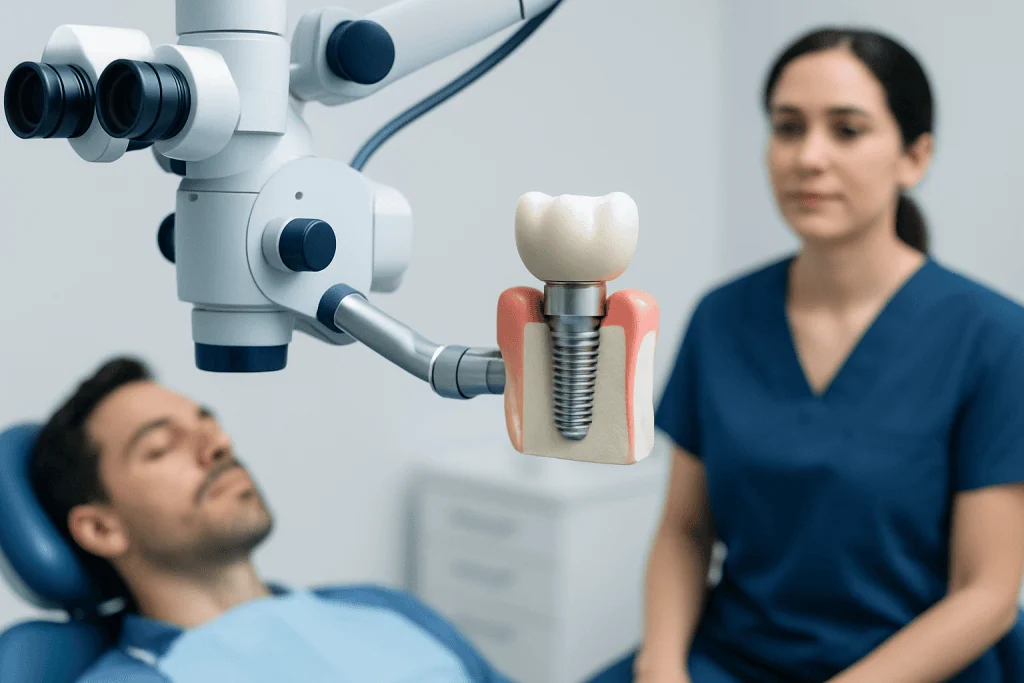
The honest answer is a range: from the same appointment to six months or more. Clinicians generally group the options into four timing categories, and your assessment places you in one of them.
- Immediate placement: the implant goes in at the extraction appointment. Considered when the socket is clean, infection is controlled and the bone can grip the implant firmly.
- Early placement: typically around 6–12 weeks after extraction, once the gum has closed and early healing has settled inflammation, but before major bone remodelling.
- Delayed placement: commonly several months after extraction, once the bone in the socket has healed more completely. Often chosen after infections, difficult extractions or where stability was doubtful.
- Placement after grafting: when bone must be rebuilt first, the graft needs its own maturation period before the implant is placed. The wait depends on the graft type, the site and how you heal.
One factor pushes against waiting indefinitely: bone naturally remodels and shrinks after a tooth is removed, and the change is fastest in the first months. This is why surgeons sometimes place graft material into the empty socket at the time of extraction, a step called socket preservation, to hold the site’s shape for a later tooth implant. If you are told to wait, ask whether socket preservation is part of your plan and what happens to the site while you wait.
It is also worth asking three practical questions at the assessment: which timing category applies to you and why; whether you will have a temporary tooth and whether you can chew on it; and when the final crown is realistically likely to be fitted. The answers define your calendar far more than any general article can.
Week-by-week dental implant timeline after extraction

The table below shows a typical sequence. Yours may be shorter or longer depending on which tooth was removed, whether grafting was needed, your general health, whether you smoke, how well you clean the area and how complex the final restoration is. Treat it as a map of the territory, not your itinerary.
| Time | What may happen | What you may need to do |
|---|---|---|
| Day 0 | Extraction, with immediate implant placement and/or bone grafting if planned. | Rest, manage bleeding as instructed, take prescribed medication only as directed, eat soft foods. |
| Days 1–3 | Swelling, tenderness and minor bruising are common. | Follow the cold-compress and oral-care plan you were given; avoid smoking, alcohol and strenuous activity if advised. |
| Days 4–7 | Discomfort usually begins to ease; sutures may still be present. | Continue gentle cleaning around the site and attend any scheduled review. |
| Weeks 2–8 | Extraction tissues continue healing. If an implant was not placed immediately, reassessment or early placement may be planned in this window. | Maintain careful hygiene; avoid biting heavily on any temporary tooth unless cleared. |
| Months 3–6 | The implant undergoes osseointegration: the process of bonding with the surrounding bone. | Attend reviews as scheduled and keep to the diet and activity guidance you were given. |
| After integration | The final crown, bridge or denture is designed and fitted once the site is ready. | Protect the result with daily cleaning, regular dental checks and any recommended night guard. |
Do not use this table to self-schedule treatment or book flights. Surgeons routinely alter the sequence for multiple extractions, sinus-related work in the upper jaw, grafting, relevant medical conditions or full-arch plans. What you eat during each phase matters too: our day-by-day diet guide after implant surgery covers this in detail.
Immediate implants: when same-day placement works
Placing an implant at the extraction appointment has real advantages: one surgical episode instead of two, fewer anaesthetic sessions, and in some cases better preservation of the gum and bone contour around the future tooth. For patients travelling from abroad, it can also reduce the number of trips. But it is a clinical option selected case by case, never a default.
Before recommending it, the team assesses the socket walls, the thickness of the gum, the forces your bite will place on the site, the position of the extracted root and any signs of infection. Three-dimensional imaging is often used to map the anatomy and plan the implant position precisely. In some cases, graft material is packed around the implant at the same visit to fill gaps between the implant and the socket walls.
An important distinction: an immediate implant does not always mean an immediate permanent tooth. You may receive a temporary restoration for appearance, but it often needs to stay out of heavy biting contact while the implant integrates. Early overload, chewing hard on an implant before it has bonded with bone, is one of the avoidable ways an implant can fail, so treat chewing restrictions as part of the surgery, not an optional extra.
Bone grafting and socket preservation: why some plans take longer
Bone is the foundation of every implant, and not every extraction site has enough of it. Long-standing infection, gum disease, trauma during extraction or simple anatomy can leave the socket short of the volume an implant needs. In these cases, the surgeon rebuilds the site before or alongside implant placement.
Grafting takes several forms. Socket preservation fills the fresh socket to limit shrinkage while you wait. Larger grafts rebuild width or height that has already been lost. In the upper back jaw, a sinus-related procedure may be needed to create room for the implant. Each adds healing time, because grafted material must mature into bone that can hold an implant securely.
Where the bone deficit is severe, some patients are assessed for alternatives such as zygomatic implants, which anchor in the cheekbone rather than the jaw. These are specialist options with their own assessment criteria; whether any of them suits you is a decision for the surgical team after imaging.
The full process: from extraction to final tooth
Even when extraction and implant placement happen in one visit, the complete journey usually spans months. The surgical phase is followed by an integration period, often around three to six months, during which the implant bonds with bone. Only then is the definitive crown, bridge or denture made and fitted, sometimes after a further stage to shape the gum around the implant.
The same logic scales up. If you are asking whether you can have all your remaining teeth removed and replaced, the answer is that full mouth dental implants are an established approach: several implants per jaw support a fixed bridge or a secured denture. These plans are more demanding, more imaging, often more grafting, and careful staging of extractions, placements and temporary teeth, but the underlying sequence of place, integrate, restore is the same.
You will see the treatment described many ways online, tooth implant, teeth implants, implant-supported crown, but the clinical process behind the labels does not change. And whether you begin by looking for a clinic close to home or by researching treatment abroad, the assessment questions a good clinician asks are identical. If you are weighing up travelling to Turkey for treatment, our dental implants in Turkey treatment guide walks through how the process is organised for international patients.
What patients wish they knew beforehand
The most common surprise is that an implant is a journey, not an appointment. The final result depends on planning, healing, gum health, bite design, home care and regular reviews, and the calendar reflects all of that. A realistic timeline lets you plan work, travel, meals and support at home instead of improvising around them.
The second is maintenance. Implants cannot decay the way natural teeth do, but the gum and bone around them can become inflamed, and that inflammation can threaten the implant. Daily cleaning around the implant as instructed, professional hygiene visits and avoiding tobacco all matter for as long as you have the implant. Smoking deserves particular attention because it interferes with healing; our guide on smoking after dental implants explains why and covers the timelines surgeons typically discuss.
The third is disclosure. If you have diabetes, take blood thinners, grind your teeth, have had radiotherapy to the jaw, or use medicines that affect bone metabolism, the dental team needs to know before planning begins: these factors can change the timing, the technique or the aftercare, and they are far easier to plan around than to discover mid-treatment. Never adjust any of your medicines yourself around dental treatment; that decision belongs to your treating doctors.
Planning recovery and travel around implant treatment
Most people manage ordinary light activities soon after a straightforward extraction or implant placement, but a quieter first day or two is usually sensible. Swelling and soreness are a normal part of early healing and typically ease over the first week; our guide on pain after a dental implant describes what the usual pattern looks like.
International patients should build slack into the itinerary. Avoid tightly timed sightseeing, business commitments or long onward journeys in the days after surgery, and confirm with your surgeon when flying is appropriate for your specific procedure: the answer differs for a simple placement, a graft and sinus-related work. Our guide on flying after dental surgery and implants covers the considerations in detail.
Before leaving, collect copies of your imaging, treatment summary and medication list, and make sure you know which reviews should happen in Turkey and which can be arranged with a dentist at home. Acibadem coordinates interpreter support and practical logistics for travelling patients, and sharing your home dentist’s details helps keep care continuous between visits.
Step by step
- Have a full assessment. The team reviews your medical history, examines your gums and bite, and takes appropriate imaging. Mention all medicines, allergies, smoking or vaping, past dental infections and any previous jaw treatment.
- Learn your timing category. The surgeon determines whether immediate placement is predictable or healing should come first, and whether socket preservation or grafting is part of the plan. Ask what factors drove the recommendation.
- Plan the temporary tooth and eating routine. A temporary tooth may be possible but is often not designed for chewing. Clarify what you can eat, how to clean the area and how to protect the temporary restoration.
- Complete the surgical stage. Extraction and implant placement may happen in one visit or be separated. Follow your individual instructions on bleeding control, pain relief, rinsing, food and activity exactly as given.
- Attend healing reviews. Reviews let the team check gum healing, implant stability and your bite. Your surgeon will explain which signs they want reported between appointments and how the follow-up schedule works.
- Allow time for integration. The implant needs its integration period before the final restoration. A comfortable implant is not necessarily a fully healed one, so keep all restrictions until your clinician lifts them.
- Receive and maintain the final restoration. Once the site is ready, the final crown, bridge or denture is fitted and adjusted. Long-term daily cleaning, professional reviews and any recommended night guard protect the investment.
Your checklist
- Bring a current list of medicines, allergies and relevant medical conditions.
- Ask whether you are suitable for immediate placement or need a healing period first.
- Request a written outline of the surgical, healing and final-restoration stages.
- Confirm whether socket preservation or bone grafting is part of your plan.
- Ask what temporary tooth options exist and whether you can bite on them.
- Plan soft foods, time off and a quiet first 24–48 hours after surgery.
- If travelling, leave room in the itinerary for reviews and confirm flying advice before booking onward journeys.
- Obtain copies of imaging, treatment notes and follow-up contact details.
- Ask your surgeon which signs during healing they want you to report.
- Arrange long-term hygiene and implant maintenance visits at home.
Key takeaways
- An implant may be placed on the day of extraction, after weeks of soft-tissue healing, or after months of bone healing, assessment and imaging decide which.
- Immediate implants require favourable local conditions and do not always come with an immediately chewable tooth.
- The complete process usually spans months because the implant must integrate with bone before the final restoration.
- Infection, bone loss, gum health, bite forces and medical history all legitimately shift the timing.
- Careful aftercare, honest travel planning and lifelong maintenance are as much part of the treatment as the surgery itself.
Frequently asked questions
Can you get dental implants after tooth extraction?
Yes. An implant can be placed at the extraction appointment itself when conditions are suitable, or after a healing period when they are not. The decision rests on bone volume, infection status, gum health and whether the implant can be held stable, all assessed by examination and imaging before anything is scheduled.
How long after tooth extraction can a dental implant be placed?
Anywhere from the same day to several months later. Common patterns are immediate placement, early placement around 6–12 weeks after soft-tissue healing, and delayed placement after several months of bone healing. If bone grafting is needed first, the graft must mature before the implant goes in, which extends the wait further.
Do you have no teeth while waiting for implants?
Usually not, if it is planned for. Options include a removable partial denture, a temporary bridge, or a temporary crown fixed to the implant itself in suitable cases. Temporary teeth are typically made for appearance rather than heavy chewing, so ask what you can eat with yours and how to look after it.
Can I have all my teeth pulled and get implants?
Full-arch treatment exists for exactly this situation: several implants per jaw supporting a fixed bridge or a secured denture. It requires thorough assessment, often grafting, and careful staging of extractions, placements and temporary teeth. Whether it suits you depends on your bone, general health and goals, which only a full examination can establish.
How long do tooth implants last?
There is no fixed lifespan and no honest way to promise one. Implants can remain in function for many years, but the gum and bone around them need lifelong care. Inflammation around an implant, tobacco use, uncontrolled grinding and poor hygiene can all shorten its life, while daily cleaning and regular professional maintenance protect it.
What is the downside of a dental implant?
It is a surgical treatment, so it carries surgical risks such as infection or, rarely, involvement of nerves or the sinus. It takes months from start to finish, often across multiple stages, and it demands lifelong maintenance. It is also not suitable for everyone, some sites need grafting first, and some medical situations change the plan.
Do I need a bone graft before an implant?
Not everyone does. Grafting is recommended when bone has been lost or when preserving the socket matters for a later implant. The need depends on the tooth’s location, the state of the site, bone shape and the planned restoration, and it usually adds a maturation period to the overall timeline.
How long do I need to stay in Turkey for dental implants?
It depends on your plan: extraction alone, immediate implantation, grafting, a temporary restoration and a final crown all have different local requirements. Many implant plans involve more than one stage, so a return visit after the integration period is common. Ask for a personalised, written itinerary before booking travel.
Add us as a Preferred Source to see more of our trusted health content across Google Search, AI Overviews and Discover.

Update history
- PublishedAugust 21, 2026
- Medical review approvedSeptember 13, 2026
- Last content updateSeptember 12, 2026
References1
- Dental Implants: Cleveland Clinic my.clevelandclinic.org
More Patient Guides

Septoplasty Recovery: Week by Week
Learn what to expect after deviated septum surgery: a week-by-week septoplasty recovery timeline, when it is usually safe to fly home, and…

Gallbladder Surgery Recovery: Week by Week
Learn what to expect after gallbladder surgery: a week-by-week recovery timeline, pain, diet, wound care, when it is safe to fly home…
Robotic Hysterectomy Recovery: Week by Week
Recovery from robotic hysterectomy week by week: pain, lifting, wounds, driving, flying home safely, warning signs and questions to ask before you…

Breast Reconstruction Recovery: Week by Week
DIEP flap recovery week by week: hospital stay, drains, pain, walking, showering, driving, when it is usually safe to fly home, and…