

Smoking After Dental Implants: Risks and Safe Timelines

There is no amount of smoking that surgeons consider safe during implant healing. Most teams advise stopping before surgery and staying smoke-free for at least the first two weeks, often longer while the bone integrates. Light smoking after dental implant surgery still exposes the wound to heat, suction and nicotine, so your surgeon's individual timeline, not a general rule, is the one to follow.
You have implant surgery booked, and somewhere at the back of your mind sits the question you may not want to ask out loud: how long can you really go without a cigarette, and would just one or two a day be acceptable? It is a fair question. It deserves a straight answer rather than a vague warning, and it is worth putting to your surgeon directly.
The honest summary is this: smoking after dental implants interferes with the two things a new implant needs most, good blood supply and undisturbed healing. There is no proven safe level, no proven safe brand and no proven safe workaround. What there is, instead, is a set of practical timelines that implant teams use, and clear reasons behind each one. This guide explains both, so the conversation with your surgeon starts from an informed place.
At a glance
- Best approach: Stop smoking before surgery and stay smoke-free throughout healing
- Light smoking: Not a proven safe compromise, heat, suction and nicotine still reach the wound
- Highest-risk window: The first 72 hours, then the first two weeks
- Why it matters: Smoking reduces blood flow and oxygen to healing gum and bone
- Dry socket: Risk rises when smoking follows an extraction or graft
- Your timeline: Your surgeon’s instructions override any general framework, especially after grafting or extractions
Light smoking after dental implant surgery: the short answer
Many patients hope that light smoking after dental implant placement is a reasonable middle ground: a few cigarettes a day rather than a full habit. Surgeons understand why people ask. The difficulty is that the mechanisms that threaten a healing implant do not need a heavy habit to operate. Each cigarette narrows blood vessels for a period afterwards, each inhalation creates suction inside the mouth, and each exposure delivers heat and chemical irritants directly across the surgical site. Cutting down reduces the number of these episodes; it does not make any single episode harmless.
So the short answer is: do not smoke after implant surgery if you can avoid it, and do not treat light smoking after dental implant treatment as a clinically approved compromise. It is a reduction in exposure, which is better than no reduction, but it is not a safe threshold, because no safe threshold has been established. If a lighter pattern is genuinely the most you can manage, say so before surgery. Your surgeon can only plan around your real habits, not the habits you wish you had.
There is also no single timeline that fits everyone. Many implant teams advise stopping before surgery and avoiding cigarettes, vapes and other nicotine products for at least the early healing period; some prefer abstinence until healing and osseointegration, the process by which bone bonds to the implant, are complete. If your treatment involves an extraction, a bone graft, a sinus lift, multiple implants or a condition that affects healing, expect a longer, stricter timeline. If you are still weighing up dental implant treatment itself, your smoking history is one of the factors worth raising at the planning stage rather than after surgery.
How long after dental implants can I smoke?
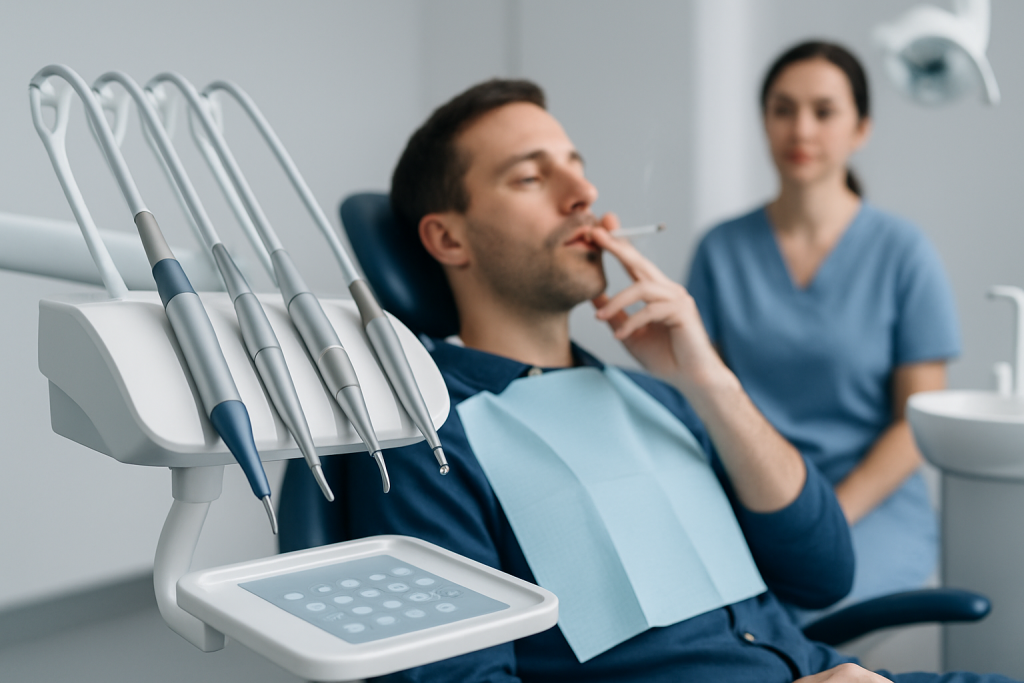
The medically cautious answer: wait until your surgeon confirms that healing is stable, and stay nicotine-free for as long as they recommend. The first 72 hours matter most, because that is when the wound is freshest and the early clot and soft tissue are easiest to disturb. But the risk does not switch off after three days. Gum tissue continues healing for weeks, and the bone around the implant continues remodelling for months, long after the site has stopped feeling sore.
A commonly used practical framework looks like this: stop before surgery, avoid smoking entirely for at least the first two weeks afterwards, and extend the nicotine-free period through osseointegration where possible. Your own advice may be longer if a tooth was removed at the same visit, if grafting was needed, if you have gum disease or diabetes, or if you have smoked heavily for years.
| Time around treatment | Practical smoking guidance | Why it matters |
|---|---|---|
| 2–4 weeks before surgery | Ideally stop, or begin a structured cessation plan with your clinician. | Time without smoke exposure supports circulation and gives tissues better healing conditions. |
| Day of surgery | Do not smoke, vape or use nicotine unless your surgeon specifically advises otherwise. | Nicotine and inhalation affect circulation and irritate a fresh surgical site. |
| Days 1–3 | Avoid smoking completely. | The earliest wound-healing phase; suction, heat and chemicals can disrupt the clot and soft tissue. |
| Days 4–14 | Continue avoiding smoking and all nicotine products. | Gum healing is still active, and complications may not yet be visible or painful. |
| Weeks 3–8 | Remain smoke-free if your surgeon recommends it; attend planned reviews. | Deeper bone healing continues even when the mouth feels normal again. |
| Following months | Ask your surgeon before resuming; stopping for good remains best for implant health. | Smoking also affects the long-term health of the gum and bone that hold the implant. |
Do not treat any row in that table as permission. At your review, ask three specific questions: has the site healed well, does the implant appear stable, and is there any reason to keep abstaining? Those answers, from the person who placed your implant, are worth more than any general timeline. For the broader picture of what supports recovery, sleep, diet, hygiene, activity, see how to heal faster after dental implant surgery.
What smoking actually does to a healing implant
It helps to understand the mechanism, because it explains why the rules are strict and why cutting down only partly helps. The relationship between smoking and dental implants comes down to three separate problems that arrive together.
- Reduced blood flow. Nicotine constricts blood vessels, and carbon monoxide in smoke reduces how much oxygen the blood can carry. A healing implant site depends on a rich blood supply to deliver oxygen, nutrients and immune cells. Restrict that supply and every stage of healing slows.
- Mechanical disturbance. Drawing on a cigarette creates suction in the mouth, and the smoke itself is hot. Both can disturb the fragile clot and early tissue over a surgical site: the same reason surgeons warn against straws in the first days.
- Chemical irritation and infection risk. Smoke carries irritants directly across the wound and alters the mouth’s bacterial environment, making inflammation and infection more likely at exactly the moment the site is most vulnerable.
Osseointegration is the quiet, invisible part of implant treatment, and it is the part smoking threatens most. The bone does not bond to the implant in a day; it grows onto the surface over weeks and months. The research on smoking and implants consistently finds this process less predictable in smokers, which is why timelines extend well past the point where the gum looks healed.
What happens if you smoke 3 days before surgery?

Smoking three days before implant surgery does not automatically mean your treatment is cancelled, but do not hide it from your surgeon. Recent smoke exposure constricts blood vessels and reduces oxygen delivery to tissue, which makes healing conditions less favourable, particularly when other risk factors are present.
Your clinician weighs the full picture: how much you smoke, whether you also use vapes or other nicotine products, the state of your gums and bone, whether grafting is planned, and any conditions or medicines that affect healing. Depending on that picture, they may proceed as planned, adjust the surgical plan, recommend a longer cessation period first, or in some cases postpone elective surgery to improve predictability. Postponement is not a punishment; it is the surgeon choosing better conditions for a procedure you only want to do once.
Two things not to do. Do not smoke more heavily beforehand on the logic of a ‘last hurrah’: you would be loading extra exposure onto tissue that is about to be operated on. And do not improvise a quitting method with unapproved products in the days around surgery. A proper cessation plan, behavioural support, and where suitable clinician-guided nicotine replacement or medication, needs tailoring, because nicotine itself may be a concern around implant healing. That decision belongs with your surgeon and prescribing clinician, not a pharmacy shelf.
Will dental implants fail if you smoke?
No, not inevitably. Many people who smoke receive implants and heal without incident. But in the study of dental implants, smoking is one of the most consistently identified risk factors for poorer healing, early integration problems and later inflammatory disease in the tissues around an implant. Research findings vary because studies involve different smoking levels, follow-up periods and patient populations, but the direction of the evidence is consistent: outcomes are less favourable in smokers than in non-smokers.
What matters more than any population figure is that smoking is a modifiable risk. Your bone quality, your age and your medical history are largely fixed at the point of surgery; whether you smoke through the healing period is not. Your personal risk also depends on oral hygiene, untreated gum disease, diabetes control, alcohol use, the number and position of implants, and whether you attend follow-up. Alcohol has its own recovery rules, covered in our guide to alcohol after dental implant surgery.
The long-term picture matters too. Continuing to smoke with dental implants in place affects the gum and bone that protect the implant for years after the crown is fitted: the same tissues that natural teeth depend on. Stopping around surgery protects the healing window; stopping for good protects the investment.
Smoking, extractions and dry socket
Dry socket is most closely associated with tooth extraction rather than implant placement alone, so it becomes especially relevant when an implant follows an extraction at the same visit, or when extractions form part of a wider treatment plan. After a tooth is removed, a blood clot forms in the socket and protects the underlying bone and nerve endings while new tissue grows. Dry socket occurs when that clot is dislodged or breaks down too early.
Smoking raises the risk through two routes: the suction of inhaling can physically dislodge the clot, and heat and chemical irritants can degrade it. It is possible to smoke after an extraction and not develop dry socket, but there is no reliable way to make smoking safe in that window, and no way to know in advance whether you will be the exception. Clinically, dry socket typically shows itself as pain that worsens rather than improves a few days after the extraction, sometimes with a bad taste or odour; a clinician diagnoses it by examining the socket and can dress and manage it. Home remedies, aspirin placed on the gum, alcohol, clove oil and similar, should not be applied to the area. If you want a fuller picture of what discomfort is expected and what is not, read pain after a dental implant: what is normal.
A note on substitutes: vapes, waterpipes and heated tobacco are not automatically safer for a healing socket. They can involve suction, heat, nicotine or chemical irritants: the same mechanisms in different packaging. Ask your surgeon about each product specifically rather than assuming anything smokeless is permitted.
Planning a smoke-free recovery when you travel for treatment
For international patients, the hard part is often not the decision but the environment: airport queues, delayed flights, hotel evenings and the first stressful days back home are exactly the moments a habit reasserts itself. Recovery planning works better when the smoke-free period is designed into the trip rather than left to willpower.
Practical measures that help: remove cigarettes, vapes and tobacco from your luggage and daily routine before surgery, not after; tell any travel companion about your plan so they support it rather than offering cigarettes at stressful moments; and keep your written aftercare instructions, prescribed medicines and clinic contact details in your hand luggage rather than the hold. Follow the instructions you were given on eating, rinsing, brushing and activity: our soft foods guide makes the diet side easier, and attend any review arranged before you fly. Flying itself has its own timing considerations after oral surgery, explained in flying after dental surgery and dental implants.
At Acibadem, treatment planning for international patients includes the aftercare conversation before surgery, so that instructions, review dates and interpreter support where needed are settled while you are still in the country. Good logistics do not replace clinical review, but they remove the friction that makes a healing period harder to protect.
Step by step
- Tell your surgeon about all nicotine use. How often you smoke, and whether you use cigarettes, vapes, heated tobacco, cigars, shisha or nicotine pouches. The plan can only be as accurate as the information behind it.
- Start a cessation plan before surgery, not on the day. Aim to stop as far in advance as your surgeon recommends. If you have struggled to quit before, ask your primary care clinician or a cessation service for structured support.
- Protect the first 72 hours absolutely. No smoking, no vaping, no products that require suction. Take medicines exactly as prescribed and follow the instructions on bleeding control, food and mouth care.
- Stay nicotine-free through early healing. The gum and bone are still recovering long after the soreness fades. Ask your implant team what duration applies to your specific procedure, including any extraction or graft.
- Attend every planned review. Reviews exist to catch early signs of inflammation, poor healing or instability before you could notice them yourself. If you are travelling internationally, confirm the review plan and who follows you up at home before you leave.
- Know your discharge instructions. Your surgeon will list the signs that warrant an earlier review and how to reach the team. Keep that document where you can find it, at the airport and at home.
Your checklist
- Tell your implant surgeon about smoking, vaping and every nicotine product you use.
- Ask for your individual stop-smoking timeline, before and after surgery, in writing.
- Arrange cessation support before travelling if you think you may need it.
- Avoid smoking and vaping completely on surgery day and through early recovery.
- Remove tobacco products from your luggage and routine before the procedure.
- Keep follow-up dates, aftercare instructions and clinic contact details in hand luggage.
- Follow the instructions on medicines, mouth care, food and activity exactly.
- Avoid straws and avoid touching the surgical site unless your surgeon says otherwise.
Key takeaways
- Smoking after a dental implant impairs blood supply and healing; there is no proven safe amount.
- Light smoking reduces exposure but is not a clinically approved compromise.
- The safest plan: stop before surgery and stay smoke-free for the period your surgeon sets.
- The first 72 hours carry the highest risk, but bone healing continues for months.
- Smoking does not guarantee failure: it is a meaningful, modifiable risk factor.
- After extractions, smoking raises dry socket risk in the early days.
- Extractions, grafts, sinus lifts and complex cases usually mean longer timelines.
Frequently asked questions
How long should I avoid smoking after dental implant surgery?
Until your surgeon confirms healing is stable: there is no universal number. The first 72 hours are the most critical, the first two weeks are the common minimum in practical frameworks, and many teams prefer abstinence through osseointegration. Extractions, grafts and sinus lifts usually extend the timeline.
How long should I quit smoking before dental implant surgery?
Many implant teams suggest stopping two to four weeks before surgery, or beginning a structured cessation plan in that window. The longer the tissues go without smoke exposure before the procedure, the better the starting conditions. Your surgeon will set the period that fits your case.
Is light smoking after a dental implant less risky than heavy smoking?
Fewer cigarettes means fewer episodes of vessel constriction, suction and heat, but each remaining cigarette still delivers all three to the healing site. No safe threshold has been established, so light smoking after dental implant surgery is a reduction in exposure, not a clinically approved level. Treat abstinence as the goal and discuss anything less with your surgeon.
Does vaping carry the same concerns as cigarettes after implants?
Vaping is not a proven safe alternative during implant recovery. It can involve nicotine, suction and chemical irritation: the mechanisms of concern with cigarettes. Ask your surgeon about vaping specifically rather than assuming it is permitted.
What happens if I smoked 3 days before my implant surgery?
Tell your surgeon rather than concealing it. Recent smoking affects circulation and healing conditions, but whether the plan changes depends on your overall health and the procedure. The surgeon may proceed, adjust the plan, extend the cessation period or, in some cases, postpone elective surgery.
Will my implant fail if I smoke?
Not inevitably, many smokers heal without incident. But smoking is a consistently identified risk factor for poorer healing, integration problems and inflammatory disease around implants. It is also one of the few risks entirely within your control, which is why surgeons press the point.
Can I smoke and still avoid dry socket?
Possibly, but there is no reliable way to make smoking safe after an extraction. Suction can dislodge the protective clot, and heat and irritants can degrade it. Dry socket is most relevant when an extraction is part of your implant treatment, and abstinence in the early days is the only dependable protection.
What should I do if I have already smoked after my surgery?
Stop again as soon as you can rather than deciding the plan is broken. Follow your aftercare instructions closely, and mention the lapse to your treating team at your review so they can assess the site with full information. One lapse handled honestly is far better than a resumed habit.
Add us as a Preferred Source to see more of our trusted health content across Google Search, AI Overviews and Discover.

Update history
- PublishedAugust 20, 2026
- Medical review approvedSeptember 13, 2026
- Last content updateSeptember 12, 2026
References1
- MedlinePlus: Quitting smoking medlineplus.gov
More Patient Guides

Septoplasty Recovery: Week by Week
Learn what to expect after deviated septum surgery: a week-by-week septoplasty recovery timeline, when it is usually safe to fly home, and…

Gallbladder Surgery Recovery: Week by Week
Learn what to expect after gallbladder surgery: a week-by-week recovery timeline, pain, diet, wound care, when it is safe to fly home…
Robotic Hysterectomy Recovery: Week by Week
Recovery from robotic hysterectomy week by week: pain, lifting, wounds, driving, flying home safely, warning signs and questions to ask before you…

Breast Reconstruction Recovery: Week by Week
DIEP flap recovery week by week: hospital stay, drains, pain, walking, showering, driving, when it is usually safe to fly home, and…