

Pain After a Dental Implant: What Is Normal and When to Worry

Some pain after a dental implant is expected. It usually peaks in the first 48–72 hours, then eases steadily over about a week. What matters is the direction: improving discomfort is the normal pattern, while pain that worsens after day three, returns after settling, or arrives with fever, discharge or a loose-feeling implant sits outside routine healing and needs professional assessment.
Is this level of soreness normal, or is something going wrong? Almost every patient asks this in the first days after implant surgery, and the honest answer is more reassuring than the internet suggests. Pain after a dental implant tends to follow a predictable curve: it peaks within the first 48–72 hours, then improves steadily over the following week.
The single most useful thing to watch is not how much it hurts on any one day, but the direction of travel. Discomfort that eases, however slowly, is the expected pattern. Pain that intensifies after the first few days, returns after it had settled, or arrives alongside fever, discharge or a loose-feeling implant is a different story: it does not automatically mean failure, but it is not part of routine healing either. This guide explains the difference in detail, day by day.
At a glance
- Expected pattern: pain and swelling usually peak on days 1–3, then ease each day.
- Typical course: most people feel substantially more comfortable within 7–10 days after a straightforward placement.
- Longer recoveries: extractions, bone grafts, sinus lifts and multiple implants extend the timeline.
- Not part of normal healing: worsening pain after day 3, fever, pus, a persistent bad taste, spreading swelling or a loose implant.
- Pain relief: the right medicine depends on your health and other medicines: the plan belongs to your treating surgeon.
- Travelling for treatment: agree a follow-up plan and take your procedure records before flying home.
Pain after a dental implant: what normal healing feels like
An implant is placed into the jawbone through the gum, so some pain after a dental implant is a normal biological response, not a sign that something has gone wrong. In the first days, most patients describe a dull ache or tenderness at the site rather than sharp pain, often accompanied by swelling of the cheek or gum, some bruising, jaw stiffness and light oozing on the first day. Sensitivity when chewing near the area or brushing close to it is also common and can outlast the ache itself.
What makes this pattern “normal” is not the intensity, that varies widely between people and procedures, but its behaviour over time. Normal post-surgical pain declines. It may fluctuate slightly within a day, and it may feel worse at night when there are fewer distractions, but comparing today with two days ago should show improvement.
The reverse pattern is the one clinicians take seriously. Pain that climbs after the third day, a new throbbing that begins after a quiet period, or discomfort paired with fever, pus, a foul taste, expanding redness or movement of the implant or its healing cap falls outside the expected course and is the kind of change dental teams examine rather than watch. None of these signs proves the implant has failed; several have simpler explanations. But they are findings a professional assesses, not ones a patient interprets alone.
One more point worth stating plainly: the written instructions from your own surgeon take priority over any general guide, including this one. Whether an extraction or bone graft was done at the same time, how many dental implants were placed, your medical history and your regular medicines all change what recovery looks like, and which pain relief is appropriate for you.
A day-by-day dental implant pain timeline
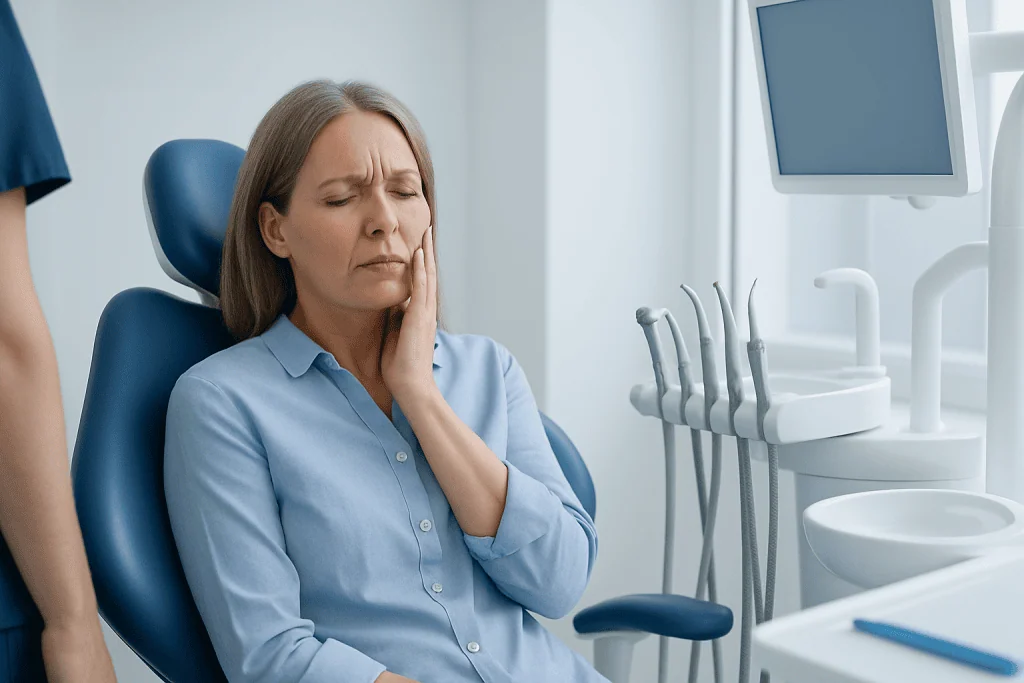
The table below describes an uncomplicated recovery after a routine single-implant placement. If your treatment involved several implants, grafting, a sinus lift or an extraction on the same day, expect the whole curve to shift later and last longer: your surgeon will have told you how much. Use this as a map of the usual territory, not a schedule your body must keep.
| Time after surgery | Usually part of normal healing | Outside the normal pattern |
|---|---|---|
| Day 0 | Numbness wears off over hours, followed by soreness, light bleeding or oozing, and the start of swelling. | Bleeding that does not slow with the pressure technique you were shown, pain unrelieved by the prescribed medication, or signs of an allergic reaction. |
| Days 1–3 | Aching and swelling peak. Bruising may appear on the cheek or under the jaw; the jaw may feel stiff. | Rapidly escalating pain or swelling, fever, rash, swelling extending toward the eye or down the neck, or difficulty swallowing. |
| Days 4–7 | Symptoms begin to ease. The site stays tender to chewing or nearby brushing, but each day is a little better. | Pain that is worsening rather than easing, new throbbing, pus, a foul taste, or redness and swelling that are increasing. |
| Week 2 | Most routine discomfort has settled. The gum may remain tender; sutures may be removed around now if non-dissolving. | Persistent significant pain, a loose healing cap or implant, the wound opening, or ongoing discharge. |
| Weeks 3–8+ | The implant integrates quietly with the bone. This phase should involve little or no pain. | New pain, pressure, swelling or any sense of movement at the implant site. |
Two cautions about using timelines. First, resist comparing your recovery with someone else’s: a friend whose implant “never hurt at all” probably had a different procedure, a different bone quality and a different pain threshold. Second, resist using the timeline to talk yourself out of a genuine concern. A steadily improving recovery is reassuring; a deteriorating one deserves an examination regardless of which day it is.
How long does pain typically last after dental implant surgery?
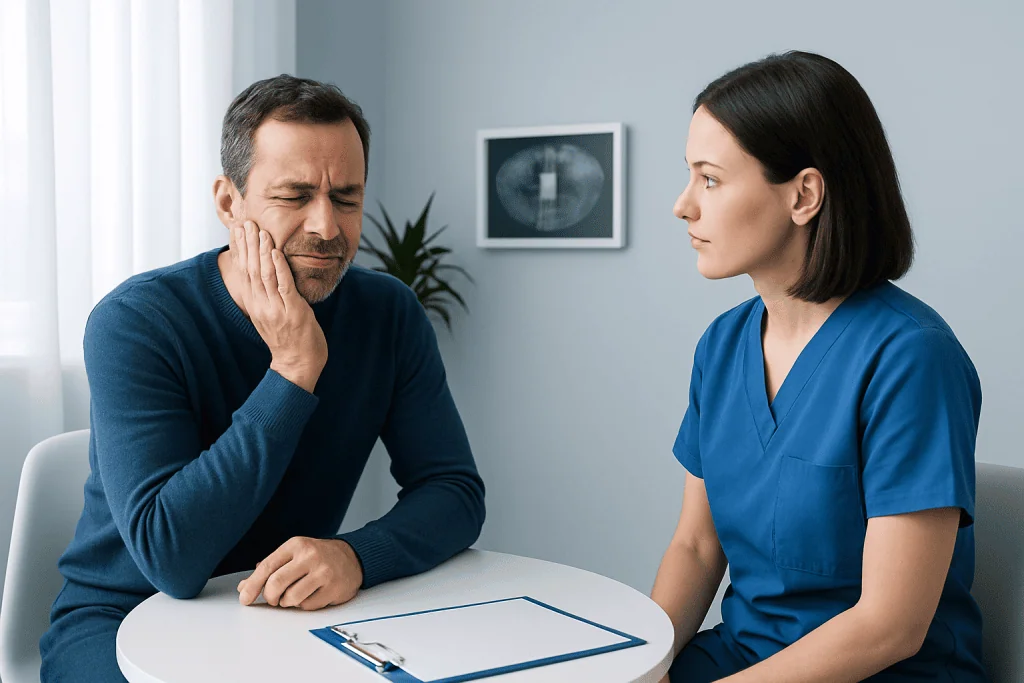
For a straightforward single placement, pain is usually most noticeable during the first 24–72 hours and should improve day by day from there. Many people find they need pain relief regularly for only the first few days, then occasionally, and feel largely back to normal within 7–10 days. Mild tenderness at the site, noticeable when brushing or pressing on the gum, can linger for a few weeks and is generally not a concern on its own.
Where the surgery was more extensive, the whole curve stretches. An implant placed alongside an extraction, a bone graft or a sinus procedure typically means more swelling and a longer tail of soreness, and multiple implants multiply the healing burden. This is why how long pain lasts after a dental implant is a question your own surgeon can answer more precisely than any article: they know exactly what was done.
Beneath the gum, healing continues for weeks to months while the implant fuses with the jawbone: a process called osseointegration. Importantly, this deeper phase should be quiet. Integration is not something you should feel as ongoing significant pain, and new symptoms during this period count as a change worth reporting to your treating team, even if you have already travelled home.
When is implant pain at its worst?
Usually on days two and three. This surprises patients who expect the day of surgery to be the hardest. On the day itself, local anaesthetic masks much of the discomfort; as it wears off, soreness arrives, but the body’s inflammatory response, the swelling, stiffness and aching, builds over the next 48 hours before it begins to resolve. A second or third day that feels worse than the first is therefore common and, on its own, not alarming. What matters is that day four is better than day three.
What worsening pain can mean: infection, failed integration and “rejection”
Patients often ask how to tell whether the body is “rejecting” the implant. The word is misleading. Modern implants are made of titanium or ceramic materials that the immune system does not reject in the way it can reject transplanted tissue; true allergy to these materials is uncommon. When an implant runs into trouble, the mechanisms are usually more mundane: infection at the site, inadequate integration with the bone, disturbed healing, excessive bite forces on the area, or inflammation of the tissue around the implant.
The signs that an implant is struggling overlap with the general warning signs already described: pain that persists or worsens instead of improving, swelling or redness that increases after the early peak, pus or discharge, a persistent bad taste or odour, gum recession around the implant, and, most tellingly, any movement of the implant or an attached component. A loose implant is never a normal finding at any stage. It is also not something to keep testing with your tongue or fingers, which only adds forces the healing bone does not need.
Two honest caveats. First, every one of these signs can have a more innocent explanation, from irritation around the sutures to a problem with a temporary restoration rather than the implant itself. Second, only an examination, sometimes with imaging, can distinguish between them. That is precisely why worsening symptoms belong in front of a dentist rather than in a search engine: the assessment that settles the question cannot be done remotely.
Can an implant hurt months or a year later?
An implant that has healed should not hurt. Pain that appears months or even years after placement most often points to inflammation of the tissues around the implant, gum inflammation in its milder form, or peri-implantitis when the supporting bone is involved, or to mechanical issues such as a loosened crown or screw, an unbalanced bite, or grinding at night. Sinus-related pressure can also mimic implant pain in the upper jaw. All of these are assessable and most are treatable, which is exactly why late pain is worth an examination rather than a wait-and-see approach. A well-integrated implant is silent; a painful one is telling you something.
How pain relief is planned after implant surgery
The safest answer to “what painkiller should I take?” is the least satisfying one: the medicine your own surgeon recommended or approved for you. Many patients are advised to use non-prescription options such as paracetamol (acetaminophen) or an anti-inflammatory, but the right choice, and whether an anti-inflammatory is appropriate at all, depends on your allergies, stomach and kidney health, bleeding risk, pregnancy status and the other medicines you take. Those are judgements your treating clinician makes with your full history in front of them.
A few general safety principles do apply to everyone. Follow the dose on the prescription or label exactly. Avoid combining products that contain the same active ingredient. Do not use leftover prescription painkillers or antibiotics from a previous illness. If antibiotics were prescribed for this procedure, take them exactly as directed for the full course, and tell the prescriber about any possible reaction such as rash, troublesome diarrhoea or breathing symptoms.
Non-drug measures carry real weight in the first days. A cool pack wrapped in cloth against the outside of the cheek, used in short intervals, can limit swelling, never ice directly on skin. Sleeping with your head slightly raised helps some patients. Rest, fluids and genuinely soft food reduce the mechanical load on the area; our guide to soft foods after dental implant surgery lists practical options, and the day-by-day diet guide shows how to progress. Ask your surgeon before using mouth rinses, herbal remedies or topical products near the wound, as instructions differ by procedure and closure type.
Self-care that makes the first days easier
Beyond medication, most of what helps is protective. Rest on the day of surgery. Chew away from the treated side and choose cool or lukewarm food rather than hot. Keep the site clean using exactly the brushing and rinsing approach your surgeon described, some patients are told to avoid the area entirely for a few days, others to clean it gently from early on, and the difference depends on the procedure, so no general rule replaces your own instructions.
Equally important is what to avoid. Smoking and vaping impair blood flow and healing around implants; the risks and sensible timelines are covered in our guide to smoking after dental implants. Alcohol, strenuous exercise and very hot drinks can all worsen bleeding or swelling in the early days. Avoid pulling your lip or cheek back repeatedly to inspect the site, prodding it with your tongue, or chewing anything hard over the implant area. For a fuller picture of what supports healing, see how to heal faster after dental implant surgery.
If symptoms concern you, keep a short written record: temperature, pain level, swelling, medicines taken and when. A pattern described accurately over three days tells a dental team far more than a single alarming moment, and it is especially valuable for international patients describing their recovery from another country.
Planning follow-up when treatment is in Turkey
If you are travelling for implant treatment, the follow-up plan deserves as much attention as the procedure. Before treatment, it is worth establishing who will carry out your review, how the dental team can be reached outside appointment hours, and what happens at each later stage of the implant journey. Before you leave, your discharge information should cover the procedure performed, the implant details, medicines prescribed, aftercare instructions and the planned milestones for the final restoration.
At Acibadem, international patient teams help coordinate appointments, interpreter support and the practical communication around a care plan, and dental treatment can be coordinated with other specialties when a patient’s wider health requires it. Your treating clinician remains the best source of advice on your individual recovery.
Timing the journey home matters too. Most patients can fly within a reasonable window after implant placement, but the right timing depends on the extent of surgery: our guide on flying after dental surgery and implants explains the considerations. Take your records with you: if a problem develops after you return, a local dentist can assess the site far sooner than a future trip could, and good documentation makes that assessment easier for everyone involved.
Step by step
- Read your discharge instructions first. They are tailored to your procedure and override general guidance, especially if you had an extraction, graft, sinus lift or multiple implants on the same day.
- Use only approved pain relief, exactly as directed. Follow the prescription or label, avoid doubling up on products with the same active ingredient, and complete any prescribed antibiotic course as instructed.
- Protect the surgical area. Soft foods, chewing on the other side, and no prodding, poking or testing the implant with tongue or fingers.
- Manage swelling early. A cloth-wrapped cool pack in short intervals during the first day or two, if included in your instructions, plus rest and no smoking, vaping, alcohol or strenuous exercise while healing.
- Track the trend, not the moment. Note pain, swelling, temperature and any discharge each day. Steady improvement after day three is the expected course; anything else is worth describing accurately to your treating team.
- Keep your follow-up plan and records to hand. Know when your review is, how the team can be reached, and which local dentist could examine the site if you have already travelled home.
Your checklist
- Keep your surgeon’s discharge instructions and contact details accessible.
- Take approved pain medicine only as directed.
- Use a cloth-wrapped cool pack externally in short intervals if advised.
- Eat soft foods and chew away from the implant area.
- Avoid smoking, vaping, alcohol and strenuous exercise during early healing.
- Clean your mouth exactly as your dental team instructed.
- Record temperature, pain level, swelling and medicines if symptoms concern you.
- Take your procedure records home and confirm your follow-up plan before travelling.
Key takeaways
- Pain after a dental implant normally peaks on days 1–3 and improves steadily within about a week; extensive surgery lengthens the timeline.
- The direction of travel matters more than the intensity: improving pain is the normal pattern, worsening or returning pain is not.
- “Rejection” is a misleading word, implant problems are usually infection, failed bone integration or bite-related, and only an examination can tell them apart.
- A loose implant is never normal at any stage, and testing it repeatedly only makes things worse.
- Pain relief is chosen by your treating surgeon based on your health and medicines, not by a general rule.
- International patients should leave with their records, a follow-up plan and a clear idea of when it is appropriate to fly.
Frequently asked questions
How long does pain last after a dental implant?
After a straightforward single placement, pain is typically strongest during the first 24–72 hours and eases over about a week, with most people substantially comfortable within 7–10 days. Mild tenderness at the site can linger for a few weeks. Extractions, grafts, sinus lifts and multiple implants extend this timeline, so your own surgeon’s estimate is more accurate than any general figure.
How much pain should I expect after a dental implant?
Most patients describe a dull ache and tenderness rather than sharp pain, alongside swelling, some bruising and jaw stiffness. Intensity varies with the extent of surgery, bone quality and individual pain thresholds, so comparisons with other people are rarely useful. Whatever the starting level, the defining feature of normal pain is that it improves day by day after the early peak.
When is dental implant pain the worst?
Usually on days two and three. Local anaesthetic masks much of the first day, and the inflammatory response, swelling, aching, stiffness, builds over roughly 48 hours before it starts to resolve. A second day that feels worse than the first is common and not alarming on its own; the reassuring sign is that day four is better than day three.
Can dental implants cause pain after a year?
A healed, integrated implant should be pain-free, so pain a year or more later is a signal worth examining, not a normal feature of implants. Common explanations include inflammation of the surrounding gum or bone (peri-implantitis), a loosened crown or screw, bite imbalance, night-time grinding, or sinus-related pressure with upper-jaw implants. Most causes can be identified with examination and imaging, and many are treatable.
How can you tell if your body is rejecting a dental implant?
True immune rejection of titanium or ceramic implants is not the usual problem; genuine material allergy is uncommon. What people call “rejection” is generally infection or a failure of the implant to integrate with the bone. The signs are pain that persists or worsens instead of improving, increasing swelling or redness, pus or a persistent bad taste, gum recession, and any movement of the implant. Only a clinical examination can confirm the cause.
What painkiller should I take after dental implant surgery?
The one your treating surgeon recommended or approved for you. Options such as paracetamol or anti-inflammatories are commonly used, but the right choice depends on your allergies, stomach and kidney health, bleeding risk, pregnancy status and other medicines, factors only your clinician can weigh. Follow the dose exactly, avoid combining products with the same active ingredient, and do not use leftover prescription medicines.
Is throbbing pain after a dental implant normal?
Some aching or throbbing in the first few days is common, especially as anaesthetic wears off and swelling peaks, and it should become less intense over time. Throbbing that begins or worsens after a period of improvement is a different pattern, particularly with fever, discharge, a bad taste or increasing swelling, and belongs in front of a dentist rather than a waiting game.
Is swelling normal after implant surgery?
Yes, within a pattern. Mild to moderate swelling typically develops over the first day or two, peaks around days two to three, then eases; bruising and jaw stiffness often accompany it. Swelling that increases rapidly, spreads toward the eye or down the neck, or occurs with fever or difficulty swallowing falls outside normal healing.
Add us as a Preferred Source to see more of our trusted health content across Google Search, AI Overviews and Discover.

Update history
- PublishedAugust 21, 2026
- Medical review approvedSeptember 13, 2026
- Last content updateSeptember 12, 2026
References1
- Dental Implants: Cleveland Clinic my.clevelandclinic.org
More Patient Guides

Septoplasty Recovery: Week by Week
Learn what to expect after deviated septum surgery: a week-by-week septoplasty recovery timeline, when it is usually safe to fly home, and…

Gallbladder Surgery Recovery: Week by Week
Learn what to expect after gallbladder surgery: a week-by-week recovery timeline, pain, diet, wound care, when it is safe to fly home…
Robotic Hysterectomy Recovery: Week by Week
Recovery from robotic hysterectomy week by week: pain, lifting, wounds, driving, flying home safely, warning signs and questions to ask before you…

Breast Reconstruction Recovery: Week by Week
DIEP flap recovery week by week: hospital stay, drains, pain, walking, showering, driving, when it is usually safe to fly home, and…