

Dental Implants in Turkey: Treatment Guide
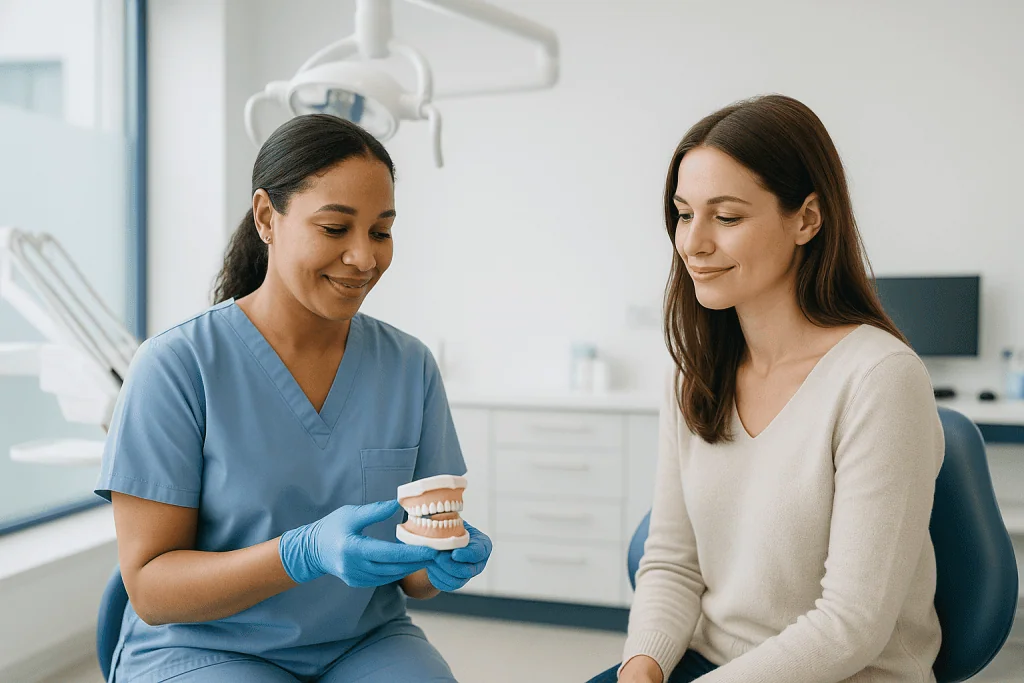
Dental implant treatment in Turkey follows the same clinical logic as anywhere else: assessment, surgery, a healing period of several months, then final teeth. Some patients complete treatment in one visit; many need two, because the implant must integrate with bone before final crowns are fitted. Your suitability, the number of trips and the final plan are confirmed only after in-person examination and imaging.
Wondering whether you can fly in, have implants placed and go home with new teeth? For some people that is possible. For many it is not, and knowing which group you fall into changes how you book flights, time off work and accommodation.
This guide explains how treatment with dental implants in Turkey is planned and performed: who tends to be suitable, what the surgery involves, how long healing genuinely takes, why most plans need two visits, and what actually determines the quote you receive. It is written to help you make decisions with your dental specialist, not instead of one. Whether you arrived here searching for dentist implants in Turkey or turkey teeth implants, the treatment behind those phrases is the same, and so are the questions worth asking before you travel.
At a glance
- Procedure type: Dental implant surgery with prosthetic restoration (crown, bridge or full-arch prosthesis)
- Purpose: To replace missing or non-restorable teeth with fixed or implant-supported teeth
- Anaesthesia: Usually local anaesthesia; sedation or general anaesthesia may be considered for selected patients
- Hospital stay: Usually outpatient; an overnight stay is not typically required
- Estimated recovery: Initial gum healing usually takes days to weeks; implant integration with bone takes several months
- Return to daily life: Often within 1–3 days for light activities, depending on the extent of surgery
- Final result timeline: Commonly several months, longer when bone grafting, sinus lift or staged treatment is needed
- Typical visits: One trip for simple cases in selected situations; two trips for most staged plans
- Suitable departments: Dentistry, Oral and Maxillofacial Surgery, Implantology, Prosthodontics
- International patient support: Medical coordination, interpreters, transfers, accommodation guidance and remote follow-up support
What is this treatment?
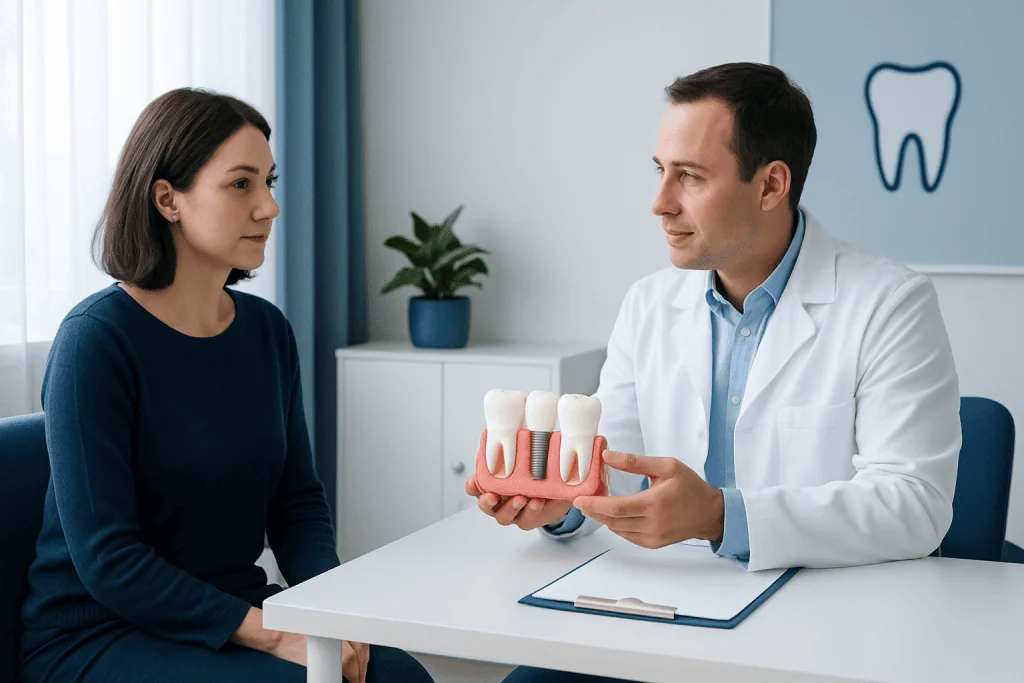
A dental implant is an artificial tooth root, usually made of a biocompatible material such as titanium, placed into the jawbone to support a crown, bridge or full-arch prosthesis. The visible tooth is only one part of the treatment. Underneath it sits a structural repair that depends on your gum health, bone volume, bite forces and general health, and on a healing process called osseointegration, in which bone grows around the implant and locks it in place. That process cannot be rushed, and it is the single biggest reason treatment with dental implants is usually staged.
For international patients, dental implants in Turkey typically begin with a remote review of photographs, X-rays and medical history before any travel is booked. That review produces a preliminary plan, not a final one. Final decisions about implant number, position, extractions, grafting and the type of final teeth are made after clinical examination and current imaging. It is worth being sceptical of any plan abroad that skips this step.
When is it recommended?
Implants may be recommended when you are missing one tooth, several teeth or a full arch, and you want a fixed or more stable replacement than a removable denture. They are also considered when teeth are too damaged by decay, fracture, gum disease or failed previous dentistry to be predictably saved.
Replacing lost teeth is not only cosmetic. Tooth loss can make chewing difficult, allow neighbouring teeth to drift, and reduce support for the lips and cheeks. In full-arch cases, implant-supported bridges or overdentures may offer more stability and comfort than conventional removable dentures.
Implants are not always the first or only answer. A natural tooth can sometimes be preserved with periodontal treatment, root canal treatment or a crown, and in some situations orthodontic treatment changes the picture entirely. A good dentist will explain the case for saving a tooth as clearly as the case for replacing it.
Who is a good candidate?
Broadly, you may be a candidate if your gums are healthy or treatable, your jawbone can support implants or can be augmented, and your general health allows oral surgery. Just as important: candidates need to be able to keep up daily oral hygiene and attend follow-up, because implants require lifelong maintenance in the same way natural teeth do.
Your dentist will weigh factors such as smoking, diabetes control, gum disease, bone quality, teeth grinding, current medications and previous jaw surgery or radiotherapy. Most of these do not automatically rule out treatment, but they can change the timing, the need for preparatory procedures and the type of prosthesis recommended. Medications that affect bone metabolism and blood thinners need particular attention during planning, which is why a complete medication list matters more than most patients expect.
Some people need preparatory care first, professional cleaning, periodontal treatment, extraction of infected teeth, bone grafting or a sinus lift. If you want to assess your own starting position, the dental implants in Turkey candidate checklist walks through the same factors a clinical team will look at.
Treatment options
Implant treatment is built around your specific gaps, not a standard menu:
- Single tooth: one implant supporting one crown.
- Several missing teeth: an implant-supported bridge, which can avoid placing an implant for every missing tooth.
- Full arch: a fixed full-arch bridge or an implant-retained overdenture, often part of a wider full-mouth rehabilitation plan when the bite and remaining teeth also need work.
Some patients are candidates for immediate placement, where the implant is inserted at the time of extraction, and in carefully selected cases a temporary tooth or bridge may be fitted soon after surgery, sometimes called immediate loading. This is not suitable for everyone; it depends on bone quality, implant stability at placement, bite forces and what the surgeon finds on the day. If a tooth has recently been removed, the timing of implant placement depends on how the socket heals and whether infection was present, and it is decided case by case rather than by a fixed rule.
Where bone volume is insufficient, options include bone grafting, guided bone regeneration or sinus lift, performed either at the same appointment or as a separate stage. Digital planning and surgical guides may be used to support precise positioning. Final restorations may be ceramic, zirconia or metal-ceramic; your dentist will recommend materials based on your bite, aesthetics and maintenance needs rather than a one-size answer.
Online evaluation before travel
Before you book anything, a remote evaluation helps the dental team estimate whether implants are likely to be appropriate. Useful materials include clear photographs of your smile and teeth, a panoramic X-ray, a CBCT scan if you have one, previous dental records and a summary of your medical history and medications. From these, the team can identify missing teeth, approximate bone levels, visible infection and the probable need for grafting or extractions.
Be clear about what remote review can and cannot do. It can produce a realistic preliminary plan and an honest estimate of how many trips you are likely to need. It cannot replace an in-person examination, and plans do change when the dentist finds active infection, less bone than the X-ray suggested, or gum disease that must be treated first. A team that tells you this upfront is being straight with you.
The online stage is also where realistic travel timing gets discussed, whether your case looks like one trip, two trips or a longer staged schedule. Getting this answer before you book flights is one of the most practical things you can do.
Before the treatment
Before surgery, the team reviews your medical history, medications, allergies and any previous reactions to anaesthesia. Conditions worth declaring in full include heart disease, diabetes, bleeding disorders, immune conditions, osteoporosis treatment, previous radiotherapy to the head or neck, and any recent infection. This information shapes a safe plan and, where needed, coordination with other physicians.
Your mouth is examined and imaging taken to assess bone height and width, sinus position, nerve location and tooth roots. Active gum disease or infection is usually treated before or alongside the implant plan. Extractions, grafting or temporary prosthetic work may be scheduled ahead of implant placement.
You will receive instructions covering eating, drinking, smoking, oral hygiene and medications before the procedure. If sedation or general anaesthesia is planned, fasting rules and escort requirements may apply. Decisions about any prescribed medication, including whether to pause anything before surgery, belong to your treating physician and dentist, not to a guide.
What happens during the treatment
On the day, the surgical area is numbed with local anaesthesia. Sedation or general anaesthesia may be considered for complex surgery, full-arch cases or significant anxiety, depending on medical suitability. The team confirms the plan with you before starting.
The dentist or oral surgeon opens the gum, prepares the implant site in the jawbone and places the implant in the planned position. If grafting or a sinus lift is needed, it may happen in the same appointment or as a separate stage. Sutures support healing, and a temporary tooth or denture may be adjusted if appropriate. Depending on the number of implants and any additional procedures, surgery commonly takes from under an hour to a few hours.
Then comes the part no clinic can shortcut: osseointegration. The implant needs months to fuse with bone. During that period you may wear a temporary restoration, usually with instructions to keep chewing pressure off the implant sites. Once the implant is stable and the tissues healthy, impressions or digital scans are taken to design the final crown, bridge or full-arch prosthesis.
Hospital stay, discharge and flying home
Implant surgery is usually outpatient: you leave the same day after monitoring, particularly if sedation was used. Before discharge you receive written guidance on hygiene, diet, medications, swelling control and what to avoid, plus a first control appointment for review and suture removal if needed.
Do not book a flight for the same evening as complex oral surgery. Travel clearance depends on the extent of the procedure and the dentist’s assessment of early healing: the practical detail, including cabin-pressure considerations after sinus lift, is covered in flying after dental surgery and dental implants. Building a day or two of flexibility around your return flight is cheap insurance.
Recovery timeline
Recovery varies with the number of implants, whether extractions or grafting were performed, your general health and how closely you follow aftercare instructions. Mild swelling, tenderness and bruising are common and usually improve gradually.
| Timeframe | What to expect |
|---|---|
| First 24 hours | Rest, mild oozing, swelling beginning; soft foods and careful cleaning as instructed. |
| First week | Swelling and tenderness usually reduce; control visit; soft diet continues. |
| Weeks 2–4 | Gum tissues continue healing; most patients feel comfortable, but chewing on implant sites stays limited. |
| Months 1–3+ | Implants integrate with bone; timing varies and is longer after grafting or sinus lift. |
| Final stage | Final crowns, bridges or full-arch prostheses fitted once implants and soft tissues are ready. |
Diet progresses in stages rather than on a fixed date: soft foods first, then a gradual return to normal textures as your dentist confirms healing is on track. If grafting, sinus lift or full-mouth rehabilitation is involved, the whole process may run across several months. Allowing enough healing time is better than rushing the final prosthesis onto an implant that is not ready.
What to avoid after treatment
Smoking and nicotine products reduce blood flow to healing tissues and are one of the most consistent threats to implant healing; the evidence and typical abstinence windows are explained in smoking after dental implants. Alcohol is best avoided in the early recovery period, particularly alongside prescribed medication.
For the first days, avoid hard, crunchy, spicy or very hot foods, chew on the opposite side where possible, and do not disturb the surgical area with your tongue, fingers or a hard toothbrush, clean it only as your dentist has shown you. Wear temporary dentures or bridges only as advised, so they do not load healing implants or grafted areas.
Postpone strenuous exercise and heavy lifting until your dentist confirms it is safe. If you grind your teeth, say so: a night guard or bite adjustment may be needed to protect implants and restorations. Long-term, the routine is unglamorous and essential, daily cleaning, professional maintenance and controlled forces on the implants.
Risks and possible complications
Implant treatment is widely used, but it is surgery and carries risk. Short-term issues can include bleeding, swelling, bruising, pain, infection, delayed healing or reactions to medication. Procedure-specific risks include failure of the implant to integrate, gum recession, bone loss around the implant, sinus-related symptoms in upper-jaw cases, altered sensation if a nerve is irritated, and damage to nearby teeth or restorations. In full-arch cases, temporary and final prostheses may need adjustments as your bite and tissues settle.
Long-term implant health depends heavily on hygiene, professional maintenance and lifestyle. Peri-implant inflammation can develop around implants, particularly in people with a history of gum disease, smoking or inconsistent cleaning. Results vary from person to person, and revision surgery, grafting, prosthetic repair or implant replacement is sometimes needed. Any clinic that presents implant surgery as carrying no risk at all is describing a procedure that does not exist.
Is it safe to have dental implants in Turkey?
This is the most-searched question about turkey dental implants, and the honest answer is that safety is not a property of a country. The surgical risks listed above are the same in Istanbul, London or Berlin. What varies, everywhere, is the quality of planning, the standards of the facility, the experience of the team and how aftercare is organised. Those factors differ between clinics within Turkey, just as they differ between clinics within any country.
What genuinely changes when you travel is distance from your surgical team after you go home. A well-organised plan accounts for this: enough in-country time for a first control visit, clear written aftercare instructions, a defined channel for remote follow-up, and honesty about which cases need two trips rather than one. The structural differences between treatment abroad and at home are laid out in dental implants in Turkey vs at home. Warning signs when comparing providers are the same worldwide: outcomes promised in advance, aggressively compressed timelines, and plans finalised without examination or current imaging.
Results and expectations
The aim is stable chewing, a natural-looking smile and comfortable daily function. A well-planned implant crown or bridge is designed to blend with your natural teeth in shape, colour and bite; in full-arch cases, the goal is stability and confidence compared with loose dentures.
Implant treatment is a biological process, not an instant result. Gums and bone must heal, and the implant must be stable before the final restoration is made. Temporary teeth can look good, but they are not as strong or refined as the final prosthesis. Outcomes vary with bone quality, gum condition, bite forces, hygiene, smoking and general health, and even careful plans sometimes need adjustment. A trustworthy team discusses these limits before treatment begins, not after.
Cost: what the quote actually depends on
Searches for dental implants turkey cost rarely return a figure you can rely on, because no honest number exists before your case is reviewed. What a quote depends on is knowable, and worth understanding before you compare clinics:
- The number of implants and whether extractions are needed
- Bone grafting or sinus lift requirements
- Anaesthesia type and imaging requirements
- Materials for final crowns or bridges, laboratory work and temporary teeth
- The number of appointments and visits your plan requires
The same logic applies to full mouth dental implants turkey price queries: a full-arch rehabilitation has a fundamentally different planning process from a single implant, and quotes only mean something once the plan behind them is defined. Ask any provider to state in writing what a quoted plan includes and excludes, flights, accommodation, treatment for unrelated dental problems and long-term maintenance at home usually sit outside it, and to explain what happens to the quote if in-person examination reveals additional needs. The broader mechanics are explained in what affects the final price of treatment in Turkey.
Why choose Acibadem
Choosing where to have implant treatment abroad is a significant decision. You need a team that looks past the visible tooth to your oral health, bone structure, bite, medical history and long-term maintenance needs. At Acibadem, implant cases can draw on dentists, oral and maxillofacial surgeons, prosthodontic specialists, radiology support and anaesthesiology teams within the Dental & Oral Health unit: a team-based approach that matters most in complex, medically sensitive and full-mouth cases.
International patient services support the practical side: remote document review, appointment scheduling, interpreters, transfers, accommodation guidance and remote follow-up after you return home. The aim is that you arrive informed, are treated on a realistic timeline, and leave knowing exactly what happens next.
Medical review and disclaimer
This guide has been reviewed by the Acibadem International medical team to support patients considering dental implants in Turkey. It provides general information about the treatment process, recovery and travel planning.
It does not replace a personal consultation, clinical examination, dental imaging or advice from a qualified physician or dentist. Implant suitability can only be confirmed after your oral health, jawbone, medical history and expectations are evaluated by a treating team. Every patient is different, plans may change after in-person assessment, and you should always follow the instructions of your treating dentist or physician.
Step by step
- Initial contact. You contact Acibadem International and share your main dental concerns, preferred travel period and questions.
- Record and photo submission. You send dental photographs, X-rays or CBCT scans if available, a medical history summary, medication list and details of previous dental work.
- Preliminary review. The dental team reviews your information to understand likely needs, possible options and whether further records are required.
- Treatment plan and quotation. You receive an initial plan describing expected stages, alternatives, the likely visit schedule and what the plan includes.
- Travel planning. Your coordinator helps arrange appointments, interpreter support, transfers and accommodation guidance around the treatment timeline.
- Arrival. On arrival in Turkey, the international patient team helps you reach the hospital or clinic and confirms your schedule.
- In-person consultation. Your dentist examines your mouth, reviews your bite, discusses expectations and confirms or revises the preliminary plan.
- Pre-operative tests. Updated imaging, medical checks and anaesthesia evaluation are performed as your case requires.
- Treatment. Implant placement, extractions, grafting, sinus lift or temporary prosthetic work is carried out according to the confirmed plan.
- Monitoring and discharge. Most procedures are outpatient; you are monitored after treatment and receive written instructions before leaving.
- First control. Your dentist checks healing, adjusts temporary teeth if needed and answers your recovery questions.
- Travel clearance. Before you fly home, the team confirms early recovery, explains next steps and advises when to return for the final prosthetic stage if needed.
- Remote follow-up. After returning home, you can share updates, photos or local dental reports so the team can provide guidance within the limits of remote follow-up.
Your checklist
- Valid passport and travel documents
- Clear dental photographs showing your smile, upper teeth, lower teeth and bite
- Recent panoramic X-ray or CBCT scan if available
- Medical history, including chronic conditions and previous hospitalisations
- Current medication list, including blood thinners and bone-related medications
- Known allergies, especially to medications, latex or anaesthesia
- Details of previous dental treatments, implants, crowns, bridges or dentures
- Information about smoking, teeth grinding or gum disease history
- Relevant blood tests or physician reports if you have a medical condition
- Your goals, concerns and preferred travel dates
Key takeaways
- Implants may suit you if you have missing teeth, adequate oral health and enough bone support, or bone that can be augmented.
- Treatment is usually staged: evaluation, any extractions or grafting, implant placement, months of healing, then final teeth.
- Most international patients need two visits to Turkey, because implants require time to integrate with the jawbone before final crowns are fitted.
- Quotes depend on implant number, grafting needs, anaesthesia, materials and appointments, no honest price exists before your case is reviewed.
- Safety depends on the clinic, the team and the plan, not on the country label; realistic timelines and in-person confirmation of the plan are the markers to look for.
Frequently asked questions
How much are dental implants in Turkey?
There is no reliable single figure, because the price depends on your case: the number of implants, whether extractions or bone grafting are needed, anaesthesia type, the materials used for final crowns or bridges, laboratory work and the number of visits. A meaningful quote is produced after your records are reviewed and may be updated after in-person examination. Treat any fixed price advertised before anyone has seen your mouth with caution.
Is it safe to have dental implants in Turkey?
Implant surgery carries the same clinical risks everywhere: infection, delayed healing, failure to integrate, and nerve or sinus-related issues. Safety depends on the quality of planning, the facility, the team’s experience and your own health and aftercare, factors that vary between clinics within every country, including Turkey. What changes when you travel is distance from your surgeon afterwards, which is why realistic timelines, a first control visit before flying and organised remote follow-up matter.
Is it worth getting dental implants in Turkey?
That depends on your case and priorities. Turkey has a large, experienced dental sector and treats many international patients, but travelling for implants means planning around healing periods, usually two trips, and follow-up at a distance. It tends to work well for patients who choose a properly staffed provider, accept a staged timeline and understand exactly what their plan includes. It works badly when treatment is compressed to fit a short holiday.
What is the best country to get dental implants done?
There is no objectively best country. Implant outcomes depend on the individual team, the facility, the planning process and your own healing and maintenance, all of which vary within countries as much as between them. A more useful question is whether a specific provider examines you before finalising the plan, gives realistic timelines, explains risks plainly and organises follow-up after you go home.
How many trips to Turkey will I need?
Most implant plans require two visits: one for surgery and a second, some months later, for the final crowns or bridges once the implants have integrated with bone. Selected simpler cases, or carefully chosen immediate-loading cases, may follow a different schedule. The likely number of trips is one of the most important things to confirm during remote evaluation, before you book anything.
Can I get teeth on the same day as implants?
Sometimes. Temporary teeth may be fitted soon after surgery in selected cases, particularly full-arch plans, but same-day teeth are temporary and not designed for strong chewing during healing. Suitability depends on bone quality, implant stability at placement and bite forces, and is confirmed during surgery rather than in advance.
How long is recovery after dental implants?
Initial gum healing typically improves within days to weeks, but the implant itself needs several months to integrate with the bone before final teeth can be fitted. Grafting or sinus lift extends the timeline. Diet, smoking habits and hygiene during this period all influence healing, and your dentist’s instructions take precedence over any general timeline.
Am I suitable for dental implants?
Suitability depends on gum health, jawbone volume, bite, general health, medications and your ability to maintain oral hygiene. Many patients with limited bone can still be treated after grafting or other preparatory work. A remote review of photographs and X-rays gives a preliminary answer; a final decision requires in-person examination and current imaging.
Add us as a Preferred Source to see more of our trusted health content across Google Search, AI Overviews and Discover.

Update history
- PublishedJune 9, 2026
- Medical review approvedSeptember 13, 2026
- Last content updateSeptember 12, 2026
References2
- Dental implants: MedlinePlus, U.S. National Library of Medicine medlineplus.gov
- Dental implants: Cleveland Clinic my.clevelandclinic.org
More Patient Guides

HoLEP in Turkey: How It Compares With TURP and What Recovery Involves
HoLEP in Turkey treats enlarged prostate tissue with laser enucleation; learn how it compares with TURP, recovery, travel and follow-up.
Porcelain Veneers in Turkey: Who Is Suitable and How Many Visits Are Needed?
Porcelain veneers in Turkey can enhance tooth shape and colour in two visits for suitable patients after a personalised dental assessment.

How to Prepare for a Sedation Procedure in Turkey
Prepare safely for a sedation procedure in Turkey with guidance on fasting, medicines, travel, recovery and follow-up.
Treatment Delays in Turkey: What Happens If Tests or Recovery Change Your Schedule
Treatment delays in Turkey can happen if tests or recovery change your plan. Learn how to manage appointments, travel, accommodation and follow-up.