Root Canal
Root canal treatment removes infected or inflamed tooth pulp, disinfects the canals, and seals the tooth to relieve pain and preserve the natural tooth.

Quick answer
A root canal is a dental procedure that removes infected or inflamed pulp, the soft tissue inside a tooth, then cleans, disinfects, fills and seals the internal canal system. It treats infection at its source so the natural tooth can be kept rather than extracted. It is performed under local anaesthesia, usually in one or two visits, and is typically followed by a filling or crown.
Root Canal Treatment: What It Is and Why It Saves Teeth
A root canal is a dental procedure that removes infected or inflamed pulp, the soft tissue of nerves, blood vessels and connective tissue inside a tooth, and then cleans, disinfects, fills and seals the internal canal system. Its purpose is to treat infection or inflammation at its source and preserve the natural tooth rather than extract it. It is usually recommended when deep decay, a crack, trauma or repeated dental work has damaged the pulp beyond the point where it can recover on its own.
The problem often announces itself gradually. A toothache may start as sensitivity to hot or cold drinks, a dull ache when biting, or swelling around the gum. For some people, the pain becomes sharp, constant, or severe enough to disturb sleep. When these symptoms appear, many patients worry that the tooth will need to be removed, that treatment will be uncomfortable, or that the infection may spread. These concerns are understandable, particularly if you are weighing up care in another country and want clear answers before committing to a plan.
It helps to be clear about what the treatment is for. A root canal is not simply a way to stop pain. Pain relief is one result, but the underlying goal is to remove the diseased tissue inside the tooth, control the infection, and restore the tooth so it can function comfortably under normal chewing forces. Keeping a natural tooth, when it is medically possible and structurally sound, helps maintain chewing ability, jawbone support, bite alignment and the appearance of your smile. Left untreated, pulp infection can progress to an abscess, bone loss around the tooth root, or the loss of the tooth altogether.
For international patients, the decision usually carries extra questions: How many visits will be needed? Can I fly home afterwards? Is treatment still appropriate if I already have swelling or an abscess? What if the tooth also needs a crown? Many people now plan root canal treatment in Turkey as part of a scheduled visit, and those planning questions deserve straight answers, which this page sets out section by section. At Acibadem, patients are assessed through a structured diagnostic pathway within the Dental & Oral Health unit, and the treatment plan is personalised according to the condition of the tooth, the extent of infection, overall oral health and travel timing.
What Is a Root Canal?
What is a root canal in practical terms? It is a procedure, also called endodontic therapy, used to treat disease inside the tooth rather than on its surface. The dentist or endodontic specialist removes the infected or inflamed pulp from the inner chamber and the root canals, cleans and disinfects the canal system, then fills and seals the space to prevent reinfection. Afterwards, the tooth is restored with a filling or, in many cases, a crown to protect it from fracture.
A little anatomy makes the logic clear. A tooth has a visible crown above the gum and one or more roots below it. Inside these structures runs a narrow canal system that houses the pulp. When bacteria reach this internal space, through deep decay, a crack, or a leaking old restoration, the body has limited ability to resolve the infection on its own, because the blood supply within the pulp may already be compromised. Antibiotics may reduce symptoms temporarily in some cases, but they usually cannot eliminate the source of infection inside the tooth. A root canal addresses the problem directly by removing the diseased tissue and sealing the canal space so bacteria have nowhere to live.
Modern treatment is performed with local anaesthesia and careful imaging. For most patients, the experience is similar in comfort to having a routine dental filling, although the appointment is longer and more detailed. The aim throughout is to relieve pain, remove infection and create a durable foundation for the final restoration. In some cases the whole treatment is completed in one visit. In others, especially when infection is extensive or drainage is needed, it takes two or more appointments. The number of visits depends on the tooth type, the canal anatomy, the severity of infection, any previous treatment history, and whether the final restoration can be placed immediately.
What is root filling?
Root filling is the sealing stage of the treatment: after the canals have been cleaned, shaped and dried, they are filled with a biocompatible material, most commonly a rubber-like substance called gutta-percha combined with a sealer, that occupies the canal space and blocks bacteria from re-entering. The root filling is not the same as the filling you can see in the top of the tooth; it sits inside the roots, below the gum line, and is only visible on an X-ray. A well-condensed root filling, matched by a well-sealed restoration above it, is one of the main factors in how long the treated tooth lasts.
What are RCTs in dentistry?
RCTs, a term people often search as rcts dental, is simply the abbreviation dentists use for root canal treatments. If a treatment plan or quotation lists “RCT” against a tooth number, it means that tooth has been assessed as needing root canal treatment. The abbreviation covers first-time treatment and, in some documents, retreatment of a tooth that has had a root canal before; if you are unsure which is meant, it is worth asking, because retreatment is usually more complex.
Who May Need Root Canal Treatment
Root canal treatment may be needed when the pulp of a tooth is irreversibly inflamed or infected. Some patients have obvious pain; others have few symptoms and only learn about the problem during a dental examination or on an X-ray. Symptoms can also come and go, which sometimes leads people to delay care. Be cautious about drawing comfort from a quiet spell: even when pain temporarily improves, infection inside the tooth may continue to progress.
Common signs that a tooth may need root canal treatment include:
- Persistent toothache or throbbing pain
- Pain when chewing or biting
- Lingering sensitivity to hot or cold temperatures
- Swelling of the gum, cheek or jaw near the affected tooth
- A small pimple-like bump on the gum, sometimes with drainage
- Darkening or discolouration of a tooth after trauma
- Deep decay or a large cavity close to the nerve
- A cracked or fractured tooth with pulp involvement
- Tenderness in the surrounding gum or bone
- A bad taste or odour associated with drainage from infection
Diagnosis begins with a detailed dental history and a clinical examination. The dentist assesses pain patterns, swelling, gum condition, tooth mobility, bite pressure and any visible decay or cracks. Sensibility tests may be used to evaluate how the tooth responds to temperature or gentle stimulation, and percussion and bite tests help identify inflammation around the root. None of these tests is decisive on its own; together, they build a picture of whether the pulp is still alive and whether the surrounding tissues are involved.
Imaging is essential. Standard digital X-rays show decay, bone changes around the root tip, previous fillings and the general shape of the canals. In selected cases, three-dimensional dental imaging may be recommended to evaluate complex root structures, hidden canals, root fractures, or infection that is not clearly visible on standard images. The goal is not just to confirm the diagnosis, but to determine whether the tooth can be predictably restored afterwards: a question that matters just as much as the infection itself.
It is worth stating plainly: not every painful tooth needs a root canal. Gum disease, sinus problems, jaw joint disorders, a filling that sits too high, tooth grinding, or reversible sensitivity can all cause similar symptoms. Accurate diagnosis is therefore the first real step of treatment. A sound treatment plan should answer three questions: Is the pulp damaged beyond recovery? Can the infection be controlled? And can the tooth be restored strongly enough to function long term? If the answer to any of these is no, the honest recommendation may be something other than a root canal.
Conditions a Root Canal Addresses
Root canal treatment is used for several conditions involving the pulp, the root canal system and the tissues around the root. The most common indication is deep tooth decay that has reached, or nearly reached, the pulp. When bacteria enter this space, inflammation may become irreversible and infection may develop. A tooth in this state will not repair itself, however long you wait.
Dental trauma is another frequent reason. A blow to the tooth can damage the blood supply to the pulp even if the tooth does not visibly break. Symptoms may occur immediately or months later: the tooth may darken, become painful, or show signs of infection around the root on an X-ray. This is why a tooth that took a knock years ago can suddenly need treatment now.
Cracked teeth may also require root canal treatment if the crack extends into the pulp. Cracks typically cause sharp pain on biting and sensitivity to temperature, and the prognosis depends on the direction and depth of the crack. If it extends below the gum or splits the root, extraction may be necessary; however, many cracked teeth can be saved when diagnosed and treated early. This is one of the clearest cases where acting sooner rather than later changes what is possible.
Large or repeated restorations can irritate the pulp too. A tooth that has had several dental fillings, a deep cavity, or extensive preparation for a crown may develop pulp inflammation. Sometimes this settles on its own; when symptoms persist or imaging shows infection, root canal treatment may be recommended instead of yet another surface repair.
Finally, root canal therapy is used for teeth with abscesses, chronic drainage, or bone changes around the root tip, and for teeth that have already been treated once. A tooth with a previous root canal may need retreatment if infection persists or returns, often because a canal was missed, the seal has leaked, or the restoration above has failed. Retreatment involves reopening the tooth, removing the previous filling material, cleaning the canals again and resealing them. If retreatment is not appropriate, endodontic surgery or extraction may be discussed instead. Each of these options has different implications for time, complexity and long-term planning, and a good clinician will set them out side by side rather than presenting only one.
The Root Canal Procedure Step by Step
The root canal procedure follows a consistent sequence, whatever the tooth: diagnose and plan, numb and isolate, access and clean, fill and seal, then restore. In outline, a typical treatment runs as follows:
- Examination, imaging and confirmation that the tooth is worth saving
- Local anaesthesia and isolation of the tooth with a dental dam
- A small access opening through the top of the tooth
- Removal of the diseased pulp and shaping of the canals
- Disinfection of the canal system with irrigating solutions
- Filling and sealing of the canals (the root filling)
- A temporary or permanent restoration in the access opening
- A final filling or crown, immediately or at a follow-up visit
Preparation and Treatment Planning
Before treatment, the dentist reviews your symptoms, medical history, medications, allergies and imaging. For international patients, it helps to bring any recent X-rays, prior dental records and details of previous treatment on the tooth in question: these can shorten the diagnostic stage considerably. Heart disease, immune system conditions, uncontrolled diabetes, blood thinners and medications that affect bone metabolism can all influence how the appointment is planned, so they form part of the pre-treatment review.
The examination also determines whether the tooth is restorable. A tooth with severe decay below the gum line, advanced periodontal disease, a vertical root fracture, or too little remaining structure may not be a good candidate for root canal therapy at all. In such cases, the dentist will explain the alternatives, which may include extraction and replacement with an implant, a bridge or a removable prosthesis. This assessment protects you from paying for a treatment that cannot succeed.
If root canal treatment is appropriate, local anaesthesia is used to numb the area. For anxious patients, the dental team may discuss supportive measures to improve comfort. The treatment field is usually isolated with a protective rubber sheet called a dental dam, which keeps the tooth dry, prevents saliva from entering the canal system, and stops small instruments or irrigating solutions from contacting the mouth.
Accessing and Cleaning the Canals
The dentist creates a small opening in the top of the tooth to reach the pulp chamber. Diseased pulp tissue is removed from the chamber and root canals, and the canals are shaped with fine instruments so they can be thoroughly cleaned and filled. Because canals can be narrow, curved or complex, magnification and precise measurement matter here more than anywhere else in the procedure.
Modern treatment draws on several technologies: digital imaging, electronic devices that determine canal length, magnification systems, and rotary or reciprocating instruments designed to shape canals efficiently and consistently. Irrigation solutions disinfect the canals and flush out debris. In more complex cases, three-dimensional imaging may help identify extra canals, unusual anatomy or infection around the root. Some clinics also use laser-supported disinfection techniques in selected cases; you can read more about how these work on our laser assisted dental procedures page.
The cleaning stage is arguably the most important part of the whole procedure. Root canal systems are not simple tubes; they can have branches, curves and small accessory canals that instruments alone cannot reach. The objective is to reduce bacterial contamination as far as possible and create a canal shape that can be sealed effectively. The quality of this stage is largely invisible to the patient, which is exactly why the clinic’s diagnostic and technical standards matter.
Filling and Sealing the Tooth
Once the canals are cleaned and shaped, they are dried and filled with a biocompatible material, placed to seal the canal space and reduce the chance of bacteria re-entering. A temporary or permanent filling then closes the access opening in the top of the tooth.
If the tooth has active infection, significant drainage or persistent symptoms, the dentist may place medication inside the canals and schedule a second appointment before the final filling. This staged approach is not a delay for its own sake; it allows extra disinfection where a single visit would not be enough. Antibiotics are not routinely required for every root canal, but they may be prescribed by the treating dentist if there is spreading infection, fever or a specific medical risk factor.
Restoration After Root Canal Treatment
A root canal-treated tooth needs an appropriate final restoration, and this step is not optional. Back teeth, such as molars and premolars, often require a crown because they bear heavy chewing forces and may have lost significant structure to decay or previous fillings; a crown covers and protects the tooth, reducing the risk of fracture. Front teeth can sometimes be restored with a filling alone, depending on how much structure remains and on the cosmetic requirements, in visible areas, an aesthetic filling may be part of the plan.
Timing matters too. A tooth that has had root canal therapy but is left with only a temporary seal for too long is vulnerable to leakage and fracture, which can undo the treatment. Your dentist will advise whether the permanent restoration should be completed immediately, within days, or after symptoms have fully settled: a point of real practical importance if you are travelling for care and need to fit the restoration into your stay.
How long does a root canal take?
How long does a root canal take? A single appointment usually lasts about one to two hours, depending on the tooth and the complexity of its anatomy. Front teeth tend to have simpler canal systems and sit at the shorter end; molars can have several canals and take longer. Retreatment cases and teeth with unusual anatomy can run longer still, or require an additional visit. Across a whole course of care, straightforward cases are often completed in one visit, while infected or complex teeth may need two or more appointments spaced days apart, plus, where a crown is planned, the time to prepare and fit it.
Do root canals hurt?
Most patients find that a root canal performed under effective local anaesthesia feels similar to having a filling placed, pressure and vibration rather than pain, and that the treatment relieves the toothache that brought them in, because the inflamed tissue causing the pain is removed. That said, honesty requires two caveats. First, a tooth with acute infection can be harder to numb completely, which is one reason a dentist may stage treatment or manage the infection first. Second, mild soreness when chewing is common for a few days afterwards, particularly if there was infection around the root before treatment. Fear of pain is the main reason people delay this procedure, and delay generally makes the situation harder to treat, not easier.
Recovery After Root Canal Treatment
Recovery varies with the severity of infection, the tooth treated and whether a crown or other restoration is still to come, but most patients follow a broadly similar pattern.
| Time Period | What Patients Can Expect |
|---|---|
| Day 1 | Numbness gradually wears off over several hours. Mild tenderness is common. Avoid chewing until sensation returns, and protect the treated tooth. |
| First Week | Soreness with biting usually improves. If a temporary filling was placed, avoid hard or sticky foods on that side. |
| First Month | The tooth should become increasingly comfortable. A permanent filling or crown may be completed or checked, depending on the treatment plan. |
| Longer Term | Routine dental care, good oral hygiene and periodic X-rays help monitor healing around the root and protect the restoration. |
Most patients return to normal daily activities the same day or the next day. Any post-treatment discomfort is usually managed with medication recommended by the treating dentist. It is generally advisable to avoid chewing hard foods on the treated tooth until the final restoration is in place, since a tooth between root filling and crown is at its most fragile.
A few situations are worth knowing about in advance. Increased swelling, severe pain, a bite that feels too high or a lost temporary filling are all issues that can usually be resolved with a timely adjustment or follow-up appointment rather than being left to settle on their own. For patients flying home shortly after treatment, root canal therapy is far less restrictive than surgical dental work, but pressure changes can briefly highlight a tooth that is still settling; our guide on flying after dental surgery covers the general principles of timing air travel around dental treatment.
Why Acting Early Matters
Dental pulp infection does not usually resolve permanently without treatment. Pain may fluctuate, sometimes disappearing for weeks, but the underlying condition can continue to damage the tooth and the surrounding bone. Acting early makes treatment simpler, improves comfort and increases the chance of preserving the natural tooth. Waiting rarely improves any of those three things.
When a root canal is delayed, infection may spread beyond the root tip into the jawbone and surrounding soft tissues. An abscess can cause swelling, fever, difficulty opening the mouth or general illness. In rare cases, dental infections spread to deeper facial or neck spaces and require urgent medical care. Patients with diabetes, immune suppression, heart conditions or other systemic illnesses may face additional risks if a dental infection is not controlled, which is another reason these conditions belong in the pre-treatment conversation.
Delay also affects whether the tooth remains restorable at all. A cavity may enlarge, a crack may extend, or supporting bone may be lost. If too much tooth structure is destroyed, root canal treatment alone cannot save the tooth, however well it is performed. Early assessment establishes the least invasive effective option before the situation becomes more complex, and more expensive to resolve.
For patients planning travel, early evaluation carries a further practical benefit. It leaves enough time for diagnosis, treatment, follow-up and the final restoration within a single trip, and it reduces the likelihood of sudden dental pain during a flight or while you are away from your usual dentist. A tooth that is already grumbling before departure is a candidate for assessment before you book, not after you land.
Benefits of Root Canal Treatment
When the tooth is suitable for treatment, root canal therapy offers a set of functional and health-related benefits that extraction cannot match.
| Benefit | What It Means for You |
|---|---|
| Relief from infection-related pain | Removing inflamed or infected pulp can reduce the source of toothache, biting pain and lingering temperature sensitivity. |
| Preservation of the natural tooth | Keeping your own tooth helps maintain chewing function, bite stability and natural appearance when the tooth can be restored properly. |
| Prevention of infection progression | Cleaning and sealing the canals helps control infection and may prevent worsening abscess, swelling or bone damage around the root. |
| Support for long-term dental function | With an appropriate final restoration, the tooth can often continue to function for many years under normal chewing forces. |
| A conservative alternative to extraction | Root canal treatment may avoid tooth removal and the additional procedures needed to replace a missing tooth. |
What Influences the Long-Term Outcome
Root canal treatment has a strong record of helping patients keep natural teeth, particularly when the tooth is diagnosed accurately, disinfected thoroughly, sealed well and restored properly. Outcomes vary from patient to patient, and no dental treatment removes every future risk. A good result depends on both the biology of healing and the quality of the final restoration, two halves of the same job.
The condition of the tooth before treatment is a major factor. Teeth treated before infection spreads extensively tend to heal more predictably than teeth with large abscesses, severe bone loss or complex anatomy. Even so, teeth with abscesses can often be treated successfully when the tooth remains structurally restorable, so an abscess alone is not a reason to assume extraction is inevitable.
The amount of remaining tooth structure matters just as much. A root canal removes diseased tissue from inside the tooth, but it does not strengthen a weakened tooth by itself. If decay, cracks or old fillings have hollowed out the tooth, a crown or other protective restoration is often essential; a well-fitted restoration prevents bacterial leakage from above and fracture from chewing forces. Skipping or delaying the crown is one of the most common reasons a technically good root canal fails.
Canal anatomy adds its own complexity. Some teeth have curved roots, narrow or calcified canals, or extra canals that are difficult to locate. Magnification, digital imaging and careful instrumentation help the dentist manage these challenges, and in selected cases referral to an endodontic specialist is the sensible route rather than a fallback.
Your own health and habits play a role too. Gum disease, smoking, uncontrolled diabetes, clenching or grinding, and poor plaque control can all affect healing and long-term tooth survival. If you grind your teeth, a protective night guard may be advised after restoration; if gum disease is present, periodontal treatment may need to run alongside the endodontic plan. Finally, follow-up is part of success: some teeth feel normal within days, but healing of the bone around the root can take months and is monitored with imaging at routine checkups.
What happens 10 years after a root canal?
A properly treated and properly restored tooth can still be functioning normally a decade later, many are, but it is not maintenance-free. Over the years, the main risks are the same ones that threaten any heavily restored tooth: leakage or fracture of the crown or filling, new decay at the margins, gum disease around the tooth, and, less commonly, reinfection of the canal system. Because a root-treated tooth has no living pulp, it will not warn you with the sharp pain an untreated tooth produces, which is precisely why periodic X-rays matter: they can show changes around the root before you feel anything. If reinfection does occur years later, options typically include retreatment, endodontic surgery or, where the tooth is no longer restorable, extraction and replacement. In short, the ten-year outlook is largely determined by two things you influence directly: the quality of the final restoration and how consistently the tooth is checked.
Root Canal Cost: What Shapes the Price
Root canal cost is not a single number, and any page that quotes one figure for every patient is simplifying to the point of being misleading. The price of treatment reflects a set of variables that differ from tooth to tooth: which tooth is involved (a molar with several canals takes more time and material than a front tooth), whether this is a first-time treatment or a retreatment, how severe the infection is, what imaging is needed, and, often the largest single component, what final restoration the tooth requires afterwards. A crown, where needed, is usually priced separately from the root canal itself, so two quotations that look very different may simply be describing different scopes of work.
How much does a root canal cost?
There is no honest universal answer: the cost depends on the individual tooth and can only be quoted reliably after an examination and imaging. What you can do before travelling is make sure any quotation you receive is complete and comparable. Ask whether it covers the consultation and X-rays, the root canal itself, any medicated dressing visits, the final filling or crown, and follow-up checks. Ask whether the figure would change if the tooth turns out to need retreatment rather than first-time treatment, or if additional canals are found. A quotation that itemises these elements tells you far more than a headline number. For a broader framework on evaluating quotations and planning a treatment budget, see our guide on how much treatment in Turkey costs.
Why do root canal quotes vary so much?
Because the quotes are often describing different things. One clinic may quote the endodontic procedure alone; another may bundle the crown, imaging and follow-up. A single-canal front tooth and a retreatment on a molar are different undertakings that happen to share a name. Specialist involvement, the technology used, and whether treatment is staged over multiple visits all move the figure. If you have already been quoted for treatment at home and are told a tooth cannot be saved, an independent review of your records and imaging can clarify whether root canal treatment, retreatment or extraction is genuinely the right call before any irreversible step is taken.
Coming to Turkey for Root Canal Treatment
International patients coming to Turkey for root canal treatment usually want to know three things: whether the treatment can be completed within their stay, what the care pathway looks like from arrival to departure, and how follow-up works once they are home. All three can be planned in advance, and the planning is worth doing before flights are booked rather than after.
A typical pathway begins with a review of your existing records, recent X-rays, prior treatment notes, and a description of your symptoms, followed by an in-person examination and imaging on arrival. If the diagnosis is confirmed and the tooth is restorable, treatment can often begin at the same visit. Straightforward cases may be completed in a single appointment; teeth with active infection, drainage or complex anatomy may need two or more appointments spaced across your stay, sometimes with medication placed in the canals between visits. If a crown is required, the team will explain whether it can be prepared and fitted within the same visit period or whether the final restoration is better completed after healing, either on a return visit or with your dentist at home. Where follow-up continues at home, records, imaging and written recommendations can be prepared for your local dentist so continuity of care does not depend on memory.
Build slack into the schedule. A tooth that turns out to be more complex than the initial X-ray suggested, or an infection that needs an extra disinfection visit, can add days to a plan. Arriving with a fixed departure date and no margin forces choices, rushing the final restoration or leaving a temporary seal in place longer than ideal: that work against the treatment. A stay planned around the more complex scenario, with the simpler one as a bonus, is the safer structure.
Is it a good idea to travel to Turkey for dental work?
It can be a reasonable choice, provided you approach it as a medical decision rather than a shopping decision. The factors that determine whether it makes sense are largely about you and the treatment, not the destination: how complex your case is, whether it can realistically be completed within the time you have, what happens if you need an unplanned extra visit, and how follow-up will be handled once you are home. Root canal treatment travels comparatively well: it is completed in a small number of visits, recovery is quick, and flying afterwards is rarely a problem, but retreatments, teeth needing crowns, and cases with active infection need more calendar time than a first glance suggests. Ask any provider, including us, the same hard questions: who exactly will treat you, what imaging will be done before irreversible steps are taken, what the plan is if findings change mid-treatment, and how complications after you fly home would be managed. The quality of the answers tells you most of what you need to know.
How Acibadem Approaches Root Canal Treatment for International Patients
Patients seeking dental care abroad usually want more than an appointment slot; they want a reliable diagnostic process, clear communication, and coordinated care if multiple dental or medical needs are involved. Acibadem’s approach is built around careful evaluation, evidence-based treatment planning, and the practical support services patients travelling from another country actually use.
The diagnostic pathway combines clinical examination with digital imaging, and, where standard images are not sufficient, three-dimensional dental imaging to evaluate root shape, hidden canals or bone changes. Magnification helps locate small canals and assess cracks; electronic canal measurement tools establish working length; modern shaping and irrigation systems support thorough cleaning. None of this technology replaces clinical judgement, but it improves the information available to the dentist and makes treatment more predictable. Sterilisation protocols and structured treatment planning apply across the dental service, with the aim of determining not only whether a root canal is possible, but whether it is the right treatment for that particular tooth and that particular patient.
Complex cases draw on more than one specialty. A cracked tooth may need input from both restorative dentistry and endodontics. A patient with gum disease may need periodontal evaluation before the final restoration. A patient for whom extraction is genuinely the better option may need implant planning or prosthetic rehabilitation instead. Where broader health issues are present, cardiac conditions, diabetes, medications that affect treatment, medical consultation can be coordinated within the hospital environment rather than handled by referral letters between separate providers.
Communication is treated as part of the clinical work, not an add-on. Acibadem International provides assistance in more than 20 languages, covering appointment coordination, medical documentation, travel-related questions and follow-up instructions. This matters in endodontics specifically, because patients often need to weigh several options against each other, first-time treatment, retreatment, crown placement, extraction, implant replacement, or staged care, and a decision made through a language barrier is a decision made on incomplete information. Some patients arrive with acute pain and need the fastest route to relief; others arrive with a recommendation for extraction from home and want to know whether the tooth can in fact be kept. In both situations, the emphasis is the same: an accurate diagnosis and a realistic explanation of what can and cannot be achieved.
A Careful Path Toward Comfort and Tooth Preservation
Root canal treatment is an effective way to relieve dental pain, control infection and preserve a natural tooth that might otherwise be lost. The decision rests on three foundations: a thorough examination, appropriate imaging, and an honest assessment of the tooth’s long-term restorability. When those foundations are in place, and when treatment is followed by a suitable final restoration and routine checkups, many patients return to normal chewing and daily life quickly, keeping a tooth that would once have been extracted without a second thought. The procedure has a reputation it no longer deserves; for most people, the hardest part is the toothache that came before it.
Preparation
- A dental examination and X-rays are usually performed to assess the tooth roots and infection. Tell your dentist about medications, allergies, pregnancy, or medical conditions. Eat normally unless your dentist advises otherwise, as local anesthesia is typically used.
Aftercare
- Mild tenderness is common for a few days and can usually be managed with prescribed or recommended pain relief. Avoid chewing hard foods on the treated tooth until the final restoration or crown is placed. Maintain good oral hygiene and attend follow-up visits to confirm healing.
Frequently Asked Questions
What affects the cost of a root canal?
The main factors are the tooth type, canal anatomy, level of infection, need for advanced imaging, whether an endodontic specialist is required, and whether a final filling or crown is needed. A personalised quote is prepared after clinical assessment.
How can I get a personalised quote from Acibadem?
You can request a free consultation and share dental records, symptoms, photographs if available, and recent X-rays. The international patient team can guide you on the information needed for a treatment plan and cost estimate.
Is the crown included in a root canal package?
Not always. Root canal treatment and the final restoration may be planned separately because the need for a filling, onlay, or crown depends on how much healthy tooth structure remains.
Why might a molar root canal cost more than a front tooth root canal?
Molars usually have more complex root canal anatomy and may require more time, imaging, and specialist techniques. The final restoration may also be more extensive because molars carry strong chewing forces.
Can international patients complete treatment during one visit to Turkey?
Some cases can be planned within a short stay, while complex infections, retreatments, or crown work may require staged appointments. Your dentist will advise the safest schedule after examination and imaging.
Medically reviewed by the Acıbadem International Medical Board September 14, 2026
See our medical review board →
Update history
- PublishedJune 8, 2026
- Medical review approvedSeptember 14, 2026
- Last content updateSeptember 14, 2026
References3
- Root canal treatment nhs.uk
- Root canal medlineplus.gov
- Root Canal my.clevelandclinic.org
Planning this treatment in Turkey
Our English guides for international patients: costs, timelines, safety and travel.
Trusted care for international patients
Root canal costsledger-based guide ranges, or browse the full Turkey Medical Price Index.
From the Acibadem Blog
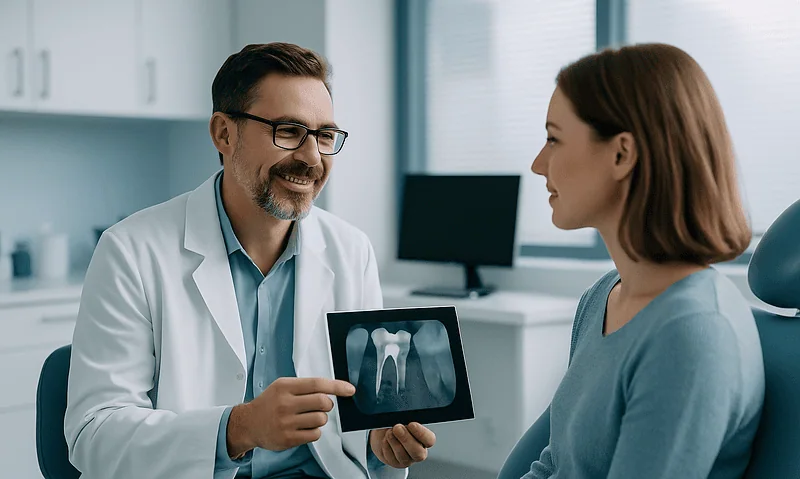
What a Root Canal X-Ray Shows: Infection at the Root Tip and How It Shapes the Plan
A root canal X-ray shows the tooth's inner canals, the bone around the root tip, and any dark area (a radiolucency) where infection has…

Root Canal Recovery: What the First Days Feel Like and When to Check In
Most people recover from a root canal within a few days. Mild soreness or tenderness when biting typically peaks in the first 24 to…
What Happens During a Root Canal? Cleaning, Shaping and Sealing the Canals Step by Step
A root canal procedure treats infection or inflammation inside a tooth by removing the soft tissue in its center, cleaning and shaping the narrow…

Root Canal and Crown Cost: The Combined Bill, Explained Honestly
A root canal and crown done together typically fall within our guide range of EUR 300–850 for international patients treated in Turkey, compared with…

Do Root Canals Make You Sick? Old Myths About Treated Teeth, Corrected
No. Current evidence does not show that a properly treated root canal tooth causes cancer, heart disease, arthritis or other illnesses. The idea traces…
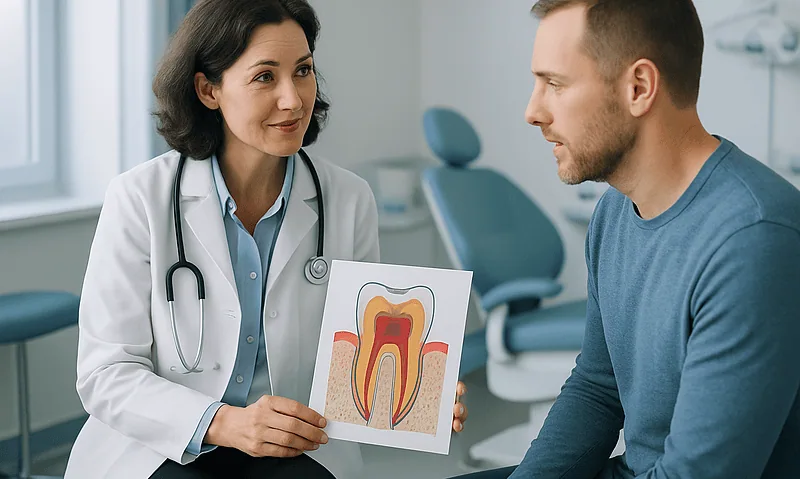
Infected Tooth Pulp Explained: How Pulpitis Progresses and When a Root Canal Is Planned
Infected tooth pulp means bacteria have reached the soft tissue inside a tooth, usually through deep decay or a crack. Early inflammation, called reversible…