

Root Canal Turkey: When a Tooth Can Be Saved, Crowns and Cost
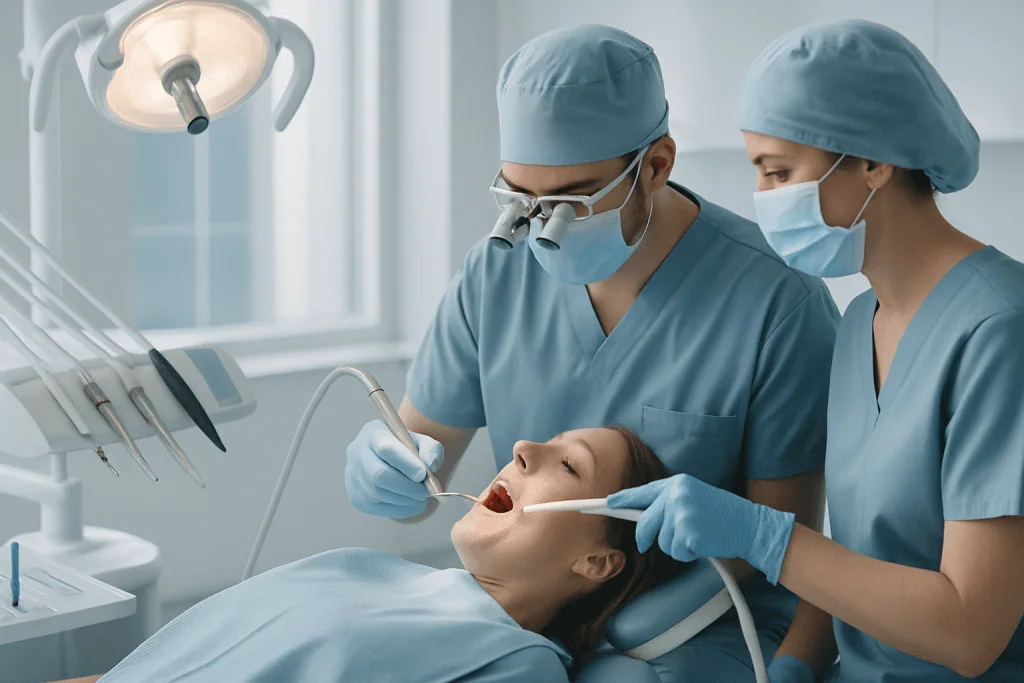
A root canal in Turkey is, in clinical terms, the same procedure you would be offered by an endodontist or general dentist in the UK: the infected or inflamed pulp inside the tooth is removed, the root canals are cleaned and disinfected, and the tooth is sealed so that pain settles and the natural tooth is preserved. What differs is the setting and the pathway. Patients travelling from London, Manchester or Dublin can have the assessment, the treatment itself and, where a tooth needs it, a protective crown, arranged within a hospital dental department rather than a stand-alone clinic, with a coordinated timetable that fits a short stay in Istanbul.
This page explains who is a candidate, how root canal treatment is performed, what a root canal and crown involves, how many visits to expect, how recovery unfolds, and how the UK and Turkish pathways compare. It also sets out the safety questions that matter when any dental work is done away from home, and how to arrange follow-up with your own dentist afterwards. Cost is addressed through the verified price band below rather than through figures in the text.
What root canal treatment is and who it suits
Every tooth contains soft tissue, the pulp, made up of nerves and blood vessels. When deep decay, a crack, repeated dental work or trauma allows bacteria to reach the pulp, it becomes inflamed and then infected. The result is often toothache that lingers, sensitivity to heat, tenderness when biting, swelling of the gum or an abscess. Left untreated, the infection can spread into the bone around the root.
Root canal treatment, also called endodontic treatment, removes the damaged pulp, disinfects and shapes the canals inside the root, and seals them with a filling material. The tooth is then restored, frequently with a crown if a large part of it has been lost. The aim is straightforward: relieve pain and keep the natural tooth, which generally remains the preferred option over extraction and replacement.
Who is usually a candidate
- Adults with a tooth whose pulp is irreversibly inflamed or infected, confirmed on examination and X-ray.
- Patients whose tooth has enough sound structure and healthy supporting bone to be worth saving.
- Those with a previously treated tooth where infection has returned and re-treatment is judged worthwhile.
Who may not be suitable
- Teeth that are fractured through the root or so broken down that they cannot be restored, where extraction may be advised instead.
- Teeth with severe bone loss from gum disease, where long-term stability is doubtful.
- Patients with uncontrolled medical conditions or medication issues that need to be addressed first; your dentist will want to know about heart conditions, diabetes, blood thinners, allergies and pregnancy.
The decision to save or remove a tooth is a clinical judgement made after examining you and your X-rays, and the dentist should explain the reasoning either way.
Why UK and US patients travel to Türkiye for root canal treatment
Patients generally give three reasons for looking abroad for root canal treatment: access, timing and the ability to combine treatment with a restoration in one trip. In the UK, NHS dental appointments can be hard to secure and specialist endodontic referrals may take weeks, while a painful tooth does not wait. In the US, dental cover is often limited and root canal plus crown is commonly a self-pay expense.
Istanbul is around 4 hours from London by air and around 10 hours from New York, so a treatment visit can be planned as a short trip rather than a long absence. Because appointments are scheduled when you book, there is no waiting list: assessment, treatment and crown work are timetabled around your stay.
Hospital dentistry rather than a stand-alone clinic
Acıbadem’s dental departments sit inside its hospitals. The network includes 7 JCI-accredited hospitals within a group of more than 20 hospitals and more than 3,300 physicians. For a routine root canal this may seem more infrastructure than the procedure needs, and often it is. Its value lies in the exceptions: a patient with a complex medical history, an abscess that needs urgent management, an allergy or reaction to medication, or a case where hospital imaging helps clarify an unclear diagnosis. Anaesthesia, intensive care, radiology and laboratory services are on the same site, under the same governance and infection-control standards as the rest of the hospital.
The group has long experience with international patients, including English-speaking coordinators, records in English, and a pathway designed around visitors who are in the city for a defined period and will continue care elsewhere.
How root canal treatment with Acıbadem works, step by step
The pathway is designed so that most of the thinking happens before you fly, and the time in Istanbul is used for treatment rather than for uncertainty.
- Remote medical review. You send recent dental X-rays if you have them, a description of your symptoms, and a summary of your medical history and medications. A dentist reviews the material and gives a preliminary view on whether the tooth appears saveable and whether a crown is likely to be needed.
- Personal plan. You receive a written outline of the proposed treatment, the expected number of sessions, whether a crown is included, and how long you should plan to stay. A personal quotation follows this free review; the price band below gives the general context.
- Arrival and coordinator. A patient coordinator confirms your appointments, explains where to go and remains your point of contact throughout, including for any questions in the evening or at the weekend.
- Consultation and pre-operative tests. The dentist examines the tooth and surrounding gum, takes fresh X-rays to assess the roots and any infection, and confirms or adjusts the plan with you. Tell the dentist about all medications, allergies, pregnancy or medical conditions.
- The treatment. Root canal treatment is performed under local anaesthesia in one or more sessions of 30 to 90 minutes. If a crown is planned, the tooth is prepared and the crown made and fitted within the same stay where the clinical situation allows.
- Recovery in Istanbul. You return to your hotel the same day. Mild tenderness for a few days is expected and manageable with the pain relief recommended.
- Follow-up after returning home. You leave with a written report, copies of your X-rays and clear instructions on what to watch for. Follow-up visits, whether with your own dentist or remotely with the treating team, are arranged before you travel home.
The procedure: technique, anaesthesia, duration and hospital stay
Root canal treatment is a non-surgical procedure. There is no incision in the gum; the dentist works through the top of the tooth to reach the pulp chamber and canals.
Anaesthesia
Local anaesthesia is used. The area around the tooth is numbed so that the treatment itself is not painful, while you remain awake and able to communicate. Because local anaesthesia is typical, you can eat normally beforehand unless your dentist advises otherwise.
What happens during a session
- The tooth is isolated to keep it dry and clean.
- An opening is made to reach the pulp.
- The infected or inflamed pulp is removed from the chamber and canals.
- The canals are cleaned, shaped and disinfected.
- The canals are sealed with a filling material to prevent re-infection.
- The tooth is closed with a temporary or permanent restoration.
Duration and number of visits
Each session takes 30 to 90 minutes depending on the tooth, the number of canals and the extent of infection. Front teeth usually have fewer canals than molars, so treatment times vary. Some teeth are completed in a single session; others need more than one, for example when an infection is being allowed to settle before the canals are finally sealed. Your dentist decides this on clinical grounds and should tell you what to expect before starting.
Root canal and crown
Where a tooth has lost a lot of structure, or is a back tooth carrying heavy chewing forces, a crown is commonly recommended after root canal treatment to protect it from fracture. Until the final restoration or crown is in place, avoid chewing hard foods on the treated tooth.
Hospital stay
Root canal treatment is an outpatient procedure with no overnight stay. You leave after each session and return for any further appointments.
Recovery and aftercare timeline
Recovery from root canal treatment is measured in days rather than weeks, and most people are able to travel and go about their day as soon as the anaesthetic wears off. The pattern below is typical; your dentist’s specific instructions take priority.
The first hours
- Numbness lasts a while after the session. Avoid chewing on that side until sensation returns, so that you do not bite your lip or cheek.
- If a temporary filling has been placed, treat it gently; it is designed to protect the tooth between visits, not to withstand hard foods.
Days one to three
- Mild tenderness when biting is common and usually settles with the prescribed or recommended pain relief.
- Brush and floss as normal, being careful around the treated tooth. Good oral hygiene supports healing.
- Continue to avoid hard, sticky or very chewy foods on the treated tooth until the final restoration or crown is fitted.
The following days
- Tenderness should be easing steadily. Increasing pain, swelling, a bad taste or a raised temperature are not expected and should be reported to the team the same day.
- If your crown is being made during your stay, the fitting appointment usually falls within this period; once cemented, you can gradually return to normal chewing.
Longer term
Attend the follow-up visits recommended to confirm healing; this often includes an X-ray at a later date to check that the bone around the root is recovering. A root-treated tooth no longer has a living pulp, but it still needs the same care as any other tooth, including regular check-ups with your own dentist.
What it costs: UK, US and Türkiye
Typical self-pay ranges from the Turkey Medical Price Index. Türkiye figures are guide ranges for hospital treatment; your personal quote follows a free medical review.
Source: Turkey Medical Price Index (quarterly edition). Ranges depend on the extent of treatment, materials and hospital stay; they are not a quote.
Safety and risks
Root canal treatment is a routine, well-established dental procedure with a long safety record. It is still a medical intervention, and it is fair to ask what can go wrong and how those risks are managed.
Who is not suitable
Teeth with root fractures, insufficient remaining structure or severe bone loss may not be worth treating, and an honest dentist may recommend extraction instead. Patients with unstable medical conditions, or those on medication that affects bleeding or healing, need these factors reviewed before treatment. Pregnancy does not necessarily rule out treatment for a painful, infected tooth, but it must be disclosed and discussed.
Possible complications
- Persistent or recurring infection if a canal is missed, incompletely cleaned or not properly sealed, which may need re-treatment or, less commonly, a small surgical procedure at the root tip.
- Fracture of the tooth, particularly a back tooth left without a crown.
- Instrument separation inside a narrow or curved canal, which the dentist should explain if it occurs.
- Post-operative flare-up with pain and swelling, usually managed with medication and review.
- Rarely, allergic or adverse reactions to local anaesthetic or medication.
What problem cases abroad tend to share
When dental treatment overseas goes badly, the stories often have common features: a diagnosis made without proper X-rays, a treatment plan compressed into too few days for the infection to be managed properly, no clear route to help when pain returned, and no records or follow-up once the patient had flown home.
How a hospital setting changes that
In a hospital dental department, imaging is on site, infection-control standards are set by the whole institution and audited under JCI accreditation, and if a patient does have a medical reaction or a spreading infection, physicians and emergency care are in the same building. Written records, X-rays and a named contact for after you leave are standard rather than optional. None of this removes the inherent risks of the procedure, but it changes what happens when something does not go to plan.
UK and US vs Türkiye: how the pathway differs
The clinical steps of a root canal are the same in London, New York and Istanbul. The differences are in access, cost structure and how aftercare is organised.
Access and waiting
In the UK, NHS root canal treatment falls under a fixed band of charges, but finding an NHS dentist who can see you promptly, and a referral to a specialist for a complex molar, can take time. Private treatment is quicker but self-funded. In the US, cover through dental insurance varies widely and many patients pay a large share themselves. In Türkiye, appointments are booked in advance around your travel dates, so there is effectively no waiting list.
What the lower cost does and does not mean
Dental fees in Türkiye are generally lower than in the UK or US. The main reasons are lower salaries and lower overheads for premises and staffing, not different materials or equipment: the filling materials, instruments, imaging systems and crown materials are the same internationally recognised products. Lower cost does not mean fewer steps or shorter treatment; it should not mean fewer X-rays or a rushed plan. The verified price band below shows how UK, US and Turkish figures compare, and a personal quotation follows the free medical review.
Compare like for like
- Is the quote for the root canal alone, or for root canal and crown together?
- Are diagnostic X-rays and follow-up appointments included?
- What crown material is proposed, and is it the same as you were quoted at home?
- Who is doing the work, a general dentist or an endodontist, and in what setting?
- How is aftercare handled once you are back in the UK or US?
Add flights, accommodation and time away from work to the Turkish figure, and any laboratory or follow-up fees to the home figure, so that you are comparing complete pathways rather than headline numbers.
Planning the trip to Istanbul
A root canal, with or without a crown, is one of the simpler treatments to organise around a short stay. A little preparation makes the visit smoother.
Documents and entry
- UK, Irish, US, Canadian and Australian passport holders enter Türkiye visa-free for up to 90 days. Check current rules and passport validity before you travel, as requirements can change.
- Bring a copy of your medical history, a list of medications with doses, and any dental X-rays or reports from your own dentist.
How long to stay
The treatment plan drawn up after your remote review will specify this. A single-session root canal with a filling may be completed in a short visit; a root canal that needs more than one session, or one combined with a crown, requires more days so that the tooth can be prepared and the crown made and fitted. It is sensible to allow a margin of a day or two at the end in case a review appointment is advised, rather than booking a flight for the morning after your last scheduled session.
Companion and accommodation
You do not need a companion for local-anaesthetic dental treatment, though many patients prefer to travel with someone. Choose accommodation within easy reach of the hospital; for example, patients treated at Acıbadem Maslak Hospital often stay in the nearby business districts, and the coordinator can advise.
Travel insurance
Standard travel insurance usually excludes planned medical treatment abroad. Look for a policy that specifically covers elective treatment overseas, or at least covers travel disruption and unrelated illness while you are away, and read the exclusions carefully.
What to bring
- Any regular medication, in original packaging.
- A soft toothbrush and your usual oral hygiene products.
- Comfortable clothing and something to occupy you during appointments; sessions can last up to 90 minutes.
Back home: follow-up with your own dentist
Root canal treatment does not end when you leave Istanbul. Healing of the bone around the root continues for months, and the tooth needs the same ongoing care as the rest of your mouth.
Sharing your records
You should leave with a written treatment report, copies of your before-and-after X-rays, details of the materials used and the crown fitted, and instructions for follow-up. Give these to your own dentist at your next visit so that they can record the treatment and monitor the tooth at routine check-ups. If a review X-ray at a later date was recommended, your dentist can take it and, if you wish, share it with the treating team for comment.
When to seek help
- Pain that worsens rather than improves after the first few days.
- Swelling of the gum, face or jaw, a discharge or a persistent bad taste.
- A temporary filling or crown that comes loose or falls out.
- A raised temperature or feeling unwell alongside dental symptoms.
Contact your coordinator or the treating dentist first, as they know the case, and see your own dentist or, if you feel unwell, your GP or an urgent dental service. Do not wait for a planned follow-up if symptoms are escalating.
Insurance, NHS and your own doctor
Private UK health insurance rarely covers elective treatment abroad, and dental plans usually reimburse only treatment by approved UK providers; check with your provider before you travel. The NHS treats complications from treatment abroad as it would treat any other patient, but it will not routinely fund remedial private dental work, and NHS dentists may charge their usual bands for any further treatment. For US readers, HSA and FSA eligibility for treatment abroad and the scope of travel-medical policies vary; confirm with your plan administrator. Keep all receipts and reports in case they are needed.
Questions to ask before deciding on root canal treatment in Turkey
Whether you are comparing a hospital dental department in Istanbul with a private practice at home, or weighing up different providers abroad, the same questions apply. Ask them before you book, and expect clear, unhurried answers.
About the diagnosis
- Have you reviewed my X-rays, and do you believe this tooth can be saved?
- Are there alternatives, including extraction, and why do you recommend one over the other?
- Will you take new X-rays before treatment begins?
About the treatment
- Who will carry out the root canal, and what is their training and experience with this type of tooth?
- How many sessions do you expect, and how long is each likely to take?
- Do you recommend a crown for this tooth, and if so, what material and why?
- What happens if the infection has not settled enough to complete treatment during my stay?
About safety and the setting
- What are the specific risks for my tooth, and how would you manage a complication?
- What medical support is available on site if I have a reaction to medication or an infection spreads?
- How do you handle infection control, and is the facility accredited?
About aftercare and cost
- What records will I take home, and in what language?
- Who do I contact if I have pain after returning to the UK, and how quickly will they respond?
- Does the quotation cover X-rays, all sessions, the crown and follow-up, so that I can compare it fairly with the price band below and with quotes at home?
A provider who welcomes these questions, and who is willing to say that a tooth is not worth saving when that is the case, is giving you the information you need. Whether root canal treatment, with or without a crown, is right for your tooth is determined by a physician’s evaluation of your examination and X-rays.
Is root canal treatment in Turkey the same procedure as in the UK?
Yes. The clinical steps are identical: the infected or inflamed pulp is removed, the canals are cleaned, disinfected and sealed, and the tooth is restored. The materials and imaging are internationally standard. What differs is the setting, the scheduling and how aftercare is arranged for a patient who lives abroad.
How much does a root canal in Turkey cost?
Figures are not stated in this text because they depend on the tooth, the number of sessions and whether a crown is needed. The verified UK, US and Türkiye price band below gives the general context, and a personal quotation follows a free review of your X-rays and history. Make sure any quote you compare covers the same elements.
Can I have a root canal and crown in Turkey in one trip?
Often, yes. Where the tooth is suitable and the infection is under control, the root canal is completed, the tooth prepared and the crown made and fitted during the same stay. The treatment plan drawn up after your remote review will tell you how many days to allow. Some cases need the infection to settle before the canals are finally sealed, which can lengthen the timetable.
Does a root canal hurt?
The treatment is carried out under local anaesthesia, so the tooth and surrounding area are numb during the session. Afterwards, mild tenderness for a few days is common and is usually managed with the recommended pain relief. Pain that worsens rather than eases should be reported to the treating team.
How long does root canal treatment take?
Each session takes 30 to 90 minutes depending on the tooth and the number of canals. Some teeth are completed in one session; others require more than one. It is an outpatient procedure with no overnight stay, and you can return to your hotel the same day.
How soon can I fly home after a root canal?
Flying itself is not usually a problem after local-anaesthetic dental treatment. It is wise to allow a day or two after your final session in case a review appointment is advised, and to avoid booking a flight for the morning immediately after your last scheduled visit. Your dentist will confirm what is appropriate for your case.
Will the NHS or my insurer cover anything if there is a problem afterwards?
The NHS treats complications from treatment abroad as it treats any other patient, but it does not routinely fund remedial private dental work, and normal NHS dental charges may apply. Private and dental insurance rarely cover elective treatment overseas; check with your provider before you travel. US readers should confirm HSA, FSA and travel-medical terms with their plan administrator.
Who should not have root canal treatment?
Teeth that are fractured through the root, too broken down to restore, or affected by severe bone loss may be better removed than treated. Patients with uncontrolled medical conditions or medications affecting bleeding or healing need these reviewed first, and pregnancy must be disclosed. Suitability is decided by the dentist after examining you and your X-rays.
Your care team
Physicians of the Acıbadem network who perform this treatment in Istanbul.
 Where it is performed Acibadem Maslak Hospital İstanbul · JCI-accredited hospitals

Clinical guide & data
The evidence-based pages behind this guide.