

Dental Crowns in Turkey: Zirconia, E-max, Crowns vs Veneers
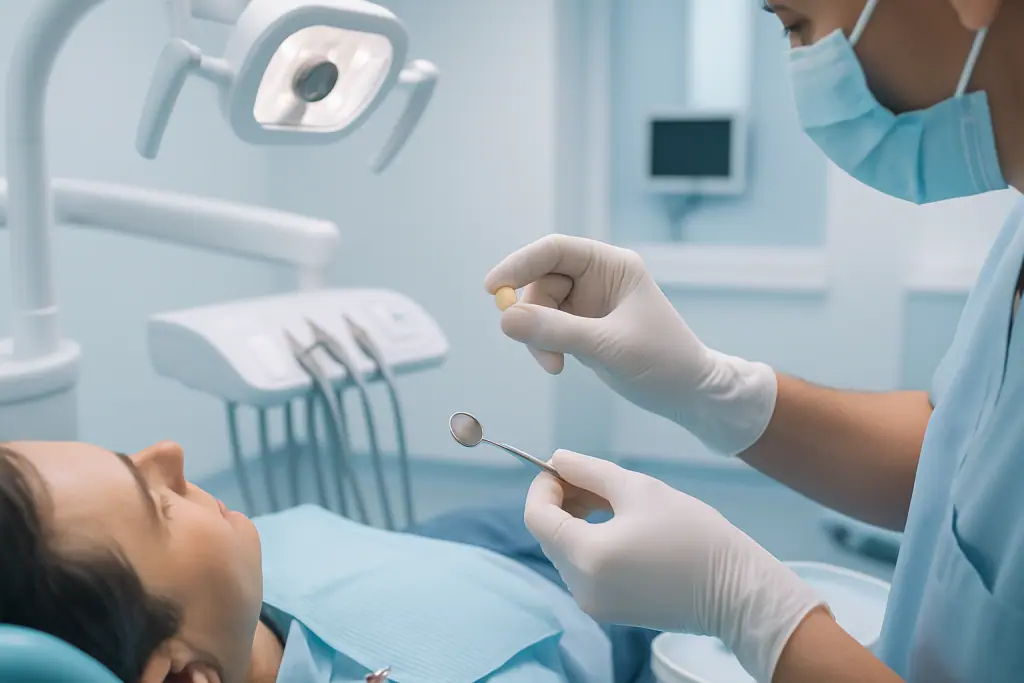
Dental crowns in Turkey are one of the most common reasons adults from the United Kingdom, Ireland and North America consider dental treatment abroad. A crown is a custom-made cap that covers a damaged, weakened or cosmetically imperfect tooth to restore its strength, shape, colour and bite function. The treatment is non-surgical, carried out under local anaesthesia, and is usually completed in planned outpatient visits with no overnight stay.
This guide explains who is a candidate, how zirconia and E-max crowns differ, when a veneer may be the better option, how the two-visit plan works with Acıbadem, what recovery involves, and how the pathway in Türkiye compares with the UK and the US. It is written for readers who want a balanced, clinically grounded picture before they speak to a dentist at home or abroad.
What dental crowns are and who they suit
A dental crown is a custom-made cap that fits over a prepared tooth. It is used when a tooth is too damaged for a filling but the root remains sound, and it restores strength, shape, colour and bite function. Common reasons for a crown include a large old filling that is failing, a fracture or crack, a tooth that has had root canal treatment, heavy wear, or a shape or colour that cannot be corrected by less invasive means.
Good candidates have healthy gums and enough remaining tooth structure to support the crown. Any decay, infection or gum disease is treated first, because a crown placed over an unresolved problem tends to fail early. People who grind their teeth may need a night guard, and the dentist will check bite alignment carefully before shaping any tooth.
Zirconia crowns and E-max crowns
Zirconia is a very strong ceramic that is often chosen for molars and for patients with a heavy bite. Modern layered zirconia can also be made to look natural at the front. E-max is a lithium disilicate glass ceramic with high translucency, which is why it is frequently preferred for visible front teeth where light behaviour matters. Neither material is universally better; the dentist balances strength, appearance and the position of the tooth.
Crowns vs veneers
A veneer covers only the front surface of a tooth and requires minimal reduction, so it suits teeth that are structurally sound but discoloured, chipped or slightly misaligned. A crown wraps the whole tooth and is chosen when structural support is needed. In Türkiye, as anywhere, a responsible dentist recommends the least invasive option that meets the clinical goal.
Why patients from the UK and the US travel to Türkiye for crowns
For many UK patients the starting point is access. NHS dental places are hard to secure in many areas, and private crown treatment at home is fully self-funded. In the US, dental insurance often has annual limits that a full set of crowns exceeds quickly. Türkiye offers a self-pay pathway without a waiting list, and Istanbul is roughly four hours by air from London and about ten hours from New York.
The distinction that matters most is where the treatment is delivered. Acıbadem is a hospital group, not a stand-alone dental clinic. Crown treatment takes place within hospital dental departments in a network of more than 20 hospitals, of which 7 hold Joint Commission International (JCI) accreditation. That means the dental team works alongside anaesthesia, intensive care, radiology and laboratory services in the same institution, with hospital-grade infection control and documented clinical governance.
For most crown patients this medical backup is never needed. Its value lies in the rare situation where it is: a patient with a complex medical history, an unexpected reaction to local anaesthesia, or a dental infection that needs broader medical management. In a hospital setting these are handled internally rather than by referral elsewhere.
The network also has long experience with international patients. English-speaking coordinators, records prepared in a format your own dentist can read, and a structured remote review before you travel are part of the standard pathway. At Acibadem Maslak Hospital, for example, dental care sits within a full multidisciplinary hospital, so imaging and medical consultation are available on the same day if the dentist requests them.
How it works with Acıbadem, step by step
The pathway is designed so that most of the thinking happens before you fly, and the visits in Istanbul are used for treatment rather than for discovery.
- Remote medical review. You send recent dental X-rays or a panoramic scan, photographs of your teeth and a short medical history. A dentist reviews them free of charge and identifies whether crowns are appropriate, which teeth are involved and whether other work is needed first.
- Personal plan. You receive a written plan describing the proposed treatment, the suggested material for each tooth, the number of visits and a personal quote. The verified price band below gives context; your quote reflects your own case.
- Arrival and coordinator. An international patient coordinator meets you, arranges transfers and appointments, and remains your single point of contact.
- Consultation and pre-operative tests. The dentist examines each tooth, checks bite alignment and takes dental X-rays or digital scans. Any decay, infection or gum problem is treated before crown work begins.
- The treatment. Teeth are shaped under local anaesthesia and impressions or scans are taken for the custom crowns. Temporary crowns protect the teeth while the laboratory works.
- Recovery in Istanbul. You stay in the city while the crowns are made, return for fitting and bite adjustment, and have a final check before departure.
- Follow-up after returning home. You leave with a full record of the work, including material details, and the team remains available by video or message for questions. Routine check-ups continue with your own dentist.
The procedure: techniques, anaesthesia, duration and hospital stay
Crown treatment is non-surgical and carried out under local anaesthesia. Each visit takes around one to two hours, depending on how many teeth are treated, and it is an outpatient procedure with no overnight stay.
Preparation
The dentist examines the tooth, checks bite alignment and may request dental X-rays or digital scans. Before any crown is placed, decay, infection or gum problems are treated. This preliminary stage is sometimes what determines the total length of your stay, because a root canal or gum treatment adds appointments.
Shaping and impressions
Under local anaesthesia the tooth is shaped to make room for the crown. Impressions or digital scans are then taken and sent to the laboratory, where the crown is custom-made in the chosen material, whether zirconia, E-max or another ceramic the dentist has recommended. Colour is matched to your surrounding teeth at this stage, and you are able to see and comment on the shade.
Fitting
At the fitting visit the dentist checks the fit, the contact with neighbouring teeth and the bite. Small adjustments are made until the crown feels comfortable when you close and chew. The final crown is then fixed in place. Until that point, you are advised to avoid very hard or sticky foods.
The overview on the treatment page summarises it well: crowns restore damaged, weakened or cosmetically imperfect teeth with custom-made caps that improve strength, shape, colour and bite function, and treatment is usually completed in planned outpatient dental visits. The exact schedule is set out in your personal plan.
Recovery and aftercare timeline
Recovery from crown treatment is short compared with surgical dental procedures. Most patients are back to normal routines within a few days to one week.
The first 24 to 48 hours
As the local anaesthesia wears off, mild sensitivity or gum tenderness is common around the prepared teeth. Over-the-counter pain relief, if you normally take it, is usually sufficient. Eat soft foods on the day of treatment and avoid chewing on temporary crowns where possible.
While you wear temporary crowns
Temporary crowns are designed to protect the tooth, not to last. Avoid very hard or sticky foods, which can dislodge them, and brush gently around the gum line. Floss by pulling the thread out sideways rather than lifting it up, so you do not catch the edge of the temporary.
After the final crown is fixed
Sensitivity to hot and cold may continue for a few days and then settle. The bite should feel even; if one crown feels high when you close your teeth, tell the dentist before you fly home so it can be adjusted. Once you are comfortable, normal eating resumes.
Longer term
Crowns need the same care as natural teeth: careful brushing twice a day, daily flossing and regular dental check-ups. The tooth beneath a crown can still decay at the margin, and gums can still become inflamed. Contact a dentist if the bite feels high, the crown loosens, or pain persists beyond the expected settling period.
What it costs: UK, US and Türkiye
Typical self-pay ranges from the Turkey Medical Price Index. Türkiye figures are guide ranges for hospital treatment; your personal quote follows a free medical review.
Source: Turkey Medical Price Index (quarterly edition). Ranges depend on the extent of treatment, materials and hospital stay; they are not a quote.
Safety and risks
Crowns are a routine, well-established treatment, but they are not free of risk, and honest planning means discussing what can go wrong.
Who is not suitable
Crowns are not appropriate where the root is fractured or infected beyond repair, where there is too little tooth left to hold a crown, or where active gum disease has not been controlled. Patients who want a purely cosmetic change on healthy teeth may be better served by veneers or by less invasive options, and a responsible dentist will say so.
Possible complications
- Prolonged sensitivity, particularly to cold, which usually settles but occasionally persists.
- A high bite after fitting, causing discomfort or jaw ache until adjusted.
- Nerve irritation in a deeply prepared tooth, which can later require root canal treatment.
- Chipping or fracture of the ceramic, more likely with heavy grinding.
- Decay or gum inflammation at the crown margin over the years.
- Loosening or loss of the crown if the cement fails.
What problem cases abroad tend to share
When treatment abroad goes badly, the cases reported in the UK press and to dental regulators usually have common features: a plan made without proper X-rays, many teeth crowned in a very short stay, underlying infection left untreated, no clinic to return to for adjustment, and no one at home willing to take responsibility. Very often the problem is not the crown material but the rushed process around it.
How a hospital setting changes that
A hospital pathway builds in imaging before shaping, treats infection first, schedules enough time between preparation and fitting, and documents everything so your own dentist can follow the work. Medical support is on site if it is ever needed. None of this removes risk entirely, but it addresses the causes that most often lead to regret.
UK and US vs Türkiye: how the pathway and the cost differ
The clinical steps of a crown are the same in London, New York and Istanbul: examine, treat underlying problems, shape, take impressions, fit. What differs is access, timing, cost structure and how aftercare is organised.
Access and waiting
In the UK, crowns on the NHS are available only where you have a registered dentist and the treatment is clinically necessary, and waits can be long. Private treatment at home is self-pay and typically spread over several appointments weeks apart. In Türkiye the same visits are compressed into a planned stay because you are on site.
What the lower cost means
The price band below draws on the verified Price Index for the UK, the US and Türkiye. The difference reflects lower clinician salaries, lower laboratory and property overheads and a different cost of living, not a different grade of ceramic. Zirconia and lithium disilicate materials come from the same international manufacturers regardless of where the crown is made. The lower cost does not mean fewer steps, and if a plan omits X-rays, infection treatment or a proper fitting visit, that is not a bargain but a shortcut.
Aftercare and travel
Treatment at home offers easy return visits for adjustments. Treatment abroad requires you to budget time and money for the trip itself, to stay long enough for the fitting visit, and to arrange follow-up with your own dentist. These are real costs and belong in any comparison.
Compare like for like
Compare a crown made from a named material in a hospital setting with the same material at home. Ask what the quoted figure includes: examination, imaging, temporaries, laboratory work, fitting and adjustment. Only then does the comparison mean anything.
Planning the trip to Istanbul
Once your personal plan is agreed, planning the trip is straightforward, but a few details deserve attention.
- Passport and entry. UK, Irish, US, Canadian and Australian passport holders enter Türkiye visa-free for up to 90 days. Check current rules before you book, and make sure your passport has adequate validity.
- Flights. Istanbul is roughly four hours from London and about ten hours from New York, with frequent direct services from major UK and US airports.
- How long to stay. Crown treatment needs at least two visits with laboratory time in between, so plan on staying long enough for preparation, fitting and a final check. If preliminary work such as root canal or gum treatment is required, the plan will say so and the stay is extended accordingly. Your coordinator will confirm the recommended number of days.
- Companion. Because crowns are placed under local anaesthesia, you can travel alone and move around normally between appointments. Many patients bring a partner or friend for company and a short holiday, and this is entirely a matter of preference.
- Travel insurance. Standard travel policies usually exclude planned treatment abroad and any complications from it. Look for a policy that specifically covers elective medical or dental travel, and read the exclusions.
- What to bring. Recent dental X-rays if you have them, a list of medications, details of any allergies, your night guard if you use one, and a printed copy of your treatment plan.
Between appointments Istanbul is easy to explore, though it is sensible to keep meals soft while wearing temporary crowns and to avoid anything that risks dislodging them.
Back home: follow-up, records and your own dentist
You leave Istanbul with a complete record of the treatment: which teeth were crowned, the material used, the shade, images taken before and during treatment, and any preliminary work. Share this with your own dentist at your next check-up so that the crowns become part of your ongoing dental record rather than an unexplained gap.
The Acıbadem team remains available after you return for questions by message or video call, and can advise whether a concern needs to be seen locally. Routine care, including scale and polish and check-ups, should continue with your own dentist as normal.
When to seek help
Contact a dentist promptly if the bite feels high and does not settle, if a crown loosens or comes off, if pain persists or worsens rather than fading, or if you notice swelling of the gum or face. These are treatable, and early attention is simpler than late.
Insurance, NHS and your own doctor
Private dental or medical insurance in the UK and the US rarely covers elective treatment abroad, and many policies exclude complications arising from it; check with your provider in writing before you travel. In the UK, the NHS treats any complication in the same way as it would for any other patient, but routine adjustments or remakes of crowns placed privately abroad are not an NHS service. US readers should note that HSA and FSA rules on foreign dental expenses vary, and travel-medical policies differ widely in what they cover. Whatever you decide, keep your own dentist informed; they are your first port of call once you are home.
Questions to ask before deciding
A good provider, at home or abroad, will welcome these questions and answer them in writing. Use them to compare any offer you receive.
- Which teeth genuinely need a crown, and which could be treated with a filling, a veneer or left alone?
- What imaging will be taken before any tooth is shaped, and will I see it?
- Is there any decay, infection or gum disease to treat first, and how does that change the plan and the stay?
- Which material is recommended for each tooth, zirconia or E-max or another ceramic, and why?
- Who makes the crowns, and will the material brand be recorded in my notes?
- How many visits are planned, and how many days should I stay in Istanbul?
- Will I have temporary crowns, and what should I do if one comes off?
- Who do I contact if something feels wrong after I return home, and how quickly will they respond?
- What exactly does the quoted figure include, so that I can compare it fairly with the price band below and with a quote from my own dentist?
- Where is the treatment carried out, and what medical support is available on site if it is needed?
- Do I need a night guard, and is it included in the plan?
Write the answers down and compare them side by side. Be cautious of any plan that proposes crowning many healthy teeth, that cannot explain why a crown rather than a veneer is being proposed, or that leaves no time between preparation and fitting.
Whether dental crowns are the right treatment for you, and which material and schedule suit your teeth, is determined by a physician’s evaluation.
How much do dental crowns in Turkey cost?
The verified price band below shows the current range for the UK, the US and Türkiye from the Price Index. Your personal quote is prepared after a free remote review of your X-rays and photographs and reflects the number of teeth, the material chosen and any preliminary treatment needed. Ask what a quote includes before comparing it with figures from home.
Are zirconia crowns or E-max crowns better?
Neither is better in every case. Zirconia is very strong and is often chosen for molars and for patients with a heavy bite, while E-max is more translucent and is frequently preferred for visible front teeth. The dentist recommends a material for each tooth based on its position, the forces on it and the appearance you want.
What is the difference between crowns and veneers?
A veneer covers only the front surface of a tooth and needs minimal reduction, so it suits sound teeth with cosmetic concerns. A crown covers the whole tooth and is used when structural strength is needed, for example after a large filling, a fracture or root canal treatment. A responsible dentist proposes the least invasive option that achieves the clinical aim.
How long do I need to stay in Istanbul for crowns?
Crown treatment needs at least two visits with laboratory time in between: one to shape the teeth and take impressions, and one to fit and adjust the final crowns. If decay, infection or gum problems must be treated first, the stay is longer. Your personal plan states the recommended number of days before you book flights.
Is the procedure painful?
Teeth are shaped under local anaesthesia, so the procedure itself is not painful. Mild sensitivity or gum tenderness for a few days afterwards is common and usually settles with ordinary pain relief. Contact your dentist if pain persists or the bite feels high.
Do I need a hospital for dental crowns?
Crowns are an outpatient treatment with no overnight stay, and most patients never need medical support. The advantage of a hospital setting lies in imaging, infection control and medical backup being on site if a complication or a complex medical history requires them. It also means the work is documented to hospital standards for your own dentist.
What happens if a crown has a problem after I get home?
Contact the team first; they can advise by video or message whether the issue needs to be seen locally. Your own dentist can adjust a high bite or re-cement a loose crown using the records you bring home. Private insurance rarely covers such follow-up, so check the terms of your policy and your treatment agreement before travelling.
Can I combine crowns with a holiday in Istanbul?
Yes, and many patients do. Because treatment uses local anaesthesia you can move around normally between appointments. Keep to softer foods while wearing temporary crowns and allow enough days for the fitting visit and a final check before you fly.
Your care team
Physicians of the Acıbadem network who perform this treatment in Istanbul.
 Where it is performed Acibadem Maslak Hospital İstanbul · JCI-accredited hospitals

Clinical guide & data
The evidence-based pages behind this guide.
Planning tools for this treatment
Indicative figures for orientation only: your written plan and quote follow a free medical review.