Laser Assisted Dental Procedures
Laser assisted dental procedures use focused light energy to treat soft tissue, cavities, gum disease, sensitivity or aesthetic concerns with precision and reduced discomfort.
Quick answer
Laser assisted dental procedures use focused light energy to treat gum tissue, selected cavities, tooth sensitivity, oral lesions and cosmetic gum concerns. Depending on the laser type, the beam can cut, vaporise, coagulate, disinfect or reshape tissue with precision, often with less bleeding and less vibration than conventional instruments. Suitability depends on the diagnosis, the laser wavelength and the individual case.
Laser Dentistry: How Light-Based Dental Treatment Works
Laser dentistry uses concentrated light energy to treat soft tissue, hard tissue and bacteria in the mouth in a controlled way. Depending on the laser type and its settings, the beam can cut, vaporise, coagulate, disinfect or reshape tissue with a precision that conventional instruments cannot always match. It is used across periodontal care, restorative dentistry, minor oral surgery and cosmetic gum treatment, but it is a set of tools, not a single procedure, and it suits some clinical problems far better than others.
Dental treatment can feel intensely personal. Many patients delay care not because they doubt the importance of oral health, but because they worry about pain, bleeding, vibration, injections, healing time, or the possibility of needing more extensive treatment than expected. A clear diagnosis, an honest explanation of the options and a step-by-step plan address most of those worries better than any single technology can.
For many people, the appeal of laser assisted dental procedures is emotional as much as technical. Suitable soft-tissue treatments may involve less bleeding, less swelling and a reduced need for sutures, and selected hard-tissue treatments may involve less vibration than a conventional drill. Be equally clear about the limits. Laser treatment is not suitable for every dental problem, it does not remove the need for local anaesthesia in every case, and its value depends on careful diagnosis, the right wavelength and settings, and a dentist trained to judge when a laser helps and when another approach is safer or more effective.
At Acibadem, laser assisted dental procedures sit within a broader dental and medical evaluation delivered through the Dental & Oral Health unit. The aim is not to use technology for its own sake, but to choose the method that best protects oral health, supports function, and fits your overall condition, expectations and long-term dental plan.
What does laser dentistry do?
Laser dentistry treats gum disease, selected cavities, tooth sensitivity, oral soft-tissue problems and cosmetic gum concerns using focused light instead of, or alongside, conventional instruments. In practical terms, a dentist may use a laser to reshape gum tissue, reduce bacteria in periodontal pockets, remove decayed tooth structure in suitable cavities, release a tight frenum, uncover an implant, manage small mouth lesions, support root canal disinfection, or refine the gum line as part of smile design. In soft tissue, the laser seals small blood vessels as it works, which improves visibility during the procedure and often reduces bleeding. In selected hard-tissue work, it removes decay with minimal vibration, though drilling may still be needed to shape the tooth for its final restoration.
Is laser treatment the same everywhere?
The clinical principles are the same wherever dental lasers are used, though the field is searched under different names: Spanish-speaking patients, for example, often look for laserterapia dental. What varies between clinics is not the physics but the equipment available, the range of indications the team treats, and the training and case selection of the dentist holding the instrument. Those are the questions worth asking, in whatever language you ask them.
Dental Lasers: The Main Types and How They Differ
Dental lasers fall broadly into two groups: soft-tissue lasers, designed to work on gums and oral mucosa, and hard-tissue lasers, which can be used on enamel, dentin and, in selected indications, bone. The word “laser” simply refers to light focused into a precise beam; different wavelengths are absorbed differently by water, pigment and mineral, which is why one laser can trim gum tissue cleanly while another can remove decayed enamel. Some lasers serve as the main treatment tool. Others act as an adjunct to conventional care, complementing scaling and root planing, restorative dentistry, orthodontics, implant dentistry or aesthetic smile design.
What determines how a dental laser behaves?
A dental laser’s effect on tissue depends on its wavelength, power setting, pulse pattern, water or air cooling, distance from the tissue and the clinical target. A skilled dentist adjusts these variables to achieve the intended tissue response while protecting nearby structures. In soft tissue, the right settings allow the laser to cut and coagulate at the same time, reducing bleeding and improving the dentist’s view of the surgical field. In hard tissue, cooling and pulse control protect the tooth from overheating while decay is removed. Get the settings wrong, and the same instrument can damage tissue, which is one reason training and case selection matter as much as the machine itself.
Laser assisted dentistry is often described as minimally invasive, and that phrase deserves careful handling. Lasers can allow very targeted treatment and may reduce trauma in selected cases, yet they remain medical instruments that require diagnosis, protective measures and appropriate follow-up. The goal is precise care, not a shortcut version of every dental procedure.
Who May Be Considered for Laser Assisted Dental Procedures?
You may be considered for laser assisted dental procedures if you have gum, tooth, oral soft-tissue, periodontal or aesthetic concerns that can benefit from precision light-based treatment. The decision always begins with a clinical examination and, when needed, digital imaging. The dentist evaluates your symptoms, oral hygiene, gum health, tooth structure, bite relationships, existing restorations, medical conditions and preferences before recommending any method, laser or otherwise.
Common concerns that lead to a consultation about laser assisted treatment include:
- Bleeding gums or persistent gum inflammation
- Gum overgrowth, or concerns about gum recession
- Small cavities or tooth sensitivity
- Lesions or persistent sore spots in the mouth
- A high or tight frenum affecting the gums, speech or a denture
- Discomfort around wisdom teeth
- Difficulty cleaning around dental implants
- An uneven gum line, or a wish to improve the balance between teeth and gums in the smile
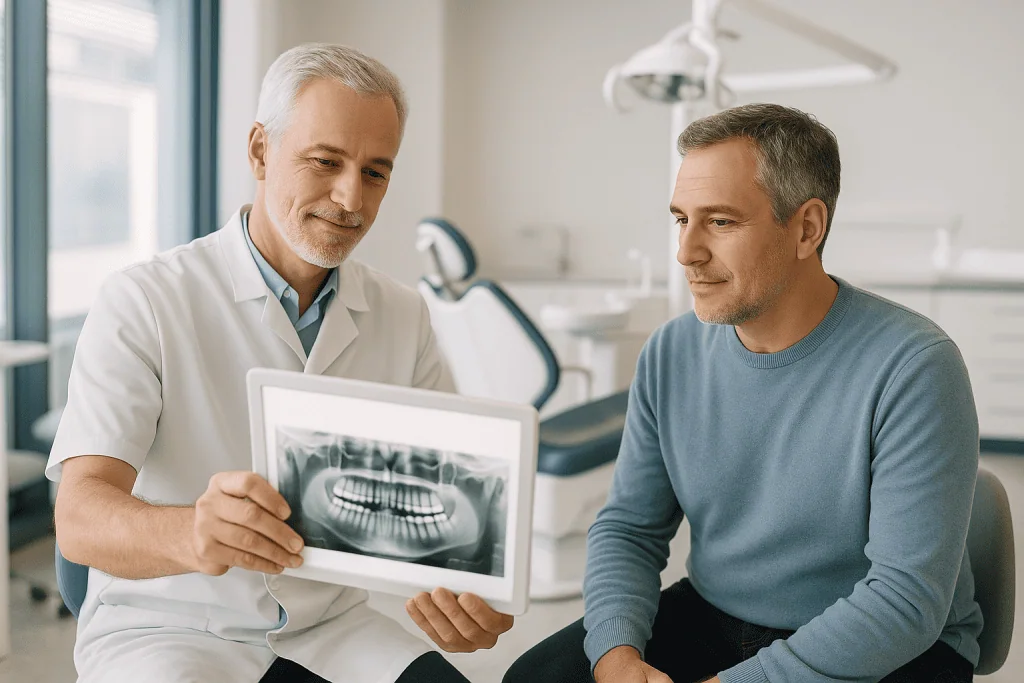
Diagnosis typically includes a detailed dental history and oral examination. For gum disease, the dentist measures periodontal pocket depths, checks bleeding points, evaluates bone support on X-rays and assesses tooth mobility. For cavities, visual examination is combined with digital radiography and caries detection methods. For soft-tissue lesions, the appearance, duration, location and risk factors are reviewed; some lesions require biopsy or specialist referral rather than immediate laser removal, and a responsible dentist will say so plainly. For aesthetic concerns, photographs, digital smile analysis, gum display evaluation and tooth proportions guide the plan.
Laser assisted procedures can be especially attractive if you are anxious about dental instruments, want to reduce bleeding in soft-tissue care, or need a precise approach in visible areas of the mouth. They can also suit complex plans that combine periodontal therapy, restorative work, implant dentistry or orthodontics. Your medical profile matters, though. If you take blood thinners, have diabetes that is not well controlled, are immunosuppressed, are pregnant, or have certain oral lesions, careful assessment and coordinated care come first, no medication should ever be changed except by the treating doctor.
Not everyone is a candidate. Extensive cavities, advanced structural tooth damage, deep infections, severe periodontal disease and certain bone-related procedures may require conventional instruments, surgery, endodontic treatment or a multidisciplinary plan. The best use of dental lasers is selective and evidence-based: the right indication, at the right time, as one part of a complete oral health strategy.
Conditions and Indications Laser Dentistry May Address
Laser assisted dental procedures are used across several areas of oral care, sometimes as the main tool and often as a supporting one. What follows are the indications for which laser use is genuinely established, together with what the laser does and does not replace in each.
What is laser teeth cleaning?
Laser teeth cleaning, often called laser dental cleaning, is the use of laser energy alongside conventional periodontal cleaning to reduce bacteria and inflamed tissue in gum pockets. The laser may help decontaminate periodontal pockets, remove inflamed tissue and improve access during gum therapy. It does not replace the foundation of periodontal care: professional scaling and root planing, daily plaque control, maintenance visits and management of risk factors such as smoking or diabetes. Think of the laser as reinforcement for that foundation, not a substitute for it.
Cavities and restorative dentistry
Certain hard-tissue lasers can treat early or moderate cavities, prepare tooth surfaces, or assist with procedures around restorations. Suitability depends on cavity depth, location, the condition of enamel and dentin, and the planned restoration. Larger cavities and complex restorations often still need traditional instruments to achieve the correct shape, bonding surface and long-term strength before dental fillings or other restorations are placed. A dentist who tells you the drill is the better choice for your particular cavity is giving you good advice, not old-fashioned advice.
Soft-tissue procedures
Soft-tissue laser procedures include gingivectomy, gum contouring, removal of excess tissue, treatment of small benign lesions, frenectomy, exposure of unerupted teeth for orthodontic purposes, and management of the tissue around dental crowns, bridges and dental implants. In many of these cases the laser’s ability to cut and coagulate at the same time is genuinely useful, especially where visibility and delicate tissue control matter.
Sensitivity, ulcers and root canals
Laser treatment may be considered for tooth sensitivity when exposed dentin tubules contribute to discomfort, for symptom relief of aphthous ulcers in selected cases, and for certain implant-related soft-tissue concerns. In endodontics, lasers are used as an adjunct to disinfect root canal systems, but root canal treatment still requires careful cleaning, shaping, irrigation and sealing through established protocols. The laser adds to that process; it does not shorten it into something else.
Cosmetic gum reshaping
Cosmetic indications usually involve the relationship between gum tissue and tooth appearance. If you have an uneven gum line, excessive gum display or a disproportionate tooth-to-gum balance, laser gum contouring may help, provided the underlying tooth position, bone level and bite are suitable. In some cases, laser reshaping must be coordinated with orthodontics, veneers, crowns or periodontal surgery as part of a wider aesthetic dentistry plan to achieve a stable result. Reshaping gum tissue without checking the bone underneath it is how short-lived cosmetic results happen.
How Laser Assisted Dental Procedures Are Performed
Whatever the indication, the pathway follows a recognisable sequence. Knowing it in advance removes much of the uncertainty.
- Consultation and history. The dentist asks about your symptoms, medical history, medications, allergies, previous dental work and goals. Clinics typically ask new patients for recent dental X-rays, photographs and treatment notes ahead of the first appointment, which helps estimate the number of visits and identify whether additional specialists should be involved.
- Examination and imaging. The teeth, gums, bite, oral mucosa and any area of concern are examined. Digital radiographs, panoramic imaging or three-dimensional imaging may be recommended depending on the indication. Periodontal charting is performed for gum disease; clinical photographs and smile analysis support aesthetic cases. A suspicious oral lesion is biopsied or referred before any removal.
- Planning and explanation. Before treatment, the procedure is explained in practical terms: what will be treated, whether local anaesthesia is needed, how long the appointment takes, what sensations to expect, whether sutures are likely, and how recovery will be managed.
- Safety preparation. Protective eyewear is used for both you and the dental team, because laser light demands strict safety precautions. The treatment room and laser settings are prepared according to the wavelength and procedure type.
- Treatment. The laser is directed at the target tissue in controlled movements, with anaesthesia where needed.
- Aftercare. You receive specific instructions for eating, oral hygiene and the days that follow, plus a follow-up plan.
Soft-tissue treatment in practice
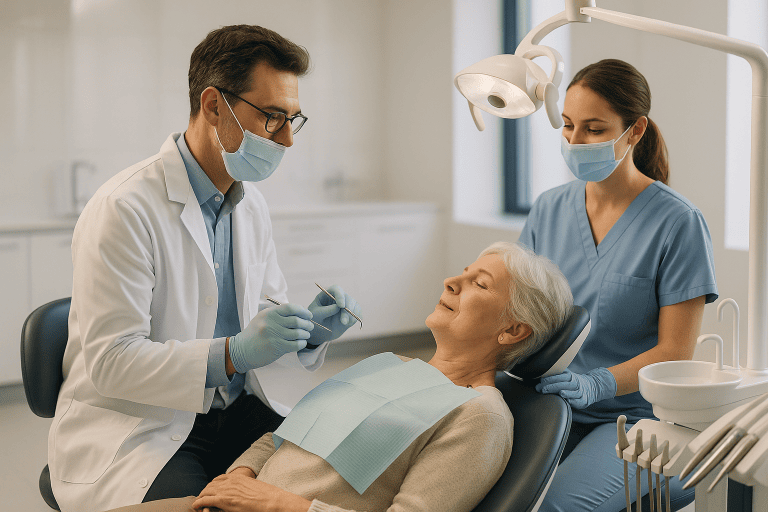
For most soft-tissue procedures, local anaesthesia is used, although some very minor treatments need little or none. In gum contouring, the laser removes small amounts of tissue to refine the gum line. In periodontal applications, the laser is introduced into gum pockets to reduce inflamed tissue and bacterial contamination, usually in combination with mechanical cleaning. In frenectomy, the laser releases the tight band of tissue while helping control bleeding. In lesion management, the selected tissue is removed carefully, with pathology assessment whenever indicated.
Hard-tissue treatment in practice
For cavity-related procedures, the dentist first determines whether a hard-tissue laser is appropriate at all. If it is, the laser removes decayed tooth structure or prepares the surface while preserving as much healthy tissue as possible, with water spray or cooling protecting the tooth. The tooth is then restored with a filling or another appropriate restoration. Some cavities still require conventional instruments, particularly where decay is extensive, access is limited, or a specific restoration design is needed.
Sensitivity treatment in practice
For sensitivity, laser energy may help seal microscopic dentin tubules or influence nerve response in the treated area. Just as important, the dentist investigates the cause, because sensitivity can come from gum recession, enamel wear, cracked teeth, cavities, clenching, an acidic diet or recent dental work. Treating the cause, not just the symptom, is what makes relief last.
The technology behind the treatment
Beyond the laser itself, the supporting technology typically includes digital radiography, intraoral cameras, magnification, three-dimensional imaging for complex implant or surgical planning, periodontal measurement systems and digital treatment planning tools. These support diagnosis, precision and documentation, and they help you understand the plan visually, which matters most when care involves several specialists or staged appointments.
How long does an appointment take?
Duration varies widely. A small soft-tissue procedure may take a short visit; periodontal laser treatment, multiple cavities or aesthetic gum contouring may need longer appointments or several sessions. Complex smile or implant-related plans may involve staged care across days or weeks. Do not assume that all dental work can be completed safely in one visit, healing intervals, laboratory work, periodontal stability and final restorations often require a planned sequence, and a clinic that promises everything in a single sitting deserves scepticism.
What happens immediately afterwards?
You receive instructions covering eating, drinking, oral hygiene, any prescribed medications and warning signs to watch for. Most patients return to normal daily activities quickly after minor laser procedures. Mild soreness, tenderness or sensitivity can occur. Soft foods may be recommended for a short period, and brushing may be modified around the treated area. After periodontal therapy, maintenance and plaque control are central to the outcome. After aesthetic gum contouring, the final tissue shape continues to mature over the following weeks.
Why Acting Early Matters
Dental problems progress quietly. Bleeding gums may seem minor, but ongoing inflammation can signal periodontal disease affecting the structures that support your teeth. Small cavities cause no pain until decay reaches deeper layers. Gum overgrowth makes cleaning difficult and lets plaque accumulate. Sensitivity may point to enamel erosion, recession, decay, cracks or bite-related stress. Soft-tissue lesions are often harmless, but persistent changes in the mouth warrant evaluation rather than watchful hoping.
Early assessment gives the dentist more options. A small area of inflamed gum tissue can be treated with conservative periodontal care, improved home hygiene and targeted laser assistance. A small cavity can be restored before it becomes a root canal problem. A tight frenum can be managed before it contributes to gum pull, speech concerns, denture discomfort or orthodontic relapse. Aesthetic gum irregularities are corrected more predictably when the underlying bone, tooth position and periodontal health are stable.
Delay increases complexity. Gum disease can progress to bone loss, tooth mobility, recession and eventual tooth loss. Untreated decay can lead to infection, abscess, swelling, pain and more extensive procedures. Chronic irritation around restorations or implants can compromise the surrounding tissue. And in each case, postponement reduces the likelihood that a minimally invasive option will still be enough.
Timing matters logistically as well as clinically. Early assessment lets the dental team plan imaging, specialist appointments, laboratory work, healing intervals and follow-up, and determine whether laser assisted treatment is even the right tool, or whether another therapy should come first. The most effective plan is usually the one made before an urgent problem develops.
Benefits of Laser Assisted Dental Procedures
When the diagnosis suits it, light-based treatment offers practical advantages for comfort, precision and recovery. These are honest, indication-dependent benefits, not blanket promises.
| Benefit | What It Means for You |
|---|---|
| Precise tissue treatment | The dentist can target selected areas carefully, which may help preserve surrounding healthy tissue in suitable cases. |
| Reduced bleeding in many soft-tissue procedures | Laser energy can seal small blood vessels as it works, often improving visibility and reducing the need for extensive suturing. |
| Potentially improved comfort | Some procedures involve less vibration, pressure or postoperative soreness than conventional methods, depending on the indication. |
| Support for bacterial reduction | In periodontal and endodontic adjunctive use, laser energy may help reduce microorganisms when combined with established cleaning and disinfection protocols. |
| Efficient management of selected soft-tissue concerns | Gum contouring, frenectomy, tissue exposure and small lesion procedures can often be completed in a focused appointment with clear postoperative instructions. |
| Aesthetic refinement | For suitable patients, laser gum reshaping can improve gum symmetry and the visible balance of teeth and soft tissue. |
What Are the Downsides of Laser Assisted Treatment?
The main downsides are a limited range of indications, the continued need for conventional instruments in many cases, and the dependence of safety on operator training. Hard-tissue lasers cannot treat every cavity; deep decay, cavities in awkward locations and teeth needing specific restoration designs usually still require the drill. Lasers are generally not used to remove old metal fillings. Local anaesthesia is still needed for many procedures: the laser reduces some discomforts, but it does not switch off the nerve. Incorrect settings or technique can overheat tooth structure or damage soft tissue, which is why the dentist’s laser training matters as much as the device. Finally, some treatments simply take longer with a laser than with conventional instruments, and a laser-first approach is not automatically a better one.
Why don’t more dentists use lasers?
Dental lasers involve a substantial equipment investment, dedicated training, and a range of indications narrower than everyday dentistry, three practical reasons adoption is uneven. Conventional instruments remain reliable, versatile and familiar, and for many procedures they are still the standard of care. Clinics also need protocols for laser safety, maintenance and case selection before the technology adds genuine value. A dentist who does not use a laser is not necessarily behind the times, and a dentist who uses one for everything is not necessarily ahead of them. What matters is whether the tool fits your diagnosis.
How Much Does It Cost to Laser Teeth?
There is no single price for laser dental treatment, because “laser” describes the instrument rather than the procedure. The cost of any laser assisted treatment depends on what is actually being done: a brief soft-tissue adjustment is planned differently from multi-session periodontal therapy, a cavity restoration or full aesthetic gum recontouring. The main cost drivers are the type and extent of the procedure, the number of teeth or gum areas involved, the number of sessions required, whether the laser is the main tool or an adjunct to conventional treatment, the diagnostics and imaging needed beforehand, and any restorations placed afterwards. A meaningful figure can only follow an examination and a written treatment plan, any quote offered before diagnosis is a guess, and you should treat it as one.
Recovery Timeline After Laser Assisted Dental Procedures
Recovery depends on the treated area, the type of procedure, your general health, your oral hygiene, and whether the treatment was minor, periodontal, restorative or aesthetic. The pattern below is typical, not promised.
| Time Period | What Patients Can Expect |
|---|---|
| Day 1 | Mild tenderness, warmth or sensitivity may occur. Many patients return to normal non-strenuous activities. Soft foods and careful oral hygiene may be advised. |
| First Week | Soft-tissue areas usually begin to settle. The dentist may recommend avoiding spicy foods, alcohol-based mouthwashes, smoking and trauma to the treated area. |
| First Month | Gum tissue continues to mature. Sensitivity often improves gradually. Periodontal patients may need follow-up cleaning, pocket reassessment or hygiene reinforcement. |
| Longer Term | Results are maintained through regular dental visits, effective home care, control of gum disease risk factors, and timely repair of cavities or restorations. |
Factors That Influence Outcomes
A good result in laser assisted dental care depends first on accurate diagnosis. The same symptom can have several causes. Bleeding gums may result from plaque-induced gingivitis, periodontitis, medication-related gum changes, poor restoration margins or systemic factors. Sensitivity may come from recession, enamel loss, decay, cracks, grinding or recent whitening. A laser helps only when the source of the problem has been correctly identified.
The severity and stage of disease matter too. Early gum inflammation responds differently from advanced periodontal disease with bone loss and tooth mobility. A small cavity differs from deep decay near the nerve. Minor gum asymmetry differs from excessive gum display caused by jaw growth pattern, tooth eruption or lip movement. In complex situations, laser treatment is one part of a broader plan, not the complete solution.
Clinician experience and case selection strongly influence both safety and effectiveness. Dental lasers demand an understanding of wavelength–tissue interaction, power settings, thermal control, anatomical limits and postoperative healing. Excessive energy or inappropriate use can damage tissue, overheat tooth structure or produce uneven outcomes, and careful technique matters most around implants, thin gum tissue, tooth roots and visible aesthetic zones.
Your general health shapes the plan as well. Diabetes, smoking, immune status, blood-thinning medications, osteoporosis medications, dry mouth, pregnancy and prior radiation therapy to the head and neck can all affect treatment planning and healing. These factors rarely rule out laser treatment outright, but they may require medical coordination, modified protocols or additional monitoring, all decided with your treating doctors.
Home care is the major long-term determinant. Laser periodontal treatment cannot compensate for persistent plaque, smoking, missed maintenance visits or uncontrolled risk factors, and steady dental hygiene does more for a laser result than the laser itself did. Gum contouring holds its shape better when periodontal health is good and the bite is balanced; restorative work lasts longer with sound hygiene, management of grinding, and regular check-ups.
Continuity of care matters after any staged treatment. Patients should leave with written treatment summaries, imaging where appropriate, postoperative instructions and clear recommendations for ongoing follow-up with their dentist. Good documentation is what turns a course of treatment into an ongoing plan rather than a one-off event.
Laser Assisted Dental Care at Acibadem
Patients weighing where to have dental treatment usually want more than a procedure: a dependable diagnostic process, clear communication, thoughtful scheduling, and clinicians who can coordinate care when dental issues overlap with medical conditions. At Acibadem, laser assisted dental procedures are provided within hospital environments where safety systems, infection control, patient documentation and multidisciplinary coordination are built into everyday practice.
Dental concerns often involve more than teeth. Gum disease is influenced by diabetes, cardiovascular risk factors, medications, immune status and smoking. Oral lesions may need pathology input. Implant-related concerns may need collaboration between restorative dentists, oral surgeons, periodontists and radiology teams, and sometimes physicians from other specialties. When needed, multidisciplinary discussion aligns the dental plan with your wider health and treatment priorities.
Technology is used to support decisions, not to replace them. Digital imaging evaluates tooth structure, bone levels, roots, impacted teeth and implant sites. Intraoral cameras and clinical photography make findings easier to understand. Three-dimensional imaging assists surgical or implant planning where detailed anatomy is needed. Laser systems, when indicated, allow precise soft-tissue or selected hard-tissue treatment. The value of these tools lies entirely in how they are integrated into your diagnosis and plan.
Personalised planning matters in laser assisted care precisely because no single laser procedure suits every problem. One patient needs laser gum contouring before aesthetic restorations; another needs periodontal therapy supported by laser decontamination, then maintenance; a third needs a cavity restored conventionally because that is the more reliable choice. A good treatment plan explains not just what a laser can do, but why it is, or is not, appropriate in your specific case.
Experienced clinicians are also measured about outcomes. Laser assisted procedures can reduce discomfort and improve precision in well-selected cases, but healing varies. Gum tissue responds differently depending on thickness, inflammation, bone support, hygiene and individual biology. Long-term periodontal results require your participation and follow-up. Aesthetic outcomes depend on correct diagnosis of tooth proportions, gum level, bone position and smile dynamics. Clear expectations, stated before treatment, are part of the treatment.
Making a Decision About Laser Assisted Treatment
The most important step in any decision about laser assisted treatment is a precise diagnosis. The technology is valuable only when matched to the right indication and delivered within a comprehensive dental plan. Whether the concern is gum disease, sensitivity, a cavity, a soft-tissue lesion, implant-related tissue or the appearance of the smile, an individual assessment is what clarifies the options, including the option of not using a laser at all.
When you evaluate any proposal for laser assisted treatment, a few questions separate careful planning from salesmanship. What exactly is the diagnosis, and how was it confirmed? Why is a laser the right tool for this indication rather than a conventional method? What training does the treating dentist have with this specific laser type? How many sessions are expected, what healing intervals are built in, and what will follow-up look like afterwards? A team that answers those questions specifically, with imaging, a written plan and honest limits, is showing you how it works before you commit to anything.
Dental care should feel carefully planned, medically responsible and understandable at every stage. With the right evaluation and an appropriate plan, laser assisted dental procedures offer a precise and often gentler option for selected dental and gum concerns, and a clear-eyed view of their limits is exactly what makes them worth considering.
Preparation
- A dentist evaluates oral health, X-rays and treatment goals before planning laser use. Patients should share medical history, medications and pregnancy status. Teeth may be professionally cleaned before periodontal or aesthetic laser procedures.
Aftercare
- Mild sensitivity, swelling or gum tenderness can occur for a short time. Follow oral hygiene instructions, use prescribed rinses or medication if given, and avoid very hot, spicy or hard foods for the first day. Attend follow-up visits to monitor healing.
Frequently Asked Questions
What affects the cost of laser assisted dental procedures?
The final cost depends on the type of laser treatment, the number of teeth or gum areas involved, diagnostic imaging, the need for additional treatments, dentist expertise, clinic setting and follow-up requirements. A dental examination is needed before an accurate quote can be prepared.
How can I get a personalised quote for laser dental treatment in Turkey?
You can request a free consultation by sharing your dental concerns, recent dental images or reports if available, medical history and treatment goals. The clinical team can then advise whether laser treatment is suitable and provide a personalised plan and quote.
Is laser dentistry always more expensive than conventional dental treatment?
Not always. Cost depends on the clinical indication, complexity and whether laser treatment replaces or supports conventional methods. In some cases, laser care is part of a wider dental plan rather than a stand-alone procedure.
What is usually included in an international patient package?
A package may include consultation, dental examination, imaging, treatment planning, the laser procedure, local coordination, translation support and follow-up instructions. Inclusions vary, so patients should confirm what is covered before travel.
Will I need more than one visit?
Some laser assisted dental procedures can be completed during a planned appointment, while gum disease, restorative work or aesthetic planning may require staged care. The dentist will explain the expected visit schedule after assessment.
Medically reviewed by the Acıbadem International Medical Board September 13, 2026
See our medical review board →
Update history
- PublishedJune 8, 2026
- Medical review approvedSeptember 13, 2026
- Last content updateSeptember 12, 2026
References1
- Dental Health medlineplus.gov