

Dental Implants in Turkey: Candidate Checklist

You may be a candidate for dental implants if you have missing teeth, healthy gums, and enough jawbone, or are suitable for bone support procedures. Placement is usually done under local anesthesia as an outpatient, with initial recovery in a few days. Implant integration takes several weeks to months, so many international patients need more than one trip.
Wondering whether you are actually a candidate for dental implants, and how many trips to Turkey it might take? Those are the two questions most people bring to this page. Both deserve a straight answer before you book anything.
This guide explains what dental implants are, who may be suitable, how treatment is planned, and what recovery usually involves if you are considering care in Turkey. You will also find a practical candidate checklist, travel planning advice, and clear expectations about timing, risks, and follow-up.
At a glance
- Procedure type: Restorative dental surgery with prosthetic tooth replacement
- Purpose: To replace missing teeth, restore chewing function, and support smile aesthetics
- Anesthesia: Usually local anesthesia; sedation or additional support may be considered in selected cases
- Hospital stay: Typically outpatient; complex cases may require longer observation
- Estimated recovery: Initial recovery is usually a few days; full implant integration takes several weeks to months
- Return to daily life: Often within 1-3 days, depending on the number of implants and any bone or gum procedures
- Final result timeline: Varies by case; final crown or bridge placement is often completed after healing and implant integration
- Suitable department: Oral and dental health, implant dentistry, prosthodontics, and oral surgery
- International patient support: Interpreter services, transfer coordination, accommodation guidance, and remote follow-up
What is this treatment?
Dental implants are artificial tooth roots, usually made from biocompatible materials, that are placed into the jawbone to support replacement teeth. They can be used to replace a single missing tooth, several missing teeth, or to support full-arch restorations in selected patients. The goal is to restore chewing, speech, comfort, and the appearance of your smile.
Unlike removable dentures, implants are designed to provide stable support for crowns, bridges, or implant-supported dentures. After placement, the implant needs time to heal and integrate with the bone before the final restoration is attached. This healing stage is an important part of treatment and helps create a more secure long-term result.
If you are traveling for treatment, your plan will usually be personalized after a review of your dental history, current symptoms, and imaging. At Acibadem International, implant care is coordinated with international patient services to help you understand the likely stages of treatment, expected stay, and follow-up needs before you travel.
When is it recommended?
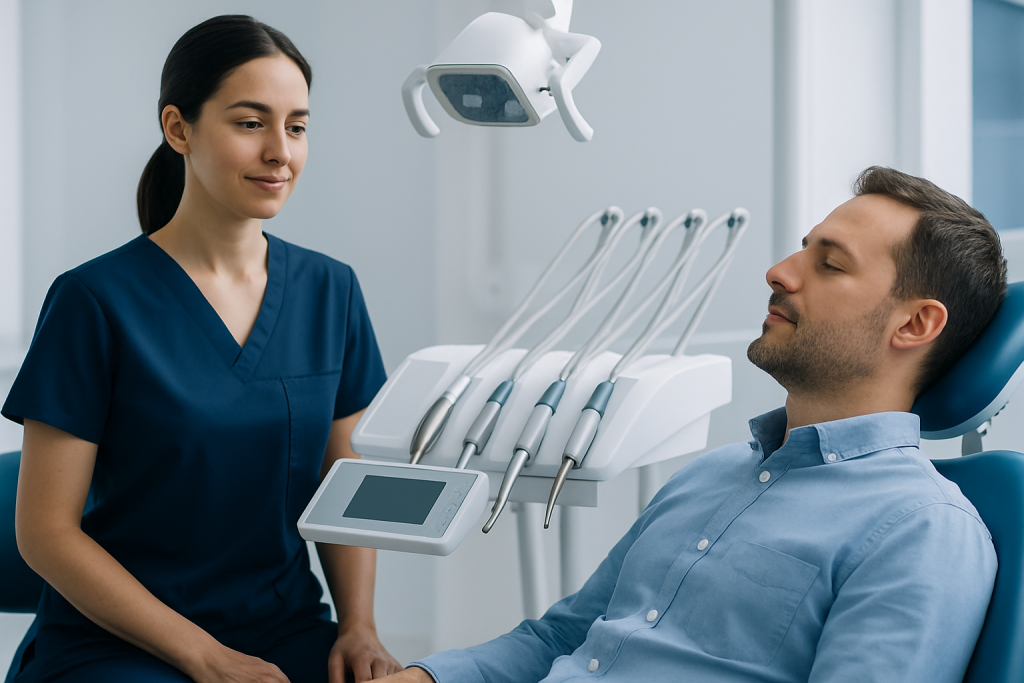
Dental implants may be recommended when you have one or more missing teeth and want a fixed replacement that feels more stable than a removable option. They can also be considered if a failing tooth needs removal, if a bridge is not ideal, or if loose dentures make eating and speaking difficult.
Your dentist or oral surgeon may discuss implants when preserving nearby teeth is important. For example, a single implant can often replace one missing tooth without relying on adjacent teeth for support. In more complex cases, implants may also be part of a broader reconstruction plan if you have multiple missing teeth, bone loss, or long-term denture use.
Implants are not recommended based on appearance alone. Gum condition, bone quality, bite forces, oral hygiene, smoking status, and your overall health all matter. A proper evaluation is important to confirm whether implants are appropriate for you now or whether other dental treatment should come first.
Who is a good candidate?
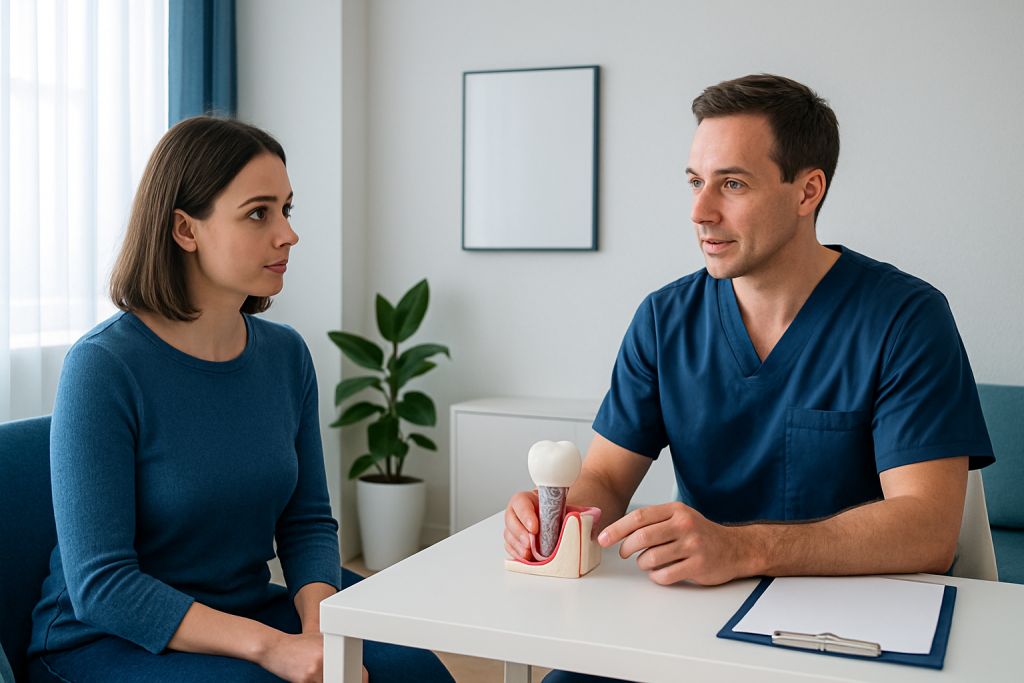
You may be a good candidate if you are missing teeth, have generally healthy gums, and have enough jawbone to support an implant or are suitable for bone support procedures if needed. Good oral hygiene and a willingness to attend follow-up appointments are also important because implants need long-term care, just like natural teeth.
Your medical history matters. Conditions such as uncontrolled diabetes, active gum disease, heavy smoking, certain immune-related conditions, and some medications can affect healing or increase the risk of complications. These factors do not always rule out treatment, but they may change the timing, the treatment plan, or the precautions your team recommends.
A practical candidate checklist includes: stable general health, realistic expectations, commitment to oral hygiene, no untreated dental infection, and readiness for staged treatment if required. If you grind your teeth, have significant bone loss, or need several teeth replaced, you may still be eligible, but your care plan may be more complex and should be assessed carefully by the treating team.
Treatment options
Dental implant treatment is not one single procedure. The right option depends on how many teeth are missing, the condition of your bone and gums, and the final result you want. Some patients need a straightforward single implant, while others need additional preparation such as tooth extraction, gum treatment, sinus lifting, or bone grafting before or during implant placement.
Common options include single-tooth implants, implant-supported bridges for several missing teeth, and full-arch implant-supported restorations for extensive tooth loss. In selected cases, an implant may be placed immediately after extraction, while in others it is safer to wait for healing first. Temporary teeth may sometimes be possible during healing, but this depends on stability, bite forces, and overall case complexity.
Your treatment plan may involve one or more of the following:
- Single dental implant with crown
- Multiple implants supporting a bridge
- Implant-supported full-arch restoration
- Immediate implant placement in selected cases
- Delayed implant placement after healing
- Bone grafting or sinus lift when bone volume is limited
- Revision or replacement planning if a previous implant has failed
A detailed consultation and imaging review are essential to decide which option is safest and most predictable for you.
Online evaluation before travel
Before you travel to Turkey, an online evaluation can help the team understand your needs and advise whether dental implants may be suitable. You may be asked to share recent dental X-rays or scans if available, clear photos of your teeth and smile, and a short summary of your symptoms, missing teeth, and any previous dental work.
This early review is useful for planning, but it does not replace an in-person examination. Final decisions are usually made after a clinical assessment and updated imaging in Turkey. This matters because gum health, bite relationship, hidden infection, and bone condition may not be fully clear from photos alone.
Acibadem International supports international patients through this stage by helping organize record review, communication, and scheduling. If more information is needed, the team will usually explain what to send so your preliminary assessment is as accurate and practical as possible.
Before the treatment
Before implant treatment, your team will review your dental and medical history, examine your mouth, and assess imaging to plan implant position and timing. Any active infection, untreated gum disease, or unstable dental issue may need to be managed first. In some cases, tooth extraction or periodontal treatment comes before implants.
You should also discuss all medicines, supplements, allergies, and habits such as smoking or teeth grinding. These details help the team plan safely and may influence healing advice. If you have chronic health conditions, you may be asked for recent medical information or clearance from your regular doctor, depending on your situation.
Practical preparation often includes arranging time off work, planning a soft diet for the first days, and understanding whether your treatment is likely to be completed in one visit or in stages. If you are traveling internationally, it is helpful to allow some flexibility in your schedule in case additional tests or adjustments are needed.
What happens during the treatment
On the day of treatment, the area is usually numbed with local anesthesia to keep you comfortable. The dentist or oral surgeon prepares the implant site in the jawbone and places the implant in a carefully planned position. If needed, this may be combined with tooth extraction, bone grafting, or other supportive procedures.
After implant placement, the gum is managed according to the technique used, and a cover component or healing component may be attached. Not every patient receives a permanent tooth immediately. In many cases, a healing period is needed before the final crown, bridge, or denture is fitted. This is one reason implant care may involve more than one trip for international patients.
The procedure length depends on the number of implants and whether additional surgery is required. Your team will give you aftercare instructions, advice about eating and cleaning, and details about follow-up before you leave the clinic.
Hospital stay and discharge
Dental implant treatment is usually performed as an outpatient procedure, so you can often return to your hotel or accommodation the same day. For more complex cases, especially when multiple implants or additional grafting procedures are involved, a longer observation period may be recommended before discharge.
Before you leave, the team will check that you are comfortable, review your immediate recovery instructions, and explain what is normal in the first few days. You will usually receive guidance on oral hygiene, food choices, activity level, and the timing of your next review. If you are an international patient, discharge planning also takes your travel schedule into account.
Acibadem International helps coordinate practical points such as interpreter support, transfer arrangements, and follow-up appointments. This can make the early post-treatment period easier, especially if you are unfamiliar with the local area or are combining treatment with a short stay in Turkey.
Recovery timeline
Recovery after dental implants happens in stages. The first stage is the short-term healing of the gums and surrounding tissues. The second stage is the longer biological process in which the implant integrates with the jawbone. If you have grafting or several implants, healing may take longer than in a simple single-implant case.
Most patients can return to light daily activities quickly, but chewing and oral care instructions need to be followed carefully. Your exact timeline depends on your bone quality, number of implants, whether temporary teeth are used, and whether you needed extra procedures such as bone grafting or sinus support.
| Timeframe | What to expect |
|---|---|
| First 24 hours | Mild bleeding or oozing, numbness wearing off, soreness, and the need for rest and a soft or cool diet. |
| First week | Swelling and tenderness usually peak early and then begin to improve. You will follow careful cleaning instructions and avoid pressure on the treated area. |
| Weeks 2-4 | Soft tissue healing continues and daily comfort usually improves. Stitches, if used, may be checked or removed depending on the technique. |
| Months 1-3 | Ongoing implant integration with the jawbone. Some patients continue waiting for the final restoration, especially after grafting or complex treatment. |
| Final result | Once healing is confirmed, the final crown, bridge, or denture can be attached or adjusted for function and appearance. |
Your team will advise when it is safe to fly, eat more normally, and progress to the next stage. It is important to keep in mind that final timing varies, and some cases need a slower approach for the safest result.
What to avoid after treatment
After implant placement, avoid anything that may disturb the surgical site or increase pressure during early healing. This usually includes chewing directly on the treated area, eating very hard or crunchy foods, smoking, and drinking alcohol in the immediate recovery period if your doctor advises against it. These measures help protect the site while tissues begin to heal.
You should also avoid intense physical activity for the period recommended by your team, especially if swelling or bleeding risk is a concern. Do not ignore oral hygiene, but do clean gently and exactly as instructed. Aggressive brushing or touching the area with your fingers or tongue can irritate the site and slow recovery.
If you have temporary teeth, use them carefully and follow your bite restrictions. Implants can fail if they are overloaded too early, so protecting the area during healing is important. If you are unsure whether an activity or food is safe, ask your care team before taking risks.
Risks and possible complications
Dental implants are widely used, but like any surgical and restorative treatment, they involve risks. Possible issues include bleeding, swelling, bruising, pain, delayed healing, infection, and inflammation around the implant. In some cases, the implant may not integrate properly with the bone or may loosen over time.
Complications can also relate to anatomy and planning. Depending on the implant site, nearby structures such as nerves or the sinus area need careful attention. Bite imbalance, gum recession, prosthetic problems, or complications after bone grafting can also occur. This is why detailed evaluation and precise planning are important.
Long-term success depends not only on the surgery but also on oral hygiene, regular follow-up, smoking status, general health, and how forces are distributed on the restoration. Even with good care, not every case heals exactly as expected, and some patients may need adjustments, further treatment, or replacement planning in the future.
Warning signs: when to contact a doctor
Some discomfort is expected after dental implant treatment, but certain symptoms should be reported promptly. If you are in Turkey, contact your treating team directly. If you have already returned home, seek local medical or dental advice as needed and inform Acibadem International so remote follow-up can be coordinated.
- Bleeding that is heavy, persistent, or worsening rather than settling
- Pain or swelling that increases significantly after the first few days
- Fever, chills, or feeling generally unwell
- Pus, bad taste, or discharge from the treatment area
- Difficulty swallowing, breathing, or opening your mouth
- Numbness that persists unexpectedly or worsens
- An implant, temporary tooth, or restoration that feels loose or unstable
- Signs of allergic reaction or medication intolerance
It is always better to ask early if something does not feel right. Prompt review can help prevent a small issue from becoming a larger problem.
Results and expectations
Dental implants can offer a stable, natural-looking way to replace missing teeth and restore confidence in eating and smiling. When successful, they can support good function and comfort for many years. However, results depend on your anatomy, gum health, healing response, oral hygiene, and the complexity of your case.
It is important to have realistic expectations about timing. The visible part of treatment may feel quick, but the biological healing phase takes longer. Some patients need staged treatment, temporary restorations, or additional procedures before the final result can be delivered safely.
The final appearance is also shaped by surrounding gums, bone support, bite, and the quality of the restorative work. Implants do not behave exactly like natural teeth, and they still require maintenance and regular dental review. In some cases, repairs, adjustments, or further treatment may be needed over time.
International patient travel planning
If you are considering dental implants in Turkey, it helps to plan around the fact that treatment is often staged. Some patients complete an assessment and implant placement on one visit, then return later for the final crown or bridge after healing. Others may be suitable for a shorter or faster schedule, but this can only be confirmed after clinical review.
When arranging travel, allow time for consultation, imaging, the procedure itself, and at least one early follow-up visit before flying home if your team recommends it. Bring your dental records, medication list, and any relevant scans. It is also sensible to choose flights and accommodation with some flexibility in case your plan needs minor changes.
Acibadem International supports international patients with appointment coordination, interpreter services, transfer assistance, and guidance about accommodation. Remote follow-up after you return home can also help maintain continuity, although urgent local dental care should still be used if needed.
Cost and package information
The cost of dental implants varies from one patient to another because treatment is highly individualized. Factors that influence cost include the number of implants, implant system and materials used, whether tooth extraction is needed, the need for bone grafting or sinus lift procedures, the type of final restoration, imaging requirements, and the complexity of your bite or gum condition.
For international patients, a quotation may also depend on how many visits are required and what support services are included. Some packages typically include consultation, treatment planning, standard tests or imaging related to the procedure, the surgical stage, planned controls, and coordination through international patient services. Transfers, interpreter support, and accommodation guidance may also be part of the service pathway depending on your arrangement.
Items that are often not included unless clearly stated can include flights, hotel costs, treatment for unrelated dental problems, unexpected extra procedures identified after examination, local care needed after you return home, and future maintenance or repairs. The clearest way to compare options is to ask what is included, what may change after in-person evaluation, and whether your treatment is likely to require more than one trip.
Why choose Acibadem
When you travel for dental care, you want a provider that combines clinical standards with practical support. Acibadem International coordinates care through JCI-accredited hospital environments and multidisciplinary teams where appropriate, with a strong focus on patient safety, clear communication, and personalized planning for international patients.
Your treatment journey is supported by services that matter when you are away from home, including interpreter assistance, transfer coordination, accommodation guidance, and remote follow-up planning. This can make a complex process feel more manageable, especially when treatment takes place in stages.
Just as importantly, your suitability is assessed carefully rather than assumed. Implant dentistry works best when it is properly indicated, planned with suitable imaging, and followed by good aftercare. A careful evaluation helps align the treatment plan with your oral health, travel schedule, and long-term expectations.
Medical review and disclaimer
This guide has been medically reviewed by the Acibadem International medical team. It is intended to give you general information about dental implants in Turkey, the candidate checklist, and the treatment journey for international patients.
It does not replace a consultation, examination, or individualized medical advice. The information here should not be used to diagnose your condition or decide on treatment without professional assessment.
Your suitability for dental implants depends on factors such as your medical history, oral health, imaging findings, bone and gum condition, and treatment goals. A physician and dental specialist evaluation is required to confirm the safest and most appropriate plan for you.
Step by step
- Initial contact. You contact Acibadem International with your treatment interest, symptoms, and preferred travel timeframe.
- Medical record / photo submission. You share your medical and dental history, medication list, relevant X-rays or scans, and clear photos if requested.
- Preliminary medical review. The dental team reviews your records to assess likely suitability and whether more information is needed before planning.
- Treatment plan and quotation. You receive a preliminary plan outlining possible treatment stages, expected stay, and the factors included in your quotation.
- Travel planning. Appointments, transfer support, interpreter needs, and accommodation guidance are coordinated around your travel schedule.
- Arrival. After arriving in Turkey, you are supported with logistics and directed to your consultation and imaging appointments.
- In-person consultation. Your dentist or oral surgeon examines you, reviews imaging, confirms candidacy, and discusses the final treatment approach.
- Pre-operative tests. If needed, updated dental imaging and other relevant pre-treatment assessments are completed for safe planning.
- Treatment. The implant procedure is performed, sometimes together with extraction, grafting, or temporary restoration placement depending on your case.
- Hospital stay. Most patients are treated on an outpatient basis, though complex cases may need a longer observation period.
- First control. An early follow-up checks healing, reviews oral care, and confirms your next steps before you travel home.
- Discharge / travel clearance. You receive discharge guidance, medication and hygiene instructions, and advice on flying and activity based on your recovery.
- Remote follow-up. After you return home, remote follow-up helps review healing and plan the next stage or final restoration if needed.
Your checklist
- Passport and travel details
- Full medical history, including chronic conditions
- Current medication and supplement list
- Known allergies or previous reactions
- History of previous surgeries or dental procedures
- Current dental symptoms and timeline
- Recent dental X-rays, CT scans, or other imaging if available
- Information about missing teeth, dentures, bridges, or prior implants
- Details of smoking, vaping, or teeth grinding habits
- Any recent blood test results or medical clearance if advised
- Clear photos of your teeth and smile if requested
- Questions and goals for treatment
Key takeaways
- Dental implants may suit you if you have one or more missing teeth and adequate jawbone and gum health.
- A full evaluation usually includes dental examination, imaging, and review of your medical history before travel.
- Many implant treatments are completed in stages, so you may need more than one visit to Turkey depending on healing needs.
- Mild swelling, tenderness, and soft-diet restrictions are common early in recovery, especially after multiple implants or grafting.
- Smoking, uncontrolled medical conditions, active gum disease, and poor oral hygiene can affect healing and long-term success.
- You should contact your doctor promptly if you develop increasing pain, heavy bleeding, fever, pus, or signs of implant instability.
Frequently asked questions
Am I too old for dental implants?
Age alone does not decide whether you can have dental implants. What matters more is your general health, bone condition, gum health, and ability to heal well. A proper dental and medical evaluation is needed to confirm suitability.
How do I know if I am a good candidate for dental implants in Turkey?
You may be a candidate if you have missing teeth, healthy or treatable gums, and enough bone support or are suitable for bone-building procedures if needed. Your medical history, smoking status, oral hygiene, and imaging findings all play a role. Final approval requires an in-person assessment.
Can I have implants immediately after a tooth extraction?
Sometimes yes, but not in every case. Immediate placement depends on infection status, bone condition, gum health, and whether good primary stability can be achieved safely. Your dentist will decide whether immediate or delayed placement is more appropriate.
How long do I need to stay in Turkey for dental implants?
The length of stay depends on whether your treatment is simple or staged. A consultation, imaging, surgery, and early follow-up are usually needed on the first visit, while the final restoration may require a later visit after healing. Your care team will advise the likely timeline once your case is reviewed.
Will I need more than one trip?
Many patients do, especially if the final crown or bridge is placed after a healing period. Some cases are faster, but treatment timing depends on bone healing, implant stability, and whether grafting or extractions are involved. It is best to plan with flexibility until your final treatment pathway is confirmed.
Is dental implant treatment painful?
The procedure is usually done under local anesthesia, so the treatment area is numbed during surgery. Afterward, mild to moderate soreness, swelling, and tenderness are common for a few days, especially in more complex cases. Your team will explain how to manage the early recovery period.
When can I eat normally again?
You will usually start with softer foods and gradually return toward a more normal diet as advised by your team. The timing depends on where the implants were placed, how many you had, and whether temporary teeth are being used. Avoiding pressure on the treated area early on is important for healing.
What affects the cost of dental implants in Turkey?
Cost is influenced by the number of implants, the need for extraction or grafting, the type of restoration, imaging, and the overall complexity of your case. International service arrangements and whether treatment is completed in one or more visits can also affect the overall package. You should always ask what is included and what may change after the in-person examination.
Are dental implants safe?
Dental implants are a commonly used treatment, but they are still a surgical procedure and require careful planning. Safety depends on proper case selection, imaging, sterile technique, aftercare, and your overall health and oral hygiene. No treatment is risk-free, so a balanced discussion of benefits and possible complications is important.
How long do dental implants last?
Implants can last for many years, but their lifespan varies between patients. Long-term outcomes depend on oral hygiene, smoking status, gum health, regular maintenance, bite forces, and how well the implant integrates. Crowns or prosthetic parts may also need maintenance or replacement over time.
What if I have bone loss?
Bone loss does not automatically rule out implants. In some cases, bone grafting, sinus lift procedures, or alternative restorative plans may be considered. Imaging and specialist evaluation are needed to decide what is feasible and safest for you.
What happens if I have a problem after I return home?
You should contact your local dentist or doctor promptly for urgent concerns and also inform Acibadem International. Remote follow-up can help review your symptoms, healing photos, and next steps, but emergency or urgent in-person care should always be arranged locally when needed. Keeping your discharge documents and treatment summary is very helpful.
Add us as a Preferred Source to see more of our trusted health content across Google Search, AI Overviews and Discover.

Update history
- PublishedJune 22, 2026
- Medical review approvedAugust 25, 2026
- Last content updateAugust 24, 2026
References2
- Dental Implants - MedlinePlus medlineplus.gov
- CDC Travelers' Health wwwnc.cdc.gov
More Patient Guides

HoLEP in Turkey: How It Compares With TURP and What Recovery Involves
HoLEP in Turkey treats enlarged prostate tissue with laser enucleation; learn how it compares with TURP, recovery, travel and follow-up.
Porcelain Veneers in Turkey: Who Is Suitable and How Many Visits Are Needed?
Porcelain veneers in Turkey can enhance tooth shape and colour in two visits for suitable patients after a personalised dental assessment.

How to Prepare for a Sedation Procedure in Turkey
Prepare safely for a sedation procedure in Turkey with guidance on fasting, medicines, travel, recovery and follow-up.

Treatment Delays in Turkey: What Happens If Tests or Recovery Change Your Schedule
Treatment delays in Turkey can happen if tests or recovery change your plan. Learn how to manage appointments, travel, accommodation and follow-up.