Removable Dentures
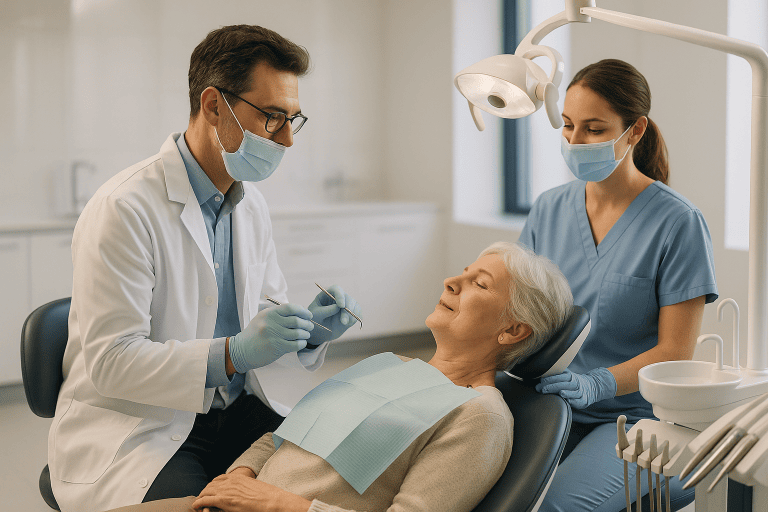
Removable dentures are artificial teeth set in a gum-colored base that can be taken out of the mouth. Complete dentures replace all teeth in a jaw, while partial dentures replace some teeth…
Quick answer
Removable dentures are custom-made artificial teeth on a gum-colored base that you can take out and put back in yourself. They replace some or all missing teeth, restoring chewing, speech, and facial support without surgery. They are made over several dental visits, require daily cleaning, and usually need adjusting or replacing as the mouth changes over time.
What is removable dentures?
Removable dentures are custom-made artificial teeth attached to a gum-colored base that you can take out of your mouth and put back in yourself. They replace teeth that have been lost because of decay, gum disease, injury, or other conditions. Unlike dental implants (artificial tooth roots placed in the jawbone) or fixed bridges (replacement teeth cemented to neighboring teeth), removable dentures rest on the gums and, in some cases, are held by clasps that grip remaining natural teeth.
There are two main types. A complete denture replaces all of the teeth in the upper jaw, the lower jaw, or both. A partial denture replaces one or more missing teeth when some healthy natural teeth remain, and it usually has a metal or flexible framework with small clasps. A denture may also be described as conventional, meaning it is made after the gums have healed following tooth removal, or immediate, meaning it is placed on the same day the teeth are extracted so that the person is not left without teeth while healing.
Removable dentures are used to restore chewing, speech, and facial support, and to improve appearance after tooth loss. Missing teeth can make eating and speaking difficult and can allow the cheeks and lips to sink inward. Dentures are one of several tooth-replacement options; your dentist may discuss them alongside implants and bridges. In many hospital settings this care is managed by a dental department, such as the Dental & Oral Health unit at Acibadem, which includes prosthodontists (dentists who specialize in replacing missing teeth).
Who is a candidate
Many people ask who needs removable dentures. In general, a dentist may suggest them for adults who have lost several or all of their teeth and who want a non-surgical, relatively quick, and often lower-cost way to replace them. Common situations include:
- Loss of all teeth in one or both jaws, usually from advanced gum disease (periodontitis, an infection that destroys the tissue and bone supporting the teeth) or widespread decay.
- Loss of several teeth where the remaining teeth are healthy enough to support a partial denture.
- People who are not suitable for dental implants because of limited jawbone, certain medical conditions, or personal preference.
- People who need teeth replaced while they wait for other treatment, such as implants, to be completed.
Removable dentures may not be suitable, or may need to be delayed, in certain circumstances. Active gum infection or untreated decay in remaining teeth usually needs to be managed first. Very flat or severely shrunken jaw ridges can make a lower denture difficult to keep in place, and a dentist may discuss implant-supported options instead. Some people have a strong gag reflex, a very dry mouth (which reduces suction and increases soreness), or conditions that make handling and cleaning a denture difficult, such as severe arthritis or memory problems; these do not always rule out dentures but do affect planning. Because every mouth is different, only a dental examination can confirm whether removable dentures are appropriate for you.
How the procedure works
The removable dentures procedure is not a single event but a series of appointments, usually spread over several weeks. It is normally done in a dental clinic and does not require a hospital stay. Anesthesia is generally not needed for the denture stages themselves; local anesthesia (numbing of a small area) is used only if teeth need to be removed beforehand.
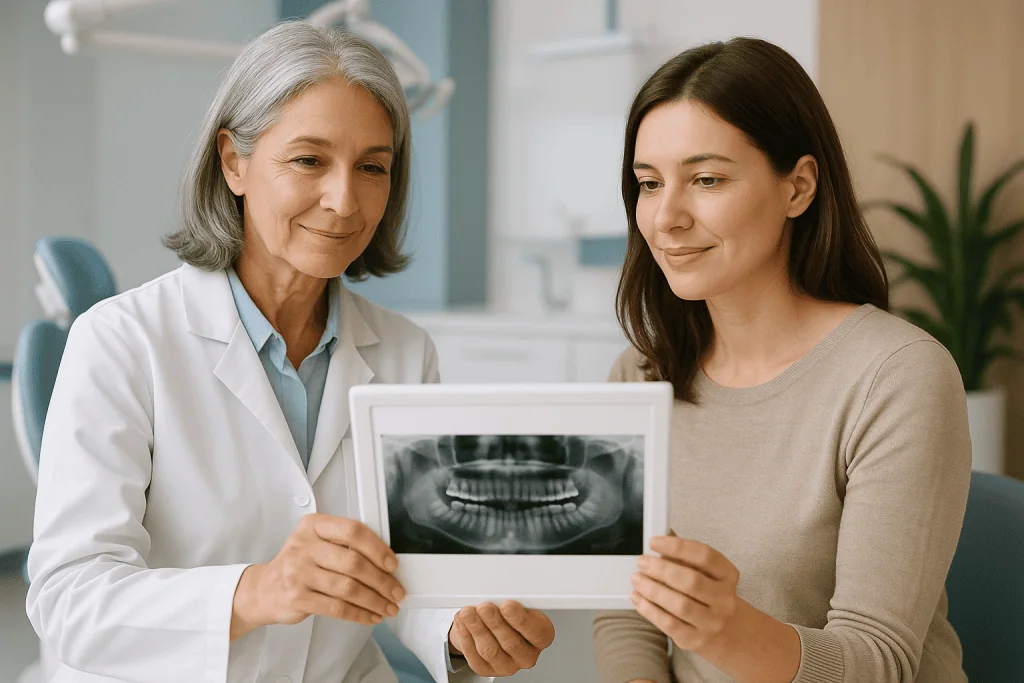
Before: Your dentist examines your mouth, takes X-rays if needed, and checks the health of your gums, remaining teeth, and jawbone. Any teeth that cannot be saved are removed, and infections are treated. If a conventional denture is planned, the gums are typically allowed to heal for a period of weeks to months before the final denture is made, because the shape of the gums changes as they heal.
During the fitting stages:
- Impressions. The dentist makes molds of your gums and any remaining teeth using a soft putty-like material or a digital scanner. These molds are used to build a model of your mouth.
- Bite registration. The dentist records how your upper and lower jaws meet so that the new teeth line up correctly.
- Wax try-in. A trial version of the denture with teeth set in wax is placed in your mouth. You and the dentist check the appearance, color, shape, and how the teeth meet, and adjustments are made before the final denture is processed.
- Final fitting. The finished denture is placed, and the dentist checks fit, comfort, speech, and bite, trimming any areas that press too hard.
After: Follow-up visits are common in the first weeks to adjust sore spots and fine-tune the fit. For immediate dentures, the denture is placed right after extraction and acts partly as a bandage; because the gums shrink as they heal, the denture typically needs relining (adding new material to the inside surface) or eventual replacement.
Preparation for removable dentures
Preparation focuses on making sure the mouth is healthy and that you understand what to expect. Your dentist may ask about your general health, current medications, and any allergies, including reactions to metals or acrylic. Tell your dentist if you take blood thinners, have diabetes, or have had radiation to the head or neck, as these can affect healing after extractions and the health of the gums.
Practical steps your dental team may recommend include:
- Completing any needed gum treatment or fillings on remaining teeth before impressions are taken.
- Arranging time off or transportation if teeth are being removed under local anesthesia or sedation.
- Bringing photographs of your natural smile if you would like the new teeth to resemble it.
- Discussing the type of denture (complete, partial, immediate, or conventional) and the materials involved, such as acrylic or metal frameworks.
- Asking how many visits are expected and what adjustments may be needed afterward.
It also helps to plan soft foods for the first days after receiving a new denture and to have denture cleaning supplies ready at home.
Recovery and aftercare
People often search for removable dentures recovery time, and the honest answer is that adjustment is gradual. The dentures themselves involve no surgical wound, but your mouth needs time to get used to a new object. Many patients notice increased saliva, a feeling of fullness, mild soreness, and some difficulty speaking or eating during the first days. These effects typically ease over the first few weeks as the muscles of the cheeks and tongue learn to hold the denture in place.
If teeth were extracted, the gums often take several weeks to close over and continue to remodel for months. During this period the fit of an immediate denture commonly loosens, and relines or a new denture may be needed. A realistic timeline for most people is:
- First few days: soreness, extra saliva, and speech changes are common; soft foods cut into small pieces are usually easier.
- First two to four weeks: eating and speaking generally improve; sore spots are adjusted by the dentist.
- Following months: most people feel comfortable with everyday use, though the fit should be checked periodically because gums and bone continue to change.
Daily aftercare is important for comfort and oral health:
- Remove and rinse dentures after eating, and brush them daily with a soft denture brush and a non-abrasive cleaner rather than regular toothpaste, which can scratch the surface.
- Take dentures out at night unless your dentist advises otherwise, and soak them in water or a denture-soaking solution so they do not dry out and warp.
- Clean your gums, tongue, and palate with a soft brush each day, and brush and floss any remaining natural teeth.
- Handle dentures over a towel or a basin of water, since they can break if dropped.
- Keep regular dental checkups so the fit can be assessed and the mouth checked for irritation or disease.
Denture adhesive can help some people with stability, but it should not be used to compensate for a poorly fitting denture, which should be adjusted instead.
Risks and side effects
Weighing removable dentures risks and benefits helps set realistic expectations. Dentures are non-surgical and generally low risk, but problems can occur:
- Sore spots and ulcers where the denture presses on the gums, especially in the first weeks or when the fit changes.
- Loose fit over time, because the jawbone under a denture gradually shrinks when it no longer supports natural teeth. This can cause slipping, clicking, and difficulty chewing.
- Bone loss in the jaw that continues over the years and may change facial appearance; dentures do not stop this process the way implants may.
- Denture stomatitis, a redness and inflammation of the tissue under the denture, often linked to a yeast infection, which is more likely if dentures are worn constantly or not cleaned well.
- Angular cheilitis, cracking and soreness at the corners of the mouth, sometimes associated with a low bite or fungal infection.
- Altered taste or speech, usually temporary but occasionally persistent, particularly with a full upper denture covering the palate.
- Damage to remaining teeth with partial dentures, if clasps place stress on the supporting teeth or if plaque collects around them.
- Breakage or loss of the denture, and rare allergic reactions to denture materials.
The benefits, for many people, include restored chewing ability, clearer speech, support for the lips and cheeks, improved appearance and confidence, and a treatment that avoids surgery and can be modified or replaced relatively easily. Your dentist can help you weigh these against the drawbacks in your specific situation.
Results and outlook
Dental research and clinical experience generally show that well-made removable dentures restore reasonable function and appearance for most people, although chewing efficiency with complete dentures is usually lower than with natural teeth or implant-supported teeth. Lower complete dentures tend to be less stable than upper ones because the tongue and a smaller ridge make suction harder to achieve. Patient satisfaction often depends as much on adaptation, expectations, and the health of the gums as on the denture itself.
Dentures are not permanent. Over time the gums and bone change, and dentures wear, so relines, adjustments, or replacement are typically needed every several years, with the exact interval varying from person to person. Regular dental review helps catch problems early. Some people who start with removable dentures later choose implant-retained overdentures, which are removable dentures that clip onto implants for added stability; this is an option your dentist may discuss if a conventional denture remains loose.
Cost considerations
Removable dentures are usually among the less expensive tooth-replacement options because they do not involve surgery or hospital admission, but the total cost still varies. Factors that commonly influence price include:
- Whether a complete or partial denture is needed, and whether it is for one jaw or both.
- The materials used, such as standard acrylic, a cast metal framework, flexible resin, or premium tooth designs.
- Whether teeth must be extracted first and whether an immediate denture is made in addition to a later conventional one.
- The number of appointments, including try-ins, adjustments, and relines.
- Any preparatory treatment, such as gum therapy or fillings on remaining teeth.
- Follow-up care over the years, including repairs and eventual replacement.
Insurance coverage for dentures differs widely between plans and countries, so it is sensible to ask for a written treatment plan and to check what your insurer covers before starting.
Frequently asked questions
Who needs removable dentures rather than implants?
Removable dentures are often considered for people who have lost many or all of their teeth and who prefer, or are better suited to, a non-surgical option. This may include people with insufficient jawbone for implants, certain medical conditions that increase surgical risk, or budget constraints. A dental examination is needed to decide which option fits an individual.
How long does the removable dentures procedure take from start to finish?
The process usually involves several appointments over a number of weeks. If teeth need to be extracted and allowed to heal before a conventional denture is made, the overall timeline can extend to a few months. Immediate dentures shorten the time without teeth but typically need relining later.
What is the typical removable dentures recovery time?
There is no surgical recovery from the denture itself, but adapting to it takes time. Many patients feel more comfortable eating and speaking within a few weeks, while full adjustment can take longer. If extractions were done, the gums generally heal over several weeks and continue to change for months, which may affect fit.
What are the main removable dentures risks and benefits?
Benefits often include improved chewing, speech, and facial support without surgery. Risks include sore spots, a loose fit as the jawbone changes, gum inflammation if the denture is not cleaned properly, and possible strain on remaining teeth with partial dentures. Regular checkups reduce many of these problems.
Can I sleep with my removable dentures in?
Most dentists recommend removing dentures at night to let the gums rest and to reduce the risk of denture stomatitis and other irritation. Your dentist may advise wearing an immediate denture continuously for the first day or two after extractions; follow the specific instructions you are given.
Will removable dentures change how I eat and speak?
Some changes are common at first. Cutting food into small pieces, chewing on both sides at once, and practicing reading aloud can help. Persistent difficulty after several weeks may indicate that the denture needs adjustment rather than that you need to accept the problem.
How often do removable dentures need to be replaced?
Dentures typically need relining or replacement every several years because the shape of the mouth changes and the materials wear, but the interval varies. Your dentist can assess the fit at routine visits and advise when a change is needed.
When to see a doctor
You should be assessed by a dentist or prosthodontist if you have missing teeth that make eating or speaking difficult, if remaining teeth are loose or painful, or if an existing denture has become loose, cracked, or uncomfortable. Ongoing sore spots, red or swollen gums under a denture, persistent bad breath, or white or red patches in the mouth also warrant an appointment, as these can point to irritation, infection, or, rarely, more serious conditions that need examination.
Seek prompt or urgent care if, after tooth extractions or a new denture, you notice:
- Bleeding that does not stop with firm pressure after a reasonable time.
- Increasing pain, swelling, or fever, which may suggest infection.
- Difficulty breathing or swallowing, or rapidly spreading swelling of the face or neck.
- A mouth sore or ulcer that has not healed within about two weeks.
- A denture or fragment that has been swallowed or inhaled.
Regular dental checkups remain important even when no natural teeth are left, because the soft tissues, jaw, and the fit of the denture should be reviewed over time.
Preparation
- Complete any needed gum treatment, fillings, or tooth extractions before impressions are taken, and tell your dentist about medications, allergies, and health conditions such as diabetes. Discuss which type of denture is planned and how many visits to expect. Have soft foods and denture cleaning supplies ready at home for the first days.
Aftercare
- Remove and rinse dentures after eating, brush them daily with a soft brush and non-abrasive cleaner, and soak them overnight while out of the mouth. Clean your gums, tongue, and any remaining teeth every day. Return for adjustment of sore spots and keep regular checkups so fit and oral health can be reviewed.
Medically reviewed by the Acıbadem International Medical Board September 13, 2026
See our medical review board →
Update history
- PublishedSeptember 13, 2026
- Medical review approvedSeptember 13, 2026
- Last content updateSeptember 13, 2026
References2
From the Acibadem Blog

When Removable Dentures Stop Fitting: Relining, Rebasing and When a Remake Is Needed
Removable dentures usually stop fitting because the jawbone and gum underneath slowly shrink, not because the denture itself changes much. Dentists first assess the…
How Removable Dentures Are Made: Impressions, Bite Records, Try-In and the Final Fitting
Removable dentures are made over several appointments, usually spread across a few weeks. The dentist takes preliminary and then detailed impressions of the gums,…
Daily Care for Removable Dentures: Rinsing, Brushing, Overnight Soaking and Gum Health
A sound denture care routine has four daily steps: rinse the denture after meals, brush it once a day with a soft denture brush…