

Veneers in Turkey: E-max, Porcelain, Composite and Cost Guide
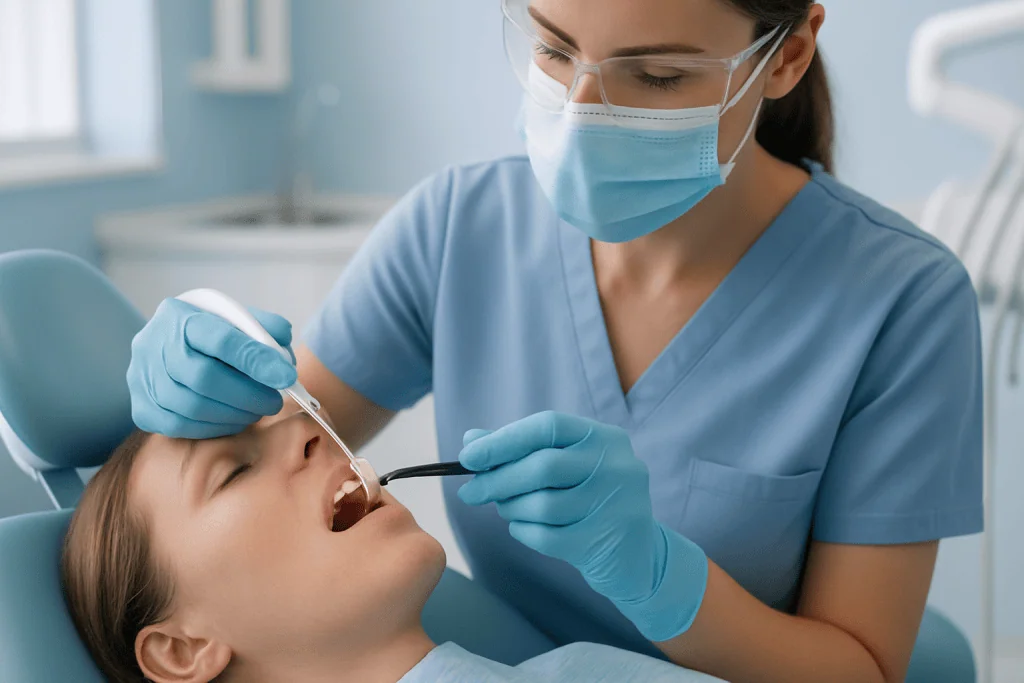
Veneers in Turkey are a frequent search among adults in the United Kingdom who want to change the colour, shape or alignment of their front teeth but face long private waiting times or self-pay costs at home. This guide explains what porcelain, E-max, laminate and composite veneers are, who is and is not a suitable candidate, and how the treatment is organised when it is delivered inside a hospital group rather than a stand-alone clinic.
It also answers the practical questions behind searches such as ‘turkey veneer cost’, ‘veneers turkey package’ and ‘how much are veneers in turkey’ without quoting figures, because a responsible price can only follow a review of your own teeth. What you will find instead is a clear description of the pathway, the recovery timeline, the risks, and how to compare an offer in Türkiye like for like with one in the UK or the US.
What veneers are and who they suit
Porcelain veneers are thin ceramic shells bonded to the front surface of the teeth. They are used in cosmetic smile design to improve colour, shape, size and alignment, most often on the teeth visible when you smile. The treatment is non-surgical and carried out under local anaesthesia.
Porcelain, E-max, laminate and composite veneers
- Porcelain veneers are made from dental ceramic in a laboratory and bonded to the tooth. The term laminate veneers is widely used for the same thin ceramic shells.
- E-max veneers refer to a well-known brand of lithium disilicate glass-ceramic. It is one of several ceramic materials a dentist may propose; the choice depends on the tooth, the shade required and the bite.
- Composite veneers use tooth-coloured resin applied directly to the tooth or made in a laboratory. They are generally easier to repair and involve less laboratory work, but composite tends to stain and wear more readily than ceramic over time.
Who is a suitable candidate
Veneers suit adults with healthy teeth and gums who want to correct discolouration, small chips, gaps, mild misalignment or uneven tooth size, and who understand that a veneer is a long-term commitment rather than a temporary cosmetic change.
Who should not have veneers
Veneers are usually not appropriate, or need to be postponed, when there is active gum disease, untreated decay, unmanaged teeth grinding, very little healthy enamel, or a bite problem that would be better corrected with orthodontics. Any cavities, gum disease or grinding concerns should be managed before treatment. A dentist will also advise against veneers when whitening or minor orthodontics would achieve the aim with less alteration of natural teeth.
Why UK and US patients travel to Türkiye for veneers
Türkiye has developed a mature dental sector serving international patients, and Istanbul is roughly four hours by air from London and about ten hours from New York. For many UK readers the deciding factors are the absence of a waiting list, the ability to complete a smile design in one planned trip, and the availability of hospital-based dentistry rather than a small stand-alone clinic.
Hospital medicine rather than a clinic in isolation
Acıbadem operates a network of more than 20 hospitals, seven of which hold Joint Commission International (JCI) accreditation, with more than 3,300 physicians across the group. Dental units within these hospitals work alongside anaesthesia, radiology and intensive care teams on the same site. For a routine veneer case this back-up is rarely needed, but it matters for patients with heart disease, diabetes, bleeding disorders or anxiety who may require sedation or closer medical oversight.
Experience with international patients
Hospital groups accustomed to overseas patients have processes that smaller providers may lack: English-speaking coordinators, translated medical records, standardised infection control, digital imaging that can be shared with your own dentist, and clear escalation routes if something is not right. The international patient service handles appointments, transfers and communication so that the clinical team can concentrate on the dentistry.
Time as well as access
Because treatment is scheduled around your travel dates rather than a waiting list, most patients can move from remote review to completed veneers within weeks. The trade-off is that you must plan the trip carefully and take aftercare seriously, which the rest of this page addresses.
How veneers in Turkey work with Acıbadem, step by step
The pathway is designed so that the clinical decisions are made before you buy a flight, and so that nothing is rushed once you arrive.
- Remote medical review. You send recent photographs of your teeth, any X-rays or scans from your own dentist, and a short medical history. A dentist reviews them free of charge and confirms whether veneers are realistic, which material may suit you, and whether any preparatory dental work is needed.
- Personal plan and quote. You receive a written plan describing the proposed number of veneers, the material, the number of visits and the days you should expect to stay. A personal price quote accompanies the plan; the website’s Price Index shows verified ranges separately.
- Arrival and coordinator. On arrival in Istanbul you are met by a coordinator who arranges transfers and appointments, and who remains your point of contact throughout the stay.
- Consultation and pre-operative assessment. The dentist evaluates your oral health, bite, gum condition and aesthetic goals in person. Digital or clinical smile planning may be used to design the intended tooth shape and shade, and you approve the design before any work begins.
- Treatment visits. Veneers are placed under local anaesthesia in outpatient visits of one to two hours. Laboratory-made ceramic veneers usually require more than one appointment during the trip.
- Recovery in Istanbul. You remain in the city for the final fitting and a review appointment before flying home.
- Follow-up after returning. You receive your records and imaging, with remote follow-up available and a recommendation to see your own dentist for routine checks.
Treatment may take place at one of the group’s Istanbul hospitals, for example Acibadem Maslak Hospital, depending on scheduling and your medical needs.
The procedure: technique, anaesthesia and duration
Placing veneers is a non-surgical dental procedure. It is performed under local anaesthesia, so you are awake but the treated area is numb. There is no hospital stay; each visit is an outpatient appointment lasting roughly one to two hours.
Preparation
Before porcelain veneers are made, the dentist evaluates oral health, bite, gum condition and aesthetic goals. Digital or clinical smile planning may be used to design the desired tooth shape and shade, and you should expect to review this design and discuss it rather than accept it automatically. Any cavities, gum disease or teeth-grinding concerns are managed first, because bonding veneers onto compromised teeth is a common source of later problems.
Bonding the veneers
Porcelain veneers are thin ceramic shells bonded to the front of the teeth. The extent of any preparation of the natural tooth depends on the material chosen and your individual case, and this is explained at the consultation. Ceramic veneers are made to the agreed design and then fitted and bonded at a subsequent visit; composite veneers may be completed more directly. The dentist checks shade, fit and bite before final bonding.
What you will feel
Because local anaesthesia is used, discomfort during the procedure is usually minimal. Mild tooth sensitivity or gum tenderness can occur for a few days afterwards. There is no general anaesthetic to recover from, and you can return to your hotel the same day. Recovery is typically described as a few days to one week.
Recovery and aftercare timeline
Recovery from veneers is short compared with surgical treatment, but the first week and the first few months matter for how well the veneers settle and last.
The day of treatment
Numbness from the local anaesthetic wears off over a few hours. Eat carefully until sensation returns fully so that you do not bite your cheek or lip. Avoid very hot or cold drinks if your teeth feel sensitive.
The first few days
Mild tooth sensitivity or gum tenderness can occur for a few days. Over-the-counter pain relief recommended by your dentist is usually sufficient. Keep to softer foods, brush gently but thoroughly, and clean between the teeth as instructed. Report any sharp edge, a veneer that feels high when you bite, or bleeding gums that do not settle.
Around one week
Most sensitivity has usually resolved within a few days to one week. A review appointment before you fly home allows the dentist to check the bite and the gum margins and make any small adjustment.
Ongoing care
- Maintain good oral hygiene every day; veneers do not protect the underlying tooth from decay at the edges.
- Attend regular dental check-ups with your own dentist.
- Avoid biting hard objects such as ice, pens or fingernails, and do not use your teeth to open packaging.
- A night guard may be recommended if you grind or clench your teeth.
How long veneers last depends on the material, your bite, your habits and how well they are maintained; no honest provider will promise a fixed lifespan.
What it costs: UK, US and Türkiye
Typical self-pay ranges from the Turkey Medical Price Index. Türkiye figures are guide ranges for hospital treatment; your personal quote follows a free medical review.
Source: Turkey Medical Price Index (quarterly edition). Ranges depend on the extent of treatment, materials and hospital stay; they are not a quote.
Safety and risks
Veneers are a well-established treatment, but they alter natural teeth and carry risks that should be weighed calmly before travelling.
Who is not suitable
Patients with active gum disease, untreated decay, unmanaged grinding, insufficient enamel or a significant bite problem should not proceed until these are addressed, and sometimes not at all. Anyone with unrealistic expectations, or who is being pressured by a deadline or a package that cannot be adjusted, should also pause.
Complications
- Persistent tooth sensitivity, particularly to cold.
- Chipping, cracking or debonding of a veneer, more likely with grinding or biting hard objects.
- Gum irritation or recession at the veneer margin if the fit is imperfect or hygiene is poor.
- Decay developing under or around a veneer over time.
- Colour mismatch or a shape you are not happy with, which is why design approval before bonding matters.
- In rare cases, irritation of the tooth nerve requiring further treatment.
What cases that go wrong abroad tend to share
Reports of poor outcomes after dental treatment abroad tend to share features: too many teeth treated in too little time, no thorough assessment of gums and bite beforehand, no written plan or records, no hospital or medical back-up when a patient felt unwell, and no arrangement for follow-up once the patient was home. Aggressive removal of healthy tooth structure to fit a standard design is a particular concern.
How a hospital setting changes that
In a hospital group the dentist works within governance, infection control and record-keeping standards that apply across the institution, with medical colleagues and imaging available on site. The remote review and in-person assessment are separate steps, treatment is scheduled with time for laboratory work, and records are handed to you for your own dentist. None of this removes the risks listed above, but it reduces the avoidable ones.
UK and US vs Türkiye: cost, waiting and aftercare compared
Searches for ‘turkey veneer cost’ and ‘how much are veneers in turkey’ reflect the main reason people look abroad. It is worth being precise about what differs and what does not.
The pathway at home
In the UK, veneers are almost always private, so there is no NHS waiting list to bypass, but private appointments can be spread over many weeks and the total cost is borne by the patient. In the US the position is similar: cosmetic dentistry is generally self-pay, and dental insurance seldom covers veneers. Aftercare, however, is close at hand in both countries, and that convenience has real value.
Why the cost differs
The lower cost in Türkiye reflects lower salaries, rents and overheads, and a different cost of living. It does not, in a hospital setting, reflect different materials: ceramic systems such as E-max and the bonding agents used are the same internationally sourced products used in the UK and the US. We do not publish figures on this page; a personal quote follows the free medical review, and the site’s Price Index shows verified ranges separately.
What lower cost does not mean
It does not mean the clinical decision should be different. If your own dentist would advise whitening or orthodontics rather than veneers, that advice does not change with geography. Nor does it remove the cost of travel, accommodation, time off work and possible return visits, which should be added to any comparison.
Compare like for like
- Same material and the same number of teeth.
- Whether preparatory work such as gum treatment or fillings is included.
- Whether a night guard, imaging and follow-up appointments are included.
- What happens, and who pays, if a veneer chips within the first year.
- Whether the provider is a hospital with medical back-up or a stand-alone clinic.
Planning your trip and what a veneers package should include
Once your plan is agreed, the practical arrangements are straightforward, but a few points deserve attention.
Documents and entry
UK, Irish, US, Canadian and Australian passport holders currently enter Türkiye visa-free for up to 90 days; check the current rules before you travel, and make sure your passport is valid for the period required. Bring printed and digital copies of your treatment plan and any dental records from home.
How long to stay
Laboratory-made ceramic veneers normally require more than one appointment, with time between them for the laboratory to make the veneers to the approved design. Your written plan will state the expected number of days; allow for a review appointment before flying and avoid booking a return flight for the same day as your final fitting.
Companion and insurance
A companion is not medically necessary for veneers, but many patients appreciate the support. Standard travel insurance usually excludes planned medical treatment abroad, so check the policy wording and consider specialist cover that includes complications of elective treatment and changes to travel dates.
What to bring
- Your medication list and any allergies, including to dental anaesthetics or antibiotics.
- A soft toothbrush, interdental brushes or floss, and any night guard you already use.
- Comfortable clothing and something to do during laboratory waiting days.
What a ‘veneers turkey package’ should contain
A responsible package sets out the number and material of veneers, the assessment and imaging, the number of visits, transfers, coordinator support, the review appointment and the follow-up arrangement, with any excluded items listed. Be cautious of any package that fixes the number of teeth before a dentist has examined you, or that cannot be changed if the in-person assessment reveals gum disease or decay.
Back home: follow-up, records and your own dentist
Your relationship with your own dentist continues after veneers, and the hospital team should support it rather than replace it.
Follow-up and records
Before you leave Istanbul you should receive your treatment notes, imaging and details of the materials used. Share these with your own dentist at your next check-up so that any future work takes the veneers into account. Remote follow-up with the treating dentist is available for questions, and you should continue routine check-ups and hygiene visits at home as before.
When to seek help
- Sensitivity that worsens rather than eases after the first week.
- A veneer that loosens, chips or comes off.
- Gum swelling, bleeding or pain that does not settle.
- A bite that feels uneven, or pain when chewing.
Contact the international patient team first so that the treating dentist can advise, and see your own dentist or, in an emergency, an urgent dental service.
Insurance, NHS and your own doctor
Private medical and dental insurance in the UK rarely covers elective cosmetic treatment abroad, and policies differ on complications, so check with your provider before travelling. The NHS treats complications of treatment received abroad as it would any other patient presenting with a dental or medical problem, but it does not repair or replace cosmetic work, and NHS dental access varies by area. Readers in the US should note that HSA and FSA eligibility for cosmetic dentistry is limited and that travel-medical policies vary widely in what they cover after planned treatment; read the exclusions carefully. Nothing on this page should be taken as a reason to skip your own dentist’s opinion, and a second opinion at home is a reasonable step before any irreversible dental treatment.
Questions to ask before deciding on veneers in Turkey
Whether you are considering Türkiye, the UK or the US, the same questions apply. Use this checklist in your consultation.
- Am I a suitable candidate, and would whitening, bonding or orthodontics achieve my aim with less change to my natural teeth?
- Which material do you recommend for me, ceramic such as E-max, another porcelain, or composite, and why?
- How many teeth do you propose treating, and how much natural tooth structure will be altered?
- How will my gums, bite and any grinding be assessed and managed before treatment?
- Can I see and approve the smile design before anything is bonded?
- How many visits and how many days in Istanbul will the plan need, and what happens if the laboratory needs more time?
- Who is the treating dentist, and within which hospital does the dental unit operate?
- What exactly does the quote include, what is excluded, and how is a complication handled once I am home?
- Will I receive full records and imaging to share with my own dentist?
- Is a night guard recommended, and is it included?
Clear, specific answers to these questions are a good sign; vague answers or pressure to decide quickly are not. Take the written plan home, discuss it with your own dentist if you wish, and decide in your own time. Suitability for veneers is determined by a physician’s evaluation of your teeth, gums, bite and general health.
How much are veneers in Turkey?
We do not publish prices on this page because the cost depends on the material, the number of teeth and any preparatory work your teeth need. A personal quote follows a free remote medical review of your photographs and records. Verified price ranges are shown separately in the site's Price Index so that you can compare before enquiring.
What is the difference between E-max veneers and porcelain veneers?
E-max is a brand of lithium disilicate glass-ceramic, so E-max veneers are one type of ceramic, or porcelain, veneer. Other ceramic materials exist, and the dentist chooses based on the shade required, the thickness available and your bite. The term laminate veneers is generally used for the same thin ceramic shells.
Are composite veneers in Turkey a reasonable alternative to ceramic?
Composite veneers use tooth-coloured resin and are generally quicker to complete and easier to repair. They tend to stain and wear more readily than ceramic and may need more maintenance over time. Your dentist will advise which suits your teeth and expectations after the assessment.
How many visits and how long do I need to stay in Istanbul for veneers?
Each visit is an outpatient appointment of roughly one to two hours under local anaesthesia, with no hospital stay. Laboratory-made ceramic veneers usually need more than one appointment during the trip, with time between them for the laboratory. Your written plan states the expected number of days, including a review appointment before you fly home.
Is it safe to have veneers in Turkey?
Veneers carry the same risks wherever they are done, including sensitivity, chipping, gum irritation and decay at the margins. Safety depends on thorough assessment, unhurried planning, quality materials and follow-up rather than on the country. Treatment within a hospital group with anaesthesia, imaging and medical teams on site, and with records provided for your own dentist, reduces the avoidable risks.
What should a veneers Turkey package include?
A responsible package lists the number and material of veneers, the assessment and imaging, the number of visits, transfers and coordinator support, the review appointment and the follow-up arrangement, with exclusions stated. Be cautious of packages that fix the number of teeth before a dentist has examined you or that cannot be changed if decay or gum disease is found.
What happens if a veneer chips or comes off after I return to the UK?
Contact the international patient team first so that the treating dentist can advise, and see your own dentist for an assessment. Ask before treatment how such situations are handled and who bears the cost. The NHS will treat pain or infection as it would for any patient but does not repair cosmetic work.
How long do veneers last?
Lifespan depends on the material, your bite, whether you grind your teeth, your oral hygiene and whether you avoid biting hard objects. No responsible provider will promise a fixed number of years. Regular check-ups with your own dentist and a night guard where recommended help protect the veneers over time.
Your care team
Physicians of the Acıbadem network who perform this treatment in Istanbul.
 Where it is performed Acibadem Maslak Hospital İstanbul · JCI-accredited hospitals

Clinical guide & data
The evidence-based pages behind this guide.
Read this treatment guide in your language
Planning tools for this treatment
Indicative figures for orientation only: your written plan and quote follow a free medical review.