

How Much Do Veneers Cost in Turkey?

There is no single answer, because how much veneers cost in Turkey depends on the material chosen, the number of teeth treated, any preparatory dental work you need, and what the quote actually includes. The most reliable way to estimate your total is a written, itemised treatment plan based on your own teeth, plus a realistic travel budget and a small contingency fund.
You have probably seen a per-tooth price online and tried to multiply it into a total. That calculation rarely holds. How much do veneers cost in Turkey? It depends on the material, how many teeth are treated, whether your teeth and gums need work first, and what the quote actually covers. Two people asking for the same treatment can receive very different totals, and both quotes can be honest.
This guide does not give you a price, because a price without an examination would be a guess. What it does is show you how the total is built, what a serious quote should list, why some numbers look cheaper than they turn out to be, and how to budget for the trip around the treatment. If you want the clinical side of the journey, appointments, preparation, fitting, read Veneers in Turkey: Process, Prices and What to Expect alongside this one.
At a glance
- Best for: International patients comparing veneer quotes for Turkey
- Main cost drivers: Veneer material, number of teeth, preparatory dental work, laboratory and planning complexity
- What a quote should list: Examination, imaging, smile planning, preparation, temporaries, lab fabrication, fitting, follow-up
- Beyond the dental fee: Flights, accommodation, meals, local transport, and a time buffer before flying home
- Quote tip: Ask what is included, what is excluded, and what could change after the in-person examination
Veneer prices in Turkey vs the UK and US
Measured ranges from our quarterly price ledger: the same data set published in the Turkey Medical Price Index. UK and US columns are typical private, self-pay ranges.
| Procedure | Turkey guide range | UK typical | US typical | Saving vs UK / US* |
|---|---|---|---|---|
| Porcelain / E-max veneer (per tooth) | €250–€500 | £900–£1,500 | $900–$2,500 | 73% / 76% |
| Composite bonding (per tooth) | €130–€300 | £200–£500 | $100–$500 | 47% / 22% |
| Zirconium crown (per tooth) | €200–€400 | £550–£1,200 | $1,000–$2,500 | 71% / 81% |
| E-max crown (per tooth) | €250–€500 | £550–£1,200 | $1,200–$2,500 | 63% / 78% |
| Full smile makeover (20-24 units) | €3,250–€7,800 | £16,000–£24,000 | $15,000–$40,000 | 76% / 78% |
| In-chair teeth whitening | €200–€450 | £300–£700 | $300–$1,000 | 44% / 46% |
Ranges come from the Turkey Medical Price Index (Q3 2026 edition): Turkey figures are published guide ranges for international patients at JCI-accredited Acibadem hospitals; UK and US figures are representative private, self-pay ranges compiled from published price lists. *Savings compare range midpoints at £1 = €1.17 and $1 = €0.92. Every figure is indicative: your own quote is confirmed only after the medical team reviews your records.
What decides how much veneers cost in Turkey
Start by dropping the idea of one number. When you ask ‘how much do veneers cost in Turkey?’, the honest answer is a range of factors, not a figure. The final total is usually shaped by four things: the veneer material recommended for you, the number of teeth treated, the condition your mouth is in when you arrive, and the amount of planning and laboratory work your case demands.
Material is the largest single variable. Composite veneers, built up directly on the tooth, sit at one end of the spectrum. Porcelain veneers and thin laminate veneers, fabricated in a laboratory to match the shade and translucency of your natural teeth, involve more steps and different pricing. Neither is universally better. They suit different teeth, different budgets and different expectations, and a dentist should explain why one is recommended for you rather than defaulting to the most expensive option.
The number of teeth is the multiplier. Veneers are usually planned across a group of visible teeth so that colour, shape and proportion match, which means the tooth count in your plan may be higher than the one or two teeth that first bothered you. And your starting oral health sets the floor: if you need a professional cleaning, gum treatment, fillings, a bite adjustment or new imaging before veneers can be placed safely, those steps either appear as separate lines on the quote or are folded into a broader plan. A remote estimate based on photographs is useful for planning, but it is provisional until a dentist has examined you in person.
What a veneers quote usually includes
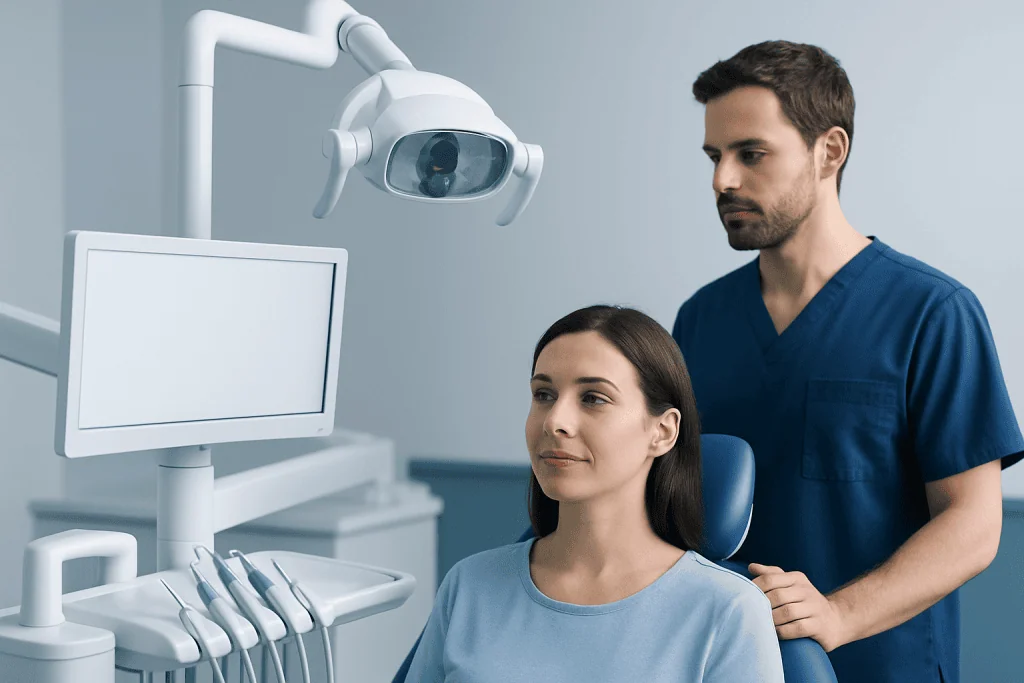
The per-tooth price is the least informative number in most advertisements. The more useful question is what sits behind it. A thorough veneers quote typically covers the consultation and dental examination, imaging where needed, smile design and planning, tooth preparation, temporary restorations where appropriate, laboratory fabrication, the fitting appointments, and a short follow-up check before you fly home. Some clinics include basic medications and written aftercare guidance; others bill these separately.
Ask just as directly about what is not included. Common exclusions are future repairs, replacement if a veneer is damaged after you leave, treatment for unrelated dental problems discovered during assessment, and extra hotel nights if your appointments shift. None of these exclusions makes a clinic dishonest, but a transparent one will name them before you travel, not after. The guide on how to spot hidden costs in medical travel quotes for Turkey covers the pattern in more detail.
If you are travelling internationally, also ask which practical services come with the treatment: airport transfers, interpreter support, accommodation coordination, local transport. At Acibadem, the international patient team handles scheduling, interpreters and travel logistics for patients arranging care from abroad, and knowing in advance which of these services a provider offers makes quotes far easier to compare fairly. For a broader view of how hospital quotes are built here, see what a quote includes.
Why some quotes look cheaper than others

If one quote is much lower than the rest, do not assume you have found the best value. Assume you have found a different scope. A low headline figure can reflect a different material, fewer planning steps, minimal aftercare, or a quote that covers only the final placement and leaves preparation work to be added later. In some advertising, the number shown is a starting price for the simplest possible case, not a realistic total for yours.
Quotes also differ because facilities differ. Hospitals and dental centres serving international patients tend to invest more in diagnostics, sterilisation protocols, multidisciplinary review, language support and coordinated scheduling, and that investment is reflected in the price. Whether those things matter to you is your judgement to make, but they are part of what you are comparing, even when they do not appear as line items.
The practical test is simple. Ask each provider for an itemised estimate and a tooth-by-tooth explanation of the plan. If two quotes describe different numbers of teeth, different materials or different included services, they are not the same treatment at different prices; they are different treatments. Cheaper is not always cheaper once travel changes, additional dental work or a remake are added to the real total.
How many teeth should you budget for?
Most people begin by imagining one or two front teeth. Most treatment plans involve more. Because a single veneer must blend seamlessly with its neighbours, dentists often recommend treating the group of teeth that shows when you smile, so colour, shape and proportion stay consistent. The exact number depends on your smile line, your natural tooth colour, existing restorations, and the result you want.
You may come across the so-called 4-8-10 rule. It is not a clinical rule: it is an informal shorthand for the tooth counts commonly treated together: four for the central smile zone, eight for the teeth visible in a moderate smile, ten or more for a wide smile that shows further back. Treat it as a way of understanding why quotes are often built around sets, not as a target. Some patients genuinely need fewer; a wider set is not automatically a better result, and a smaller one is not automatically a mismatch.
Since tooth count is usually the biggest driver of the total, ask the dentist to justify the number they recommend. “Why these teeth and not fewer?” is a fair question, and a good clinician will answer it in terms of your smile line and existing dentistry rather than in terms of the package on offer. Budget as well for the possibility of preparatory work, old fillings, uneven edges, gum concerns or bite issues may need attention before any veneer is placed. Planning for that possibility is cheaper than being surprised by it after you arrive.
Currency, payment and quotes in US dollars
A frequent search is ‘how much do veneers cost in Turkey in US dollars’, and it points to a real practical issue: currency. Clinics quoting international patients may price in dollars, euros, pounds or Turkish lira, and the currency of the quote affects how stable your total is between the day you accept it and the day you pay.
Three questions settle it. First, which currency is the quote fixed in, and for how long is it valid? Second, which payment methods are accepted, card, bank transfer, cash, and do any carry a surcharge or conversion fee on your side? Third, when is payment due: is a deposit required to confirm dates, and when is the balance settled? Your own bank may also apply foreign transaction fees or exchange margins, which sit outside the clinic’s quote entirely but still land on your statement.
Get the answers in writing before you book flights. A quote that is clear about currency, validity and payment timing is one less variable in a trip that already has several.
Travel, timing and the costs around the treatment
The dental fee is only part of what this trip costs you. Flights, accommodation, meals, travel insurance and local transport all belong in the same budget, and so does the possibility of extra nights if laboratory timing shifts or your dentist wants one more adjustment before you fly. Depending on the plan, veneers may need more than one clinical visit spread over several days, and occasionally a second trip is advised for review or additional work.
Ask in advance how long you should plan to stay, what happens if the laboratory schedule changes, and whether your itinerary leaves room for a final check of comfort, bite and appearance before departure. Patients regularly underestimate the value of a time buffer. Booking the earliest possible return flight saves little and can cost a lot if it forces a rushed fitting or a second journey.
If someone is travelling with you, their costs belong in the plan too: the guide on companion costs in Turkey covers meals, transport and extra nights. For the wider picture of expenses patients tend to miss, see hidden costs patients often miss.
How to ask for a quote you can trust
The quality of a quote depends on the quality of the information behind it. Estimates built on clear, recent photographs and an honest dental history are more stable than estimates built on a single selfie. When you approach any provider, mention crowns, fillings, root canal treatment, gum bleeding, sensitivity, grinding and previous cosmetic work, and be candid about the result you expect. Incomplete information is the most common reason a quote changes significantly after the first examination.
Then ask for the plan in writing, itemised: the recommended veneer type and why, the number of teeth, included consultations and diagnostics, temporaries, laboratory work, fitting appointments, follow-up, and the specific circumstances that could add cost after examination. It is entirely reasonable to ask about deposit rules, cancellation and postponement policies at the same stage. A provider that answers these questions plainly before taking your money is telling you something useful about how they will behave afterwards.
Finally, ask who coordinates your care and how communication works before travel and after you return home, who answers questions, in what language, and how quickly. That clarity is often worth as much as the number on the quote.
Is it worth getting veneers in Turkey?
For many international patients, dental treatment in Turkey can be more affordable than in their home country, which is why the question comes up so often. But “worth it” is not a price comparison; it is a value judgement across the whole package: the standard of the facility, the thoroughness of planning, the material used, the aftercare arrangements, and what happens if you need support once you are home.
The same caution applies to “which country is cheapest”. There is no reliable answer, because the cheapest headline price and the cheapest realistic total are rarely the same thing, and both shift with exchange rates, tooth count and the scope of each quote. Veneers are also a long-term commitment: they involve preparing your natural teeth, they need maintenance, and they will eventually need attention or replacement. The sensible comparison is between complete, itemised plans from providers you have questioned properly, not between advertised per-tooth figures from different countries.
Step by step
- Collect your dental information. Gather recent dental records if you have them, plus clear photographs of your teeth from the front and side. Note sensitivity, gum problems, grinding, old bonding, crowns or root canal treatment so any clinic can assess your case accurately.
- Request an itemised estimate. Ask for a written quote listing the veneer type, number of teeth, consultations, imaging, temporaries if needed, laboratory work, fitting and follow-up, and the situations that could increase the price after in-person examination.
- Compare scope, not per-tooth numbers. Check whether each estimate includes diagnostics, laboratory fabrication, medications, interpreter support and travel coordination. Two quotes with different scopes are not comparable on price alone.
- Confirm currency and payment terms. Establish which currency the quote is fixed in, how long it is valid, which payment methods are accepted, whether a deposit is required, and when the balance is due.
- Confirm your timeline before booking flights. Ask how many appointments are needed and how many days to stay. Leave a buffer before your return flight in case the dentist wants a final adjustment or review.
- Set a contingency budget. Put money aside for possible extras: additional imaging, gum treatment before placement, an extra hotel night, a night guard if recommended. You are not expecting problems: you are planning for normal variability.
- Understand aftercare before you leave. Make sure you know the eating and cleaning guidance, how maintenance works long term, who to contact with questions after you return home, and whether remote follow-up is available.
Your checklist
- Recent photographs of your teeth and smile
- List of past dental treatments, crowns, fillings or implants
- Written itemised quote with included and excluded costs
- The recommended veneer material, and the reason for it
- Planned number of teeth and the justification for that number
- Quote currency, validity period, deposit and payment terms
- Travel budget: flights, hotel, meals, insurance, local transport
- Contingency fund for extra treatment or extra nights
- Time buffer before the return flight
- Aftercare instructions and a follow-up contact route
Key takeaways
- Veneers cost in Turkey is set by material, tooth count, planning complexity and any dental work needed first, not by a single advertised rate.
- A trustworthy quote states what is included, what is excluded, and what could change after examination, in writing.
- Unusually low quotes usually describe a narrower scope, not the same treatment at a discount.
- Tooth count is typically the biggest multiplier; ask the dentist to justify the number they recommend.
- Currency, payment terms, travel, accommodation and a time buffer are all part of the real total for international patients.
Frequently asked questions
How much do veneers cost in Turkey?
There is no single fixed total. How much veneers cost in Turkey depends on the material, the number of teeth in the plan, whether preparatory dental work is needed, and what the quote includes. The reliable way to estimate your own total is a written, itemised treatment plan based on photographs and dental history, refined after an in-person examination, plus your travel budget.
How much do porcelain veneers cost in Turkey compared with composite?
Porcelain and laminate veneers are laboratory-fabricated and involve more planning steps, so they are generally quoted differently from composite veneers, which are built directly on the tooth. The right choice depends on your teeth and expectations, not simply on price, and a dentist should explain why a particular material is recommended for your case.
How much would a full set, for example, twenty veneers, cost in Turkey?
A full set multiplies whatever per-tooth arrangement applies, but the total is rarely simple multiplication: larger plans involve more planning, laboratory work and appointment time, and not every smile needs that many teeth treated. Ask why a given number is recommended for your smile line rather than budgeting for a round number in advance.
How much do veneers cost in Turkey in US dollars?
Clinics quote in different currencies, dollars, euros, pounds or lira, so the useful questions are which currency your quote is fixed in, how long it remains valid, and what payment methods are accepted. Your own bank’s exchange margins and foreign transaction fees sit outside the quote but still affect what you actually pay.
Is it worth getting veneers in Turkey?
Treatment in Turkey can be more affordable than in some countries, but value depends on the whole package: facility standards, planning quality, material, aftercare and follow-up support. Compare complete itemised plans from providers you have questioned properly, and remember veneers are a long-term commitment involving your natural teeth, not a one-off purchase.
What is the 4-8-10 rule for veneers?
It is an informal shorthand, not a clinical rule. It refers to the tooth counts commonly treated together, four for the central smile zone, eight for a moderate smile, ten or more for a wide smile, because veneers are usually planned in matching sets. Your own number should come from your smile line and existing dentistry, not from the shorthand.
Why can my quote change after I arrive?
Remote estimates are based on photographs and history, which cannot show everything. An in-person examination and imaging may reveal gum issues, hidden decay, bite concerns or old restorations that affect the plan, so the dentist may refine the number of veneers or recommend preparatory treatment first. A good quote names these possibilities in advance.
How many days should I stay in Turkey for veneers?
It varies with the treatment plan, the number of teeth and laboratory timing, and some plans involve more than one clinical visit over several days. Ask for a suggested itinerary before booking flights, and leave a buffer before your return in case the dentist wants a final adjustment or review.
See also: what “Turkey teeth” really cost, dental implant costs, All-on-4 costs, and all cost & payment guides.
Add us as a Preferred Source to see more of our trusted health content across Google Search, AI Overviews and Discover.

Update history
- PublishedJune 25, 2026
- Medical review approvedSeptember 13, 2026
- Last content updateSeptember 12, 2026
References1
- MedlinePlus: Dental Health medlineplus.gov
More Patient Guides

Private MRI, CT and Check-Up Costs in Turkey: How Scans Are Priced
How private MRI, CT, PET-CT and full check-up packages are priced in Turkey, modality, region, contrast, reporting, and what a…

Cataract Surgery Cost in Turkey: Per-Eye Prices and Lens Options
Cataract surgery in Turkey is priced per eye and the lens decides the quote. Biometry, both eyes on one trip, and what…

Lip Filler Cost in Turkey: Per-ml Prices Explained
Lip filler in Turkey is priced per millilitre with licensed hyaluronic acid brands and physician injectors. Volume, product, dissolving, safety and what…

Botox Cost in Turkey: Per-Area and Per-Unit Prices
How Botox is priced in Turkey, per area or per unit, brand, physician injectors, medical indications, and what a serious…