

How Much Does Hospital Stay Add to Treatment Cost in Turkey?

A hospital stay adds to treatment cost in Turkey mainly through the number of nights, the room category, the level of monitoring, and any tests or medicines given during admission. Packages usually cover a defined number of nights in a specific room type. Extra nights, intensive care, upgrades and unplanned services are commonly billed separately, so a written breakdown matters more than the headline total.
Before you book a flight for treatment abroad, it is worth understanding one thing clearly: the procedure fee and the hospital stay are not the same line on the bill. The nights you spend admitted, where you sleep, how closely you are monitored, and what happens during those nights, can add a meaningful amount to treatment cost in Turkey. This guide explains how that portion is built, what is usually included in a quote, and what tends to be billed separately.
At a glance
- Main cost drivers: Number of nights, room category, intensive care or high-dependency monitoring, medicines, tests, and consultant reviews during admission
- Often included in a package: The planned procedure, a defined number of inpatient nights, standard nursing care, and routine post-treatment observation
- Often billed separately: Extra nights, room upgrades, unplanned imaging or blood tests, additional specialist consultations, and companion arrangements
- The fair way to compare quotes: Compare nights, room type and inclusions, not just the total figure
- Worth asking early: How extra nights and higher-level care would be charged if your recovery takes longer than planned
How much does a hospital stay add to treatment cost in Turkey?
There is no single answer, and any guide that gives you one figure is guessing. What can be said honestly is this: how much a hospital stay adds to treatment cost in Turkey depends on a short list of variables, and once you know them, you can read any quote with far more confidence.
When you travel for treatment, the final bill typically has two broad parts. The first is the procedure itself: the surgical or medical intervention, the operating theatre, the treating team. The second is everything connected to your admission: the room, nursing care, meals provided under hospital policy, medicines given while you are an inpatient, routine observation, and any tests ordered before discharge. Some hospitals bundle both parts into one package. Others separate the procedure from admission-related charges. Neither approach is wrong, but they make quotes look very different on paper.
Even two patients having the same procedure can end up with different inpatient costs, because their recoveries differ. One person is discharged after a single planned night; another needs an extra day of observation, an added blood test, or closer monitoring. This is why it helps to think in nights rather than procedure names. A one-night stay after a straightforward planned treatment is a very different financial event from a three- or four-night stay that includes extra imaging or time in a higher-dependency setting.
If you want the wider context of how treatment quotes are built in Turkey, consultation fees, diagnostics, the procedure itself, the practical guide to treatment costs for international patients covers the full picture. This guide focuses on the inpatient portion specifically.
What usually adds the most to inpatient costs
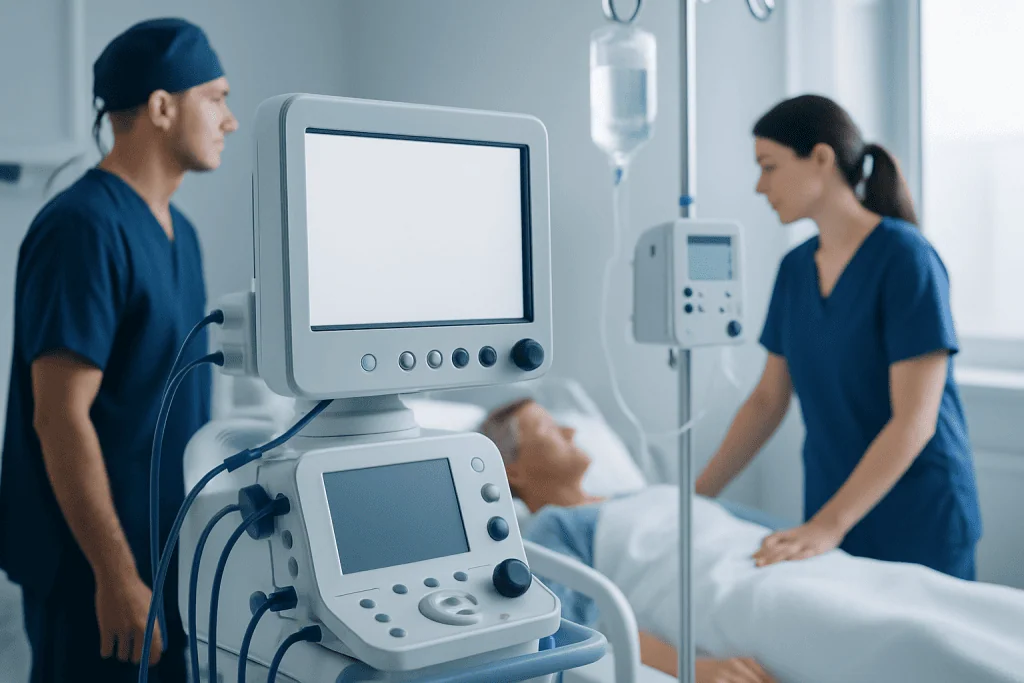
Length of stay comes first. Each additional night carries a cost, and discharge dates move for ordinary clinical reasons: your doctor may want to see stable pain control, a settled wound, reassuring test results, or simply confidence that you are fit to travel. An extended stay is not a sign that something has gone wrong: it is often a cautious decision made precisely because you are an international patient who will board a flight soon afterwards. But it does affect the budget, so it belongs in your planning from the start.
Room category comes second. A standard room is usually the baseline in a quote. An upgraded private room or a larger suite raises the nightly rate. If your plan includes time in an intensive care unit or a high-dependency setting, the cost changes more significantly than a room upgrade would, because staffing ratios, equipment and monitoring are more intensive there. The guide on single rooms, ICU and extra hospital nights walks through how each of these settings changes the bill in practice.
Then come the items that accumulate quietly. Medicines given during admission, blood tests, pathology, imaging, dressings and consumables, and specialist reviews outside the original plan can each be billed separately unless your quote clearly includes them. If your surgeon asks a colleague from another specialty to review you before discharge, or requests an unplanned scan, that is good medicine, and it may also be an added line on the invoice.
- Extra nights beyond the planned stay
- ICU or high-dependency monitoring
- Room upgrades
- Additional laboratory tests or imaging
- Medicines, transfusion support, or medical supplies during admission
- Consultant visits or specialist reviews outside the original plan
None of these items is unusual, and most stays include at least a few of them. The question is not whether they exist but whether your quote already accounts for them, and that is something you can only see in writing.
What a package usually includes, and what it usually does not

Many international patients receive package pricing for planned treatment in Turkey. A typical package covers the scheduled procedure, a defined number of inpatient nights in a stated room category, standard nursing care, and routine post-treatment checks. Depending on how it is arranged, it may also cover airport–hotel–hospital transfers and interpreter assistance, particularly when an international patient department coordinates the trip.
Packages are rarely all-inclusive, and this is where surprises usually come from. Common exclusions include:
- Nights beyond the number stated in the package
- Unexpected intensive care or high-dependency time
- Imaging or pathology beyond the standard scope of the treatment
- Treatment for unrelated medical issues discovered during your stay
- Companion accommodation and companion meals
- Special medical consumables or implants beyond the standard specification
The phrase “package price” should always be followed by a detailed inclusion list. Two quotes with similar totals may cover very different lengths of stay, different room categories, or entirely different assumptions about tests and medicines. At Acibadem, quotes for international patients are structured to show what the estimate covers and under which circumstances additional charges could arise; the guide on what a treatment quote includes explains that structure in detail.
Questions to ask before you accept a quote
A clear quote is your best protection against surprise costs, and the questions that produce one are simple. Ask how many hospital nights are included. Ask what type of room is covered. Ask whether medicines, standard blood tests and post-treatment reviews during admission sit inside the price or outside it. If your treatment commonly requires one or more nights of observation, check that the quote reflects the admission, not just the procedure.
Then ask about the scenarios that change the number. What happens if the doctor advises a longer stay? Is there a per-night charge for extra nights, and does that charge include nursing and meals or only the room? How would intensive care be billed if it became necessary? If a companion plans to stay in the room where permitted, or nearby, are there related fees? These questions are routine for hospitals that regularly treat overseas patients, and the answers are usually straightforward once asked.
Finally, ask about timing: when is discharge expected, and how many days should you remain in Turkey afterwards before flying home? The answer shapes your hotel booking and your return flight, and getting it early costs nothing. Getting it late can mean paying for unnecessary hotel nights or changing flights under pressure.
Why length of stay can change after you arrive
Even a careful plan is still a plan. Actual stays differ from estimates for reasons that are usually mundane. A doctor may extend observation to confirm stable pain control, safe mobility, adequate eating and drinking, or reassuring test results before discharge. When the next step in your journey is an international flight, clinicians tend to err on the side of one more night rather than one too few.
Sometimes the change comes from your own medical background rather than the procedure. Chronic conditions, age-related considerations, the medicines you already take, or a slower-than-expected recovery can all shift discharge timing. In other cases, a surgeon requests an additional review, scan or laboratory test to be confident you are ready to continue recovering outside the hospital. Where several specialties are involved in your care, coordinated multidisciplinary teams make these reviews easier to arrange, one of the practical reasons international patients often choose larger hospital groups.
Because a change in stay length is the single most common reason an inpatient bill differs from an estimate, it deserves its own budgeting logic. The guide on cost planning for longer hospital stays covers this scenario step by step.
Budgeting beyond the hospital room itself
The admission cost is one part of a broader travel budget, and treating it as the whole budget is the most common planning mistake international patients make. Around the hospital stay sit pre-treatment hotel nights, local transport, meals outside the hospital, and, often most significantly, the recovery period after discharge. If your doctor recommends remaining in Turkey for a follow-up visit before flying home, those days can matter financially as much as the inpatient stay itself.
A practical structure is to split your budget into three parts: treatment and hospital charges; travel and accommodation; and a contingency fund. The contingency fund exists because medical travel involves small, ordinary changes, one extra hotel night, an added blood test, another transfer between airport, hotel and hospital. Handled in advance, these feel like footnotes. Handled under pressure, they feel like problems. The guide on how much extra to budget beyond your treatment cost sets out sensible categories for this buffer.
If someone is travelling with you, plan for them explicitly. A companion’s meals, transport, accommodation and possible extra nights sit outside the medical quote at most hospitals, and they add up over a multi-day stay. Companion costs in Turkey covers what to expect and how to plan for it.
Non-medical support, interpreter services, transfer coordination, accommodation guidance, is often arranged through international patient teams. These services do not necessarily change the medical bill, but they make the overall cost picture clearer, which is half the battle when you are organising treatment from another country.
Step by step
- Request a written treatment quote. Ask for a written estimate rather than a verbal range. It should show the planned procedure, the expected number of hospital nights, and the room category included.
- Check exactly what the inpatient stay covers. Confirm whether the quote includes nursing care, routine medicines, standard blood tests, post-treatment reviews, and meals under hospital policy. This separates the room charge from the true admission cost.
- Ask about extra-night and ICU scenarios. Before you travel, establish how a delayed discharge or higher-level monitoring would be charged. Knowing the triggers in advance makes the overall cost far easier to plan.
- Clarify non-medical support. Check whether interpreter services, airport transfers and appointment coordination are included in the package or arranged separately. These matter for international patients even when they sit outside the core treatment fee.
- Plan your post-discharge days in Turkey. Find out how long you should remain in the country after leaving hospital before flying home, and budget hotel nights, transfers, meals and any follow-up visit accordingly.
- Keep a contingency budget. Set aside funds for common extras such as an additional blood test, one more hospital night, or a flight change. A modest buffer makes the whole trip less stressful.
Your checklist
- Get the quote in writing
- Confirm how many hospital nights are included
- Check the room type included in the estimate
- Ask which medicines and tests are covered during admission
- Find out the cost basis for extra nights
- Ask whether ICU or high-dependency care is included or separate
- Clarify companion and accommodation arrangements
- Budget for hotel nights after discharge
- Keep a contingency fund for unexpected changes
Key takeaways
- How much a hospital stay adds to treatment cost in Turkey depends mainly on the number of nights, the room category and the level of monitoring.
- A package quote usually covers a defined number of nights in a stated room type; extra nights and unplanned services are commonly billed separately.
- Tests, medicines, specialist reviews and intensive care can add more than the room charge alone.
- Discharge dates move for ordinary clinical reasons, so extra-night pricing belongs in your questions before travel, not after.
- Budget in three parts, hospital charges, travel and accommodation, and contingency, and get the quote in writing before you compare anything.
Frequently asked questions
How much does a hospital stay add to treatment cost in Turkey?
There is no fixed figure, because the inpatient portion depends on the number of nights, the room category, the level of monitoring, and the tests and medicines given during admission. The most reliable approach is a written quote that states how many nights are included and how additional nights or services would be charged.
Does the hospital stay usually cost a lot compared with the procedure itself?
It depends on the treatment. For simpler planned procedures with a short stay, the procedure often remains the larger share. Longer recoveries, higher-dependency monitoring or several extra nights shift more of the total towards the inpatient stay. The balance is specific to your treatment plan, which is why quotes are prepared individually.
Are hospital room charges in Turkey usually included in package prices?
Often, yes, but usually only for a defined number of nights and a specific room category. If you stay longer than planned or choose a room upgrade, the difference is typically charged separately. Always read the inclusion list, not just the package total.
What can make my hospital stay more expensive than expected?
The most common reasons are extra nights, additional tests, unplanned medicines, specialist consultations, and intensive care or high-dependency monitoring. A delayed discharge is often a cautious clinical decision, particularly for patients who will travel internationally soon after treatment, but it still affects the bill.
Will my companion’s stay be part of the hospital bill?
Not always. Some hospitals allow a companion to stay under certain conditions, but the related costs or accommodation arrangements are often separate from the medical quote. It is worth asking what is permitted, and what, if anything, is charged, before you travel.
How can I compare two hospital quotes fairly?
Do not compare totals alone. Check the included number of nights, the room type, post-treatment tests and medicines, transfer support, and what happens if the stay becomes longer than planned. A higher quote may include more services and leave fewer items to be billed later, which can make it easier to plan around.
Can international patient services help me understand the cost better?
Yes. International patient teams typically explain a quote line by line, coordinate interpreters, and help with the timing of admission, discharge and follow-up. That kind of support does not change the clinical plan, but it makes the practical and financial side of treating abroad considerably clearer.
Add us as a Preferred Source to see more of our trusted health content across Google Search, AI Overviews and Discover.

Update history
- PublishedJune 25, 2026
- Medical review approvedSeptember 13, 2026
- Last content updateSeptember 12, 2026
References2
- Medical Tourism: CDC Travelers' Health wwwnc.cdc.gov
- Going abroad for medical treatment: NHS nhs.uk
More Patient Guides

Private MRI, CT and Check-Up Costs in Turkey: How Scans Are Priced
How private MRI, CT, PET-CT and full check-up packages are priced in Turkey, modality, region, contrast, reporting, and what a…

Cataract Surgery Cost in Turkey: Per-Eye Prices and Lens Options
Cataract surgery in Turkey is priced per eye and the lens decides the quote. Biometry, both eyes on one trip, and what…

Lip Filler Cost in Turkey: Per-ml Prices Explained
Lip filler in Turkey is priced per millilitre with licensed hyaluronic acid brands and physician injectors. Volume, product, dissolving, safety and what…

Botox Cost in Turkey: Per-Area and Per-Unit Prices
How Botox is priced in Turkey, per area or per unit, brand, physician injectors, medical indications, and what a serious…