

Paying for Extra Tests in Turkey: What Happens If Your Plan Changes

If your doctor in Turkey recommends tests that were not in your original plan, they are usually billed as additional services unless your package already covers them. Before agreeing, ask why each test is needed, whether it changes your treatment date, and request a revised written estimate. Payment is typically settled at the billing desk before or shortly after the test, with coordinator support available.
You arrived with a plan, a quote and a return flight booked, and now your doctor is recommending tests nobody mentioned before departure. That moment is unsettling in two ways at once: medically, because you wonder what it means, and financially, because your budget was built around a different plan. It is also one of the most common experiences international patients describe.
This guide explains what usually happens next. It covers why plans change after an in-person review, how paying for extra tests in Turkey typically works, what a revised quote should show you, how insurance and sponsor approvals fit in, and the questions worth asking before you agree to anything that was not in the original plan.
At a glance
- Best for: International patients whose treatment plan changes after consultation or initial testing in Turkey
- What usually gets added: Updated blood work, imaging, cardiac or anaesthesia checks, specialist reviews, or repeats of older tests
- Before you pay: Ask why each test is needed, whether it is time-sensitive, and request the revised estimate in writing
- Who helps: Your international patient coordinator, the billing desk, and your treating team, each answers a different part of the question
- Key documents: Passport, original quote, previous reports and scans, insurance or sponsor details, and the updated cost estimate
Why extra tests sometimes appear after you arrive
A treatment plan prepared before travel is built on the information available at the time: the reports you sent, the scans you shared, and what you described in correspondence. Once a doctor examines you in person, that picture often needs sharpening. The team may want clearer imaging, more recent blood values, a second specialist opinion, or a pre-anaesthesia check before confirming that the planned treatment is still the right and safest option for your current condition.
This does not automatically mean something is wrong. Often it means the team is fitting the plan to you as you are today, rather than to records that may be weeks or months old. For international patients specifically, extra tests tend to appear for practical reasons: earlier results are incomplete, older than the hospital’s accepted timeframe, in a format the team cannot fully verify, or measured against protocols that differ from the hospital’s own. Sometimes a surgeon, oncologist or cardiologist simply needs an up-to-date baseline before signing off on the next step. There is a separate guide on when extra tests are needed before treatment in Turkey if you want the medical side in more depth.
At a large group such as Acibadem, where several specialists may weigh in on one plan, additional checks are often requested so that different departments can make a single, joined-up decision rather than several partial ones. That can feel inconvenient when you are watching travel dates and a budget, but the purpose is to reduce uncertainty before treatment starts, not to expand the bill.
What ‘extra tests’ usually means for your quote and payment
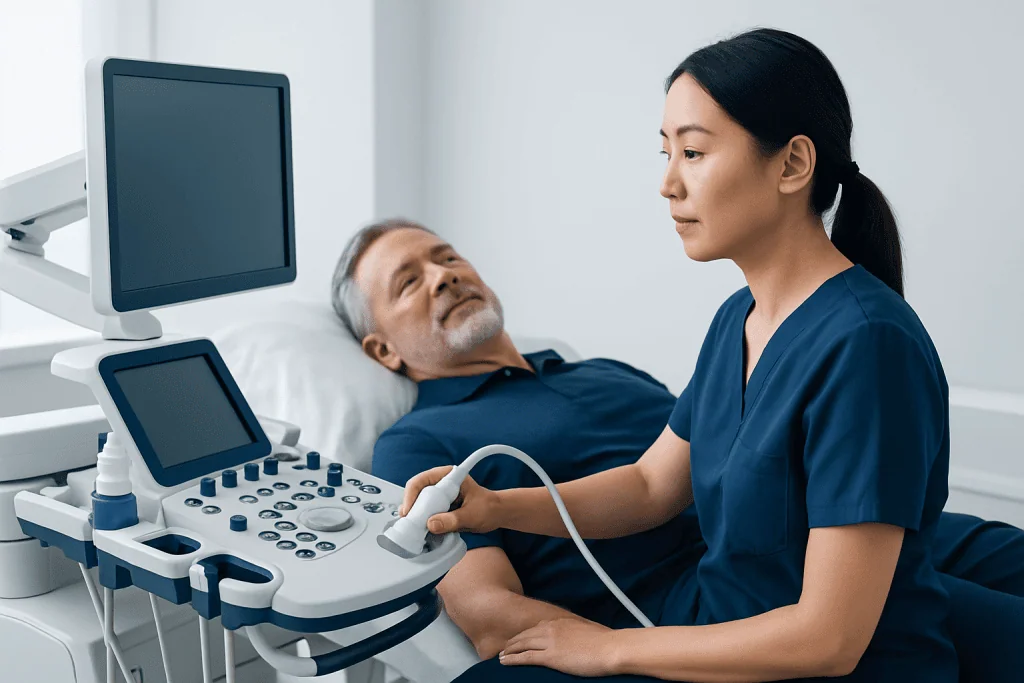
Here is the honest structural answer. A quote prepared before travel covers the services that were foreseeable at that point. If your doctor later orders new imaging, additional laboratory work, a pathology review, anaesthesia clearance or extra specialist consultations, those items are usually treated as additional services, unless your original package explicitly included them. Paying for extra tests in Turkey therefore starts with one question: is this item inside my existing quote or outside it?
You should never have to guess. Ask for an updated breakdown that shows three things: what was added, whether anything from the original plan was removed or replaced, and whether the treatment date moves as a result. A calm, practical billing conversation before non-emergency extras go ahead is entirely normal, and international patient offices handle these conversations every day. If you want to see how the numbers side is typically communicated, read how Acibadem explains possible additional costs when a plan changes.
In terms of mechanics, payment for additional tests in Turkish hospitals is usually settled before the test is performed or shortly afterwards, through the billing desk or the international patient office. Card payments are widely accepted at large private hospitals, but confirm accepted methods before the appointment rather than at the desk. Keep every receipt: you may need them for insurance claims, employer reimbursement or your own records of how the plan evolved.
- Ask whether the new test sits inside your package or is billed separately.
- Request the revised quote in writing, not only verbally.
- Check whether the extra test changes the overall treatment timeline.
- Confirm accepted payment methods and when payment is collected.
- Ask for itemised receipts for every additional service.
Questions to ask before agreeing to additional tests

When you are tired, anxious or jet-lagged, it is easy to say yes without fully understanding what is changing. A few calm questions restore your footing. Start with the medical reason: what is this test for, what decision will it inform, and can treatment safely continue without it? If a recent test from home covers the same ground, ask whether it could be accepted instead of a repeat, sometimes it can, sometimes the team genuinely needs its own result.
Then move to logistics. When can the test be done? How long do results usually take? Could it delay admission, surgery or your return flight? Same-day blood work and same-day imaging are common at large hospitals, but some results, pathology in particular, take longer by nature. If timing is tight, the guide on what happens if tests or recovery change your schedule walks through the knock-on effects.
Finally, ask the financial questions directly and politely. A useful formulation: ‘Please explain what is medically necessary now, what is optional, and what the new estimate will be before I decide.’ No good hospital is offended by that sentence. International patient teams, including those at Acibadem, hear it regularly and can bring in interpreter support so nothing is lost between the medical explanation and the billing one.
How insurance, self-pay and approvals may work
If you are paying for yourself, the process is comparatively simple: you hear the recommendation, receive a revised estimate, and decide whether to proceed. Even then, keep every updated document, receipt and report together. Reimbursement claims to private insurers or employers succeed or fail on paperwork, and reconstructing it after you fly home is far harder than filing it as you go.
If an insurer, embassy, sponsor or corporate plan is paying, an extra layer appears: approval may be required before non-urgent additional tests are performed. This can affect timing as much as the medical recommendation itself. Ask the hospital team three things: what information the payer needs, who will contact them, and whether you should notify the payer yourself in parallel. Doing both rarely hurts; assuming the other side has done it often does.
Bring your policy details, authorisation letters and insurer contact information to appointments. If a claim is only partially covered, ask specifically which items remain your responsibility, in writing. One more honest note: standard travel insurance bought for a holiday usually excludes planned medical treatment abroad, so do not assume a holiday policy covers extra tests connected to a planned procedure, check the wording or ask the insurer directly. When the treatment finishes, how final billing works if your care plan changes explains what the closing statement should show.
Common cost questions, answered without the numbers
Search results for tests in Turkey are full of price claims. This guide deliberately gives none, because a figure quoted on a webpage is not a figure you can pay at a desk. What follows is the structural truth behind three questions international patients ask most often.
How much does a full body scan or check-up cost in Turkey?
There is no single answer, and any page giving you one number is simplifying. The cost of a full health assessment depends on the scope of the programme (which blood panels, which imaging, how many specialist consultations), whether cardiac or advanced imaging is included, the hospital and city, and whether reporting and follow-up consultations are bundled or separate. The reliable route is a written, itemised quote for a named programme, requested before you travel, so you can compare like with like. Treat any figure that arrives without an itemised list as provisional.
Do tourists get free healthcare in Turkey?
Generally, no. Turkey’s public health insurance system covers Turkish citizens and registered residents who contribute to it; visitors are not part of that system and pay for the care they use. Emergency departments will treat genuine emergencies, but treatment is still billed. This is why travellers are advised to carry insurance, and why planned medical travel needs its own financial arrangements rather than reliance on a holiday policy.
Where can I get a full health assessment in Turkey?
Structured check-up programmes are offered by large private hospital groups, including Acibadem, typically combining laboratory work, imaging and specialist consultations in one or two days. If a check-up is part of your trip, the same principles in this guide apply: ask what the programme includes, what would count as an add-on, and how any findings that lead to further testing would be quoted and scheduled.
Practical ways to avoid surprises during your stay
You cannot prevent every plan change, but you can shrink the space in which surprises happen. Plans change less often when the treating team has complete, recent records before travel: reports, imaging files, a medication list and a clear medical history. Incomplete or outdated records are one of the most common reasons tests get repeated. It is also worth finding out in advance whether any of your existing tests will be considered too old by the time you arrive, and what typically happens on the first consultation day.
Build slack into your travel plans. A return flight booked hard against a planned discharge date turns even a routine extra check into a stressful one. Many experienced medical travellers choose refundable or changeable flights, or leave a buffer of a few days after the planned treatment date. Accommodation with flexible check-out helps for the same reason. The guide on how plan changes can affect your stay and budget covers this side in detail.
Finally, agree the communication channels in advance: how revised quotes are shared, who to reach out of hours, and whether transfers and accommodation can be adjusted if your schedule moves. Getting those answers before anything changes means that if something does, you are executing a plan rather than improvising one.
If you feel unsure, pressured or confused
It is reasonable to pause. In a non-emergency situation, you can ask for time to review the revised plan, speak with your family, contact your insurer, or request interpreter support before consenting. Clear communication is part of safe care, and that is doubly true when you are far from home, in a second language, and thinking about money and medicine at the same time.
If affordability worries you, say so early rather than after the test is done. The team can usually explain which steps are time-sensitive, which can wait, and whether every recommended item is required before the next phase. Do not assume every added test is optional, but do ask, for each one, what decision it feeds and what happens to the timeline with and without it.
Keep your focus on informed consent in its full sense: you should understand the reason for the test, its expected effect on the treatment plan, and the financial implications as far as they can be known at that stage. Paying for extra tests in Turkey goes smoothly when the medical explanation, the billing update and the travel logistics are handled as one conversation instead of three: a well-organised international patient service exists to make that happen so you are not chasing answers between desks.
Step by step
- Ask why the plan changed. Start with the medical reason, not the bill. Ask what new information the team needs, what decision the extra test will guide, and whether treatment can safely continue without it.
- Request an updated written estimate. Do not rely on a verbal explanation. Ask for a revised quote that shows added tests, any removed items, and whether the planned treatment cost or package has changed.
- Confirm timing and possible delays. Find out when the test can be done and how long results usually take, then check the effect on admission dates, hotel bookings, return flights and companion arrangements.
- Check who must approve payment. If you are self-pay, ask when and where payment is collected. If an insurer or sponsor is involved, confirm whether authorisation is needed before the test goes ahead, and who is obtaining it.
- Use your coordinator or interpreter. If anything is unclear, ask your international patient coordinator to join the discussion. At Acibadem, coordinators and interpreters can help connect the medical explanation with the practical next steps.
- Keep every document together. Save the revised estimate, receipts, consent forms and new reports in one folder or phone file. This makes reimbursement, follow-up abroad and any later questions about the bill far simpler.
Your checklist
- Passport or ID and hospital registration details
- Original quote or package confirmation
- Updated written estimate for any extra tests
- Insurance or sponsor approval documents, if applicable
- Previous scans, blood results and medical reports
- Payment card or another confirmed payment method
- Interpreter request if you prefer support in your language
- Flexible travel and accommodation details in case dates shift
Key takeaways
- Extra tests after arrival in Turkey are common and usually reflect a team fitting the plan to your current condition, not a problem with you.
- A pre-travel quote is built on pre-travel information; new imaging, lab work or specialist reviews are generally billed as additions unless your package covers them.
- Before agreeing, ask why each test is needed, how it affects timing, and what the revised written estimate says.
- If an insurer or sponsor pays, approval can affect timing as much as the medical recommendation, confirm who is obtaining it.
- Keep every revised estimate, receipt and report together; documents are what turn a confusing plan change into a traceable one.
Frequently asked questions
Does an original treatment quote in Turkey always include extra tests?
Not always. A quote prepared before arrival is based on the records shared in advance and the plan expected at that time. If your doctor later needs additional tests to confirm safety or refine the diagnosis, those are usually billed as additions unless your package already includes them. The revised written estimate is what settles the question.
How much does a full body scan or check-up cost in Turkey?
There is no single figure, and this guide deliberately quotes none. The cost depends on the programme’s scope, which blood panels, imaging and specialist consultations are included, plus the hospital and city. The reliable approach is a written, itemised quote for a named programme requested before travel, so you can compare offers on content rather than headline numbers.
Do tourists get free healthcare in Turkey?
Generally, no. Turkey’s public health insurance covers citizens and registered residents; visitors pay for the care they use, including emergency care after initial treatment. Holiday travel insurance usually excludes planned treatment abroad, so planned medical travel needs its own financial arrangements and, where relevant, insurer approval.
Can I refuse an extra test if I am worried about cost?
In a non-emergency situation you can always pause, ask questions and seek clarification before consenting. Be aware, though, that some tests may be necessary for the team to proceed safely, so declining them could delay or change the treatment plan. Ask what each test decides and what happens to the plan without it.
Will extra tests delay my treatment or surgery date?
Sometimes, depending on what is needed and how quickly results come back. Many blood tests and imaging studies are same-day at large hospitals; pathology and some specialist reviews take longer by nature. Ask specifically about turnaround time and whether your current schedule should be adjusted before you rebook anything.
What if my insurance has not approved the new test yet?
Tell the hospital team immediately if a payer must authorise additional services. The international office can usually help with documentation, but it is wise to contact your insurer or sponsor yourself in parallel so there is no misunderstanding about who is responsible for payment or how long approval takes.
Can I use test results from my home country instead of repeating them?
Sometimes, especially if the results are recent, complete and meet the treating team’s standards. In other cases the hospital will need to repeat or supplement them to match its own protocols or to get current values before treatment. Ask the question test by test rather than assuming either way.
What documents should I keep if my plan changes?
Keep the original quote, the revised estimate, receipts, test orders, reports and any insurance approvals together in one place. These documents support reimbursement claims, help clinicians at home continue your follow-up, and give you a clear record of exactly how and why the plan evolved.
Add us as a Preferred Source to see more of our trusted health content across Google Search, AI Overviews and Discover.

Update history
- PublishedJuly 8, 2026
- Medical review approvedSeptember 13, 2026
- Last content updateSeptember 12, 2026
References2
More Patient Guides

Private MRI, CT and Check-Up Costs in Turkey: How Scans Are Priced
How private MRI, CT, PET-CT and full check-up packages are priced in Turkey, modality, region, contrast, reporting, and what a…

Cataract Surgery Cost in Turkey: Per-Eye Prices and Lens Options
Cataract surgery in Turkey is priced per eye and the lens decides the quote. Biometry, both eyes on one trip, and what…

Lip Filler Cost in Turkey: Per-ml Prices Explained
Lip filler in Turkey is priced per millilitre with licensed hyaluronic acid brands and physician injectors. Volume, product, dissolving, safety and what…

Botox Cost in Turkey: Per-Area and Per-Unit Prices
How Botox is priced in Turkey, per area or per unit, brand, physician injectors, medical indications, and what a serious…