Quick answer
Bursitis is inflammation of a bursa, the small fluid-filled sac that cushions joints, and it commonly causes pain, swelling, and limited movement around areas such as the shoulder, elbow, hip, or knee. Treatment depends on the cause and severity and may include rest, medicines, physical therapy, fluid drainage, or injections, while surgery is considered when symptoms persist or bursitis keeps…
What is bursitis?
Bursitis is the inflammation of a bursa, which is a small, fluid-filled sac that sits between bones and the soft tissues around them, such as tendons, muscles, and skin. The body contains more than 150 bursae (the plural of bursa). Their job is to act as cushions and reduce friction so that tissues can glide smoothly over one another when you move. When a bursa becomes irritated or inflamed, it can fill with extra fluid, swell, and become painful. Doctors classify this condition under the medical code ICD-10 M71.9 when the specific type is not further defined.
Understanding what is bursitis begins with knowing where it most often occurs. The most commonly affected areas are the shoulder, elbow, hip, knee, and heel, in other words, joints that perform frequent, repetitive movements or that bear pressure for long periods. Bursitis can affect people of any age, but it becomes more common in adulthood, particularly in middle age and beyond, as tissues become less resilient. People whose work, sports, or hobbies involve repeated motions or prolonged kneeling, leaning, or lifting are affected more often. In many cases, bursitis is temporary and improves with rest and simple care, although it can return or become long-lasting in some people.
Symptoms of bursitis
Bursitis symptoms vary depending on which bursa is affected and whether the inflammation is recent (acute) or long-standing (chronic). The most common signs include:
- Localized painoften a dull ache at first, which may become sharper with movement or direct pressure on the area.
- Swellinga visible or palpable puffiness over the joint, sometimes described as a soft lump, especially at the elbow or the front of the knee.
- Tendernessthe area hurts when touched or pressed, for example when lying on the affected hip or shoulder at night.
- Stiffness and reduced movementthe nearby joint may feel harder to move, usually because movement provokes pain rather than because the joint itself is damaged.
- Warmth or rednessthe skin over the bursa may feel warm or look slightly red, particularly in bursae that lie close to the skin surface.
In acute bursitis, symptoms usually appear over hours to days, often after unusual activity, overuse, or a direct blow to the area. The pain tends to be more intense, and the area may be noticeably swollen and warm. In chronic bursitis, which develops after repeated episodes or ongoing irritation, the swelling may persist while the pain becomes duller. The bursa wall can thicken over time, and the area may flare up again after activity.
A particularly important form is septic bursitis, which means the bursa is infected with bacteria. This occurs most often in bursae near the skin, such as those at the elbow or kneecap, especially if the skin over them has been cut or scraped. Septic bursitis usually causes more pronounced redness, warmth, and pain, and it may be accompanied by fever or a general feeling of being unwell. This form needs prompt medical attention, because an untreated infection can spread.
Causes and risk factors
The most common bursitis causes involve repetitive motion or prolonged pressure on a bursa. Repeated movements, such as throwing, painting, gardening, scrubbing, or lifting overhead, can gradually irritate a bursa until it becomes inflamed. Similarly, leaning on the elbows for long periods or kneeling frequently (as in carpet laying, tiling, cleaning, or plumbing) puts direct pressure on the bursae in those areas.
Other recognized causes and contributing factors include:
- Injury or direct traumaa fall or blow onto a joint can inflame the underlying bursa, sometimes causing rapid swelling.
- Infectionbacteria can enter a bursa through broken skin, leading to septic bursitis.
- Inflammatory conditionsdiseases such as rheumatoid arthritis (an autoimmune condition in which the immune system attacks the joints) and gout (a condition in which uric acid crystals form in and around joints) can also inflame bursae.
- Agebursitis becomes more common with increasing age, as tendons and other soft tissues tolerate stress less well.
- Occupation and hobbiesjobs and activities that involve repetitive tasks, kneeling, or sustained pressure raise the risk. Sports with repeated overhead or throwing motions are frequent contributors to shoulder bursitis.
- Other health conditionsdiabetes, obesity, and thyroid disease have been associated with a higher likelihood of developing bursitis in some people.
- Poor posture or biomechanicsdifferences in leg length, muscle weakness, or joint misalignment can place uneven stress on certain bursae, particularly around the hip and knee.
Often, more than one factor is involved. For example, an older adult with mild arthritis who takes up a new repetitive activity may be more likely to develop bursitis than a younger person doing the same task occasionally.
Diagnosis
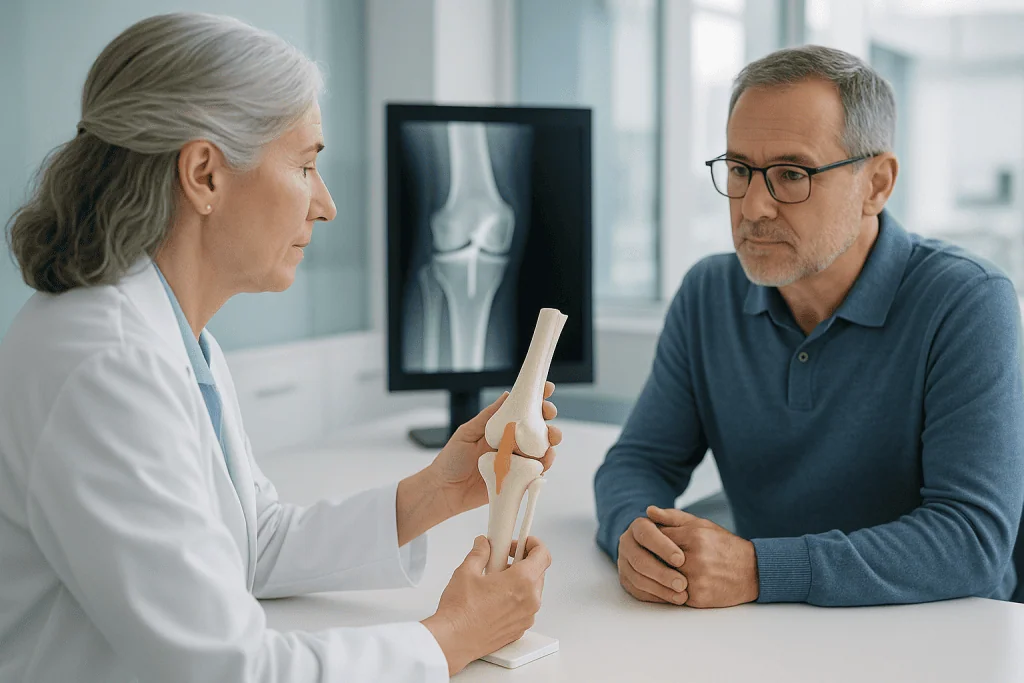
Bursitis diagnosis usually starts with a conversation and a physical examination. Your doctor will ask when the pain began, what activities make it worse, whether there was an injury, and whether you have had similar episodes before. During the examination, the doctor will gently press on the painful area, move the nearby joint, and look for swelling, warmth, and redness. In many cases, this examination alone is enough to identify bursitis, because the pattern of tenderness directly over a known bursa is quite characteristic.
Additional tests are used when the picture is less clear, when infection is suspected, or when symptoms do not improve as expected:
- X-raysthese do not show the bursa itself, because bursae are soft tissue, but they help rule out other problems such as fractures, bone spurs, or arthritis that could be causing similar pain.
- Ultrasounda painless scan using sound waves that can show fluid within the bursa and thickening of its wall. It is often used to confirm the diagnosis and, if needed, to guide a needle precisely into the bursa.
- MRI (magnetic resonance imaging)a detailed scan sometimes ordered when the diagnosis is uncertain or when deeper structures, such as tendons around the hip or shoulder, need to be evaluated at the same time.
- Aspiration and fluid analysisif infection or gout is suspected, the doctor may use a thin needle to withdraw fluid from the bursa. Laboratory testing of this fluid can identify bacteria or crystals and helps distinguish septic bursitis from non-infectious inflammation.
- Blood teststhese may be ordered to look for signs of infection or of an underlying inflammatory disease such as rheumatoid arthritis.
Distinguishing bursitis from related problems, such as tendinitis (inflammation of a tendon), arthritis (inflammation of the joint itself), or a muscle strain, matters because the treatment approaches can differ. Your doctor may use a combination of examination findings and imaging to make this distinction.
Treatment options for bursitis
Most bursitis treatment starts conservatively, and in many cases the condition settles without any invasive procedure. An overview of how bursitis is managed as a treatment pathway is available on the condition page; at Acibadem, this condition is typically managed within the Orthopedics & Joint Center.
Watchful waiting and self-care
The first step is usually to reduce or modify the activity that triggered the inflammation. This does not necessarily mean complete immobility, gentle movement is often encouraged, but it does mean avoiding the specific motion or pressure that irritates the bursa. Common self-care measures include:
- Rest and activity modificationtaking a break from the aggravating activity, or changing technique and equipment (for example, using knee pads or elbow cushions).
- Iceapplying a cold pack wrapped in a cloth for short periods can help reduce swelling and pain, especially in the first days.
- Compression and elevationfor accessible areas such as the knee or elbow, gentle compression and keeping the limb raised may limit swelling.
Medication
Over-the-counter pain relievers, particularly non-steroidal anti-inflammatory drugs (NSAIDs) such as ibuprofen or naproxen, are often used to reduce pain and inflammation. These medicines are not suitable for everyone, for example, people with certain stomach, kidney, or heart conditions, so it is sensible to check with a doctor or pharmacist before taking them regularly. If septic bursitis is diagnosed, antibiotics are the essential treatment, and in some cases the infected fluid must also be drained.
Physical therapy
When symptoms persist or keep returning, a structured physical therapy program can be helpful. A physical therapist can teach exercises that stretch tight tissues, strengthen the muscles that support the affected joint, and correct movement patterns or posture problems that overload the bursa. Addressing these underlying mechanical factors is often important for preventing recurrence, particularly in hip and shoulder bursitis.
Aspiration and corticosteroid injections
If the bursa is very swollen, your doctor may aspirate it, that is, remove excess fluid with a needle, which can relieve pressure and pain and also allow the fluid to be tested. For persistent, non-infected bursitis, a corticosteroid injection (an anti-inflammatory medicine delivered directly into or around the bursa) may be considered. These injections often reduce inflammation effectively, though relief can be temporary and repeated injections are used cautiously. Image guidance, such as ultrasound, is sometimes used to improve accuracy. For patients with chronic pain that has not responded to standard measures, doctors may discuss options within interventional pain management, a field that uses targeted, minimally invasive procedures to control pain.
Surgery
Surgery is rarely needed for bursitis and is generally reserved for cases that do not improve after prolonged conservative treatment, or for recurrent septic bursitis. The operation, called a bursectomy, removes the affected bursa; the body typically forms new tissue in its place over time. In some locations, this can be done using minimally invasive techniques. Where the problem is inside or immediately around a joint, surgeons may use arthroscopya keyhole procedure in which a small camera and instruments are inserted through tiny incisions, to remove the inflamed bursa and address related problems such as bone spurs. Your surgical team will explain the expected benefits, risks, and recovery time for your specific situation, since these vary by joint and by individual.
Living with bursitis and outlook
For most people, the outlook with bursitis is favorable. Acute episodes often improve within a few weeks with rest, activity changes, and simple treatment. However, bursitis can recur, especially if the activity or pressure that caused it continues unchanged. Chronic bursitis may cause intermittent flare-ups over months or years, but even then, symptoms can usually be managed without surgery.
Practical steps that many people find helpful for living with bursitis and lowering the chance of recurrence include:
- Using cushioning, such as knee pads or padded elbow supports, during activities that press on vulnerable areas.
- Warming up before exercise and building up new activities gradually rather than suddenly.
- Taking regular breaks from repetitive tasks and varying positions during the day.
- Maintaining strength and flexibility in the muscles around commonly affected joints.
- Managing related conditions such as gout, rheumatoid arthritis, or diabetes with your doctor.
- Maintaining a healthy body weight, which reduces load on the hips and knees.
It is honest to say that no treatment can guarantee that bursitis will never come back. The goal of good long-term care is to control symptoms, address the underlying causes where possible, and keep episodes infrequent and mild.
Frequently asked questions
What is bursitis in simple terms?
Bursitis is the inflammation of a bursa: a small, fluid-filled cushion that reduces friction between bones and the soft tissues that move over them. When a bursa is irritated by repetitive movement, pressure, injury, or infection, it swells and becomes painful. The condition most often affects the shoulder, elbow, hip, knee, and heel, and in many cases it improves with rest and simple treatment.
Can bursitis heal on its own?
Often, yes. Mild bursitis caused by overuse or pressure frequently settles within a few weeks once the triggering activity is reduced and the area is rested. Ice and over-the-counter anti-inflammatory medicines may help during this period. However, if the pain is severe, the area is very red and warm, you have a fever, or symptoms have not improved after a couple of weeks of self-care, it is important to see a doctor, since infection or another condition may be involved.
How serious is bursitis?
Most bursitis is not dangerous: it is painful and can limit activity, but it usually does not damage the joint itself. The main exception is septic bursitis, an infection of the bursa, which requires prompt treatment with antibiotics and sometimes drainage. Long-standing, untreated bursitis can also become chronic and harder to settle, which is one reason persistent symptoms deserve medical assessment rather than indefinite self-treatment.
What are the first bursitis symptoms people usually notice?
The earliest bursitis symptoms are usually a localized ache and tenderness directly over the affected area, often noticed during or after activity, or when pressure is applied, for example, when leaning on an elbow or lying on a hip in bed. Swelling may follow, and in bursae close to the skin, such as at the elbow or kneecap, a soft lump can appear quite quickly. Warmth and redness suggest more active inflammation or possibly infection.
How is bursitis diagnosed?
Bursitis diagnosis usually rests on your medical history and a physical examination, during which the doctor identifies tenderness and swelling over a known bursa. If the diagnosis is uncertain or infection is suspected, tests may be added: X-rays to rule out bone problems, ultrasound or MRI to visualize the bursa and nearby tendons, blood tests, or aspiration of bursal fluid for laboratory analysis. Not every patient needs all of these tests.
What is the best bursitis treatment?
There is no single best treatment for everyone; the right approach depends on the location, cause, and severity of the inflammation. In many cases, rest, activity modification, ice, and anti-inflammatory medicines are enough. Persistent cases may benefit from physical therapy, aspiration of fluid, or a corticosteroid injection. Septic bursitis requires antibiotics. Surgery to remove the bursa is uncommon and generally reserved for cases that fail all other measures. Your doctor can advise which options are appropriate for your situation.
How long does recovery from bursitis take?
Recovery time varies considerably. Mild acute bursitis often improves within days to a few weeks with rest and self-care. Cases linked to ongoing repetitive strain, deeper bursae such as those at the hip, or underlying conditions such as arthritis may take longer and can flare again. After surgery, recovery depends on the joint involved and the procedure performed, and your care team will give you an individualized timeline. Rushing back to the aggravating activity too soon is a common reason symptoms return.
When to see a doctor
Many episodes of bursitis can be managed at home at first, but some situations need professional assessment, and a few need urgent attention. Make an appointment with a doctor if pain or swelling has not improved after one to two weeks of rest and self-care, if the same area keeps flaring up, or if pain interferes with sleep or daily activities.
Seek medical attention promptly, the same day where possible, if you notice any of these red-flag warning signs:
- Fever or chills together with a painful, swollen joint area, which may indicate infection.
- Spreading redness or streaks on the skin around the swollen area, or skin that is hot to the touch.
- A break in the skin (cut, scrape, or puncture wound) over the swollen bursa, which raises the risk of septic bursitis.
- Sudden, severe pain or rapid swelling, particularly after an injury, which could indicate bleeding into the bursa or another injury such as a fracture.
- Inability to move the joint or to bear weight on the affected limb.
- Feeling generally very unwell, weak, or confused alongside the local symptoms.
These signs do not automatically mean something serious is happening, but they should not be ignored, because an infected bursa can worsen quickly without treatment. If you are unsure whether your symptoms are urgent, it is safer to have them checked. A doctor can confirm whether bursitis is the cause of your pain, rule out other conditions, and recommend a treatment plan suited to your individual health situation.
Medically reviewed by the Acıbadem International Medical Board September 2, 2026
See our medical review board →
Update history
- PublishedJune 14, 2026
- Medical review approvedSeptember 2, 2026
- Last content updateSeptember 2, 2026