Arthroscopy
Arthroscopy is a minimally invasive surgical procedure that uses a small camera and specialized instruments to diagnose and treat problems inside a joint, commonly the knee, shoulder, ankle, hip, wrist, or elbow.
Quick answer
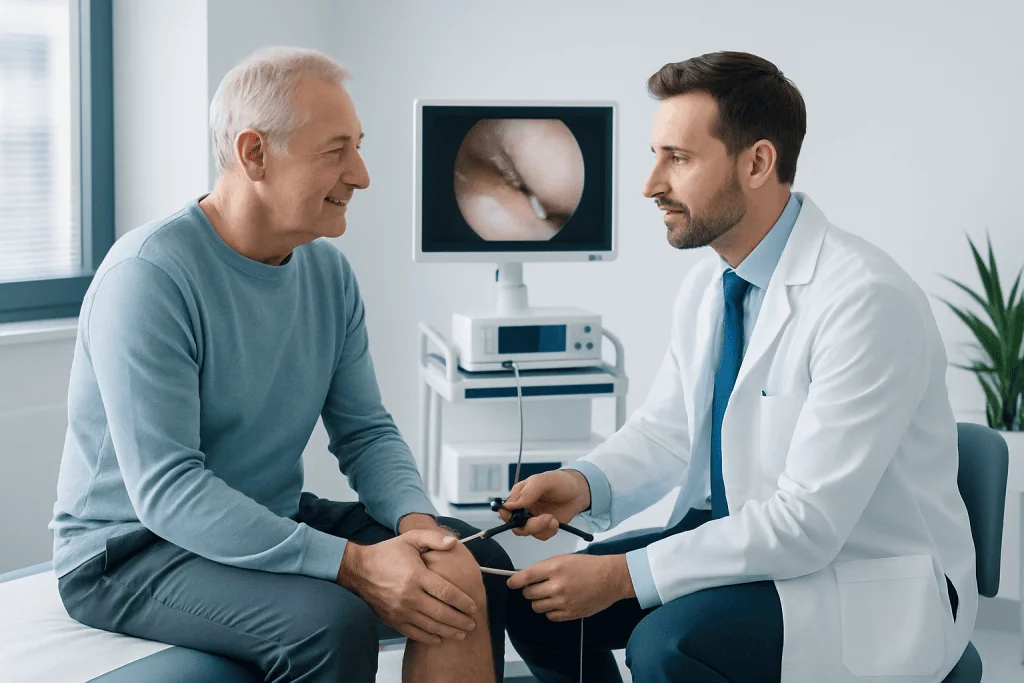
Arthroscopy is a minimally invasive procedure in which a surgeon examines the inside of a joint through a small incision using a slim camera called an arthroscope. Damaged cartilage, ligaments, tendons or loose fragments can often be treated during the same operation through additional small incisions. It is most commonly performed in the knee and shoulder, usually as a day-case procedure under general or regional anaesthesia.
What Is Arthroscopy?
Arthroscopy is a minimally invasive surgical procedure that allows an orthopaedic surgeon to examine the inside of a joint through very small incisions and, in many cases, treat the problem found there during the same operation. A slim instrument called an arthroscope, a narrow tube carrying a camera and a light source, is inserted into the joint and sends magnified images to a monitor in the operating theatre. Surgeons use it to diagnose and treat damage to cartilage, ligaments, tendons, bone surfaces and the joint lining, most commonly in the knee and the shoulder.
Rather than opening the joint through a long incision, the surgeon works through one or more small openings, often called portals. Sterile fluid is usually introduced to expand the joint space and improve visibility. Through the portals, fine instruments designed for confined spaces can repair torn tissue, remove loose fragments, smooth unstable cartilage, reconstruct a damaged ligament, release tight tissue or treat inflammation of the joint lining. The camera lets the surgeon see structures at high magnification while doing this, which helps focus treatment on damaged tissue and protect healthy tissue around it.
Although the knee and shoulder are the most frequent sites, arthroscopy is also used in the hip, ankle, wrist and elbow. The technique differs substantially between joints. In the knee, it may involve treatment of a torn meniscus or a cartilage injury. In the shoulder, it may be used for rotator cuff repair, instability after dislocation, or impingement-related problems. In the hip, it may address femoroacetabular impingement or a labral tear. Each joint has its own instruments, positioning and approach.
It is worth being clear about one thing from the start: arthroscopy uses small incisions, but it is still surgery. It may require general anaesthesia, regional anaesthesia, sedation or a combination of these. Recovery varies according to the joint involved, the underlying diagnosis, the amount of repair performed, your general health, and the physical demands of your work and daily life.
Joint pain has a way of gradually reshaping how you move through the day. A knee that catches on stairs, a shoulder that aches at night, an ankle that stays swollen after an injury, a hip that limits walking: these create uncertainty as well as discomfort. Arthroscopy is usually considered when symptoms suggest a problem inside a joint and non-surgical treatment has not brought enough relief. It is not the right answer for every painful joint. Widespread degenerative arthritis, for example, generally calls for a different strategy than a discrete sports injury. The purpose of a careful orthopaedic assessment is to identify the true source of your symptoms and recommend the least invasive approach that is medically appropriate, which is sometimes arthroscopy, and sometimes not.
Is arthroscopy a major surgery?
Arthroscopy sits somewhere between minor and major surgery, and the honest answer depends on what is done inside the joint rather than on the size of the scars. It is genuine surgery: you have an anaesthetic, the procedure takes place in a sterile operating theatre, and the usual surgical risks apply. At the same time, most arthroscopic procedures are completed as day cases through incisions of around a centimetre, with far less disruption to muscle and soft tissue than open joint surgery. Removing a small loose fragment of cartilage and repairing a torn rotator cuff can leave near-identical scars, yet they involve very different operations and very different rehabilitation. Treat arthroscopy with respect: small incisions do not make the procedure trivial, and they do not make the rehabilitation optional.
How do you spell arthroscopy?
Arthroscopy is spelled a-r-t-h-r-o-s-c-o-p-y. The word combines two Greek roots: arthron, meaning joint, and skopein, meaning to look, so the term literally means “to look into a joint”. The adjective is arthroscopic, as in an arthroscopic procedure or arthroscopic repair. Common misspellings include “athroscopy” and “arthoscopy”. The word people most often confuse it with is arthroplasty, which means joint replacement: a completely different operation in which the joint surfaces are replaced with implants. If you are researching your treatment options, keeping the two terms separate makes the reading considerably clearer.
Who May Need Arthroscopy?
Arthroscopy is generally considered for people whose joint symptoms persist despite an appropriate course of conservative care. That course may include activity modification, physiotherapy, anti-inflammatory medication when suitable, injections, bracing, or structured rehabilitation after an acute injury. Surgery enters the discussion when symptoms interfere with daily function, sleep, sport, work or recovery from injury, and when examination and imaging point to a treatable problem inside the joint.
Symptoms vary by joint and condition. In the knee, people commonly report locking, catching, repeated swelling, difficulty fully straightening the leg, instability, or pain with twisting and squatting. Shoulder problems tend to produce painful overhead movement, weakness, a sense that the joint slips out of place, reduced range of motion, or pain that disrupts sleep. Hip problems often cause groin pain, clicking, stiffness, or discomfort with prolonged sitting, pivoting and deep flexion. Ankle, wrist and elbow disorders can similarly cause swelling, stiffness, mechanical catching and activity-related pain.
Diagnosis begins with a detailed history and physical examination. The orthopaedic specialist will want to know how the symptoms began, whether there was a specific injury, which movements trigger pain, and how the problem affects your everyday activities. The examination typically tests joint stability, strength, range of motion, alignment, tenderness and signs of inflammation.
Imaging is a core part of the modern diagnostic pathway. X-rays assess bone alignment, fractures, joint-space narrowing and signs of arthritis. Magnetic resonance imaging helps identify tears of the meniscus, labrum, ligaments, tendons and cartilage, while ultrasound is useful for certain tendon and soft-tissue conditions. Sometimes the imaging and the symptoms do not fully match. Arthroscopy can then provide direct visualisation of the joint, and treatment in the same sitting when an appropriate target is found.
One point deserves emphasis: not every MRI finding requires surgery. Some structural changes are simply common with age and may have nothing to do with your pain. A sound recommendation for arthroscopy weighs the complete picture, symptoms, examination, imaging, your response to non-surgical care, your general health, your activity goals, and the realistic likelihood that a specific arthroscopic treatment will help.
Conditions Arthroscopy Can Treat
Arthroscopy is used across a broad range of orthopaedic conditions. Whether it suits your situation depends on the joint, the nature and severity of the damage, and whether the tissue can be repaired or needs a different form of treatment altogether. Common indications include:
- Meniscus tears in the knee: a torn meniscus can cause pain, swelling, catching or locking. Depending on the tear pattern, its location, tissue quality and your individual circumstances, the surgeon may repair the meniscus or remove only the unstable, damaged portion.
- Cartilage injuries and loose bodies: damage to the smooth cartilage lining a joint, or free fragments of cartilage or bone, can produce catching, swelling and pain. Arthroscopy can remove loose bodies, stabilise damaged areas, or support selected cartilage-restoration techniques.
- Ligament injuries and instability: arthroscopic techniques are frequently part of ligament reconstruction, particularly in the knee and shoulder. Anterior cruciate ligament reconstruction, for example, often includes arthroscopic assessment and treatment of associated injuries.
- Rotator cuff tears: in selected shoulder injuries, arthroscopy allows repair of torn rotator cuff tendons, treatment of biceps tendon problems, and management of associated inflammation or bone-related impingement.
- Shoulder instability and labral tears: recurrent dislocation, or a feeling that the shoulder is slipping, may result from damage to the labrum and its supporting ligaments. Arthroscopic stabilisation can repair these structures in appropriate patients.
- Hip labral tears and femoroacetabular impingement: hip arthroscopy can repair or reconstruct labral tissue, address the bone-shape abnormalities that cause impingement, and treat selected cartilage injuries.
- Inflammation of the joint lining: certain inflammatory or proliferative conditions affecting the synovium, the membrane lining the joint, can be evaluated and treated arthroscopically.
- Elbow, wrist and ankle disorders: arthroscopy can help with impingement, loose bodies, selected ligament injuries, cartilage lesions, stiffness, and persistent symptoms after trauma.
Why is arthroscopy not recommended for some joint problems?
Arthroscopy is usually not recommended when pain comes mainly from widespread osteoarthritis rather than a discrete mechanical problem. “Cleaning out” an arthritic joint does not change the underlying wear of the cartilage, and surgical experience has shown limited lasting value in that setting. When arthritis dominates the picture, the orthopaedic team is more likely to discuss non-surgical pain management, injections, alignment procedures or joint replacement, depending on your symptoms and imaging. Arthroscopy may also be a poor fit when the main problem is an inflammatory disease better controlled medically, or when the pain does not actually originate inside the joint. A trustworthy surgical opinion includes knowing when to say no: an operation that cannot address the true source of your pain is not a small operation worth having; it is simply the wrong one.
Knee Arthroscopy
Knee arthroscopy, arthroscopic surgery of the knee joint, is the most widely performed form of the procedure, and for many people it is the first context in which they hear the word at all. The knee lends itself to the keyhole approach: it has a relatively accessible joint space and well-defined internal structures. Typical targets include meniscus tears, cartilage injuries, loose bodies, inflamed or thickened tissue folds, problems around the kneecap, and inflammation of the joint lining. Arthroscopy is also the standard working method during anterior cruciate ligament reconstruction, where the camera guides graft placement and allows associated injuries to be treated at the same time.
The meniscus illustrates how individual these decisions are. Whether a tear is repaired or trimmed depends on its pattern, its location relative to the meniscus’s limited blood supply, the quality of the tissue and how long the tear has existed. Repair preserves the meniscus’s shock-absorbing function but demands a longer, more protective rehabilitation; removing only the unstable fragment allows a quicker return to activity but sacrifices some tissue. Often the surgeon can only make the final call once the arthroscope is inside the joint, which is why both possibilities, and what each would mean for your recovery, should be discussed before the operation.
Equally important is what arthroscopic knee surgery is not: it is not a treatment for generalised knee arthritis. A fresh mechanical tear in an otherwise healthy knee is a fundamentally different situation from degenerative fraying inside a worn joint, even when the MRI reports sound similar. Part of a good consultation is establishing which of the two describes your knee.
How long does a knee arthroscopy surgery take?
Arthroscopic knee surgery for a straightforward problem: a diagnostic assessment, removal of a loose body, or trimming of an unstable meniscus fragment, usually takes well under an hour of actual operating time. More complex work, such as a meniscus repair, cartilage treatment or combined ligament reconstruction, takes longer. Your total time at the hospital is always greater than the operating time, because it includes anaesthetic preparation beforehand and monitored recovery afterwards; even a day-case knee arthroscopy means several hours on site. Your surgical team can give you a realistic estimate for the specific operation planned, which is far more useful than any general figure.
How soon can you exercise after knee arthroscopy?
How soon you can exercise after knee arthroscopy depends entirely on what was done inside the joint. After a simple debridement or removal of a loose body, gentle range-of-motion exercises typically begin within days, and low-impact activity such as stationary cycling or swimming often follows within a few weeks as swelling settles. After a meniscus repair, weight bearing and deep knee bending are restricted for a period to protect the sutured tissue, and running, squatting and pivoting sports return much later in a staged programme. Progress is measured against milestones, controlled swelling, restored quadriceps strength, comfortable range of motion, rather than against the calendar. The plan written for your knee by your surgeon and physiotherapist should always override a generic timeline you read online, including this one.
How Arthroscopic Surgery Is Performed
Arthroscopic surgery follows a structured pathway from preparation through to rehabilitation. Before the operation you undergo a preoperative evaluation tailored to your medical history and the planned procedure: blood tests where needed, a review of your imaging, and an anaesthetic assessment. The team also reviews every medicine you take regularly, including blood thinners, diabetes treatments and drugs that affect immune function, and gives you written, individual instructions; any adjustment to medication is a decision made by your treating doctor as part of that plan, never something to improvise. You will also receive guidance on fasting, skin preparation, smoking, and arranging support at home after discharge.
On the day of surgery you meet the anaesthetic team and your surgeon, and the plan is reviewed once more: the intended procedure, the findings that are possible, the expected rehabilitation and the relevant risks. Because the full extent of a joint problem sometimes only becomes clear once the arthroscope is inside, the surgeon discusses the reasonable treatment options in advance, for instance, that a meniscus tear will be repaired if its pattern and blood supply support healing, or carefully trimmed if they do not.
The operation itself follows a consistent sequence:
- Anaesthesiageneral, regional, sedation, or a combination, chosen with the anaesthetic team according to the joint and your health.
- Positioning and preparationthe joint is positioned for safe access and accurate visualisation; the skin is cleaned and sterile drapes are applied.
- First portalthe surgeon makes a small incision and inserts the arthroscope; sterile fluid expands the joint space and improves visibility.
- Systematic inspectioncartilage, ligaments, tendons, bone surfaces and the joint lining are examined in sequence on the monitor.
- Working portalsadditional small openings are created only as needed for instruments to probe tissue and confirm what the camera shows.
- Treatmentdamaged fragments are removed, sutures or anchors are placed, tight tissue is released, or bone is reshaped in selected procedures.
- Closurethe fluid is drained, the portals are closed with a stitch or adhesive strips, and dressings are applied.
The instruments are purpose-built for confined spaces: miniature shavers, graspers, suture-passing devices, anchors and radiofrequency tools, supported by high-definition visualisation and specialised small-joint equipment. These technologies help the surgeon see clearly, work precisely and preserve healthy tissue, but they support surgical judgement rather than replace it, and they are selected according to the procedure and your anatomy.
Many diagnostic or relatively limited arthroscopic procedures are completed in under an hour; complex repairs and reconstructions take longer. Most arthroscopies are performed as outpatient or short-stay procedures, though some patients stay overnight because of the complexity of the surgery, their medical needs, pain control, or travel considerations.
Some patients leave theatre with a brace, sling, compression wrap or crutches. These are not mere precautions: they protect a repaired tendon, ligament, meniscus or cartilage surface while healing begins, and abandoning them early can undo careful surgical work. Pain management is individualised and may combine local anaesthetic techniques, ice, elevation, anti-inflammatory medication where medically appropriate, and short-term prescription pain relief if needed.
How painful is arthroscopy surgery?
You feel nothing during the operation itself, because it is performed under anaesthesia; the honest question is about the days afterwards. Some pain, swelling and stiffness are normal in the first week and usually ease steadily with rest, elevation and the pain-management plan you are given. Because arthroscopy disturbs far less soft tissue than open surgery, the discomfort is generally more manageable than after an equivalent open procedure, but no honest surgeon will describe the recovery as pain-free. How much it hurts depends on what was done: a simple debridement typically causes less discomfort than a repair involving suture anchors or work on bone, and individuals vary considerably. What you can reasonably expect is a clear plan for controlling pain, and discomfort that trends downward rather than upward as the days pass.
Why Acting Early Can Matter
Not every joint problem needs immediate surgery, and many people improve with well-planned non-surgical care. Persistent mechanical symptoms, however, deserve prompt assessment. A joint that repeatedly locks, gives way, swells or loses motion may be signalling damage that continued stress could worsen.
In some injuries, timing changes the range of options available. Certain meniscus tears are more suitable for repair when addressed before they become larger, unstable, or associated with further cartilage damage. Recurrent shoulder dislocations can progressively injure the labrum, ligaments and bone. Ongoing knee instability after a ligament injury can expose the meniscus and cartilage to additional damage, particularly in active people.
Delaying assessment also has quieter costs. When pain leads you to avoid walking, exercise, work tasks or sleep, muscle weakness and loss of joint control develop over time. Reduced activity can contribute to weight gain, declining cardiovascular fitness, and a harder road back to previous function even after the original problem is treated.
Acting early does not mean rushing into an operation. The appropriate next step may be targeted physiotherapy, image-guided treatment, structured monitoring, or a specialist consultation. The value of early orthopaedic evaluation is that it clarifies the diagnosis while your options are still at their widest, before symptoms become more limiting and the problem potentially more complex.
Potential Benefits of Arthroscopic Treatment
When arthroscopy is recommended for an appropriate condition, its potential benefits include the following:
| Benefit | What It Means for You |
|---|---|
| Direct visualisation of the joint | The surgeon assesses cartilage, ligaments, tendons and other internal structures directly, which can clarify the cause of symptoms when examination and imaging leave questions unanswered. |
| Diagnosis and treatment in one procedure | If a treatable problem is identified, many repairs and corrective procedures can be performed during the same operation, rather than requiring a separate open diagnostic surgery. |
| Smaller incisions | Arthroscopy usually involves small portal incisions, which may reduce soft-tissue disruption and typically leave less visible scarring than a larger open approach. |
| Preservation of healthy tissue | Magnified visualisation and precise instruments help the surgeon focus treatment on damaged structures while protecting as much normal tissue as possible. |
| Potential relief of mechanical symptoms | For selected conditions, treating a loose body, unstable tear, impingement or instability may reduce catching, locking, recurrent swelling or painful movement. |
| Structured return to activity | Rehabilitation is planned around the specific procedure performed, helping you progress toward daily activities, work and sport when it is medically appropriate. |
These benefits are not identical for every patient. Pain relief and functional improvement depend on the diagnosis, the degree of joint degeneration, whether repaired tissue heals as intended, and the quality and consistency of rehabilitation. Your surgeon can explain which of these benefits are realistic in your particular case, and which are not.
Recovery After Arthroscopy: What to Expect
Recovery after arthroscopy ranges from a relatively short period following a simple procedure to several months after a complex repair or reconstruction. The timeline below is a general guide; the individual instructions from your surgical and rehabilitation teams always take priority.
| Time Period | What to Expect |
|---|---|
| Day 1 | Most patients go home the same day or after a short stay. Numbness from anaesthesia wears off gradually. Dressings, ice, elevation, prescribed medication and instructions for walking or protecting the joint are reviewed before discharge. |
| First week | Swelling, bruising, stiffness and discomfort are common and usually begin to improve with rest, medication and gentle movement. Some patients use crutches, a sling or a brace. Early exercises may begin to maintain circulation and range of motion. |
| First month | Incisions continue healing and physiotherapy becomes increasingly important. Desk-based work usually resumes sooner than physically demanding work, depending on the joint and procedure. Restrictions remain necessary after many repairs. |
| Several months | Strength, balance, mobility and endurance are rebuilt progressively. Demanding activities, running, lifting, overhead work, sport-specific training, are reintroduced only when healing and functional testing support it. |
| Longer term | Recovery after ligament reconstruction, rotator cuff repair, cartilage procedures or complex hip surgery extends over many months. Continued rehabilitation and follow-up support durable function and reduce the risk of reinjury. |
How long does it take to recover from arthroscopic surgery?
Anywhere from a few weeks to many months, and the single biggest factor is what was done inside the joint, not the size of the incisions. After a limited procedure such as removal of a loose body, everyday activities often resume within weeks. After a repair or reconstruction, protected healing comes first and progressive loading follows, stretching the process across months. Your job matters too: someone at a desk usually returns to work well before someone doing heavy manual labour. Driving depends on which limb was treated, whether you can control the vehicle confidently, and your surgeon’s guidance. Ask for a written, procedure-specific timeline before you leave the hospital: it makes planning work, family life and travel far easier.
If you will fly home after treatment, discuss the timing of that flight before surgery rather than after it. Long periods of sitting still increase the risk of blood clots after any operation, so the journey needs a plan of its own. Our guides on flying after knee or hip surgery and compression socks for flying after surgery explain the principles, flight timing, moving regularly during the journey, and when compression is advised, which apply in adapted form after arthroscopic procedures as well. The final word on when you may fly belongs to your surgical team, based on the specific operation performed.
Complications after arthroscopy are uncommon, but they are real, which is why discharge instructions always cover the warning signs that would need prompt medical review, typical examples being fever, increasing redness or drainage at an incision, calf swelling, and pain that worsens rather than eases. Before you go home, the team explains which signs matter after your particular operation and how follow-up is arranged, including for patients recovering at a distance.
What Influences Arthroscopy Outcomes?
Arthroscopy delivers meaningful improvement when it addresses a clearly identified, treatable cause of symptoms. Outcomes are shaped by the underlying condition, the quality of the remaining joint tissue, the presence of arthritis, how long the injury has existed, and whether repair or reconstruction is required.
Age alone does not determine suitability or recovery. More relevant factors include biological tissue quality, activity level, overall health, bone and joint alignment, smoking status, weight, diabetes control, inflammatory conditions, and, critically, commitment to rehabilitation. A young athlete with a traumatic tear and healthy cartilage has different goals and a different expected recovery than an older adult with diffuse degenerative changes, even when both have pain in the same joint.
The type of procedure matters just as much. Removing a small loose body permits relatively rapid recovery. A repaired meniscus needs time to heal before it is loaded. A repaired rotator cuff must be protected before strengthening begins. Ligament reconstruction involves a carefully staged return to running, pivoting and sport. Progressing too quickly can jeopardise a repair; staying inactive too long produces stiffness and weakness. A well-designed rehabilitation plan balances those competing risks week by week.
Consistent postoperative care supports all of this. Regular follow-up lets the orthopaedic team review wound healing, pain, motion, strength and functional progress, and lets rehabilitation professionals adjust exercises to your milestones. For patients who travel for treatment, a clear written recovery plan and coordination with a physician or physiotherapist at home support continuity of care after the return journey.
Like all surgery, arthroscopy carries risks: infection, bleeding, blood clots, stiffness, nerve or blood-vessel injury, anaesthesia-related complications, persistent pain, incomplete symptom relief, and the possibility that further treatment may be needed. The specific risks depend on the joint and the procedure, and your surgeon should discuss them in the context of your diagnosis and medical history, not as a generic list, but as they apply to you.
What should you ask arthroscopy surgeons before deciding?
Experienced arthroscopy surgeons expect direct questions and tend to answer them plainly; the quality of those answers tells you a great deal about the plan. Questions worth asking include:
- What exactly do you expect to find, and what do you plan to do about it?
- Is repair or removal more likely in my case, and how would each change my rehabilitation?
- What happens if you find more arthritis than the imaging suggests?
- What are the alternatives, including continuing non-surgical care, and what happens if I wait?
- What will my first six weeks realistically look like, including work, driving and exercise?
- What outcome would you consider a success for my joint, and what would fall short?
A surgeon who answers these questions specifically, including the uncertainties, is giving you the information a sound decision actually requires.
How Arthroscopy Care Is Organised at Acibadem
Arthroscopy works best as part of a complete orthopaedic care pathway rather than an isolated procedure. At Acibadem hospitals, patients are evaluated by the orthopaedics and joint centre teams, whose work spans sports injuries, shoulder and knee disorders, hip preservation, cartilage conditions and complex joint problems. The initial assessment looks beyond the imaging to how symptoms affect your work, mobility, exercise, sleep and long-term independence.
For conditions that benefit from more than one perspective, treatment planning can involve multidisciplinary specialist boards. Orthopaedic surgeons work alongside radiologists, anaesthesiologists, physiatrists, pain specialists, physiotherapists and sports medicine professionals, and, where needed, specialists in rheumatology, neurology or internal medicine. This collaborative model is most valuable when symptoms are complex, imaging findings are uncertain, or other health conditions need attention before any surgery is considered.
Diagnostic and treatment decisions follow contemporary, evidence-based orthopaedic protocols, personalised to your anatomy, goals and clinical findings. Modern imaging pathways inform the evaluation before surgery, while arthroscopic visualisation and minimally invasive instruments support precise treatment during it. The specific technologies used are chosen according to the joint involved and the operation planned, not the other way around.
For patients coming from abroad, dedicated international patient services handle the practical side of care: appointment coordination, medical record review, language support, travel-related planning, and communication before and after treatment. The purpose of this structure is not to replace the relationship between you and your physician, but to make the clinical process easier to navigate when distance, language and an unfamiliar system would otherwise add stress to an already significant decision.
A Considered Decision About Your Joint
Persistent joint pain does not always mean surgery, but it deserves proper attention when it limits the way you live. Arthroscopy is a valuable option for selected injuries and joint conditions: it gives the surgeon a detailed view inside the joint and the ability to treat many problems through small incisions. The strength of the decision, however, lies in the assessment behind it: an accurate diagnosis, a candid discussion of expected benefits and limits, and a rehabilitation plan you understand and can follow.
Seeking a second orthopaedic opinion is a reasonable step, not a difficult one. A good consultation clarifies whether arthroscopy is appropriate for your joint, whether repair is realistically possible, what recovery will demand of you, and whether non-surgical management remains a sensible path. Wherever that consultation takes place, previous imaging, treatment records and a clear account of your symptoms make the assessment more accurate, and the decision that follows a better one.
Preparation
- Patients undergo an orthopedic assessment and may need imaging tests, blood tests, and anesthesia evaluation before arthroscopy. Your doctor will review medications, allergies, and medical history, and may advise stopping certain blood-thinning medicines. Fasting is generally required before surgery when general anesthesia is planned.
Aftercare
- Patients usually return home on the same day with instructions for wound care, pain control, and safe movement. Rest, elevation, ice, and prescribed exercises can help reduce swelling and support healing. Physical therapy may be recommended, particularly after ligament, cartilage, or tendon repair.
Frequently Asked Questions
What is arthroscopy and how does it work?
Arthroscopy is a minimally invasive orthopedic procedure used to diagnose and treat problems inside a joint. The surgeon inserts a thin camera, called an arthroscope, through a small incision and uses specialized instruments through additional small openings when treatment is needed. It may be used to repair or remove damaged tissue, treat inflammation, or address certain injuries. Acibadem orthopedic specialists determine whether arthroscopy is appropriate after a personalized assessment.
Which joints can be treated with arthroscopy?
Arthroscopy is most commonly performed on the knee, shoulder, ankle, hip, wrist, and elbow. The procedure can help evaluate or treat conditions such as meniscus tears, ligament injuries, cartilage damage, shoulder impingement, labral tears, loose bone or cartilage fragments, and joint inflammation. Not every joint problem requires surgery. Your Acibadem specialist will review your symptoms, examination findings, and imaging to recommend the most suitable treatment approach.
When is arthroscopy recommended instead of open surgery?
Arthroscopy may be recommended when a joint condition can be safely assessed or treated through small incisions. Compared with traditional open surgery, it often causes less disruption to surrounding tissues and may support a shorter recovery for suitable patients. However, open surgery can be necessary for complex fractures, severe arthritis, extensive tendon damage, or major reconstruction. The decision depends on your diagnosis, joint condition, activity needs, and overall health.
Do I need an MRI before arthroscopy?
An MRI is often helpful before arthroscopy because it can show soft tissues such as ligaments, tendons, cartilage, and the meniscus. X-rays may also be needed to assess bones, alignment, or arthritis. In some cases, arthroscopy is used when symptoms continue despite imaging or when treatment is already indicated. Acibadem orthopedic specialists use your medical history, physical examination, and imaging results to plan a personalized evaluation and procedure.
How is arthroscopic surgery performed and what anesthesia is used?
During arthroscopy, the surgeon makes small incisions around the joint, introduces a camera, and views the joint on a monitor. Sterile fluid is used to improve visibility, and surgical instruments may be inserted to repair or remove damaged tissue. Depending on the joint and procedure, anesthesia may be general, regional, or local with sedation. Your anesthesiologist will discuss the safest option based on your health, medications, and planned surgery.
How long does arthroscopy take and can I go home the same day?
Many arthroscopic procedures are completed within one to two hours, although the duration varies according to the joint and whether a repair or reconstruction is required. Arthroscopy is commonly performed as day surgery, meaning patients may return to their hotel or home after a period of monitoring. Some patients need an overnight stay because of medical conditions, procedure complexity, or travel arrangements. Your care team will provide an individual plan.
What is recovery like after knee or shoulder arthroscopy?
Recovery depends on what was done inside the joint. A simple diagnostic procedure or removal of loose tissue may allow earlier movement, while meniscus repair, cartilage treatment, or shoulder tendon repair usually requires more protection and rehabilitation. Swelling and discomfort are common initially. You may need crutches, a sling, or a brace for a period of time. Acibadem physiotherapy teams can create a rehabilitation program tailored to your procedure and goals.
When can I walk, drive, work, and exercise after arthroscopy?
Many patients can begin gentle walking soon after uncomplicated knee arthroscopy, but weight-bearing restrictions vary after repairs or reconstructions. Driving should wait until you can safely control the vehicle, are no longer taking sedating pain medicine, and have your surgeon's approval. Desk work may resume sooner than physically demanding work. Return to sports can take weeks or months, depending on the joint, treatment performed, healing progress, and rehabilitation milestones.
What are the risks and possible complications of arthroscopy?
Arthroscopy is generally less invasive than open surgery, but it still carries potential risks. These include infection, bleeding, blood clots, stiffness, persistent swelling, nerve or blood vessel injury, anesthesia-related effects, and incomplete relief of symptoms. Some conditions may progress despite treatment, particularly when significant arthritis is present. Following wound-care, medication, movement, and physiotherapy instructions can help reduce risks. Your surgeon will explain procedure-specific considerations before surgery.
How long should international patients stay in Turkey after arthroscopy?
The recommended stay depends on the joint treated, the type of repair, your recovery immediately after surgery, and whether follow-up or physiotherapy is needed before travel. Patients undergoing a simple arthroscopy may require a shorter visit than those having ligament, tendon, or cartilage repair. Acibadem's international patient services can help coordinate appointments, records, accommodation, and follow-up planning. Your surgeon will advise when flying is medically appropriate.
What information is needed to receive an arthroscopy quote?
A personalised quote usually requires details of the affected joint, symptoms, previous treatment, relevant imaging reports or images, medical history, and the specialist's proposed procedure. A free consultation can help clarify the likely treatment plan and inclusions.
Why can arthroscopy costs differ between patients?
Costs can differ according to the joint involved, the complexity of the condition, whether repair or reconstruction is needed, anaesthesia requirements, hospital care, implants, tests, and rehabilitation planning.
Does a quoted arthroscopy package include rehabilitation?
Package contents vary. Ask for a written outline confirming whether consultations, imaging review, anaesthesia, surgery, hospital care, medicines, physiotherapy, follow-up, and airport or interpreter services are included.
How long should an international patient plan to stay after arthroscopy?
The recommended stay depends on the joint treated, the type of procedure, early recovery needs, and the surgeon's follow-up plan. Your care team can advise on safe travel timing after reviewing your case.
Can arthroscopy be planned based on an MRI report alone?
An MRI report can be helpful for an initial review, but a specialist may need the actual images, clinical history, examination findings, and sometimes additional tests before confirming whether arthroscopy is suitable.
Medically reviewed by the Acıbadem International Medical Board September 1, 2026
See our medical review board →
Update history
- PublishedAugust 10, 2026
- Medical review approvedSeptember 1, 2026
- Last content updateSeptember 1, 2026
Trusted care for international patients
Compare options, costs and recovery
From the Acibadem Blog
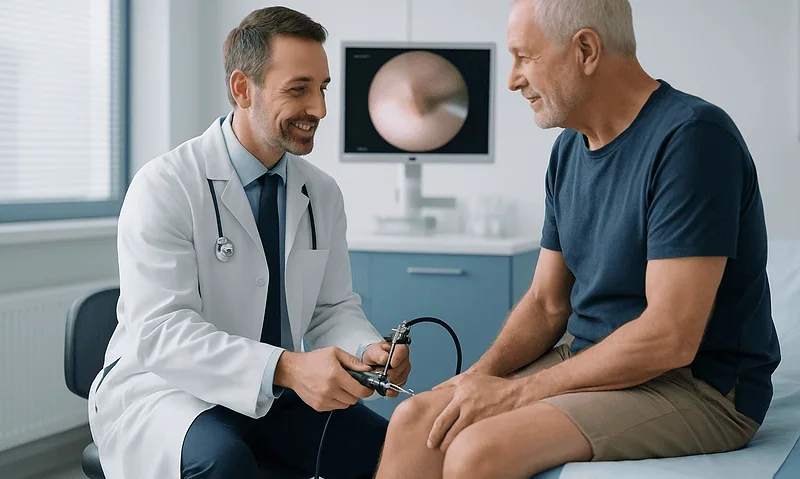
How Arthroscopy Works: The Camera, the Portals and What Surgeons Can Fix Through Keyholes
Arthroscopy works by passing a pencil-width tube with a light and a video camera into a joint through an incision a few millimetres long,…

Can Arthroscopy Diagnose What an MRI Missed? When a Look Inside the Joint Is Used
Yes, in some cases. Diagnostic arthroscopy lets a surgeon look directly inside a joint with a thin camera, and it can reveal cartilage damage,…