

Arthroscopy in Turkey: Treatment Guide
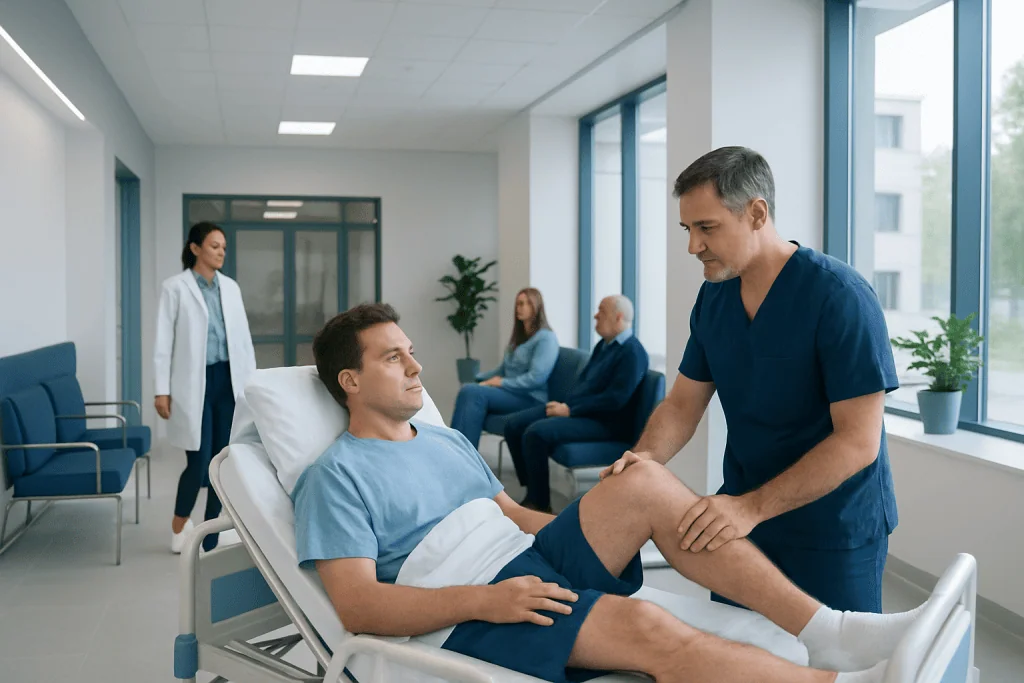
Arthroscopy is keyhole surgery used to diagnose and treat joint problems through small incisions. For treatment in Turkey, your records are usually reviewed remotely first, then you travel for an in-person consultation, tests, surgery and an early follow-up visit before flying home. Many procedures allow same-day discharge or one overnight stay; rehabilitation continues after you return home.
ACL recovery is measured in months and tested in milliseconds: the moment you plant, pivot and trust the knee again. Between the operation and that moment stretches the most protocol-driven rehabilitation in orthopedics: a timeline that cannot be rushed because it is graft biology, not fitness, that sets the pace. This guide walks that timeline honestly, including the return-to-sport testing that separates modern programmes from calendar-watching, plus the arthroscopy basics, graft choices, and the meniscus decisions that ride along with most knee surgery.
Definitions in one paragraph: arthroscopy is keyhole joint surgery, camera and instruments through small ports, and the knee is its home stadium. ACL reconstruction replaces a torn anterior cruciate ligament with a graft (it does not stitch the old one; the torn ACL rarely heals); meniscus surgery repairs or trims the shock-absorbing cartilage rings; and combined procedures are common because injuries travel in packs.
The single most useful sentence for anyone facing this: the graft is weakest around months two to three, precisely when the knee feels good, and that mismatch between feeling and biology is where re-tears are manufactured.
Keyhole surgery: what arthroscopy can and cannot fix
What it does brilliantly: ligament reconstruction, meniscus repair and trimming, cartilage procedures, loose-body removal, and diagnostic certainty, all through port incisions with day-surgery convenience and low infection rates. What it honestly cannot do: reverse arthritis. The disappointing arthroscopies of history were mostly degenerative knees “cleaned out”: an indication modern evidence has retired for routine use. A knee that hurts from worn cartilage surfaces needs a different conversation (injections, load management, and eventually the knee replacement pathway), not a camera.
The candidacy logic is mechanical: arthroscopy fixes structures, torn, unstable, catching, locking things. Instability episodes, true locking, and imaging-confirmed structural tears are its territory; diffuse ache with degenerative scans is not. A surgeon who reads your MRI with you and names the structure being fixed is practising selection; that habit predicts outcomes better than any device in the theatre.
ACL graft choices, honestly compared
Your new ACL comes from somewhere: hamstring tendons (the common default, reliable, smaller incisions, mild early hamstring weakness), patellar tendon with bone blocks (the traditional contact-athlete choice, robust fixation, more kneeling-pain aftermath), quadriceps tendon (the rising option, thick graft, favourable pain profile), or allograft (donor tissue, no harvest site, slower incorporation, higher re-tear rates in young athletes, sensible in selected revisions and older patients).
The honest matching: young pivot-sport athletes lean toward autografts with strong fixation; the specific choice balances your sport, body and surgeon’s fluency. Ask two questions and you will learn everything: which graft do you recommend for me and why, and what is your re-tear experience with it? Surgeons with real volume answer both without flinching.
The rehab timeline: months, milestones and the two-three trap
Weeks zero to two: swelling control, full extension as priority one (the knee that loses straightness pays for months), quad activation, protected weight-bearing progressing per protocol. Weeks two to six: gait normalises, range builds, stationary bike enters; desk work returns early in this window, physical work much later. Months two to three: strength building, and the famous trap: the knee feels capable while the graft, mid-remodelling, is at its weakest. No pivoting, no open-field temptation, whatever the knee whispers.
Months three to six: running programmes begin (straight-line first), strength targets chase symmetry, hop and agility work layers in gradually. Months six to nine-plus: sport-specific training and the modern gatekeeper, return-to-sport testing: strength symmetry (commonly ninety-percent benchmarks), hop-test batteries, movement quality under fatigue. Programmes that test before clearing produce fewer re-tears than programmes that count months; insist on being tested, not just timed. Meniscus repairs riding along shift early weeks (slower weight-bearing, protected flexion), trims barely change the road; repairs deserve their protection honoured.
Meniscus decisions: repair vs trim, explained
The meniscus is the knee’s shock absorber, and its blood supply divides its fate: outer-zone tears in younger knees can genuinely heal when stitched, repair is the investment choice, buying decades of cartilage protection at the cost of slower rehab. Inner-zone and degenerative tears cannot heal, trimming (partial meniscectomy) removes the catching fragment with quick recovery, at the long-term price of less cushioning. Surgeons repair what is repairable and trim what is not; a unit’s repair rate in young patients quietly signals its philosophy.
Straight talk for the middle-aged with degenerative meniscus findings on MRI: those tears live in most knees your age, surgery for them (without mechanical symptoms) mostly disappoints, and structured rehab frequently matches the scope. An orthopedic programme willing to say that is the one to trust when it does recommend surgery.
Frequently asked questions
How long is ACL recovery?
Nine to twelve months to tested return-to-sport for most athletes, walking normally within weeks, running from month three to four, pivot sports only after passing strength and hop testing. The calendar serves the biology, never the reverse.
When can I walk after knee arthroscopy?
Simple scopes and trims: weight-bearing quickly, often days to comfort. ACL reconstruction: protected progression over early weeks. Meniscus repair: the slow lane by design, weeks of protection buying decades of cushion.
Which ACL graft is best?
The one matched to your sport, age and surgeon’s fluency: hamstring, patellar and quadriceps autografts each carry honest trade-offs; allografts suit selected cases. The surgeon’s reasoning and re-tear record matter more than the label.
Why can’t I pivot at three months when my knee feels fine?
Because the graft is remodelling and near its weakest exactly then: the feeling-biology mismatch is where re-tears are made. Testing, not sensation, earns the pivot clearance.
What is return-to-sport testing?
Strength-symmetry benchmarks, hop-test batteries and movement screening under fatigue: the modern gate before clearance. Programmes that test produce fewer re-tears than programmes that count months; ask for the protocol in writing.
Meniscus repair or removal, which will I get?
Anatomy decides: outer-zone tears in younger knees get stitched when possible (slower rehab, long-term protection); inner-zone and degenerative tears get trimmed (quick recovery, less cushion). Repairing the repairable is the philosophy to seek.
Will arthroscopy help my arthritic knee?
Routinely, no, cleaning out degenerative knees without mechanical symptoms has failed modern evidence tests. Arthritis conversations run through injections, load management and eventual replacement, and honest units route you accordingly.
How soon can I fly home after knee surgery in Turkey?
Simple scopes: within days. ACL reconstruction: commonly five to seven days with brace, aisle-walk and clot-precaution instructions, and a written rehab handoff for your physiotherapist at home before you board.
Do I need a brace after ACL surgery?
Protocol-dependent: many programmes brace early weeks for comfort and extension protection; functional sport braces afterwards divide expert opinion. Follow your surgeon’s written plan over forum consensus.
How much does ACL surgery cost in Turkey?
A fraction of UK or US self-pay pricing, typically packaged with graft, implants and initial rehab guidance. The honest figure follows MRI review, itemised, with the rehabilitation handoff plan included in writing.
Add us as a Preferred Source to see more of our trusted health content across Google Search, AI Overviews and Discover.

Update history
- PublishedJune 9, 2026
- Medical review approvedSeptember 1, 2026
- Last content updateSeptember 2, 2026
References2
- Arthroscopy: MedlinePlus Medical Encyclopedia medlineplus.gov
- Arthroscopy: NHS nhs.uk
More Patient Guides

HoLEP in Turkey: How It Compares With TURP and What Recovery Involves
HoLEP in Turkey treats enlarged prostate tissue with laser enucleation; learn how it compares with TURP, recovery, travel and follow-up.
Porcelain Veneers in Turkey: Who Is Suitable and How Many Visits Are Needed?
Porcelain veneers in Turkey can enhance tooth shape and colour in two visits for suitable patients after a personalised dental assessment.

How to Prepare for a Sedation Procedure in Turkey
Prepare safely for a sedation procedure in Turkey with guidance on fasting, medicines, travel, recovery and follow-up.
Treatment Delays in Turkey: What Happens If Tests or Recovery Change Your Schedule
Treatment delays in Turkey can happen if tests or recovery change your plan. Learn how to manage appointments, travel, accommodation and follow-up.