ACL Reconstruction
ACL Reconstruction is a surgical procedure to replace a torn anterior cruciate ligament and restore knee stability, especially for active patients with persistent instability after injury.

Quick answer
ACL reconstruction is a surgical procedure that replaces a torn anterior cruciate ligament with a tendon graft, restoring stability to a knee that gives way. It is usually performed arthroscopically through small incisions and takes around one to two hours. Months of structured physical therapy follow, and return to demanding sport is judged by strength and function testing rather than the calendar.
ACL Reconstruction and Physical Therapy for an ACL Injury
ACL reconstruction is an operation that replaces a torn anterior cruciate ligament with a tendon graft, restoring stability to a knee that buckles or shifts during turning and pivoting. It is intended for people whose knee remains unreliable after the ligament tears, most often athletes, active adults and anyone whose sport or work demands sudden changes of direction. Physical therapy for an ACL injury is the other half of the treatment: some knees are managed with rehabilitation alone, and every reconstructed knee depends on months of structured therapy afterwards. The operation and the rehabilitation are not alternatives so much as two parts of one plan.
An ACL tear can interrupt everyday life abruptly. For some people, the injury happens during sport: a sharp pivot, an awkward landing, a direct blow to the knee, often with a popping sensation and rapid swelling. For others, the first sign is quieter: the knee gives way while stepping off a kerb, turning quickly in the kitchen, or trying to return to exercise after what seemed like a simple sprain. In either case the result tends to be the same. Confidence in the knee drops, and movements that once felt automatic begin to feel uncertain.
The questions that follow are predictable and legitimate. Is reconstruction truly necessary, or can the knee be rehabilitated without surgery? How painful is the recovery? How long will you be away from work, driving, running, sport? Will the knee ever feel normal again? These questions deserve careful, individualised answers rather than reassurance, and this page sets out what is honestly known about each of them.
The decision matters beyond performance. A knee that repeatedly gives way is doing more than limiting your training. Each instability episode places extra stress on the meniscus and the articular cartilage: the structures that absorb shock and let the joint glide smoothly. Over time, uncontrolled instability increases the likelihood of additional damage inside the knee. The choice about reconstruction is therefore not only about getting back to sport; it is about protecting the long-term health of the joint.
The decision also comes with practical questions: which graft suits your anatomy and sport, whether other structures need treating at the same time, and how surgery and rehabilitation should be sequenced. A thoughtful ACL reconstruction pathway should address all of these, not just the operation itself. The sections below cover each in turn.
 Dr. Mohamed Al-QadiMDBoard Commentary
Successful ACL reconstruction is not defined by graft placement alone; identifying associated meniscal injuries, selecting the appropriate graft, restoring knee stability and completing a criterion-based rehabilitation program are equally important for a safe return to sport. Acıbadem-affiliated orthopedic surgeons have published research on ACL reconstruction in athletes, combined ACL and meniscal root or RAMP lesion repair, and contemporary biologically augmented reconstruction techniques. Recent Acıbadem research also focuses specifically on return-to-sport considerations in basketball players, reflecting the importance of tailoring ACL treatment to the athlete’s sport, functional demands and associated knee injuries.
What ACL Reconstruction Involves
ACL reconstruction replaces the torn ligament rather than stitching it back together. The anterior cruciate ligament is one of the major stabilising structures of the knee: it runs through the centre of the joint and controls forward movement and rotation between the thigh bone (femur) and the shin bone (tibia). When it tears completely, it does not usually heal in a way that restores normal function, particularly in people who place high demands on the knee. The ligament’s blood supply is limited and its torn ends retract, so the body cannot reliably knit it back into a working structure.
Reconstruction, not repair
Reconstruction means building a new ligament rather than mending the old one. The surgeon takes a tendon graft, usually from the patient’s own body, sometimes from donor tissue in selected cases, and places it in the position of the original ACL, securing it inside carefully prepared channels in the bone. Over the months that follow, the graft incorporates biologically: the body grows new blood supply into it and remodels it so that it functions as a stabilising ligament. True suture repair of the ligament exists for a narrow group of tear patterns, but for most complete ruptures, reconstruction remains the standard approach because it has the longer and better-understood track record.
Keyhole surgery through small incisions
Most ACL reconstructions are performed arthroscopically. The surgeon works through small incisions using a camera and specialised instruments, which allows detailed visualisation inside the joint and generally causes less tissue trauma than a large open procedure. Arthroscopy also lets the surgeon inspect the whole joint, so associated problems, a meniscus tear, a cartilage lesion, a loose fragment, can be identified and, where appropriate, treated during the same operation.
The goals of ACL reconstruction are specific: restore stability, reduce or eliminate giving-way episodes, support a return to the activities you value, and help protect the meniscus and cartilage from further damage. What the operation cannot do on its own is rebuild strength, balance and movement quality. Those come from rehabilitation, which is why the surgical decision should always be made alongside a realistic plan for the months of therapy that follow.
Who May Need ACL Surgery
ACL surgery is not automatic after a tear. Some people manage well with rehabilitation alone, especially if their activities do not involve pivoting and their knee does not give way in daily life. Others continue to feel that the knee is unreliable despite committed physical therapy, and in these patients reconstruction is usually recommended. The deciding factor is rarely the MRI image by itself; it is how the knee behaves under the demands you actually place on it.
Typical symptoms at the time of an ACL injury include a popping sensation, swelling that develops within hours, pain, reduced range of motion and difficulty bearing weight. As the acute phase settles, a second pattern often emerges: the knee feels as though it may buckle, shift or give way during turning, pivoting or sudden deceleration. This sense of instability is frequently the symptom that most strongly influences the treatment decision.
Diagnosis begins with a detailed orthopaedic evaluation. The physician asks how the injury occurred, what symptoms followed, whether swelling developed quickly, and which activities now feel limited. Examination includes specific stability tests for the ACL, along with checks for swelling, tenderness, motion loss and signs of injury to other ligaments or the meniscus. Magnetic resonance imaging is commonly used to confirm the tear and identify associated injuries such as meniscal tears, cartilage lesions, bone bruising or damage to other stabilising structures. Standard X-rays help evaluate alignment, rule out fracture and inform surgical planning. In selected cases, gait or biomechanical assessment adds further detail.
Patients who are more likely to be considered for ACL reconstruction include:
- People with a complete ACL tear and repeated episodes of knee instability
- Athletes or active adults who want to return to pivoting, cutting or jumping sports
- Patients with combined injuries, such as an ACL tear together with meniscus damage
- Younger patients whose activity level places ongoing strain on an unstable knee
- Individuals whose work requires kneeling, climbing, turning or physical agility
- Patients who have not improved enough with rehabilitation alone
Timing is individualised. Some patients benefit from early reconstruction once swelling has settled and range of motion has been recovered. Others begin with rehabilitation and decide on surgery later if instability persists. The best decision depends on age, activity goals, the condition of the knee, associated injuries, and, honestly, your ability to commit to the rehabilitation that follows surgery.
Can a torn ACL heal with physical therapy?
A completely torn ACL does not usually grow back into a functioning ligament, no matter how good the rehabilitation is. What physical therapy for an ACL injury can do is build the strength, balance and neuromuscular control that allow some people to function well without the ligament. A proportion of patients, often those with lower rotational demands, adapt so effectively that they never need surgery. Some partial tears also stabilise with structured rehabilitation. The honest test is functional: if the knee still gives way during the activities you need it for after a proper course of therapy, rehabilitation alone has not solved the problem, and reconstruction becomes the more reliable path.
Can you walk on a torn ACL after a week?
Many people can walk reasonably comfortably within days to weeks of an ACL tear, once the initial swelling and pain begin to settle. This surprises patients, and it can be misleading. Walking in a straight line places little rotational demand on the knee, so a torn ACL often tolerates it well. The ligament’s job shows up during turning, pivoting and sudden deceleration, which is why a knee that walks well can still give way on a staircase turn or a five-a-side pitch. Being able to walk does not mean the ligament has healed, and it is not by itself evidence that surgery is unnecessary.
What Problems ACL Reconstruction Addresses
ACL reconstruction primarily addresses instability caused by a torn anterior cruciate ligament. It is most often recommended for complete ruptures, but the broader clinical picture matters as much as the scan: some patients with partial tears have substantial instability and may be considered for surgery when symptoms and examination support it.
The procedure is commonly used in situations such as:
- Complete ACL tear with functional instability: the knee repeatedly gives way during daily activities or exercise.
- ACL tear in an athlete or highly active individual: returning to sports that involve pivoting, sudden deceleration or contact usually requires restored ligament stability.
- ACL injury with meniscus tear: instability can worsen meniscal damage, and preserving meniscal tissue is important for the long-term health of the joint.
- ACL tear with associated ligament injury: some knee injuries involve several stabilising structures at once and need coordinated treatment planning.
- Failure of nonoperative treatment: physical therapy may improve strength and control, yet persistent instability can still limit function.
- Revision cases: a previously reconstructed ACL that has re-torn, or that never restored satisfactory stability, can be reconstructed again after careful planning.
It is equally important to be clear about what ACL reconstruction does not do. It does not reverse all forms of knee pain, and it is not a treatment for arthritis on its own. If there is substantial cartilage wear, malalignment or a complex multi-ligament injury, the surgical plan may need to be modified or staged. This is why thorough preoperative assessment matters: the aim is to match the treatment to the actual source of your symptoms and your long-term goals, not simply to the presence of a torn ligament on a scan.
How ACL Reconstruction Is Performed, Step by Step
The process begins well before the day of surgery. Preoperative preparation includes confirming the diagnosis, reviewing imaging, evaluating your general health and discussing graft options. Many patients are advised to complete a period of “prehabilitation” first, focused on reducing swelling, regaining as much range of motion as possible, and strengthening the muscles around the knee and hip. A knee that enters surgery quiet, mobile and reasonably strong tends to recover more smoothly afterwards.
Graft choice is one of the most important preoperative conversations. Common autograft sources include the hamstring tendons, the central portion of the patellar tendon, and the quadriceps tendon; donor tissue (allograft) is used in selected cases. Each option carries trade-offs related to age, sport, anatomy, prior surgery and recovery priorities: a patellar tendon graft, for example, may cause more soreness at the front of the knee during kneeling, while a hamstring graft leaves the extensor mechanism untouched. There is no universally superior graft; there is a right graft for a particular patient.
On the day itself, the operation typically proceeds as follows:
- Anaesthesia and examination. You receive general anaesthesia, often combined with regional pain-control techniques planned by the anaesthesia team. The knee is examined under anaesthesia to confirm the pattern of instability, and the leg is prepared in sterile fashion.
- Arthroscopic inspection. A camera enters the joint through a small incision. The surgeon inspects the torn ACL and looks carefully for associated injuries, meniscus tears, cartilage damage, loose fragments, which can be treated at the same sitting when appropriate.
- Graft harvest and preparation. If your own tissue is being used, the selected tendon is harvested through a controlled incision and prepared to the correct size and configuration. Precision matters here, because the graft must fit both your anatomy and the fixation plan.
- Tunnel creation. Bone tunnels or sockets are created in the femur and tibia at positions that reproduce the natural ACL anatomy as closely as possible. Accurate placement is one of the strongest technical determinants of stability and long-term graft function.
- Graft passage and fixation. The graft is passed into position and secured with fixation devices designed to hold it firmly while biological healing takes place.
- Final checks and closure. The surgeon confirms stability and graft tension through range of motion, washes the joint, and closes the small incisions.
Throughout the procedure, arthroscopic visualisation and modern instrumentation allow the team to work accurately through small incisions. In revision surgery or complex instability, additional planning tools may be needed to map prior tunnels, alignment and associated structural problems. None of this technology matters for its own sake; it matters because it helps the surgeon place the graft correctly, protect surrounding tissue and deal with everything else that the injury damaged.
How long does ACL reconstruction surgery take?
The operation itself usually takes around one to two hours. A straightforward, isolated ACL reconstruction sits at the shorter end; cases involving meniscus repair, multi-ligament work or revision surgery take longer. Bear in mind that total time away from the ward is longer than the surgical time, because it includes anaesthesia, positioning and recovery-room monitoring. If someone quotes you a precise duration before your knee has been assessed, treat it as an estimate, not a plan.
How painful is ACL reconstruction?
Expect real soreness in the first days, not agony, and expect it to be actively managed. Regional anaesthetic techniques used at the time of surgery reduce early discomfort, and your team plans postoperative pain control before you wake up. Most patients describe the first week as sore and swollen rather than severely painful, with graft-site soreness (the front of the knee for patellar tendon grafts, the back of the thigh for hamstring grafts) often more noticeable than the joint itself. Discomfort settles progressively over the following weeks, though occasional aching and swelling after exercise can persist for months. Anyone promising a comfortable recovery is overselling; a well-managed one is a fair expectation.
What happens in the first days after surgery?
You are monitored in recovery and begin the first phase of postoperative care almost immediately. Pain control, swelling management and early movement are the priorities. Some patients go home the same day; others stay longer depending on the complexity of surgery or general health. Crutches are standard at first, and a brace may be recommended in selected cases, particularly when other structures have been repaired. Rehabilitation starts early: the initial goals are reducing swelling, achieving straight-knee extension, regaining gradual flexion, activating the quadriceps and walking safely.
Why Acting Early Can Matter
Not every ACL tear requires immediate surgery, but delaying evaluation is rarely helpful. A knee that repeatedly gives way is more vulnerable to secondary injury: each instability episode stresses the meniscus and cartilage, and damage to these tissues may increase the risk of ongoing pain and future degenerative change. The ligament decision can wait in many cases; the assessment should not.
Early orthopaedic review also creates a better treatment window. If surgery is likely, it is usually better to prepare the knee properly, settling swelling, restoring motion, rebuilding quadriceps activation, than to operate through a stiff, inflamed joint. If surgery is not immediately needed, supervised rehabilitation and sensible activity guidance still protect the joint and help establish whether instability is a genuine, persistent problem or a temporary one.
For athletes, drifting without a clear plan prolongs deconditioning and complicates return to sport. A clear plan, even when that plan is nonoperative, keeps the timeline in your hands rather than leaving the knee to dictate it.
Benefits of ACL Reconstruction
The expected benefits should always be read in the context of your individual knee, your activity goals and the quality of rehabilitation afterwards. With that caveat, this is what a well-selected, well-executed reconstruction is intended to deliver:
| Benefit | What It Means for You |
|---|---|
| Improved knee stability | The knee is less likely to buckle or shift during turning, pivoting or quick movement. |
| Better return to activity | Many patients can work toward resuming sports, exercise and physical routines that instability had limited. |
| Protection against further injury | Restoring stability may reduce the repeated giving-way episodes that damage the meniscus and cartilage. |
| Greater confidence in the knee | Everyday movement tends to feel more secure, which supports walking, stairs, training and overall function. |
| Opportunity to address related problems | Meniscus tears and other intra-articular injuries can often be treated during the same arthroscopic procedure. |
ACL Recovery Time: A Realistic Timeline
ACL recovery time is measured in months, not weeks, and it depends on the procedure performed, the graft used, whether the meniscus was repaired, and how consistently rehabilitation is done. The table below describes a typical course; your surgeon and therapist will adjust it to your knee.
| Time Period | What Patients Can Expect |
|---|---|
| Day 1 | Swelling, soreness and limited mobility are normal. Pain management, gentle movement and safe walking with crutch support begin. |
| First Week | Focus on controlling swelling, regaining knee extension, activating the quadriceps and managing basic daily activities. |
| First Month | Walking improves, range of motion increases, and structured physical therapy builds early strength and movement control. |
| Months 2 to 4 | Rehabilitation advances to heavier muscle work, balance training and more dynamic movement patterns as the knee becomes more reliable. |
| Longer Term | Return to running, sport drills and eventually higher-level activity is guided by healing, strength, functional testing and assessment by the physician and therapist. |
ACL injury length of recovery: what changes the timeline?
The ACL injury length of recovery is shaped more by what was damaged and how you rehabilitate than by the calendar. An isolated reconstruction generally progresses faster than one combined with a meniscus repair, because a repaired meniscus needs protected weight-bearing and restricted flexion early on. Graft type influences early soreness and strength recovery. Age, baseline fitness, swelling control and quadriceps recovery all shift the timeline in either direction. Many programmes plan for daily activities within weeks, running after several months, and a return to pivoting sport somewhere around nine to twelve months, with the final clearance based on testing, not the date.
ACL rehabilitation time: phases matter more than dates
ACL rehabilitation time is best understood as a sequence of phases with entry criteria, rather than a fixed schedule. Phase one restores extension, calms swelling and wakes up the quadriceps. Phase two rebuilds strength and normal walking. Phase three adds balance, single-leg control and heavier loading. Phase four introduces running, then change-of-direction work, then sport-specific drills. You move to the next phase when the knee meets the criteria, not when a certain number of weeks has passed. Rushing a phase is the classic way to turn a good operation into a disappointing outcome.
What does PT for an ACL injury involve?
PT for an ACL injury, the American shorthand for physical therapy, combines supervised sessions with daily home exercise, and it starts before muscle strength, not after. Early work targets swelling, extension and quadriceps activation. Middle phases build strength symmetry between the legs, hip and trunk control, and confidence under load. Later phases retrain the movement patterns that caused trouble in the first place: landing mechanics, deceleration and cutting. A structured physical therapy program with regular reassessment is what turns a stable graft into a knee you trust, and specialists in physical medicine and rehabilitation can adjust the plan when progress stalls or pain patterns change.
When can I drive after ACL reconstruction?
Most patients return to driving within a few weeks, but the honest answer depends on four things: which leg was operated on, whether your car is automatic or manual, whether you are still using strong pain medication that impairs reaction time, and whether you can perform a genuine emergency stop. Left-leg surgery with an automatic car generally allows an earlier return than right-leg surgery or a manual gearbox. Your surgeon confirms the timing at follow-up, and it is worth checking your motor insurance terms, since some policies have their own requirements after surgery.
What is the fastest ACL recovery ever achieved?
Some professional athletes have returned to elite competition in well under a year, and these cases attract enormous attention. They are outliers, and they are poor benchmarks. Professional athletes rehabilitate full time, with daily supervised therapy, objective testing, and medical teams monitoring every stage, and even then, an early return carries a real re-injury risk that clubs and athletes knowingly accept. The graft matures biologically over many months regardless of how strong the leg feels, which is why feeling ready and being ready are not the same thing. Chasing a record recovery is the most reliable way to need a second reconstruction.
What Influences a Good Outcome
ACL reconstruction is a well-established procedure and many patients do very well, but outcomes are shaped by identifiable factors, and it helps to know them before surgery rather than after. The first is patient selection: surgery is most helpful when instability is the true problem and when your goals genuinely require a stable knee for pivoting or physically demanding activity.
Associated injuries matter. A patient with an isolated ACL tear recovers differently from someone who also needed a meniscus repair, has cartilage damage or injured other ligaments. The state of the knee before surgery matters too: operating through severe swelling, motion loss or a shut-down quadriceps complicates early recovery, which is why prehabilitation is emphasised so consistently.
Technical accuracy during surgery is another key factor. Graft choice, tunnel positioning, fixation and the management of associated injuries all contribute to how the knee functions afterwards. In revision cases, planning is especially important because prior surgery alters the anatomy and can leave old tunnels exactly where the new ones need to go.
The most important influence after surgery is rehabilitation. An expertly performed reconstruction can still fall short if strength, neuromuscular control and movement quality are never fully rebuilt, and returning to sport before objective milestones are met raises the risk of re-injury. Committed physical therapy after an ACL injury is not an optional extra to the operation; it is the mechanism by which the operation delivers its result. Patient-specific factors also play a role: age, body mechanics, baseline fitness, smoking status and adherence to therapy. Recovery is rarely linear. Temporary swelling or stiffness after a hard week of training is common and usually manageable when addressed promptly, and steady communication between surgeon, therapist and patient is one of the strongest predictors of a smooth course.
How Much Does ACL Reconstruction Cost Without Insurance?
There is no single answer, because the total is built from several components that vary widely between countries, hospitals and individual knees. When you compare quotes, check what each one actually includes. The main cost drivers are:
- The graft and implants: autograft versus donor tissue, and the fixation devices used to secure the graft.
- What else is done in the same operation: a meniscus repair or cartilage procedure adds surgical time and materials.
- Anaesthesia and hospital stay: day-case surgery costs less than an inpatient stay after complex or combined procedures.
- Imaging and preoperative assessment: MRI, X-rays and medical evaluation may be quoted separately.
- Rehabilitation: months of physical therapy are a genuine part of the total cost of treatment, and quotes often omit them entirely.
- Revision complexity: redo surgery typically requires more planning, sometimes staged procedures, and costs more than a first reconstruction.
A meaningful comparison is between complete care pathways, assessment, surgery, hospital stay, follow-up and rehabilitation, rather than between headline surgical fees.
Deciding Between Surgery and Rehabilitation Alone
If your knee still feels unstable after an ACL injury, the key question is not simply whether the ligament is torn. It is how the injury is affecting your life now, and what your knee needs in order to function well for the decades ahead. For a patient with low rotational demands and a knee that behaves itself, a committed course of rehabilitation may be a complete answer. For a patient whose knee gives way despite good therapy, or whose sport and work depend on pivoting, reconstruction is usually the more reliable route, provided the months of rehabilitation that follow are treated as part of the treatment, not an afterthought.
Both conclusions are legitimate outcomes of a careful assessment. The useful test of any recommendation, wherever you receive it, is whether it accounts for your examination findings and imaging together, addresses associated injuries rather than the ligament in isolation, explains the graft choice in terms of your anatomy and goals, and comes with a rehabilitation plan that has phases, criteria and testing rather than just dates. A recommendation that meets that standard, for surgery or against it, is one you can trust.
Preparation
- Before ACL reconstruction, patients usually have an orthopedic evaluation, knee imaging, and routine blood tests. Your doctor may advise stopping certain medications, fasting before surgery, and starting prehabilitation exercises to improve strength and motion.
Aftercare
- After surgery, rehabilitation is essential and usually includes pain control, ice, bracing, crutches, and structured physical therapy. Follow-up visits monitor healing, knee stability, and progress toward a safe return to daily activities and sports.
Frequently Asked Questions
What is ACL reconstruction and when is it needed?
ACL reconstruction is surgery to replace a torn anterior cruciate ligament in the knee, usually with a tendon graft. It is often recommended when the knee feels unstable, gives way during walking or sports, or when there is associated meniscus or cartilage damage. Not every ACL tear needs surgery. At Acibadem, orthopedic specialists assess your symptoms, activity level, imaging, and overall knee health to decide whether reconstruction is the right option for you.
How do I know if I need ACL surgery or just physiotherapy?
Some people manage well with physiotherapy, bracing, and activity changes, especially if they are less active and do not experience instability. Surgery is more commonly advised for active patients, athletes, or those with repeated knee buckling. The decision depends on your age, lifestyle, sports goals, associated injuries, and exam findings. Acibadem specialists provide a personalized assessment to compare non-surgical treatment with reconstruction and recommend the safest, most effective plan.
What tests are done before ACL reconstruction in Turkey?
Before ACL reconstruction, patients usually have a physical knee examination and imaging tests, most often MRI to confirm the ligament tear and look for meniscus or cartilage injuries. X-rays may also be used to assess bone alignment and rule out other problems. Blood tests and anesthesia evaluation are typically part of preoperative preparation. At Acibadem, your orthopedic team reviews these results carefully to plan a treatment approach tailored to your knee structure and recovery goals.
Which graft is better for ACL reconstruction: patellar tendon, hamstring, or donor graft?
The best graft depends on your anatomy, sport, previous surgeries, and personal priorities. Patellar tendon grafts can offer strong fixation, hamstring grafts may reduce front-of-knee pain for some patients, and donor grafts may be considered in selected cases. Each option has benefits and trade-offs regarding recovery, pain, and return to activity. Acibadem orthopedic surgeons explain the choices clearly and recommend the graft type that best fits your knee condition and lifestyle.
Is ACL reconstruction a major surgery and how long does it take?
ACL reconstruction is a common orthopedic procedure, usually performed arthroscopically through small incisions. Although it is less invasive than open knee surgery, it is still an important operation that requires careful planning and rehabilitation. The surgical time varies depending on the graft used and whether meniscus or cartilage treatment is done at the same time. Most patients stay in the hospital for a short period, and some may be discharged the same day depending on their condition.
How painful is ACL reconstruction and what is recovery like afterward?
Some pain, swelling, and stiffness are normal after ACL reconstruction, especially in the first days. Pain is usually managed with medication, ice, elevation, and an early rehabilitation plan. Most patients begin controlled movement and walking with support soon after surgery, depending on the surgeon’s instructions. Recovery is gradual and requires commitment to physiotherapy. At Acibadem, your care team monitors healing closely and adjusts your rehabilitation program to support safe progress and comfort.
How long does it take to walk, drive, work, and return to sports after ACL reconstruction?
Timelines vary, but many patients begin walking with crutches early and gradually progress as strength and balance improve. Driving may be possible once you can safely control the car and are no longer taking medications that impair alertness. Office work often resumes sooner than physically demanding jobs. Returning to sports takes longer because the knee must recover stability, strength, and coordination. Acibadem specialists create a personalized rehabilitation timeline based on your surgery and activity goals.
What are the risks or complications of ACL reconstruction?
As with any surgery, ACL reconstruction carries potential risks such as infection, blood clots, bleeding, stiffness, graft failure, persistent instability, numbness around the incision, or pain in the front of the knee. The risk profile also depends on your general health, smoking status, and whether there are other knee injuries. Careful surgical technique and structured rehabilitation help reduce complications. At Acibadem, patients receive detailed preoperative counseling and follow-up to support a safer recovery process.
Can international patients travel to Turkey for ACL reconstruction safely?
Many international patients travel to Turkey for ACL reconstruction after remote review of their medical history and MRI images. Travel is generally possible, but the timing should be coordinated around your symptoms, surgery date, and early recovery needs. After the operation, you may need crutches, compression measures, and guidance on flying safely. Acibadem teams support international patients with treatment planning, hospital coordination, and postoperative instructions to make the journey more comfortable and organized.
How much does ACL reconstruction cost in Turkey, and what affects the price?
The cost of ACL reconstruction in Turkey can vary based on the hospital, surgeon’s experience, graft choice, imaging, anesthesia, length of stay, and whether additional procedures such as meniscus repair are needed. A simple case and a more complex knee injury will not cost the same. Rather than relying on general online figures, it is better to request an individualized quotation. Acibadem specialists provide a personalized assessment so the treatment plan and expected costs are clear from the start.
Medically reviewed by the Acıbadem International Medical Board September 1, 2026
See our medical review board →
Update history
- PublishedJuly 19, 2026
- Medical review approvedSeptember 1, 2026
- Board commentary addedAugust 26, 2026
- Last content updateSeptember 1, 2026
Compare options, costs and recovery
From the Acibadem Blog
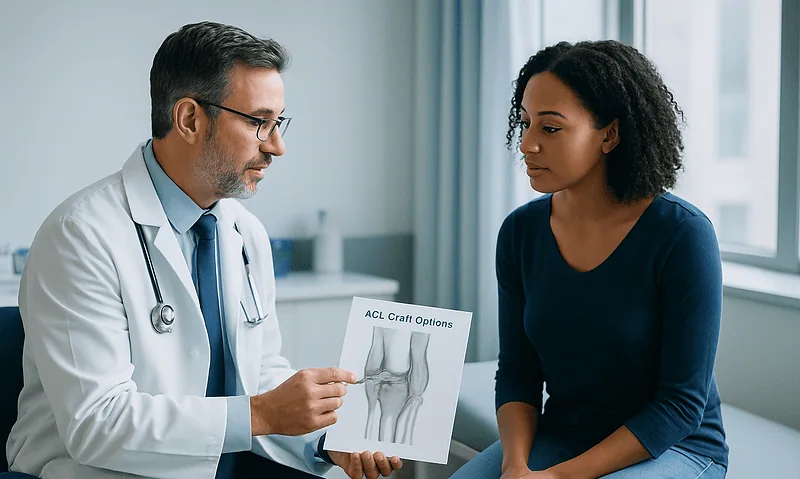
ACL Graft Options: Patellar, Hamstring, Quad or Donor: Compared
Surgeons rebuild a torn ACL with one of four main graft options: your own patellar tendon, hamstring tendons, or quadriceps tendon, or donor (allograft)…

ACL Surgery Recovery Time: The Honest 9-12 Month Timeline
Full recovery from ACL reconstruction typically takes 9 to 12 months, even though many people walk without crutches within a few weeks and feel…