Arthrocentesis: What Patients Need to Know

Arthrocentesis removes fluid from a joint for diagnosis, symptom relief, or both. It is often performed on the knee, but other joints such as the shoulder, ankle, elbow, wrist, or hip may also be treated.
Key Takeaways
- Arthrocentesis removes fluid from a joint for diagnosis, symptom relief, or both.
- It is often performed on the knee, but other joints such as the shoulder, ankle, elbow, wrist, or hip may also be treated.
- Doctors may use the fluid sample to check for infection, crystals, bleeding, or inflammatory joint disease.
- The procedure is usually brief and done with local numbing medicine.
- Mild soreness afterward is common, but severe pain, fever, or worsening swelling should be assessed promptly.
Medically reviewed by the Acıbadem International Medical Board — July 23, 2026
Arthrocentesis is a common procedure in which a doctor uses a needle to remove fluid from a joint. It can help diagnose the cause of swelling and pain, and it can also relieve pressure when a joint is very full of fluid.
Overview: what arthrocentesis is and why it is done
Arthrocentesis, also called joint aspiration, is a procedure in which a clinician inserts a sterile needle into a joint to remove synovial fluid. This fluid normally helps the joint move smoothly, but when too much collects, it can cause swelling, stiffness, and discomfort. Removing some of that fluid may ease pressure and improve movement.
The procedure is used for two main reasons. First, it can help diagnose why a joint is swollen or painful. Second, it can provide symptom relief by reducing fluid buildup. In some cases, arthrocentesis is followed by an injection of medicine into the joint, but aspiration and injection are separate steps and may or may not be done together.
Arthrocentesis is commonly performed on the knee because it is one of the easiest joints to access, but it may also be done on the shoulder, elbow, wrist, ankle, or smaller joints. For deeper joints such as the hip, imaging guidance may be used to improve accuracy and safety.
How arthrocentesis helps with diagnosis and symptom relief
One of the most useful aspects of arthrocentesis is that it can quickly provide important information. A sample of joint fluid can be examined for color, clarity, white blood cells, crystals, blood, or signs of bacteria. These findings can help a doctor distinguish between infection, gout, bleeding into the joint, inflammatory arthritis, or a flare of osteoarthritis.
Relief of symptoms is another important reason the procedure is performed. If a joint has a large effusion, meaning an abnormal collection of fluid, that pressure can make movement difficult and painful. Aspiration may reduce tightness and improve comfort, even before laboratory results are available.
Because of these dual benefits, arthrocentesis is often part of the evaluation of a newly swollen joint. It may also be used in people with known joint conditions who develop a sudden increase in swelling, especially when a clinician needs to rule out infection or crystals.
When doctors are evaluating causes of joint swelling, they may also investigate related conditions such as arthritis or gout, depending on the pattern of symptoms and the fluid analysis results.
When a doctor may recommend arthrocentesis

A doctor may recommend arthrocentesis when a joint becomes swollen without a clear explanation, especially if the swelling comes on suddenly. It is particularly helpful when there is concern about septic arthritis, a joint infection that needs urgent treatment. It may also be advised if gout or pseudogout is suspected, since crystals can often be identified in the fluid.
People with chronic joint disease may also need arthrocentesis if symptoms change. For example, someone with osteoarthritis or inflammatory arthritis may develop a rapid increase in fluid, pain, warmth, or reduced motion. In these situations, aspiration can help determine whether there is a new problem on top of the underlying condition.
Other reasons include a painful joint after an injury, suspected bleeding into the joint, or persistent swelling that limits daily activities. In some cases, the procedure is performed before additional treatment, such as orthopedic rehabilitation, to improve comfort and mobility.
- Sudden joint swelling
- Warm, tender, or painful joints
- Reduced range of motion
- Possible infection or crystal arthritis
- Joint swelling after trauma
- Need to analyze synovial fluid
What happens during the procedure
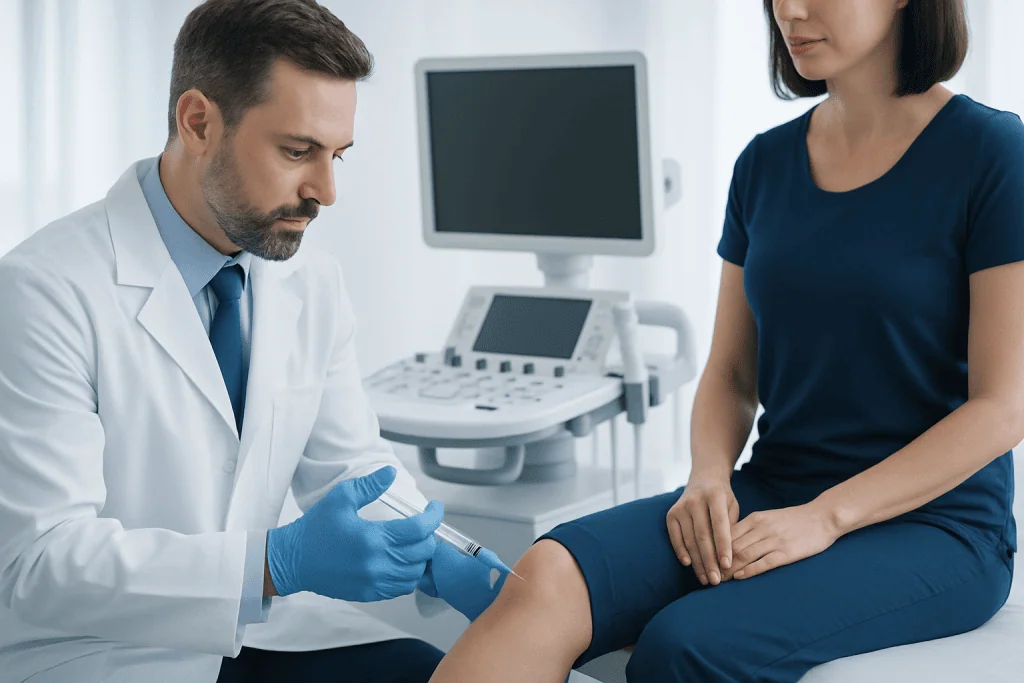
Before arthrocentesis, the skin over the joint is cleaned carefully to reduce the risk of infection. The clinician may examine the joint and sometimes use ultrasound or another imaging method to identify the best entry point, especially if the fluid collection is small or the joint is deeper.
A local anesthetic is usually used to numb the area. Once the skin and tissues are prepared, a sterile needle is guided into the joint space and fluid is withdrawn into a syringe. The amount removed depends on the purpose of the procedure and how much fluid is present. If laboratory testing is needed, the sample is sent for analysis.
Some people feel pressure more than pain during arthrocentesis. The procedure is often brief, although the exact experience depends on the joint involved and the amount of fluid. If a medication injection is planned after aspiration, the doctor may discuss the expected benefits and limits of that step separately.
After the needle is removed, a small bandage is placed over the site. Many patients can return home the same day and resume light activity soon afterward, though the doctor may recommend resting the joint for a short period.
Risks, side effects, and recovery
Arthrocentesis is generally considered a safe procedure when performed with proper sterile technique. The most common short-term effects are mild soreness, temporary tenderness, or a small bruise at the needle site. These symptoms often improve within a day or two.
Less common risks include infection, bleeding, or injury to nearby structures. The chance of serious complications is low, but it is important for patients to understand that no invasive procedure is completely risk-free. People taking blood thinners or those with bleeding disorders may need special planning before the procedure.
Recovery is usually simple. A person may be advised to avoid strenuous use of the joint for the rest of the day, use ice if mild soreness develops, and keep the site clean and dry as instructed. If fluid was removed from a large, tense effusion, many patients notice improved comfort fairly quickly.
When recovery does not go as expected, the doctor may look more closely at the joint and surrounding structures. If symptoms are tied to injury, cartilage damage, or persistent mechanical problems, further orthopedic assessment or knee treatment options may be discussed in appropriate cases.
Understanding the test results and next steps
The fluid removed during arthrocentesis can reveal a great deal about what is happening inside the joint. Clear, straw-colored fluid may be seen in noninflammatory conditions, while cloudy fluid can suggest inflammation or infection. Blood in the sample may point to trauma, a bleeding disorder, or internal joint damage.
Microscopic testing may identify crystals associated with gout or pseudogout. Cell counts and cultures may help determine whether bacteria are present. These results are interpreted together with symptoms, physical examination findings, blood tests, and imaging when needed.
Treatment after arthrocentesis depends on the underlying cause rather than the procedure itself. Infection usually requires urgent antibiotics and sometimes additional drainage. Crystal arthritis may be managed with anti-inflammatory treatment. Chronic inflammatory conditions may need longer-term follow-up with specialists, and structural problems may call for imaging, physical therapy, or procedures such as arthroscopy in selected patients.
When to seek medical care
A swollen or painful joint should be assessed promptly if it is red, hot, very tender, or difficult to move, especially when symptoms begin suddenly. Fever, feeling generally unwell, or inability to bear weight can raise concern for a serious joint problem such as infection. In these situations, waiting for symptoms to settle on their own is not advisable.
Medical advice is also important after arthrocentesis if the joint becomes more swollen, increasingly painful, or if there is drainage, spreading redness, or fever. These symptoms do not always mean a complication has occurred, but they do need timely review by a clinician.
For ongoing joint symptoms, a careful assessment can help guide the most appropriate next steps. Acibadem International’s multidisciplinary specialists in JCI-accredited hospitals evaluate and treat joint conditions for international patients, using diagnostic testing and individualized treatment plans when arthrocentesis or further care is needed.
Frequently asked questions
Is arthrocentesis painful?
Most patients feel brief discomfort, pressure, or stinging from the numbing medicine rather than severe pain. The experience varies by joint and by how inflamed it is, but the procedure is usually short.
How long does arthrocentesis take?
The aspiration itself often takes only a few minutes. The full visit may take longer because of preparation, consent, positioning, and any additional testing or treatment.
Why would a swollen joint need fluid removed?
Removing fluid can help a doctor find the cause of swelling and can also reduce pressure inside the joint. This is especially useful when infection, gout, bleeding, or inflammatory arthritis is being considered.
Can a joint refill with fluid after arthrocentesis?
Yes, a joint can refill if the underlying cause is still active. That is why treatment focuses not only on removing the fluid but also on identifying and managing the reason it built up.
Do patients need to rest after arthrocentesis?
Many people can return to normal light activities the same day, but heavy exercise or strenuous joint use may be postponed briefly. The doctor may recommend ice and short-term rest if there is mild soreness afterward.
What conditions can arthrocentesis help diagnose?
It can help diagnose joint infection, gout, pseudogout, bleeding into the joint, and inflammatory joint disease. Results are usually interpreted together with symptoms, examination findings, and sometimes imaging or blood tests.
References
- American Academy of Orthopaedic Surgeons
- Centers for Disease Control and Prevention
- Merck Manual Professional Edition
- National Institute of Arthritis and Musculoskeletal and Skin Diseases
- UpToDate
This article is for general information only and is not a substitute for professional medical advice. Please consult a qualified doctor about your individual situation.
Explore treatments in Turkey — costs, top hospitals & a free quote
JCI-accredited · board-certified surgeons · reply within 24h

More from the Health Library



Related Specialists

Dr. Berrin Yalçın
Intensive Care
Prof. Dr. Javad Parvizi
Orthopedic Surgery & Traumatology
Dt. Sevda Yetkin
Oral & Dental Health
Prof. Dr. Mustafa Sofikerim
Urology