

Acetabulara — Explained by Medical Evidence, Not Myths

Acetabulara most often refers to the acetabulum, the socket part of the hip joint. Problems in this area can be caused by injury, arthritis, labral tears, impingement, or developmental hip conditions.
Key Takeaways
- Acetabulara most often refers to the acetabulum, the socket part of the hip joint.
- Problems in this area can be caused by injury, arthritis, labral tears, impingement, or developmental hip conditions.
- Common symptoms include groin or hip pain, stiffness, clicking, and reduced range of motion.
- Diagnosis usually involves a physical exam and imaging such as X-rays or MRI.
- Treatment depends on the cause and may include activity changes, physiotherapy, medication, injections, or surgery.
- Persistent hip pain, limping, or sudden inability to bear weight should be assessed by a doctor.
Medically reviewed by the Acıbadem International Medical Board — July 24, 2026
Acetabulara is not a standard medical diagnosis, but it is commonly used online to refer to the acetabulum, the cup-shaped socket of the hip joint. When people ask about acetabulara, they are usually asking about pain, injury, wear, or structural problems affecting the hip socket and nearby cartilage, bone, and soft tissues.
What acetabulara usually means
Acetabulara is not a formal medical term used in standard anatomy or diagnosis. In most health-related searches, it appears to refer to the acetabulum, which is the socket portion of the hip joint. The rounded head of the thigh bone, called the femoral head, fits into this socket to form the ball-and-socket hip joint.
This joint is designed to provide both stability and movement. The acetabulum is lined with smooth cartilage that helps the joint move with minimal friction, and it is surrounded by a ring of cartilage called the labrum, which adds support and helps keep the joint stable.
Because many structures meet in this area, symptoms described as “acetabulara pain” can come from different causes. These include cartilage wear, labral tears, fractures, hip impingement, arthritis, or developmental shape differences in the hip. The term itself is less important than identifying the exact condition affecting the hip socket.
Understanding this distinction helps patients ask clearer questions and get the right tests. Rather than treating “acetabulara” as a single disease, doctors evaluate whether the problem involves bone, cartilage, soft tissue, joint alignment, or degeneration over time.
How the acetabulum affects hip movement and comfort
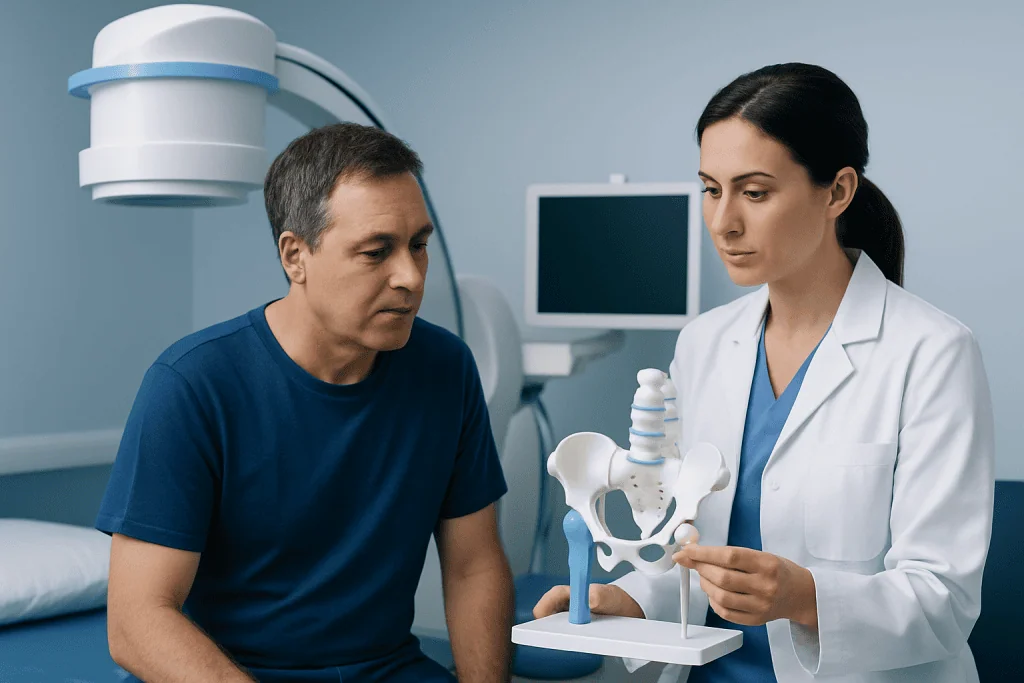
The acetabulum plays a central role in how the hip works every day. It supports body weight during standing and walking, helps absorb force during movement, and allows the leg to move in multiple directions. A healthy acetabulum contributes to smooth, stable motion.
If the socket is too shallow, misshapen, injured, or affected by arthritis, the joint may not move normally. This can increase friction inside the hip, place stress on the labrum and cartilage, and gradually lead to pain or stiffness. Some people are born with structural differences, while others develop problems later because of sports strain, aging, or injury.
In some cases, abnormal contact between the femoral head and the edge of the acetabulum can lead to femoroacetabular impingement. Over time, this may damage the labrum or articular cartilage and contribute to early joint wear. Related conditions may overlap with hip arthritis or soft tissue injury around the joint.
Because hip pain can also come from the lower back, pelvis, tendons, or nerves, the source is not always obvious. Careful medical evaluation is often needed to determine whether the acetabulum is truly involved.
Symptoms linked to acetabular problems
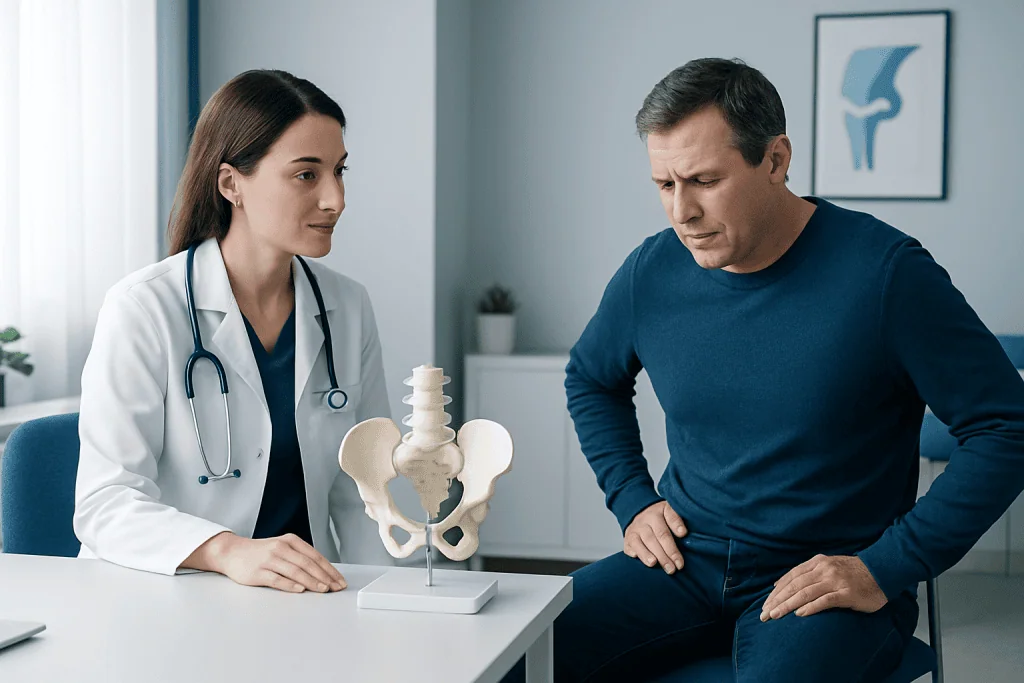
Symptoms vary depending on the underlying cause, but many people notice pain in the groin, outer hip, buttock, or upper thigh. The discomfort may begin gradually or appear suddenly after a fall, sports injury, or awkward movement. Some people feel pain only with activity, while others notice it even at rest.
Stiffness is another common symptom. The hip may feel tight when getting out of a chair, climbing stairs, putting on shoes, or rotating the leg. Clicking, catching, or a sense that the joint is not moving smoothly can suggest irritation of the labrum or uneven joint surfaces.
Symptoms that may occur with acetabular conditions include:
- Groin pain, especially with walking or twisting
- Hip stiffness or reduced range of motion
- Clicking, locking, or catching sensations
- Limping or difficulty bearing weight
- Pain after exercise or prolonged sitting
- Night pain in more advanced joint disease
Not every symptom means there is a serious structural injury. However, pain that persists, recurs frequently, or limits daily life deserves attention, particularly if it is associated with injury, fever, numbness, or sudden weakness.
Causes and risk factors
Acetabular symptoms can arise from several different conditions. Traumatic injury is one possibility. Falls, road traffic accidents, and high-impact sports can cause bruising, dislocation, or an acetabular fracture. These injuries typically require urgent medical assessment because the hip is a major weight-bearing joint.
Another important group of causes involves structural and mechanical problems. Hip dysplasia, in which the socket does not fully cover the femoral head, can increase instability and wear. Femoroacetabular impingement can occur when the ball, the socket, or both have a shape that leads to abnormal contact during movement. Over time, this may contribute to a labral tear or cartilage damage.
Degenerative conditions are also common, especially with age. Osteoarthritis can wear down cartilage within the joint and lead to pain, stiffness, and reduced mobility. Inflammatory joint diseases may also affect the hip, though they are less common. Some patients who search for acetabulara are eventually found to have osteoarthritis or other chronic hip disorders.
Risk factors include previous hip injury, repetitive athletic loading, certain anatomical differences, advancing age, excess body weight, and family history of hip disease. Less commonly, infection, avascular necrosis, or tumors can involve the hip region, which is why persistent or unexplained symptoms should not be ignored.
How doctors diagnose the problem
Diagnosis begins with a detailed history and physical examination. A doctor will usually ask where the pain is felt, what activities trigger it, whether there was an injury, and how long symptoms have lasted. They may assess walking, leg movement, hip rotation, strength, and whether specific motions reproduce pain.
Imaging is often needed to identify the cause. Plain X-rays can show fractures, joint space narrowing, arthritis, dislocation, hip dysplasia, and some forms of impingement. MRI is useful when doctors suspect labral injury, cartilage damage, bone stress injury, or problems not visible on X-ray. In selected cases, CT may be used for a more detailed view of bony anatomy, especially after trauma.
Sometimes blood tests are requested if infection, inflammation, or other systemic disease is a concern. When pain might be coming from outside the hip joint, the doctor may also examine the lower back, knee, and pelvis to avoid missing another source.
A clear diagnosis matters because treatment is cause-specific. Pain from arthritis is managed differently from a fracture, labral tear, or dysplasia. If specialist care is needed, patients may be referred for orthopedic evaluation or rehabilitation planning.
Treatment options for acetabular conditions
Treatment depends on the diagnosis, the severity of symptoms, the patient’s age and activity level, and whether there is joint damage. Many non-emergency hip conditions can initially be managed conservatively. This may include temporary activity modification, guided exercises, anti-inflammatory medication when appropriate, and structured physiotherapy to improve strength, mobility, and joint mechanics.
Injections may be considered in selected cases for both diagnosis and symptom relief. For example, an image-guided injection into the hip joint can help confirm that the pain is coming from the joint itself. Doctors generally individualize these decisions based on the likely cause and the patient’s overall health.
When structural damage is significant, surgery may be recommended. Depending on the condition, this can involve arthroscopic treatment for labral tears or impingement, fracture repair, or joint replacement in advanced arthritis. Patients with severe degeneration may benefit from hip replacement when pain and mobility loss affect everyday life despite non-surgical care.
Rehabilitation is an important part of recovery whether treatment is surgical or non-surgical. A tailored physical therapy and rehabilitation plan helps restore motion, improve muscle support around the joint, and reduce the risk of ongoing limitation. Near the end of the care pathway, Acibadem International’s multidisciplinary specialists and JCI-accredited hospitals also evaluate and treat hip socket conditions for international patients when needed.
Self-care, prevention, and when to seek medical care
Although not all hip problems can be prevented, some habits support joint health. Regular low-impact activity, healthy body weight, gradual training progression, and exercises that improve hip strength and flexibility may reduce strain on the joint. Good footwear and fall prevention are also helpful, particularly for older adults.
At home, it is sensible to avoid movements that clearly worsen symptoms until a cause is identified. Short-term rest after a mild strain may help, but prolonged inactivity can lead to stiffness and weakness. A clinician or physiotherapist can advise on safe stretching, strengthening, and return to activity.
Medical care should be sought promptly if hip pain follows a major injury, if the person cannot bear weight, if the leg looks shortened or deformed, or if there is fever, redness, or severe pain. Non-urgent medical review is appropriate for pain lasting more than a few weeks, repeated locking or catching, progressive stiffness, or a limp that does not improve.
Early assessment can make treatment more effective, especially when the problem involves a labral tear, dysplasia, fracture, or early joint degeneration. Timely diagnosis helps protect long-term hip function and can reduce unnecessary pain.
Frequently asked questions
Is acetabulara a real medical term?
Acetabulara is not a standard medical term used in anatomy or diagnosis. In most cases, people use it to mean the acetabulum, which is the socket part of the hip joint.
Where is acetabulara pain usually felt?
Pain related to the acetabulum is often felt in the groin, deep hip, buttock, or upper thigh. Some people also notice stiffness, clicking, or pain with walking, sitting, or rotating the leg.
Can acetabular problems heal without surgery?
Some can, depending on the cause. Mild overuse problems, irritation, and certain early joint conditions may improve with rest, physiotherapy, activity changes, and medication, while fractures or major structural damage may need surgery.
Is acetabulara the same as arthritis?
No. Arthritis is one possible cause of pain involving the acetabulum, but not the only one. Labral tears, hip impingement, dysplasia, fractures, and soft tissue conditions can also affect the same area.
What tests are used to check the acetabulum?
Doctors often begin with a physical examination and X-rays. MRI or CT may be used when more detail is needed, especially for suspected labral tears, cartilage problems, fractures, or complex hip anatomy.
When should someone worry about hip socket pain?
Urgent assessment is important after major trauma, sudden inability to bear weight, severe pain, or visible deformity. A routine medical review is also a good idea if hip pain keeps returning, lasts for weeks, or interferes with normal daily activities.
References
- American Academy of Orthopaedic Surgeons
- National Institute of Arthritis and Musculoskeletal and Skin Diseases
- MedlinePlus
- National Health Service
- American College of Rheumatology
This article is for general information only and is not a substitute for professional medical advice. Please consult a qualified doctor about your individual situation.
Explore treatments in Turkey — costs, top hospitals & a free quote
JCI-accredited · board-certified surgeons · reply within 24h

More from the Health Library



Related Specialists

Embriyolog Hasan Benli
Vitro Fertilization and Reproductive Medicine Center
Dr. Nuri Soysal
Aesthetic Plastic & Reconstructive Surgery
Prof. Dr. Nefise Çağla Tarhan
Radiology
Dr. Sadettin Dolar
Internal Medicine