Contracture — Explained by Medical Evidence, Not Myths
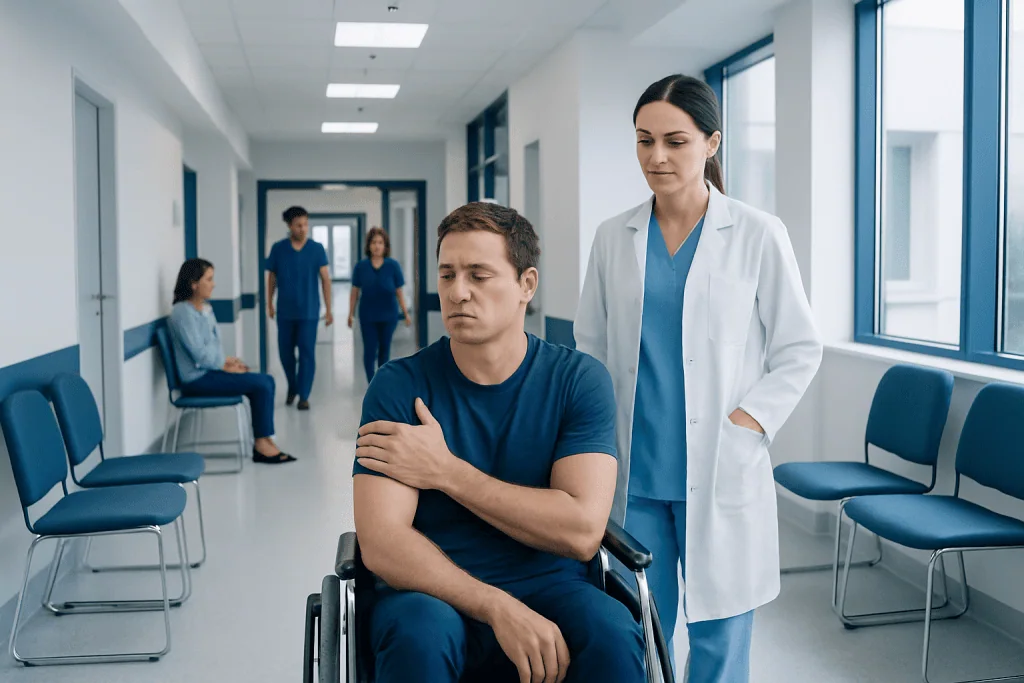
A contracture limits normal movement because tissues become shortened, stiff, or scarred. Common causes include prolonged immobility, nerve or brain disorders, injury, surgery, burns, and chronic muscle imbalance.
Key Takeaways
- A contracture limits normal movement because tissues become shortened, stiff, or scarred.
- Common causes include prolonged immobility, nerve or brain disorders, injury, surgery, burns, and chronic muscle imbalance.
- Early treatment often includes stretching, splinting, rehabilitation, and management of the underlying cause.
- Contractures may worsen over time if they are not addressed, making early assessment important.
- Medical care is especially important when a contracture causes pain, functional difficulty, skin problems, or rapid loss of motion.
Medically reviewed by the Acıbadem International Medical Board — July 23, 2026
Contracture is a permanent or long-lasting tightening of soft tissues around a joint or body area that reduces normal movement. It is not simply ordinary stiffness; it usually develops when muscles, tendons, ligaments, skin, or joint tissues shorten or scar, often after injury, neurologic disease, burns, or prolonged immobility.
What a contracture is
Contracture is a medical term for a body part becoming abnormally tight and difficult to move because soft tissues have shortened or become stiff. This can affect muscles, tendons, ligaments, skin, or the joint capsule. The result is reduced range of motion, which may make it hard to straighten, bend, open, or rotate a joint normally.
People sometimes use the word loosely to describe temporary muscle tightness after exercise, but a true contracture is different. It usually lasts much longer and does not fully improve just by resting. In many cases, the tissue itself has changed through scarring, shortening, or long-term imbalance.
Contractures can happen in many parts of the body. Common examples include fingers curling into the palm, elbows that cannot fully straighten, knees that stay bent, ankles pulled downward, or shoulder stiffness after injury. They may affect one area or several, depending on the underlying cause.
Understanding contracture clearly matters because treatment depends on the reason it developed. Rather than being one disease by itself, contracture is often a physical problem caused by another condition, prolonged immobility, or tissue damage.
How contracture affects the body

Normal movement depends on a balance between muscles that tighten and muscles that relax, along with flexible tendons, healthy joints, and skin that can stretch. When one or more of these tissues stays shortened for a long period, the body gradually adapts to that shortened position. Over time, movement becomes restricted even if the person tries to stretch the area.
In some cases, the main problem is muscle overactivity related to the nervous system. This is often seen after a stroke or in disorders that affect the brain, spinal cord, or peripheral nerves. In other cases, the limiting factor is scarred skin, thickened fascia, joint capsule stiffness, or tendon shortening.
The impact on daily life can be significant. A hand contracture may make dressing or hygiene difficult. A knee or ankle contracture can interfere with standing, walking, and balance. When the body stays in an abnormal position, there may also be pressure sores, pain from abnormal posture, and reduced independence.
Contracture should therefore be viewed not only as a movement problem but also as a functional one. The most useful treatment plans focus on preserving comfort, mobility, daily activities, and long-term joint health.
Symptoms and signs of contracture

The main sign of contracture is loss of normal movement in a joint or body area. A person may notice that the limb no longer straightens or bends fully, or that the hand, wrist, foot, or neck stays in one position. This limitation may develop slowly over weeks or months, though sometimes it becomes noticeable after surgery, hospitalization, or an injury.
Symptoms vary depending on the location and cause. Some contractures are painless but still interfere with daily activities. Others cause discomfort, muscle spasms, pressure points, or pain when someone tries to move the joint beyond its restricted range.
- Reduced range of motion
- Stiffness that does not fully ease with rest
- Visible abnormal positioning of a joint or limb
- Difficulty walking, gripping, dressing, or personal care
- Muscle tightness or spasms
- Skin problems or pressure sores in severe cases
It is also important to notice changes around the affected area. Swelling, redness, warmth, sudden weakness, numbness, or severe pain are not typical features of a simple contracture alone and may suggest another problem that needs prompt medical assessment.
Causes and risk factors
Contractures most often develop when a joint is not moved normally for a long time or when tissue healing leads to shortening and scarring. Bed rest, wearing a cast, long stays in intensive care, and limited mobility after surgery can all contribute. The risk rises when stretching and rehabilitation are delayed or when the person cannot move independently.
Neurologic conditions are another major cause because they can create abnormal muscle tone and imbalance. After a stroke, for example, some muscles may become overactive while their opposing muscles remain weak. Similar patterns can occur in cerebral palsy, spinal cord injury, traumatic brain injury, multiple sclerosis, and some neuromuscular disorders.
Local tissue injury can also lead to contracture. Burns may cause the skin to scar and tighten across a joint. Hand contractures may occur with conditions that thicken tissue in the palm, such as Dupuytren’s contracture. Joint inflammation, trauma, arthritis, tendon injuries, and repeated poor positioning may all play a role.
Risk factors include older age, serious illness, poor mobility, untreated spasticity, delayed rehabilitation, chronic pain that limits movement, and previous surgery or trauma. In some people, several risk factors are present at the same time, which makes prevention and early monitoring especially important.
How doctors diagnose contracture
Diagnosis begins with a clinical examination and a clear history of when the limitation started. A doctor will ask whether the problem followed an injury, surgery, burn, hospitalization, neurologic event, or progressive disease. It also helps to know whether the restriction is getting worse, causes pain, or interferes with activities such as walking, dressing, or using the hands.
The examination usually focuses on range of motion, muscle strength, tone, posture, skin condition, and joint alignment. Doctors often compare active movement, which the person performs alone, with passive movement, which the clinician gently performs. This helps identify whether the main limitation comes from weakness, spasticity, pain, joint stiffness, or fixed tissue shortening.
Imaging and other tests are used when needed rather than in every case. X-rays may show joint changes or bone problems. Ultrasound or MRI can sometimes help assess soft tissues. If a nerve or brain-related cause is suspected, the evaluation may include neurologic testing or referral to specialists in rehabilitation, orthopedics, or neurology.
A good diagnosis does more than confirm that a contracture exists. It identifies which structures are involved and whether the problem is still flexible or has become fixed. That distinction helps guide treatment choices and gives a better sense of what improvement is realistic.
Treatment options for contracture
Treatment depends on the cause, severity, location, and how long the contracture has been present. In general, earlier treatment offers the best chance of improving motion and preventing worsening. Most care plans combine treatment of the underlying cause with physical measures to improve flexibility and function.
Conservative treatment often includes stretching, positioning, splinting, and structured rehabilitation. A personalized physical therapy and rehabilitation program may help maintain joint range, strengthen weaker muscles, and support safer movement patterns. Occupational therapy can be especially useful for hand, wrist, and elbow contractures that affect daily tasks.
Some people need treatment for spasticity or pain to allow better movement and stretching. Depending on the diagnosis, this may involve oral medicines, injections, orthotic devices, or management of the underlying neurologic or orthopedic problem. If contracture has formed after a major neurologic event, care may overlap with stroke rehabilitation or other long-term rehabilitation plans.
Surgery may be considered when the limitation is severe, fixed, or not responding to conservative care. Procedures can include release of tight soft tissue, correction of scar-related restriction, tendon lengthening, or other reconstructive options. In selected cases, orthopedic surgery may help improve position, comfort, and function, but recovery usually still requires rehabilitation afterward.
Prevention and self-care
Not every contracture can be prevented, but early movement and proper positioning reduce risk in many situations. This is especially important after surgery, injury, burns, stroke, or prolonged bed rest. Even small, regular range-of-motion exercises can help maintain flexibility when they are started safely and consistently under professional guidance.
For people with limited mobility, daily routines matter. Caregivers and clinicians may recommend gentle stretching, supportive splints, frequent position changes, and seating or bedding adjustments that reduce pressure and prevent limbs from staying in one shortened posture for long periods. Good skin care is also important when movement is restricted.
Self-care should remain realistic and safe. Forceful stretching can cause pain or injury, especially when joints are inflamed, fragile, or affected by neurologic conditions. It is better to follow a tailored program from a qualified professional than to push aggressively at home.
People living with chronic neurologic or orthopedic conditions benefit from regular review. A change in walking pattern, increased hand tightness, or reduced ability to straighten a joint may be early signs that treatment needs to be adjusted before the contracture becomes more fixed.
When to seek medical care
Medical evaluation is a good idea whenever stiffness lasts and movement is clearly decreasing rather than improving. It is especially important if the contracture begins to affect walking, self-care, sleep, work, or the ability to use the hands. Early assessment can help identify a reversible cause and reduce the risk of a more permanent limitation.
Prompt care is also needed if there is significant pain, skin breakdown, rapid worsening, fever, redness, swelling, numbness, or sudden weakness. These features may point to infection, a new injury, worsening nerve involvement, or another problem beyond contracture alone.
People recovering from burns, neurologic conditions, fractures, or major surgery should mention any developing tightness at follow-up visits. In these settings, a contracture may be part of a broader rehabilitation issue and may need coordinated care from rehabilitation specialists, neurologists, orthopedists, or plastic and reconstructive teams.
For international patients who need evaluation, Acibadem International’s multidisciplinary specialists and JCI-accredited hospitals diagnose and treat contracture-related conditions with rehabilitation, orthopedic, neurologic, and reconstructive care tailored to the underlying cause.
Frequently asked questions
Is a contracture the same as ordinary muscle tightness?
No. Ordinary tightness is usually temporary and improves with rest, gentle movement, or stretching. A true contracture is more persistent and happens when tissues shorten or stiffen enough to limit normal movement.
Can a contracture go away on its own?
Some early or mild cases may improve if the underlying cause is treated quickly and movement is restored. More established contractures usually need guided therapy and sometimes other medical treatment. The longer a contracture remains, the harder it can be to reverse.
What conditions commonly lead to contracture?
Common causes include prolonged immobility, stroke, spinal cord injury, cerebral palsy, burns, trauma, surgery, arthritis, and some hand disorders such as Dupuytren’s contracture. The exact mechanism differs, but tissue shortening and long-term abnormal positioning are common themes.
Is contracture always painful?
Not always. Some contractures mainly cause reduced movement and difficulty with daily activities rather than pain. Others become uncomfortable because of muscle spasm, pressure, poor posture, or strain on nearby joints.
How is contracture treated without surgery?
Non-surgical treatment often includes stretching, splinting, positioning, rehabilitation, and treatment of the underlying medical problem. If spasticity is involved, doctors may also recommend therapies that reduce muscle overactivity. The plan should be individualized rather than one-size-fits-all.
When is surgery considered for contracture?
Surgery is generally considered when a contracture is severe, fixed, causing major functional problems, or not improving with conservative treatment. The goal may be to release tight tissue, improve alignment, or restore better function. Surgery is usually only one part of treatment and is commonly followed by rehabilitation.
References
- World Health Organization
- National Institute of Neurological Disorders and Stroke
- American Academy of Orthopaedic Surgeons
- National Institute of Arthritis and Musculoskeletal and Skin Diseases
- MedlinePlus
This article is for general information only and is not a substitute for professional medical advice. Please consult a qualified doctor about your individual situation.
Explore treatments in Turkey — costs, top hospitals & a free quote
JCI-accredited · board-certified surgeons · reply within 24h

More from the Health Library


Related Specialists

Prof. Dr. Dilek Güven
Ophthalmology
Dr. Barış Peker
Neurosurgery
Prof. Dr. A. Çağrı Büke
Infectious Diseases & Clinical Microbiology
Assoc. Prof. Dr. Seden Erten Çelik
Cardiology