Tinel Sign — Explained by Medical Evidence, Not Myths

Tinel sign is a clinical clue, not a disease or a stand-alone diagnosis. A positive Tinel sign may occur with nerve compression, nerve injury, or nerve healing.
Key Takeaways
- Tinel sign is a clinical clue, not a disease or a stand-alone diagnosis.
- A positive Tinel sign may occur with nerve compression, nerve injury, or nerve healing.
- The test is commonly used around the wrist, elbow, ankle, and sites of previous nerve trauma.
- Doctors interpret Tinel sign together with symptoms, examination findings, and sometimes nerve studies or imaging.
- Persistent numbness, weakness, pain, or loss of hand function should be medically assessed.
Medically reviewed by the Acıbadem International Medical Board — July 23, 2026
Tinel sign is a physical examination finding in which tapping over a nerve causes tingling, pins-and-needles, or a mild electric sensation in the area supplied by that nerve. It can suggest nerve irritation, compression, or regeneration, but it does not confirm a diagnosis by itself.
Overview: what Tinel sign means
Tinel sign is a bedside examination finding used to assess a peripheral nerve. When a clinician gently taps over a nerve, the person may feel tingling, pins-and-needles, or a brief electric-like sensation that travels along the nerve’s usual pathway. This response is called a positive Tinel sign.
Medical evidence supports its role as a helpful clue rather than a final answer. A positive response can appear when a nerve is irritated, compressed, inflamed, or healing after injury. It may be seen in conditions such as carpal tunnel syndrome, around the elbow in ulnar nerve irritation, or after trauma and surgery affecting a nerve.
Because many online explanations oversimplify the test, it is important to understand what it cannot do. Tinel sign does not measure severity precisely, does not identify every cause of symptoms, and may be absent even when a nerve problem is present. For that reason, doctors combine it with a symptom history, physical examination, and other tests when needed.
How the test is performed and what a positive result feels like
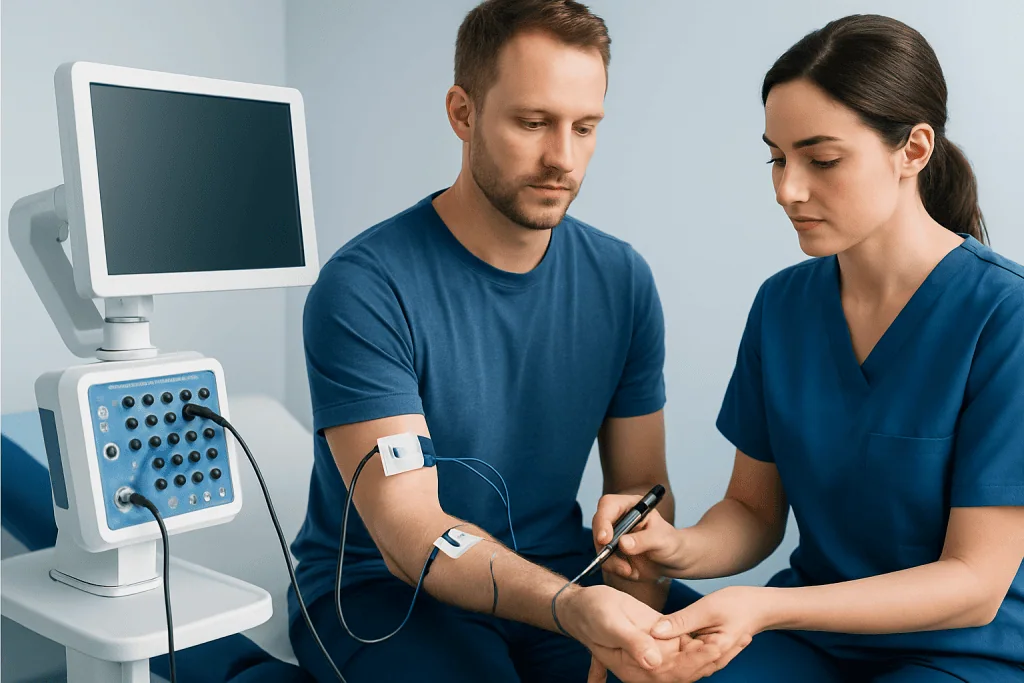
To check for Tinel sign, a clinician taps lightly over the course of a nerve. Common testing sites include the median nerve at the wrist, the ulnar nerve near the elbow, the tibial nerve near the ankle, and areas where a nerve may have been injured. The goal is to see whether tapping reproduces symptoms in the nerve’s distribution.
A positive result usually feels like tingling spreading into the fingers, hand, foot, or another area served by that nerve. Some people describe it as buzzing, pins-and-needles, or a quick electric shock. Mild local tenderness alone is not the same as a true positive Tinel sign; the sensation typically travels beyond the tapping point.
The test result depends on context. In nerve compression, tapping may trigger symptoms because the nerve is unusually sensitive. During recovery from a nerve injury, the point at which tingling is felt can sometimes help clinicians track nerve regeneration over time. Even so, the test is somewhat subjective because it relies on what the person feels and reports.
Symptoms and conditions linked with Tinel sign
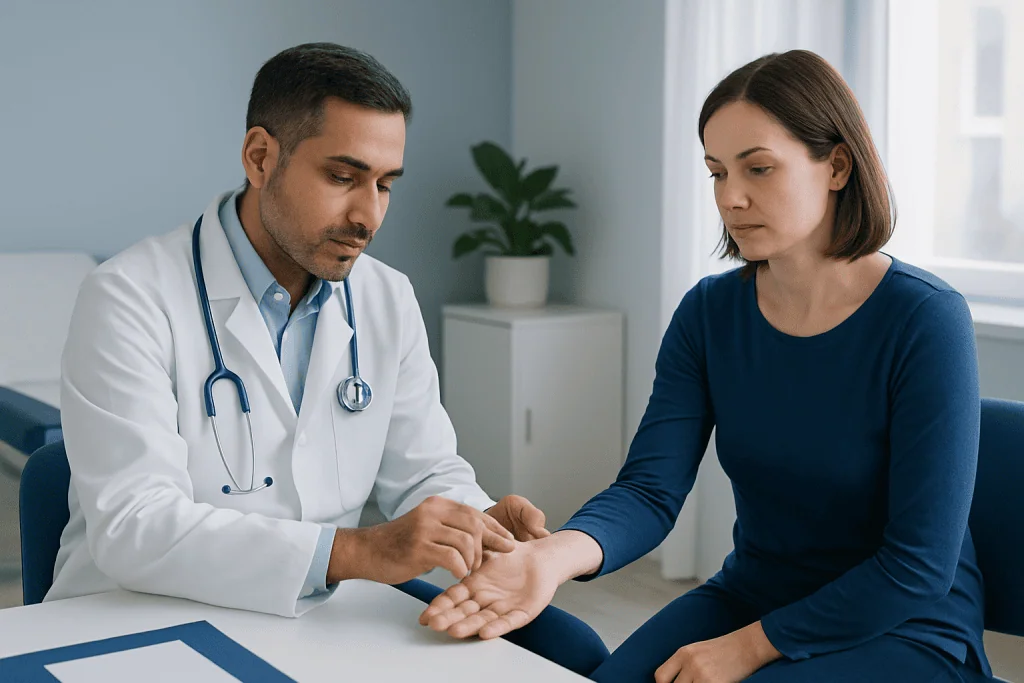
Tinel sign is most relevant when a person already has symptoms that suggest a nerve problem. These symptoms may include numbness, tingling, burning discomfort, reduced sensation, clumsiness, weakness, or pain that follows a particular nerve pathway. In the hand, symptoms can affect grip, fine finger movements, or night-time comfort.
The sign is often discussed with entrapment neuropathies, in which a nerve becomes compressed in a narrow passage. Examples include the median nerve at the wrist in carpal tunnel syndrome and the ulnar nerve at the elbow. It may also be used after cuts, fractures, stretching injuries, or surgery involving a peripheral nerve.
Not everyone with these conditions has a positive Tinel sign, and a positive sign is not specific to one disorder. Symptoms can also come from the neck, spinal conditions, generalized neuropathy, diabetes-related nerve damage, or inflammatory causes. This is why the sign is best understood as one piece of the clinical picture rather than a label on its own.
- Common associated symptoms: numbness, tingling, pain, weakness, hand fatigue
- Common locations: wrist, elbow, ankle, scar sites, areas of previous nerve trauma
- Common related conditions: nerve compression, nerve injury, postoperative nerve irritation, nerve regeneration
What causes a positive Tinel sign
A positive Tinel sign usually reflects heightened sensitivity of a nerve. This may happen when the nerve is compressed by surrounding tissues, irritated by inflammation, recovering from injury, or surrounded by scar tissue. In some people, repetitive motions, prolonged pressure, or certain work and hobby activities can contribute to this irritation.
Medical conditions can also increase the likelihood of nerve compression or vulnerability. These include diabetes, thyroid disorders, fluid retention, arthritis near joints, previous fractures, and anatomical narrowing of nerve passages. Pregnancy can sometimes contribute to temporary nerve compression because of swelling and fluid changes.
After a nerve is injured, regenerating nerve fibers may become sensitive to percussion, making Tinel sign useful during follow-up. However, the interpretation is nuanced. A migrating point of tingling along the course of the nerve may suggest regeneration, but formal examination and specialized testing are still needed to understand how well the nerve is functioning.
How doctors interpret Tinel sign in diagnosis
Doctors use Tinel sign as part of a broader neurological and musculoskeletal examination. They also look for sensory loss, muscle weakness, reduced dexterity, changes in reflexes, and symptoms provoked by posture or movement. The exact pattern helps distinguish a local nerve compression from a problem coming from the neck, spine, or a more widespread neuropathy.
Other bedside tests may be used alongside Tinel sign. For example, wrist flexion tests or pressure tests may support suspicion of median nerve compression, while examination of the neck, shoulder, elbow, and hand can identify alternative causes. If symptoms involve numbness, pain, or weakness in the hand, a clinician may also assess for ulnar nerve entrapment or other neuropathies.
When the diagnosis is unclear, or when symptoms are persistent or function-limiting, doctors may request nerve conduction studies and electromyography. These tests help show whether signals are slowing across a compressed segment or whether muscles are affected. In selected cases, ultrasound or MRI may be used to visualize the nerve and nearby tissues.
Because interpretation can be complex, self-testing is limited. A person may tap over a sensitive area and notice tingling, but this cannot determine the cause or the best treatment. Medical evaluation is especially important if there is weakness, muscle wasting, worsening numbness, or symptoms that disturb sleep and daily tasks.
Treatment options and what happens next
Treatment does not target Tinel sign itself; it targets the underlying nerve problem. For mild compression injuries, doctors may recommend activity modification, rest from repetitive strain, splinting, ergonomic adjustments, or supervised exercises. Addressing contributing health conditions such as diabetes or thyroid disease can also be important.
If pain, numbness, or tingling persists, a specialist may suggest medications for symptom control, physical or occupational therapy, or targeted interventions depending on the site of compression. For wrist-related symptoms, evaluation may include options connected with carpal tunnel release when conservative measures are not enough. If symptoms relate to the elbow, some patients may be assessed for ulnar nerve decompression after careful examination.
When a nerve has been cut, trapped in scar tissue, or severely damaged, surgical repair or decompression may be considered. The decision depends on the cause, duration of symptoms, degree of weakness, and test results. Recovery can take time because nerves heal slowly, and the aim is to protect function while reducing ongoing injury.
Near the end of the care pathway, some people benefit from multidisciplinary assessment. Acibadem International’s specialists in neurology, orthopedics, neurosurgery, and rehabilitation, working in JCI-accredited hospitals, diagnose and treat peripheral nerve conditions for international patients when advanced evaluation is needed.
Self-care, prevention, and daily habits that may help
Not all nerve irritation can be prevented, but daily habits can reduce strain on vulnerable areas. Good workstation setup, regular breaks from repetitive hand or wrist movements, avoiding prolonged pressure on the elbows, and maintaining comfortable joint positions can all help. People who use tools, keyboards, or vibrating equipment may benefit from task variation and ergonomic support.
If symptoms are mild and intermittent, simple self-care may improve comfort while medical assessment is being arranged. This can include reducing aggravating activities, using a clinician-recommended splint, keeping the wrist or elbow in a neutral position when possible, and following guided stretching or nerve-gliding exercises only if advised by a professional. Self-care should not replace evaluation if symptoms are persistent, painful, or worsening.
General health measures also matter. Managing blood sugar, maintaining a healthy weight, treating thyroid problems, and staying physically active may support nerve health overall. Smoking cessation is also beneficial because smoking can affect blood flow and tissue healing.
When to seek medical care
Medical review is advisable if numbness, tingling, or pain lasts more than a few days, returns repeatedly, wakes a person from sleep, or interferes with work, driving, or daily tasks. It is also wise to seek care if symptoms spread, become more intense, or occur after an injury, cast placement, or surgery.
Prompt evaluation is especially important when weakness appears, objects are being dropped, walking becomes unstable, or there is visible muscle thinning in the hand or foot. Urgent assessment is needed for sudden severe weakness, loss of bowel or bladder control, major trauma, or symptoms affecting a large area of the body, because these may point to a problem beyond a local nerve irritation.
A clinician can determine whether Tinel sign is relevant and whether additional tests are needed. Early assessment may help relieve symptoms sooner and reduce the risk of long-term nerve dysfunction.
Frequently asked questions
Is Tinel sign a diagnosis?
No. Tinel sign is a physical examination finding that may suggest nerve irritation, compression, or regeneration. Doctors use it together with symptoms, examination, and sometimes nerve tests to make a diagnosis.
Does a positive Tinel sign always mean carpal tunnel syndrome?
No. Although it is commonly checked at the wrist for carpal tunnel syndrome, a positive Tinel sign can occur in other nerve conditions too. It may be present at the elbow, ankle, or near a previously injured nerve.
Can Tinel sign be negative even if there is a nerve problem?
Yes. Some people with confirmed nerve compression or injury do not have a positive Tinel sign. This is one reason the test is considered supportive rather than definitive.
What does Tinel sign feel like?
People often describe it as tingling, pins-and-needles, or a brief electric sensation that travels along the nerve’s path. It is different from ordinary soreness at the spot being tapped because the feeling usually radiates beyond that point.
Can a positive Tinel sign mean a nerve is healing?
Sometimes, yes. After a nerve injury, tapping over the regenerating nerve may produce tingling, and the point where this happens can change over time. Still, healing is assessed more fully with examination and, when needed, electrodiagnostic testing.
Should someone test Tinel sign at home?
Self-testing may reproduce tingling, but it cannot show the exact cause or severity of a nerve problem. If symptoms are persistent, painful, or associated with weakness, a qualified doctor should assess them.
References
- National Institute of Neurological Disorders and Stroke
- American Academy of Orthopaedic Surgeons
- American Academy of Neurology
- National Institute of Arthritis and Musculoskeletal and Skin Diseases
- Mayo Clinic
This article is for general information only and is not a substitute for professional medical advice. Please consult a qualified doctor about your individual situation.
Explore treatments in Turkey — costs, top hospitals & a free quote
JCI-accredited · board-certified surgeons · reply within 24h

More from the Health Library



Related Specialists

Prof. Dr. Tunç Ovali
Ophthalmology
Assoc. Prof. Dr. Mehmet Salih Söylemez
Orthopedic Surgery & Traumatology
Dr. Neslihan Hot Aydın
Dermatology
Prof. Dr. Ayşe Sarioğlu
Pediatric Cardiology