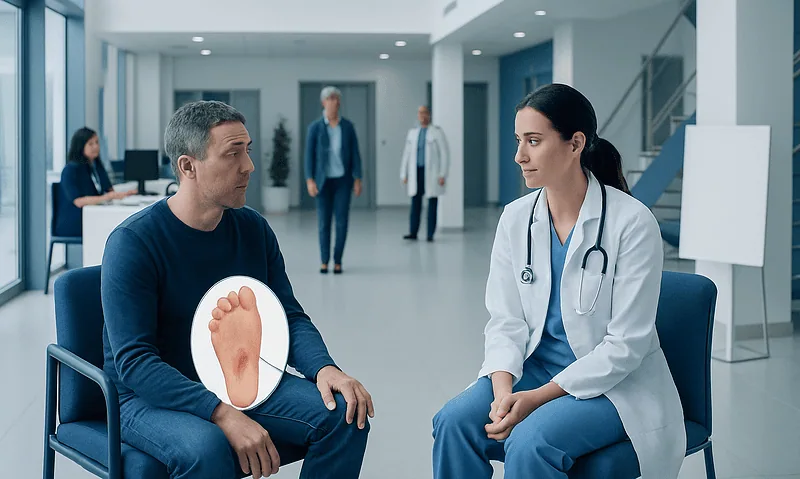
How to Get Rid of Moles? Here Is What the Evidence Says

Most moles are benign and do not need to be removed unless they change, cause symptoms, or bother the patient. Home remedies and DIY mole removal methods are not recommended because they can cause burns, scarring, infection, or delay diagnosis of skin cancer.
Key Takeaways
- Most moles are benign and do not need to be removed unless they change, cause symptoms, or bother the patient.
- Home remedies and DIY mole removal methods are not recommended because they can cause burns, scarring, infection, or delay diagnosis of skin cancer.
- Doctors usually examine a mole visually and may use dermoscopy; if needed, they remove it and send it for laboratory testing.
- Safe medical options include shave removal, surgical excision, or punch removal depending on the mole’s type and location.
- Warning signs include asymmetry, irregular borders, multiple colors, growth, bleeding, itching, or a new mole that looks different from others.
Medically reviewed by the Acıbadem International Medical Board — July 25, 2026
Most moles are harmless and do not need treatment. When someone wants to know how to get rid of moles, the evidence-based answer is to have the mole assessed first, because the safest removal method depends on whether it is benign, irritated, cosmetically unwanted, or possibly cancerous.
Overview: What Is the Safest Way to Get Rid of Moles?
Most skin moles are common, harmless growths made of pigment-producing cells. Many people have them from childhood or early adult life, and in most cases they remain stable for years without causing medical problems. Because of this, a mole does not usually need treatment unless it changes, becomes irritated, or the person wishes to remove it for comfort or cosmetic reasons.
For people asking how to get rid of moles, the evidence-based answer is simple: a mole should be checked before it is removed. This is important because some spots that look like ordinary moles can be atypical moles or, less commonly, skin cancer. A doctor can decide whether the mole is suitable for simple removal or whether it needs biopsy and closer examination first.
The safest approach is professional mole removal rather than home treatment. DIY methods such as cutting, tying off, freezing with nonmedical products, or applying acids and herbal pastes may damage the skin and make later diagnosis more difficult. A medical assessment helps protect both appearance and health.
What Moles Are Like and Why People Want Them Removed
Moles can be flat or raised, smooth or rough, and light brown, dark brown, pink, or skin-colored. Some contain hair, and some become more noticeable over time because of sun exposure, hormonal changes, or natural aging. A mole may also rub against clothing, jewelry, or shaving areas, making it uncomfortable even if it is not dangerous.
People commonly seek removal for several reasons. Some want relief from repeated irritation, bleeding after shaving, or snagging on clothing. Others are concerned about a new or changing spot. Cosmetic concerns are also very common, especially when moles are on the face, neck, or other visible areas.
Not every raised bump is a mole. Skin tags, seborrheic keratoses, freckles, and other benign lesions can resemble moles. This is one reason self-diagnosis is unreliable. When a spot seems different from a person’s usual skin markings, a dermatologist or another qualified clinician can help identify it accurately.
Red Flags: When a Mole Should Be Checked Before Removal

Although most moles are harmless, some changes should prompt medical review before any attempt at removal. Doctors often teach the ABCDE warning signs of melanoma: asymmetry, irregular border, color variation, diameter that is increasing, and evolving size, shape, or symptoms. Any one of these does not confirm cancer, but it does mean the spot should be assessed.
Other warning signs include itching, pain, crusting, bleeding without obvious injury, rapid growth, or a mole that suddenly looks very different from a person’s other moles. This is sometimes called the “ugly duckling” sign. New pigmented spots in adulthood can also deserve attention, especially if they continue to change.
People with a personal or family history of skin cancer, many moles, atypical moles, fair skin, or significant sun exposure may need a lower threshold for getting a mole checked. If there is concern about a cancerous lesion, clinicians may evaluate for conditions such as skin cancer rather than treating the lesion as a simple cosmetic mole.
How Doctors Diagnose a Mole Safely
A medical evaluation usually begins with a history and skin examination. The doctor may ask how long the mole has been present, whether it has changed, and whether there has been bleeding, itching, or trauma. Personal risk factors such as sunburn history, tanning bed use, immune suppression, and family history are also relevant.
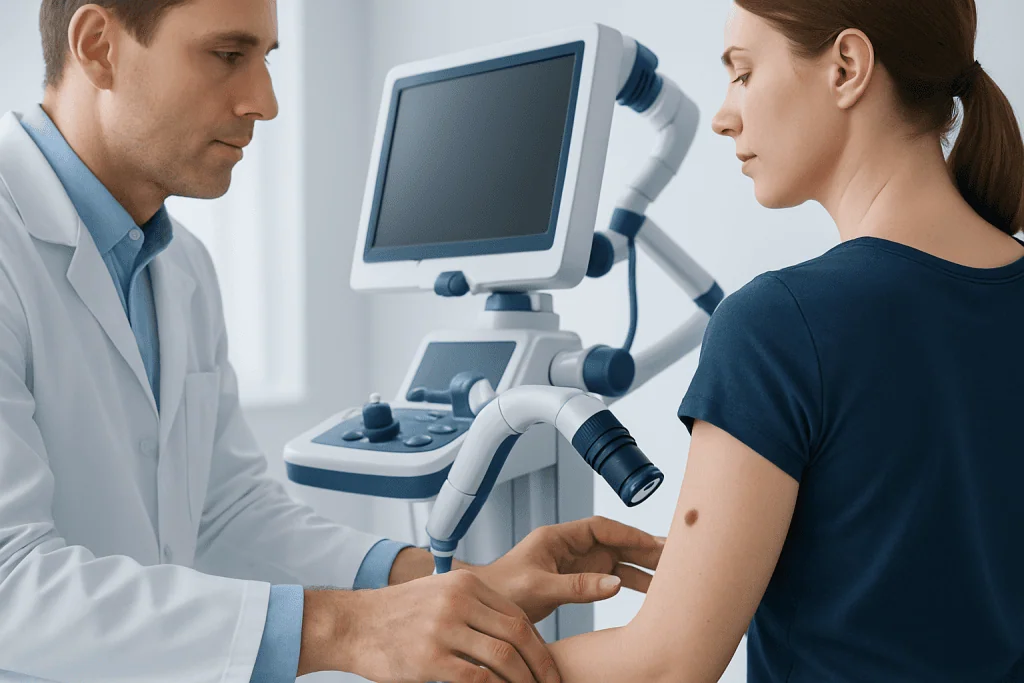
In many cases, the next step is dermoscopy, a close-up examination with a handheld device that helps the clinician see pigment patterns and structures not visible to the naked eye. Dermoscopy can improve diagnostic accuracy and help determine whether a mole appears benign, atypical, or suspicious enough to remove for testing.
If the mole cannot be confidently identified as benign, the doctor may recommend biopsy or complete removal so a pathologist can examine the tissue under a microscope. This step matters because the appearance of a mole alone does not always tell the whole story. A suspicious lesion should not be destroyed with home remedies or cosmetic techniques before diagnosis.
When deeper assessment is needed, patients may be referred through a dermatology or dermatology service, and in selected cases imaging or wider oncologic planning may be involved if a skin cancer diagnosis is confirmed.
Medical Treatment Options for Mole Removal
If a mole is benign and the person wishes to remove it, the doctor can choose the method based on the mole’s size, depth, location, and likelihood of returning. The main options are shave removal, punch removal, and surgical excision. The goal is safe treatment with the best possible cosmetic result while still allowing appropriate pathology review when needed.
Shave removal is often used for raised moles that appear benign. After numbing the area, the doctor carefully removes the elevated part of the lesion at or slightly below the skin surface. This can be effective for selected moles, but because deeper cells may remain, some lesions can recur.
Surgical excision removes the entire mole along with a small margin of normal skin and is usually closed with stitches. This is often preferred when the mole is suspicious, deeper, or more likely to return after a superficial procedure. Punch excision may be used for small lesions, especially when a circular instrument can remove the whole spot cleanly.
When the lesion is suspicious for melanoma or another cancer, complete removal and pathology review are essential. In those situations, care may involve specialists in skin cancer treatment rather than simple office-based cosmetic removal.
Why Home Remedies Are Not Recommended
Online advice about getting rid of moles at home is common, but it is not considered safe or evidence-based. Products marketed to burn off moles, acids applied directly to the skin, apple cider vinegar, garlic, tea tree oil, cutting the mole, or tying it off can all injure healthy tissue. These methods may cause pain, infection, scarring, bleeding, or dark marks after healing.
An equally important problem is missed diagnosis. If a suspicious mole is partly destroyed at home, the doctor may have less tissue to examine later, and diagnosis can be delayed. This is especially concerning when the lesion is actually melanoma or another skin cancer rather than a harmless mole.
Even over-the-counter freezing products are not designed to distinguish between benign and malignant lesions. A person may think they are treating a simple mole when they are actually masking something more serious. Because of this, professional assessment is the safest first step for any mole that a person wants removed.
Aftercare, Prevention, and Skin Self-Checks
After mole removal, the doctor usually gives wound-care instructions to support healing and reduce scarring. In general, the area should be kept clean, protected, and monitored for signs of infection such as increasing redness, swelling, pus, or worsening pain. Depending on the procedure, stitches may need removal at a follow-up visit.
People cannot prevent every mole from forming, but they can reduce sun-related skin damage. Helpful steps include seeking shade, wearing protective clothing and a hat, and using broad-spectrum sunscreen as part of daily sun protection. Avoiding tanning beds is also important because ultraviolet exposure increases the risk of skin damage and skin cancer.
Regular skin self-checks can help people notice new or changing lesions early. It is useful to look at the entire skin surface in good lighting, including the scalp, back, soles, and between the toes, sometimes with help from a partner or mirror. Photographing a mole over time can help track changes, but photos should not replace an in-person assessment when warning signs are present.
For patients traveling for care, Acibadem International’s multidisciplinary specialists and JCI-accredited hospitals diagnose and treat skin conditions for international patients, including evaluation of concerning lesions and coordination with oncology treatment teams when needed.
When to Seek Medical Care
A doctor’s appointment is advisable if a mole is new in adulthood, changes over weeks or months, or shows any ABCDE warning signs. Medical care is also appropriate if a mole repeatedly catches on clothing, is difficult to shave around, becomes painful, or bleeds with minimal irritation. Removal may be recommended for comfort even when the lesion is benign.
Urgent review is sensible if a mole bleeds without injury, develops a persistent sore, or changes rapidly in shape or color. People with many moles, a family history of melanoma, or previous skin cancer may benefit from routine skin checks even when they do not notice obvious changes.
In short, most moles are harmless, but the safest path is not to treat them blindly at home. A qualified doctor can distinguish between a common mole and a lesion that needs closer attention, then recommend the most appropriate and least risky way to remove it if removal is needed.
Frequently asked questions
Can moles go away on their own?
Some moles may fade slowly over time, especially as a person ages, but many remain stable for years. A mole that suddenly changes should not be assumed to be disappearing harmlessly and should be checked if there are warning signs.
Is mole removal painful?
Medical mole removal is usually done with local anesthetic, so the area is numbed during the procedure. Mild soreness afterward is possible, but it is often manageable with routine wound care and the advice given by the treating doctor.
Will a removed mole grow back?
Some moles can recur if mole cells remain after a superficial procedure such as shave removal. Complete excision lowers the chance of recurrence, but the best technique depends on the lesion and whether pathology is needed.
Is it safe to remove a mole for cosmetic reasons?
Yes, a benign mole can often be removed for cosmetic or comfort reasons after a medical assessment. The key point is that the mole should be evaluated first so that a suspicious lesion is not treated as if it were purely cosmetic.
What kind of doctor removes moles?
Dermatologists commonly assess and remove moles, especially when there is a question about diagnosis. Primary care doctors, surgeons, or plastic surgeons may also remove selected lesions depending on the location, complexity, and reason for treatment.
Do all removed moles need to be tested in a lab?
Not every clearly benign lesion requires pathology in every setting, but suspicious or uncertain moles are often sent for laboratory examination. The decision depends on the appearance of the lesion, the removal method, and the doctor’s clinical judgment.
References
- American Academy of Dermatology
- National Cancer Institute
- American Cancer Society
- National Health Service
- World Health Organization
This article is for general information only and is not a substitute for professional medical advice. Please consult a qualified doctor about your individual situation.
Explore treatments in Turkey — costs, top hospitals & a free quote
JCI-accredited · board-certified surgeons · reply within 24h