Quick answer
Melanoma is a serious form of skin cancer that begins in pigment-producing cells and can spread if not found early. Treatment depends on the stage and may include surgical removal, lymph node assessment, immunotherapy, targeted therapy, radiation therapy, or chemotherapy.
What is melanoma?
Melanoma is a type of skin cancer that begins in melanocytes, the cells that produce melanin, the pigment that gives skin its color. When these cells are damaged, they can start to grow in an uncontrolled way and form a cancerous tumor. Understanding what is melanoma matters because, although it is less common than other skin cancers, it is more likely to spread to other parts of the body if it is not found and treated early.
Melanoma most often appears on the skin, frequently in areas exposed to the sun, such as the back, legs, arms, and face. However, it can also develop in places that receive little or no sun, including the soles of the feet, the palms, under the nails, inside the mouth, and, rarely, in the eye or internal organs. In medical coding, melanoma of the skin without a specified site is recorded as ICD-10 code C43.9.
Melanoma can affect adults of any age, and it is one of the cancers that can occur in relatively young adults. People with fair skin, light-colored hair and eyes, many moles, or a history of sunburns face a higher risk, but melanoma can develop in people of all skin tones. In people with darker skin, it more often appears on the palms, soles, or under the nails, which can delay recognition.
Symptoms of melanoma
Melanoma symptoms most often involve a change in the skin. This may be a new spot or mole, or a change in the size, shape, or color of an existing mole. A mole is a common, usually harmless growth of pigment cells. Because early melanoma often causes no pain or discomfort, watching for visible changes is the most important way to notice it.
Doctors often teach the ABCDE rule to help people recognize warning signs in a mole or skin spot:
- A: Asymmetry: one half of the spot does not match the other half.
- B: Border: the edges are irregular, ragged, notched, or blurred.
- C: Color: the color is uneven and may include shades of brown, black, pink, red, white, or blue.
- D: Diameter: the spot is larger than about 6 millimeters (roughly the size of a pencil eraser), although melanomas can be smaller.
- E: Evolving: the spot is changing in size, shape, color, or elevation, or it starts to itch, bleed, or crust.
Other possible melanoma symptoms include:
- A sore on the skin that does not heal.
- A mole that becomes itchy, tender, or painful.
- Bleeding or oozing from a mole or skin spot.
- A dark streak under a fingernail or toenail that was not caused by an injury.
- Darkening or a new pigmented area on the palms, soles, gums, or inside the mouth.
- Redness or swelling that spreads beyond the border of a mole.
Symptoms can differ by type and stage. In its earliest stage, melanoma is usually confined to the top layer of the skin and may look like an unusual flat or slightly raised spot. A type called nodular melanoma can grow more quickly and often appears as a raised, firm bump that may be dark, pink, or red. Acral lentiginous melanoma, which is more common in people with darker skin, typically develops on the palms, soles, or under the nails. If melanoma spreads (a process called metastasis, meaning cancer cells travel to other parts of the body), symptoms may include swollen lymph nodes, unexplained weight loss, fatigue, or symptoms related to the organ affected. Advanced symptoms like these are less common and usually appear only when the disease has progressed.
Causes and risk factors
Melanoma causes are linked mainly to damage in the DNA of melanocytes. DNA is the genetic material inside cells that controls how they grow and divide. When DNA is damaged and the cell cannot repair it properly, the cell may begin to multiply out of control.
The most important known cause of this damage is ultraviolet (UV) radiation from sunlight and from artificial sources such as tanning beds. UV exposure explains why melanoma often occurs on sun-exposed skin, although not every melanoma is caused by UV light, since the disease can also arise in areas that rarely see the sun.
Common risk factors include:
- UV exposure: a history of intense, intermittent sun exposure and sunburns, especially blistering sunburns in childhood.
- Tanning bed use: artificial UV light increases melanoma risk, particularly when use begins at a young age.
- Fair skin: people with light skin, freckles, red or blond hair, and blue or green eyes have less protective melanin.
- Many moles or unusual moles: having numerous moles, or moles with irregular features (called atypical or dysplastic moles), raises risk.
- Family history: having a close relative with melanoma increases risk, and in some families inherited gene changes play a role.
- Personal history: people who have had melanoma or another skin cancer before have a higher chance of developing melanoma again.
- Weakened immune system: conditions or medicines that suppress the immune system, such as those used after organ transplantation, increase risk.
- Older age: risk rises with age, although melanoma also occurs in younger adults.
Having one or more risk factors does not mean a person will develop melanoma, and some people develop it without any obvious risk factors. Reducing UV exposure, by using sunscreen, wearing protective clothing, avoiding midday sun, and not using tanning beds, is the most practical way to lower risk.
Diagnosis
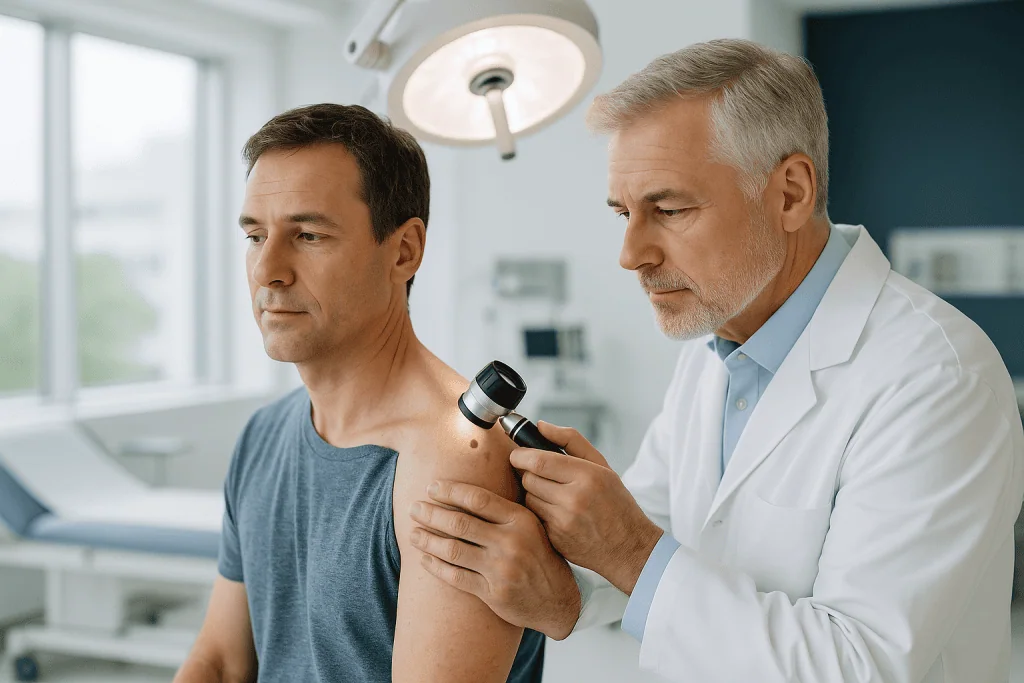
Melanoma diagnosis usually begins with a physical examination of the skin. A doctor, often a dermatologist (a physician who specializes in skin conditions), examines the suspicious spot and may check the rest of the skin for other unusual areas. Many doctors use a dermatoscope, a handheld magnifying instrument with a light, to look at the structure of a mole in detail. This examination is painless.
If a spot looks suspicious, the only way to confirm melanoma is a biopsy, a procedure in which some or all of the suspicious tissue is removed and examined under a microscope by a pathologist (a doctor who studies tissue samples). Whenever possible, doctors prefer to remove the entire spot with a small margin of normal skin, usually under local anesthesia (numbing medicine).
If melanoma is confirmed, further tests help determine the stage of the disease, how deep the melanoma has grown and whether it has spread. Staging guides treatment decisions. Depending on the situation, doctors may use:
- Breslow thickness: a measurement of how deep the melanoma extends into the skin, reported by the pathologist. Thinner melanomas generally carry a better outlook.
- Sentinel lymph node biopsy: a procedure to check whether cancer cells have reached the first lymph node (a small gland that filters fluid in the body) that drains the area of the melanoma. It is often considered for melanomas beyond a certain thickness.
- Imaging tests: such as ultrasound, computed tomography (CT), magnetic resonance imaging (MRI), or positron emission tomography (PET) scans, which may be used when there is concern that melanoma has spread to lymph nodes or other organs.
- Blood tests: these cannot diagnose melanoma but may provide additional information in advanced disease.
- Genetic testing of the tumor: in advanced melanoma, the tumor tissue may be tested for specific gene changes (such as mutations in a gene called BRAF), because some medicines work only when these changes are present.
Not everyone needs every test. For an early, thin melanoma, surgical removal and pathology review may be all that is required, while more advanced disease usually calls for additional staging studies.
Treatment options for melanoma
Melanoma treatment depends on the stage of the disease, its location, the person’s overall health, and the tumor’s genetic features. Care is often coordinated by a team that may include dermatologists, surgeons, and medical oncologists (doctors who treat cancer with medicines). In many hospitals, including Acibadem, systemic melanoma care is managed within a medical oncology department working alongside surgical and dermatology teams. A general overview of melanoma care is also available for reference.
Surgery
Surgery is the main treatment for most melanomas. In a wide local excision, the surgeon removes the melanoma along with a margin of healthy skin around it to reduce the chance that cancer cells are left behind. The size of the margin depends on the thickness of the melanoma. For early-stage disease, surgery alone is often sufficient. If the sentinel lymph node contains cancer cells, doctors may recommend further surgery, additional medicine, or close monitoring, depending on the individual case.
Immunotherapy
Immunotherapy uses medicines that help the body’s own immune system recognize and attack cancer cells. A group of drugs called checkpoint inhibitors has become an important option for melanoma that has spread or has a high risk of returning after surgery. These medicines can be effective in many cases, but responses vary from person to person, and they can cause side effects related to immune system activity, which the care team monitors closely.
Targeted therapy
Targeted therapy uses medicines designed to act on specific gene changes in the tumor. For example, if the melanoma carries a BRAF mutation, drugs that block this altered pathway may be used, often in combination. Targeted therapy is an option only when testing shows the tumor has the relevant mutation.
Radiation therapy
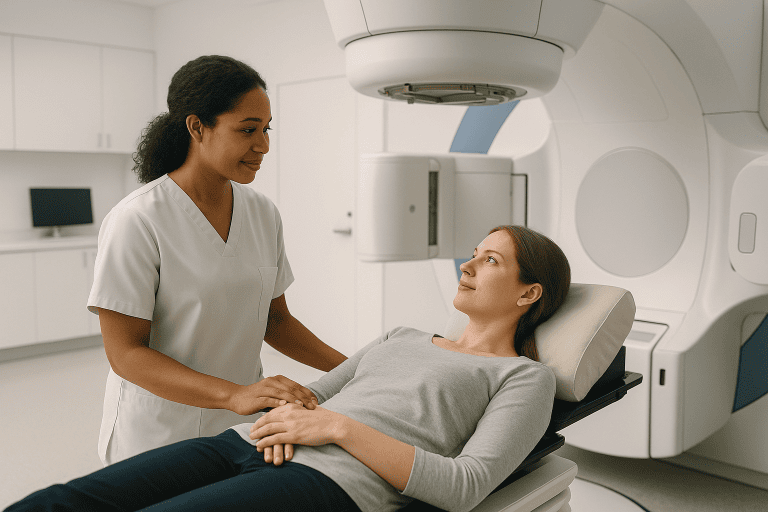
Radiation therapy uses high-energy beams to destroy cancer cells. It is not usually the first treatment for melanoma on the skin, but it may be used in certain situations, such as treating melanoma that has spread to the brain or bones, or to relieve symptoms in advanced disease.
Chemotherapy
Chemotherapymedicines that kill rapidly dividing cells, was once a standard option for advanced melanoma. Today it is used less often, because immunotherapy and targeted therapy are generally preferred, but it may still be considered in specific circumstances.
Observation and follow-up
For some very early lesions or after successful surgery, the plan may focus on regular skin examinations and follow-up visits rather than additional treatment. This careful monitoring, sometimes called active surveillance, helps detect any recurrence or new melanoma early. Your doctor will recommend a follow-up schedule based on the stage of your original melanoma.
Living with melanoma / outlook
The outlook for melanoma depends strongly on how early it is found. When melanoma is diagnosed while still confined to the top layers of the skin, treatment is often curative, and many people go on to live normal lives. When melanoma has spread to lymph nodes or distant organs, treatment becomes more complex, but modern immunotherapy and targeted therapy have meaningfully improved outcomes for many people with advanced disease. No doctor can promise a specific result, and outcomes vary widely between individuals.
After treatment, ongoing skin protection and follow-up are important because people who have had one melanoma have a higher chance of developing another. Practical steps often recommended include:
- Performing regular self-examinations of the skin, including hard-to-see areas, and asking a partner or using a mirror to help.
- Attending all scheduled follow-up appointments and skin checks.
- Using broad-spectrum sunscreen, wearing protective clothing and hats, and avoiding tanning beds.
- Reporting any new or changing skin spots to your doctor promptly.
- Seeking emotional support if needed; a cancer diagnosis can be stressful, and counseling or support groups help many people cope.
Family members of people with melanoma may also benefit from regular skin checks, especially if several relatives have been affected.
Frequently asked questions
What is melanoma in simple terms?
Melanoma is a form of skin cancer that starts in the pigment-producing cells of the skin. It often appears as a new dark spot or a changing mole. It is considered the most serious common type of skin cancer because it can spread to other organs if not treated early, but when it is caught at an early stage, treatment is often successful.
Can melanoma be cured?
In many cases, yes, especially when it is found early. Surgically removing a thin, early-stage melanoma is often curative. When melanoma has spread, a cure is less certain, but newer treatments such as immunotherapy and targeted therapy can control the disease for extended periods in some people. Outcomes depend on the individual situation, so your doctor is the best source of information about your own outlook.
How serious is melanoma compared with other skin cancers?
Melanoma is generally considered more serious than the more common skin cancers (basal cell and squamous cell carcinoma) because it has a greater tendency to spread to lymph nodes and internal organs. That said, seriousness depends heavily on stage: an early melanoma that has not grown deeply into the skin usually has a favorable outlook after removal.
What are the first signs of melanoma?
The first sign is usually a change in the skin: a new spot, or an existing mole that changes in size, shape, or color. Warning features include asymmetry, irregular borders, uneven color, a diameter larger than a pencil eraser, and any spot that is evolving, itching, or bleeding. Early melanoma is often painless, so visible change is the key signal to watch for.
Does melanoma spread quickly?
Growth rates vary by type. Some melanomas grow slowly along the surface of the skin for months before growing deeper, while others, such as nodular melanoma, can grow more quickly. Because it is not possible to know in advance how fast a particular melanoma will behave, doctors recommend having any suspicious or changing skin spot examined without delay.
What is recovery like after melanoma surgery?
Recovery depends on the size and location of the surgery. Removal of an early melanoma is often done under local anesthesia, and most people return to normal activities within days, with a scar at the site. Larger excisions, skin grafts, or lymph node surgery involve longer healing times and more follow-up care. Your surgical team will explain wound care and what to expect in your specific case.
Can melanoma come back after treatment?
Yes, melanoma can return, either at or near the original site, in nearby lymph nodes, or elsewhere in the body. The risk of recurrence depends mainly on the stage at diagnosis. This is why regular follow-up visits, skin examinations, and sun protection are recommended after treatment, and why any new or changing spot should be reported to your doctor promptly.
When to see a doctor
See a doctor promptly if you notice any of the following warning signs. Early evaluation of melanoma can make a substantial difference in treatment options and outcomes.
- A new mole or dark spot on the skin, especially in adulthood.
- An existing mole that is changing in size, shape, color, or texture.
- A mole with asymmetry, irregular borders, or multiple colors.
- A skin spot that itches, becomes painful, bleeds, oozes, or crusts.
- A sore on the skin that does not heal within a few weeks.
- A new dark streak under a fingernail or toenail without a known injury.
- A new pigmented spot on the palms, soles, or inside the mouth.
- A new lump under the skin or a swollen lymph node near a previously treated melanoma.
If you have already been treated for melanoma and develop unexplained symptoms such as persistent headaches, new lumps, ongoing bone pain, breathing difficulty, or unexplained weight loss, contact your care team, as these may warrant evaluation. When in doubt about any skin change, it is always reasonable to have it checked, most spots turn out to be harmless, but a professional examination is the only way to know for certain.
Medically reviewed by the Acıbadem International Medical Board September 2, 2026
See our medical review board →
Update history
- PublishedJune 14, 2026
- Medical review approvedSeptember 2, 2026
- Last content updateSeptember 2, 2026