Random Bruises on Legs — Explained by Medical Evidence, Not Myths

Many cases of random bruises on legs come from minor everyday trauma that is not remembered. Bruises are more likely with aging, intense exercise, some medications, and nutritional deficiencies.
Key Takeaways
- Many cases of random bruises on legs come from minor everyday trauma that is not remembered.
- Bruises are more likely with aging, intense exercise, some medications, and nutritional deficiencies.
- Large, painful, frequent, or unexplained bruises may need medical evaluation, especially if there is bleeding elsewhere.
- Doctors assess bruising by reviewing symptoms, medications, family history, and sometimes blood tests.
- Treatment depends on the cause and may range from simple self-care to managing an underlying blood or vascular condition.
Random bruises on legs are commonly caused by small bumps that go unnoticed, especially because the legs are exposed to daily contact. In some cases, frequent or unusual bruising can be linked to medicines, vitamin deficiencies, or conditions that affect blood vessels, platelets, or clotting.
Overview: what random bruises on legs usually mean
Random bruises on legs usually have a medical explanation rather than a mystery. In many people, they happen after minor knocks that are easy to miss during walking, exercise, carrying bags, bumping furniture, or daily activity. Because the legs are often exposed and take more contact than other parts of the body, bruises there are especially common.
A bruise forms when small blood vessels under the skin break and leak a small amount of blood into nearby tissue. The skin may look blue, purple, red, or brown at first, then change color as the body gradually clears the blood. This process is normal and most bruises improve on their own over days to a few weeks.
Still, not every bruise is simply from a bump. Easy or frequent bruising can be related to medicines such as blood thinners, aspirin, or steroids. It can also happen with fragile skin, vitamin deficiencies, intense physical training, or conditions that affect platelets, clotting proteins, or blood vessels.
The key question is not only whether the bruise appeared unexpectedly, but whether the bruising pattern is unusual for that person. Bruises that are large, happen often, appear without any likely explanation, or occur together with nosebleeds, bleeding gums, heavy periods, or fatigue deserve medical attention.
How bruises form and why the legs are a common site

Bruising is part of the body’s response to minor injury. Tiny blood vessels called capillaries can break after pressure or impact, allowing blood to collect under the skin. As the blood is broken down and reabsorbed, the bruise changes color and gradually fades.
The legs are one of the most common areas for bruising because they are frequently bumped during normal movement. Sports, stairs, crowded spaces, children and pets at home, and everyday exercise can all cause small impacts that are forgotten quickly. People may only notice the bruise later when changing clothes or bathing.
Bruises may be more visible on the legs because gravity can slightly increase swelling or make blood spread through tissue in a noticeable way. Varicose veins and fragile surface blood vessels may also make the lower legs bruise more easily in some adults.
Noticing a bruise without remembering an injury does not automatically mean a serious disease. Memory for small impacts is often poor, especially if the bruise is painless at first. What matters more is the size, frequency, location, associated symptoms, and whether the bruising pattern is new.
Common causes and risk factors
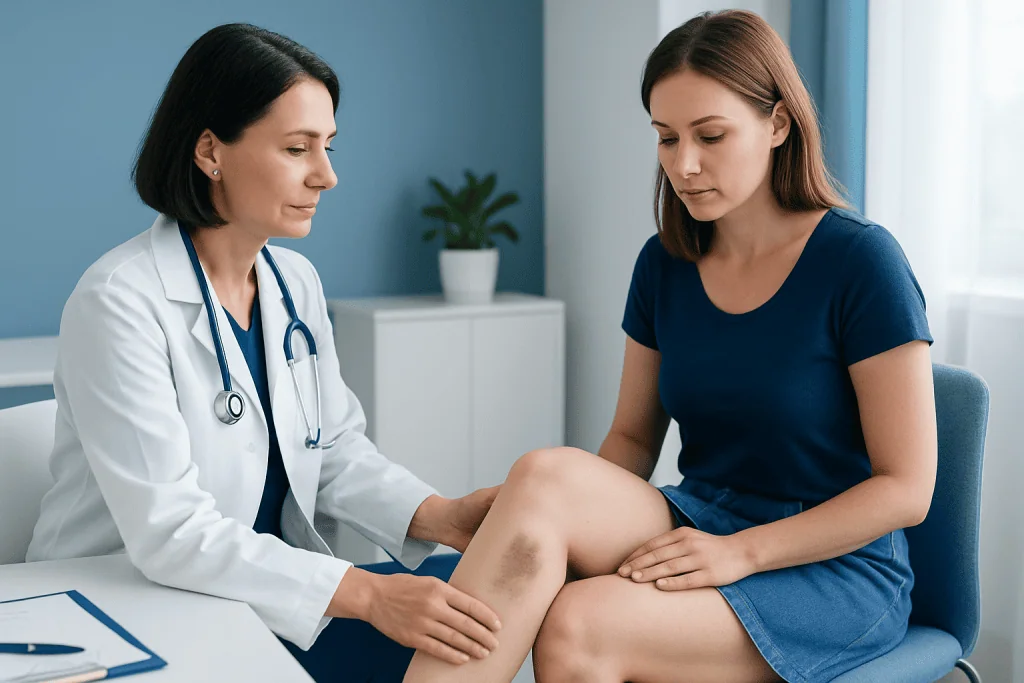
The most common cause of random bruises on legs is minor trauma that goes unnoticed. Exercise, kneeling, lifting, gardening, contact sports, and bumping into furniture are typical examples. Skin and blood vessels also become more delicate with age, making bruises more likely even after light impact.
Medicines are another frequent reason. Blood thinners, antiplatelet medicines, aspirin, some anti-inflammatory drugs, corticosteroids, and certain supplements may increase bruising. A person should not stop prescribed medication on their own, but should discuss bothersome or unusual bruising with a doctor.
Nutritional factors can contribute as well. Low intake or poor absorption of vitamins involved in blood vessel and clotting health, such as vitamin C or vitamin K, may play a role in some people. Heavy alcohol use, restrictive diets, or digestive disorders can also affect nutrition and increase bruising risk.
Less commonly, random bruises on legs are linked to underlying conditions. These may include low platelets, platelet function disorders, inherited bleeding disorders such as hemophilia, liver disease, some autoimmune conditions, or blood cancers such as leukemia. Vascular inflammation and certain connective tissue disorders can also lead to unusual bruising. Although these causes are less common, they are important when bruising is persistent or accompanied by other symptoms.
- More likely benign: a few small bruises after activity, no other bleeding, normal healing
- Needs more attention: very large bruises, frequent new bruises, bruises in unusual places, or bruising with fever, weight loss, fatigue, or bleeding elsewhere
Symptoms that may suggest a medical problem
A simple bruise is usually tender at first, then fades steadily. It does not keep enlarging after the first day or two, and there are no other signs of bleeding. This type of bruising is common and often does not need treatment beyond rest and observation.
There are situations where bruising deserves closer evaluation. Warning patterns include bruises that appear very often, bruises larger than expected for the degree of injury, bruises that occur without any clear trigger, or bruises that take an unusually long time to heal. Multiple bruises in different stages of healing may also prompt a doctor to ask more questions.
Other symptoms can be important clues. These include nosebleeds, bleeding gums, prolonged bleeding from small cuts, tiny red or purple spots on the skin, blood in urine or stool, unusually heavy menstrual bleeding, joint swelling, marked fatigue, or repeated infections. These symptoms do not confirm a serious illness, but they can point to a problem with platelets, clotting, or overall health.
Some people mistake leg pain and skin changes from circulation problems for bruising. If discoloration is associated with swelling, vein problems, or ulcers, a doctor may also consider vein disease or inflammation rather than a simple bruise. In selected cases, assessment may overlap with care used for varicose veins treatment if vein problems are contributing to leg symptoms.
How doctors evaluate unexplained bruising
Diagnosis starts with a careful history. A doctor will usually ask when the bruises began, where they appear, how often they occur, whether they are painful, and whether there is any bleeding from the gums, nose, urine, stool, or menstrual periods. Medication and supplement use is especially important because many common products can affect bleeding and bruising.
The physical examination looks at the size, shape, color, and distribution of bruises and whether there are petechiae, swelling, enlarged lymph nodes, liver or spleen enlargement, or signs of nutritional deficiency. The doctor may also ask about family history of easy bruising or known bleeding disorders.
If bruising is frequent, severe, or unexplained, blood tests may be recommended. These often include a complete blood count to check platelets and anemia, and clotting tests to see how well blood is coagulating. Depending on the situation, additional tests may assess liver function, vitamin levels, inflammation, or inherited bleeding disorders.
Imaging is not needed for most ordinary bruises, but it may be useful if there is concern about a deeper muscle injury, a hematoma, or another condition affecting the leg. In more complex situations, further workup may involve hematology or, if a broader blood disorder is suspected, evaluation used for oncology care pathways.
Treatment options and self-care
Treatment depends on the cause. For an uncomplicated bruise, home care is usually enough. A cool compress during the first day, leg elevation, and avoiding repeated pressure on the area may reduce discomfort and swelling. Most bruises heal naturally without specific medical treatment.
If medication is contributing, a doctor may review whether the bruising is an expected effect or whether an adjustment is needed. People should not stop anticoagulants, antiplatelet drugs, or prescription steroids without medical advice, because these medicines may be important for preventing serious conditions.
When an underlying disorder is identified, treatment focuses on that condition. This may include correcting a vitamin deficiency, treating liver disease, managing platelet or clotting disorders, or addressing vein-related leg problems. In selected cases, referral to a specialist can help guide testing and treatment decisions.
Simple self-care also matters. Protecting the legs during sports, improving home safety, using supportive footwear, and maintaining balanced nutrition may reduce further bruising. If bruises are painful, expanding, or linked to swelling and reduced movement, a medical review is the safer choice.
When to seek medical care
Medical advice is recommended if random bruises on legs are becoming more frequent, are very large, or are appearing without any likely reason. It is also wise to seek care if bruising is new after starting a medicine or supplement, or if a person has a personal or family history of bleeding problems.
Prompt medical assessment is important if bruising comes with nosebleeds, bleeding gums, blood in urine or stool, heavy menstrual bleeding, severe weakness, fever, unexplained weight loss, or many tiny red-purple spots on the skin. These features can suggest a broader issue that should not be ignored.
Urgent care may be needed if there is a rapidly enlarging bruise, severe pain, major swelling, weakness in the leg, or bruising after a significant injury. A large deep collection of blood, called a hematoma, may sometimes need more than routine home care.
For international patients who need evaluation, Acibadem International’s multidisciplinary specialists and JCI-accredited hospitals assess bruising with laboratory testing, imaging, and specialty care when appropriate. The next step is usually straightforward: identify whether the bruising reflects normal minor injury, medication effects, or an underlying medical condition that needs treatment.
Frequently asked questions
Are random bruises on legs always a sign of illness?
No. Many bruises on the legs come from minor bumps that are not remembered, especially after exercise or normal daily activity. A medical problem is more likely when bruises are frequent, unusually large, or accompanied by other bleeding symptoms.
Why do I get bruises on my legs but nowhere else?
The legs are exposed to more daily contact than many other body parts, so small impacts are common. Bruises may also be easier to notice there because of skin visibility, activity patterns, and, in some adults, fragile blood vessels or vein issues.
Can vitamin deficiencies cause unexplained bruising?
Yes, some deficiencies can make bruising more likely, especially when diet is limited or there are absorption problems. A doctor can decide whether testing is needed based on symptoms, eating habits, and overall health.
Do blood thinners always cause bruising?
Blood thinners and antiplatelet medicines can increase bruising because they reduce the blood's ability to clot normally. Mild bruising may be expected, but unusual, heavy, or sudden bruising should still be discussed with the prescribing doctor.
When should unexplained bruising be checked by a doctor?
A medical review is a good idea if bruises appear often, are very large, happen without injury, or are linked to nosebleeds, gum bleeding, heavy periods, or fatigue. Immediate care is more important after a major injury, with severe swelling or pain, or if a bruise rapidly expands.
How are random bruises on legs diagnosed?
Doctors usually begin with questions about symptoms, recent injuries, medicines, supplements, and family history. If needed, they may order blood tests to check platelets, anemia, clotting, liver function, or other possible causes.
References
- American Academy of Family Physicians
- National Heart, Lung, and Blood Institute
- MedlinePlus
- Merck Manual Consumer Version
- Mayo Clinic
This article is for general information only and is not a substitute for professional medical advice. Please consult a qualified doctor about your individual situation.
Explore treatments in Turkey — costs, top hospitals & a free quote
JCI-accredited · board-certified surgeons · reply within 24h

More from the Health Library



Related Specialists

Prof. Dr. Cem Demirel
Gynecology & Obstetrics
Assoc. Prof. Dr. Mehmet Özgür Akkurt
Gynecology & Obstetrics
Dr. Erkam Saka
Anesthesiology
Prof. Dr. Emel Özcan
Physical Medicine & Rehabilitation