Melinin: A Complete Medical Overview

Melinin usually refers to melanin, a natural body pigment. Melanin helps determine skin, hair, and eye color and offers some UV protection.
Key Takeaways
- Melinin usually refers to melanin, a natural body pigment.
- Melanin helps determine skin, hair, and eye color and offers some UV protection.
- Too much, too little, or uneven melanin can lead to pigment changes in the skin.
- Pigment changes may be harmless, but some need medical evaluation.
- Sun protection and skin monitoring are important parts of self-care.
Melinin is commonly used as a misspelling or variant of melanin, the natural pigment that gives color to the skin, hair, and eyes. Melanin also has an important protective role, especially in helping the skin respond to ultraviolet (UV) radiation.
Overview: What Is Melinin?
Melinin most often refers to melanin, a natural pigment made by specialized cells called melanocytes. Melanin is responsible for much of the color of the skin, hair, and eyes. It is also part of the body’s defense system because it helps absorb and disperse ultraviolet (UV) radiation from sunlight.
People may search for “melinin” when they want to understand skin tone, pigmentation disorders, or how the body reacts to sun exposure. In medical use, the standard term is melanin. Understanding melanin is helpful because pigment changes can be linked to normal variation, aging, inflammation, hormone changes, or certain skin conditions.
Melanin is not a disease itself. Rather, it is a normal biological substance that becomes medically relevant when pigment production changes. A doctor may evaluate melanin-related concerns when a person notices darkening, lightening, patchiness, or a new mole or spot that looks different from the surrounding skin.
What Melanin Does in the Body

Melanin has several important functions. Its best-known role is to give visible color to body tissues, especially the skin, hair, and iris of the eyes. The amount, type, and distribution of melanin vary naturally from person to person and are strongly influenced by genetics.
Another key function is protection from UV radiation. When skin is exposed to sunlight, melanocytes may produce more melanin. This is one reason tanning can occur. Melanin helps reduce some UV-related damage, although it does not provide complete protection and cannot prevent all sun injury.
There are different forms of melanin. Eumelanin is associated with brown to black shades, while pheomelanin is linked to yellow to reddish tones. The balance between these pigments influences natural coloring. Changes in production can happen with age, pregnancy, inflammation, medication use, and certain medical disorders.
- Skin: contributes to tone and response to sun exposure
- Hair: helps determine natural hair color
- Eyes: supports iris color and helps limit excess light scattering
Common Pigment Changes Linked to Melanin
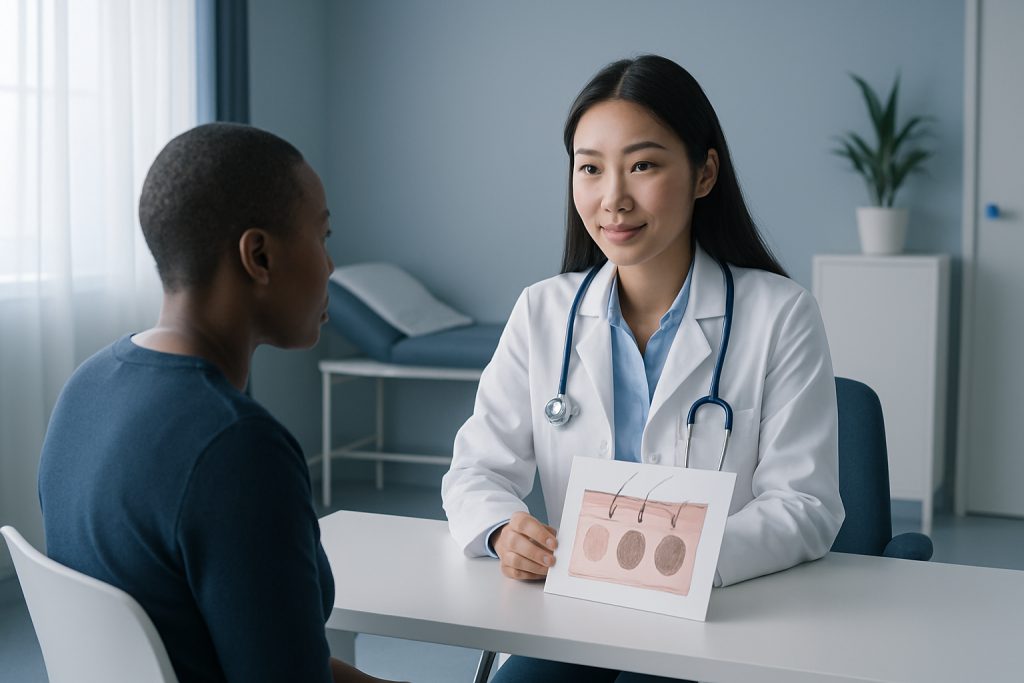
Melanin-related changes may appear as areas that are darker, lighter, or uneven compared with the surrounding skin. Many of these changes are common and benign, such as freckles, tanning, age-related spots, or temporary discoloration after a rash or acne lesion heals.
Hyperpigmentation happens when too much melanin collects in an area. This may occur after inflammation, sun exposure, hormonal shifts, or certain skin disorders. Melasma, for example, can cause symmetrical brown or gray-brown patches, often on the face. Vitiligo, by contrast, causes loss of pigment and leads to lighter or white patches because pigment-producing cells are reduced or absent.
Some pigment changes are part of broader skin conditions and may need clinical assessment. A specialist may consider problems such as skin cancer when a spot changes in shape, color, or size, or when it bleeds, crusts, or does not heal. Because pigment changes can have many causes, it is best not to self-diagnose based on appearance alone.
Why Melanin Levels or Distribution Change
Changes in melanin can happen for many reasons. Genetics play a major role in baseline skin, hair, and eye color. However, external and internal factors can also affect how much pigment the body makes and where that pigment appears.
Sun exposure is one of the most common influences. UV radiation stimulates melanocytes, which can lead to tanning or dark spots over time. Inflammation is another common trigger. After acne, eczema, burns, or other irritation, the skin may temporarily produce extra pigment or lose pigment in the healing area.
Hormones can affect pigmentation too. Pregnancy, birth control use, and some endocrine changes may increase the chance of melasma or generalized darkening. Medications, nutritional issues, autoimmune conditions, and rare genetic disorders may also be involved. A clinician may review personal history, recent skin changes, and medication use to understand the cause.
How Doctors Evaluate Pigment Concerns
Evaluation usually begins with a medical history and careful skin examination. A doctor will ask when the change started, whether it is spreading, whether there is itching or pain, and whether there has been recent sun exposure, skin irritation, or new medication use. Family history may also matter, especially for certain pigment disorders or skin cancers.
In many cases, a visual examination is enough to guide the next step. Dermatologists may use magnification tools to look more closely at moles and pigmented lesions. If a spot appears unusual, a biopsy may be recommended so the tissue can be examined under a microscope. This is an important way to distinguish a harmless pigment change from a serious condition.
Sometimes tests are used to look for an underlying trigger. Depending on the person’s symptoms, doctors may consider blood tests or evaluation for hormonal, inflammatory, or autoimmune causes. If there is concern about a suspicious lesion, further assessment by specialists in dermatology care is often the most appropriate next step.
Treatment Options for Melanin-Related Conditions
Treatment depends on the cause. Not all pigment changes need medical treatment, especially if they are harmless and not bothersome. When treatment is needed, the goal may be to reduce excess pigmentation, manage the underlying condition, protect the skin, or evaluate and remove suspicious lesions.
For hyperpigmentation, doctors may recommend sun protection, topical therapies, and treatment of the original trigger, such as acne or eczema. Procedures can sometimes help selected patients, but they should be guided by a qualified clinician because some treatments can worsen discoloration if used incorrectly. When pigment loss is present, treatment may focus on controlling the underlying condition and supporting even skin tone where possible.
If there is concern for a skin growth, treatment may involve biopsy or removal. In patients diagnosed with cancerous or precancerous changes, care is tailored to the type and stage of the lesion and may involve skin cancer treatment. For selected pigment-related lesions or structural concerns, doctors may also use dermatologic surgery when it is the safest and most effective option.
Self-Care, Prevention, and Daily Skin Protection
Good skin care habits can help reduce preventable pigment changes and support overall skin health. Daily sun protection is especially important. Even though melanin offers some natural defense, all skin tones can develop sun damage, uneven pigmentation, and skin cancer. Broad-spectrum sunscreen, sun-protective clothing, and shade during peak sunlight hours are sensible preventive steps.
Gentle skin care also matters. Picking at acne, overusing harsh exfoliants, or using unproven lightening products can irritate the skin and worsen discoloration. A simple routine that protects the skin barrier may reduce inflammation-related pigment changes over time.
Regular self-checks can also be useful. Looking for new or changing moles, persistent dark spots, or pale patches that spread may help a person decide when to seek advice. Near the end of the care pathway, some people benefit from a multidisciplinary review; Acibadem International’s specialists in JCI-accredited hospitals evaluate and treat pigment-related skin conditions for international patients when expert assessment is needed.
When to Seek Medical Care
Medical advice is recommended if a pigment change is new, rapidly changing, or difficult to explain. A person should arrange an evaluation if a mole becomes asymmetric, develops irregular borders, shows several colors, grows noticeably, or starts to bleed, crust, or itch. These signs do not always mean cancer, but they should not be ignored.
Care is also important when skin color changes are widespread, associated with pain or inflammation, or affecting quality of life. Patchy loss of color, persistent facial darkening, or discoloration after a rash may benefit from diagnosis and treatment planning. A clinician can help clarify whether the cause is harmless, inflammatory, hormonal, autoimmune, or more serious.
Urgent assessment is appropriate for any lesion that does not heal, any rapidly enlarging pigmented spot, or symptoms suggesting infection or severe inflammation. If there is uncertainty, early evaluation is often the safest step. Prompt attention can support peace of mind as well as timely treatment when needed.
Frequently asked questions
Is melinin a real medical term?
In most cases, melinin is used to mean melanin. Melanin is the medically recognized term for the pigment that gives color to the skin, hair, and eyes. If a person sees “melinin” online, it is often a spelling variant rather than a different substance.
What is the main function of melanin?
Melanin gives color to the skin, hair, and eyes. It also helps the skin respond to ultraviolet radiation by absorbing some of the energy from sunlight. This offers partial protection, but it does not replace sunscreen or other sun-safety measures.
Can too much melanin be harmful?
Excess melanin itself is not always harmful, but it can lead to noticeable dark patches or uneven skin tone. Sometimes this reflects sun exposure, inflammation, or hormone changes. A doctor can help decide whether treatment is needed and whether an underlying cause should be addressed.
Why do some areas of skin lose pigment?
Loss of pigment can happen when melanocytes are damaged, reduced, or temporarily less active. This may occur after inflammation, with certain autoimmune conditions such as vitiligo, or for other medical reasons. A professional evaluation is helpful if pale patches spread or persist.
Does darker skin prevent skin cancer?
Darker skin has more melanin, which provides some natural UV protection, but it does not eliminate the risk of skin cancer. People of all skin tones can develop suspicious moles, sun damage, and skin cancers. Regular skin checks and sun protection remain important for everyone.
When should a person worry about a pigmented spot?
A spot should be assessed if it changes in size, shape, or color, or if it bleeds, crusts, or does not heal. These signs can be caused by several conditions, including harmless ones, but they deserve medical attention. Early evaluation helps guide the right next step.
References
- American Academy of Dermatology
- National Cancer Institute
- MedlinePlus
- National Institute of Arthritis and Musculoskeletal and Skin Diseases
- Mayo Clinic
This article is for general information only and is not a substitute for professional medical advice. Please consult a qualified doctor about your individual situation.
Hair transplant in Turkey — costs, graft counts & a free assessment
JCI-accredited · board-certified surgeons · reply within 24h