Wrinkled Fingertips: What Patients Need to Know

Wrinkled fingertips are most often temporary and linked to water exposure or skin dryness. Persistent wrinkling may be associated with eczema, irritation, dehydration, circulation changes, or nerve function problems.
Key Takeaways
- Wrinkled fingertips are most often temporary and linked to water exposure or skin dryness.
- Persistent wrinkling may be associated with eczema, irritation, dehydration, circulation changes, or nerve function problems.
- Associated symptoms such as pain, numbness, cracking, color change, or swelling deserve medical attention.
- Diagnosis usually begins with a skin and medical history review rather than complex testing.
- Care depends on the cause and may include moisturizers, trigger avoidance, and treatment of any underlying condition.
Wrinkled fingertips are often harmless and commonly appear after water exposure, frequent handwashing, or dry skin. When wrinkling happens without water, lasts a long time, or comes with pain, color change, numbness, or rash, a medical evaluation may help identify an underlying skin, circulation, or nerve-related cause.
Overview
Wrinkled fingertips usually happen for a simple reason: the skin has been in water for a while or has become dry and irritated. In many people, the change is temporary and improves once the hands are dry, protected, and moisturized. Although this can look unusual, it is often not a sign of serious illness on its own.
At the same time, wrinkled fingertips can occasionally reflect something more than normal water exposure. If the skin stays wrinkled even when dry, or if it is accompanied by burning, itching, cracking, numbness, color changes, or weakness, a doctor may look for skin disease, reduced circulation, or nerve-related problems. This article explains the most common reasons, what to watch for, and when further evaluation may be useful.
One useful way to think about wrinkled fingertips is to separate temporary wrinkling from persistent wrinkling. Temporary wrinkling often follows bathing, swimming, cleaning, or handwashing. Persistent wrinkling tends to point more toward dryness, irritation, eczema, repeated chemical exposure, or less commonly an issue affecting the blood vessels or nerves that help regulate the skin.
Why fingertips wrinkle

Many people assume fingers wrinkle in water because the skin simply swells. In fact, the process is more complex. Water changes the outer skin layer, and the small blood vessels in the fingertips respond in a way that creates the familiar ridged, pruned appearance. This is why wrinkling tends to happen most clearly on the pads of the fingers and toes.
Outside water exposure, the fingertips may look wrinkled when the skin barrier is weakened. Frequent washing, alcohol-based sanitizers, detergents, cold weather, and low humidity can strip natural oils from the skin. As the skin becomes dry, it may appear thin, rough, creased, or shriveled, especially around the finger pads and tips.
Less often, wrinkled fingertips can be related to changes in sweating, blood flow, or nerve signaling. Doctors may consider this if wrinkling appears unusually fast with water, happens only on one hand, or comes with numbness or tingling. In these situations, the symptom is not usually evaluated alone but as part of a wider pattern of signs.
Common causes and risk factors
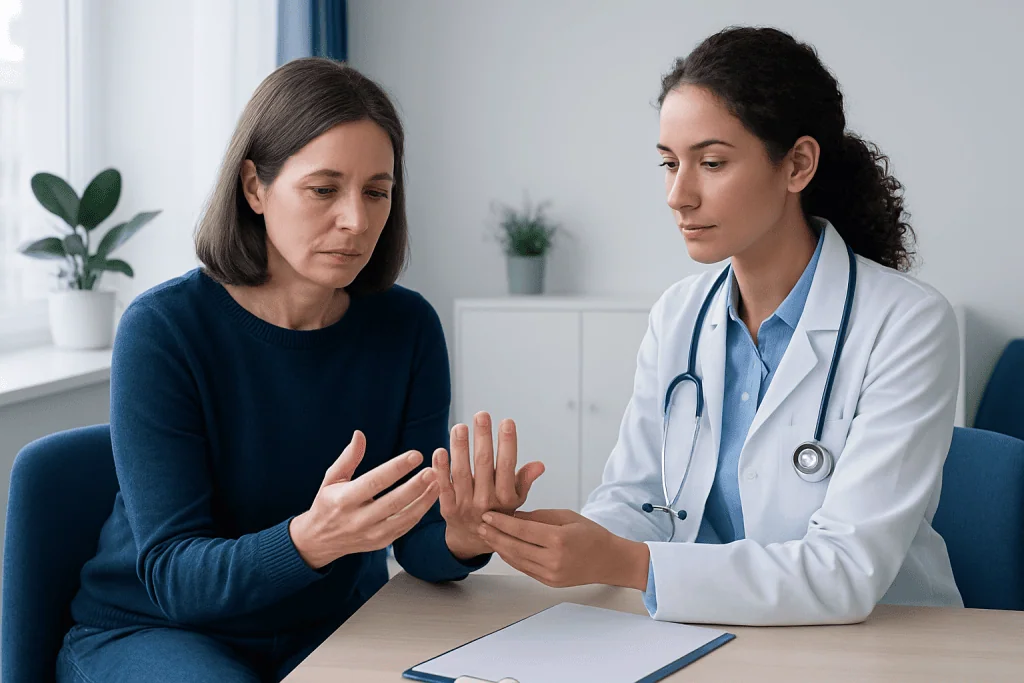
The most common causes of wrinkled fingertips are everyday factors. Long baths, swimming, dishwashing, cleaning, and repeated handwashing can all trigger temporary wrinkling. Dry skin is another major cause, particularly in winter or in people whose work involves soaps, disinfectants, hair products, food preparation, or other irritants.
Inflammatory skin conditions can also affect the fingertips. Hand eczema may cause dryness, peeling, itching, redness, fissures, and wrinkling. Contact dermatitis can develop after exposure to latex, fragrances, cleaning agents, metals, or workplace chemicals. In some people, wrinkled fingertips are part of a broader skin problem such as eczema or chronic irritation of the hands.
Other possible contributors include dehydration, aging skin, and repeated friction. More rarely, doctors may investigate circulation problems, autonomic nerve dysfunction, or conditions that affect sweating and blood vessel control. A history of numbness, weakness, one-sided symptoms, unusual color changes, or fingertip pain may raise suspicion for a neurologic or vascular issue rather than a simple skin cause.
- Frequent water exposure
- Dry climate or cold weather
- Repeated use of soaps, sanitizers, or cleaning products
- Hand eczema or contact dermatitis
- Dehydration or poor skin barrier function
- Less commonly, circulation or nerve-related conditions
Symptoms that may occur with wrinkled fingertips
Wrinkled fingertips can appear on their own, but associated symptoms often give clues to the cause. Dryness, roughness, mild peeling, and tight-feeling skin commonly suggest irritation or skin barrier damage. If wrinkling appears after water and fades within a short time, this pattern is usually considered normal.
If the skin is red, itchy, flaky, cracked, or sore, dermatitis or eczema becomes more likely. Deep cracks can be painful and may bleed, especially in cold weather or after repeated washing. People with hand eczema may also notice symptoms on the palms, knuckles, or around the nails, not only at the fingertips.
Color changes are important to notice. Fingertips that turn white, blue, purple, or very red in response to cold or stress may suggest a blood vessel spasm pattern such as Raynaud disease. Numbness, tingling, or weakness may point to nerve involvement and can lead a doctor to consider whether further assessment, including neurology evaluation, would be helpful.
How doctors diagnose the cause
Diagnosis usually starts with a careful history. A doctor will ask when the wrinkling began, whether it occurs only after water, how long it lasts, and whether there are triggers such as soaps, cleaning products, gloves, cold weather, or workplace exposure. They will also ask about itching, pain, cracking, color changes, sweating changes, numbness, and any existing skin or medical conditions.
A physical examination focuses on the fingertips, nails, palms, and the rest of the hands. The doctor may look for dryness, scaling, inflammation, fissures, swelling, or asymmetry between the two hands. Sometimes the appearance alone strongly suggests irritant dermatitis or eczema, while in other cases the pattern may lead to evaluation for circulation or nerve-related problems.
Further tests are only needed in selected cases. Patch testing may help identify contact allergies. If poor circulation is suspected, vascular assessment may be considered. If symptoms include persistent numbness, weakness, or unusual one-sided wrinkling, a clinician may look more closely for disorders affecting the nerves or spinal cord and guide the patient toward appropriate medical assessment.
Treatment and self-care
Treatment depends on the cause. For simple dryness or frequent water exposure, the main approach is to restore and protect the skin barrier. Thick, fragrance-free moisturizers or ointments are often more effective than light lotions, especially when applied after washing and before sleep. Gentle cleansers, lukewarm water, and limiting unnecessary exposure to soaps and detergents can also help.
If hand eczema or contact dermatitis is suspected, trigger avoidance is essential. This may include changing hand products, using protective gloves for wet work, and following a doctor’s treatment plan for inflamed skin. In some cases, prescription creams may be needed to calm irritation and help the skin heal. When wrinkling is part of a more persistent skin condition, dermatology care can help clarify the diagnosis and tailor treatment.
When circulation or nerve-related causes are involved, management focuses on the underlying issue rather than the wrinkles alone. For example, reducing cold exposure may help people with blood vessel spasm symptoms, while neurologic symptoms may need separate evaluation. In all cases, self-treatment should remain gentle. Scrubbing, strong exfoliants, and harsh chemicals can worsen skin damage and prolong symptoms.
- Use a rich moisturizer regularly, especially after washing
- Choose fragrance-free, mild soaps or cleansers
- Wear gloves for cleaning or prolonged wet work
- Avoid very hot water and repeated chemical exposure
- Seek medical advice if symptoms are persistent or worsening
When to seek medical care
Medical care is appropriate if wrinkled fingertips do not improve, return frequently without clear water exposure, or interfere with daily activities. A doctor should also assess fingertips that are painful, swollen, cracked, bleeding, or associated with a rash. These features can suggest a treatable skin condition rather than simple temporary wrinkling.
Prompt evaluation is especially important when wrinkling is accompanied by numbness, tingling, weakness, marked color changes, or symptoms affecting only one hand. These patterns may point to an issue involving blood flow or nerve function and should not be ignored. People with diabetes, autoimmune disease, or significant occupational exposure to irritants may also benefit from earlier review.
For international patients who need coordinated evaluation, Acibadem International’s multidisciplinary specialists and JCI-accredited hospitals diagnose and treat skin, vascular, and neurologic conditions related to hand symptoms. The right specialty depends on the overall pattern of symptoms rather than the wrinkling alone.
Frequently asked questions
Are wrinkled fingertips usually normal?
Yes, in many cases wrinkled fingertips are normal after spending time in water. They can also happen with dry skin or frequent handwashing. If the wrinkling persists when the skin is dry or comes with other symptoms, a medical review may be helpful.
Why do my fingertips stay wrinkled even when I have not been in water?
Persistent wrinkling without water exposure is often linked to dry skin, hand eczema, or repeated contact with irritants such as soaps and cleaning products. Less commonly, circulation or nerve-related factors may play a role. A doctor can look at the full symptom pattern to identify the cause.
Can dehydration cause wrinkled fingertips?
Dehydration may contribute to skin dryness, which can make fingertips look creased or shriveled. However, it is not the only explanation. Moisturizing the skin and improving fluid intake may help, but persistent symptoms should still be assessed if they do not resolve.
Are wrinkled fingertips a sign of a vitamin deficiency?
Wrinkled fingertips are not usually a classic sign of a specific vitamin deficiency. Skin texture changes are more often related to dryness, irritation, eczema, or environmental exposure. If someone has broader concerns such as hair loss, fatigue, or widespread skin changes, a doctor may consider nutritional issues as part of a larger evaluation.
When should someone worry about wrinkled fingertips?
Concern is more appropriate when wrinkling is persistent, painful, or associated with cracking, rash, swelling, numbness, weakness, or blue or white color changes. One-sided symptoms also deserve attention. These features may indicate an underlying condition that needs diagnosis and treatment.
What can help improve wrinkled fingertips at home?
Using a thick fragrance-free moisturizer, avoiding harsh soaps, and protecting the hands during wet work often helps. Lukewarm rather than hot water is gentler on the skin. If home care does not improve symptoms, a healthcare professional can suggest next steps.
References
- American Academy of Dermatology
- National Institute of Arthritis and Musculoskeletal and Skin Diseases
- National Institute of Neurological Disorders and Stroke
- Mayo Clinic
- Merck Manual Consumer Version
This article is for general information only and is not a substitute for professional medical advice. Please consult a qualified doctor about your individual situation.
Explore treatments in Turkey — costs, top hospitals & a free quote
JCI-accredited · board-certified surgeons · reply within 24h