

Child Rotten Teeth: A Complete Medical Overview

Child rotten teeth are most often caused by dental decay, not poor parenting or a single food. Early signs can include white spots, sensitivity, bad breath, or trouble chewing before visible holes appear.
Key Takeaways
- Child rotten teeth are most often caused by dental decay, not poor parenting or a single food.
- Early signs can include white spots, sensitivity, bad breath, or trouble chewing before visible holes appear.
- Treatment depends on severity and may include fluoride, fillings, crowns, pulpotomy, or tooth removal.
- Daily brushing with fluoride toothpaste, regular dental visits, and limiting sugary drinks help prevent decay.
- A child with facial swelling, fever, severe pain, or trouble eating should be seen by a dentist or doctor promptly.
Child rotten teeth usually refer to untreated tooth decay that makes a tooth look brown, black, broken, or severely damaged. Early dental assessment is important because decay can cause pain, infection, eating problems, and harm to developing adult teeth, but timely treatment often protects oral health well.
Overview: what child rotten teeth usually means
The phrase child rotten teeth is commonly used to describe teeth that appear decayed, dark, broken, or badly damaged. In medical terms, this usually means dental caries, also called tooth decay. Decay happens when bacteria in the mouth feed on sugars, produce acids, and slowly wear away the tooth’s outer layer.
This problem can affect baby teeth as well as permanent teeth. Even though baby teeth eventually fall out, they still matter greatly. They help a child chew, speak clearly, maintain space for adult teeth, and support healthy jaw development.
When decay is found early, treatment is often simpler and more comfortable. If it is ignored, the damage can spread deeper into the tooth, causing pain, infection, sleep disturbance, and difficulty eating. In some children, severe decay also affects confidence, school concentration, and overall well-being.
Parents and caregivers should know that tooth decay is very common and treatable. A dentist can identify the cause, relieve symptoms, and recommend steps to protect the rest of the child’s teeth.
How tooth decay develops in children
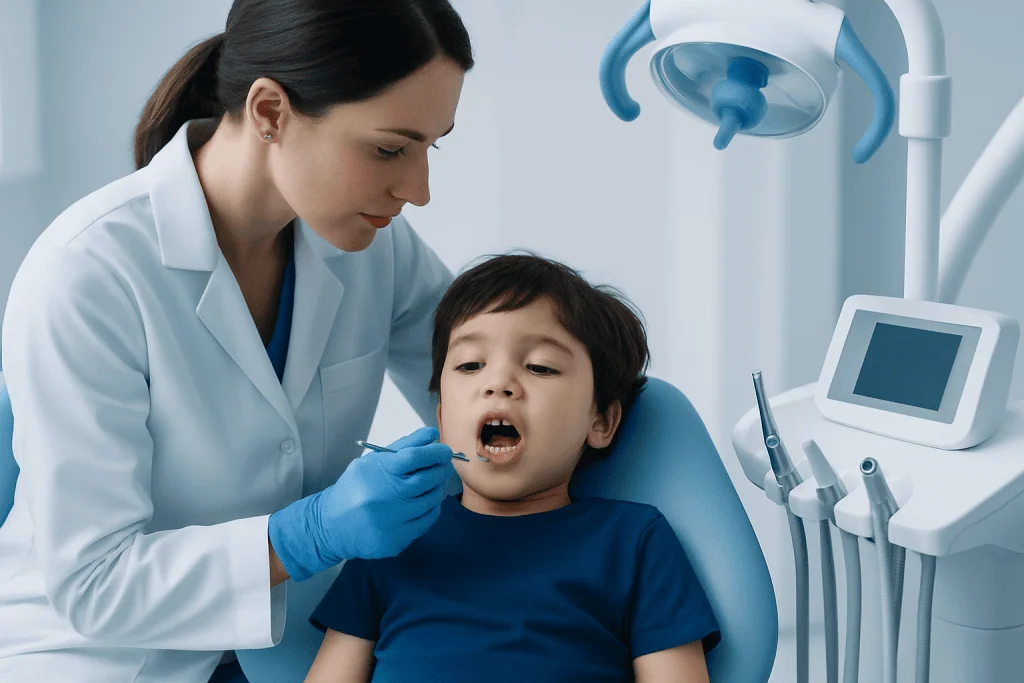
Tooth decay does not happen all at once. It usually begins as a soft, sticky film called plaque that collects on the teeth. When plaque is not brushed away well, bacteria use sugars from food and drinks to make acids. These acids remove minerals from enamel, the hard outer coating of the tooth.
At first, the earliest sign may be a chalky white spot near the gumline. This stage can sometimes improve with better oral hygiene and fluoride. Over time, however, the enamel weakens and a cavity forms. If the decay continues inward, it can reach the dentin and then the pulp, where nerves and blood vessels are located.
Once the inner part of the tooth is affected, a child may develop stronger pain, swelling, or sensitivity to hot, cold, and sweet foods. In advanced cases, the tooth may break down, appear black or brown, and smell unpleasant. This is the stage many families describe as a “rotten” tooth.
Some children have extensive decay in multiple teeth, especially the upper front teeth and molars. This pattern may be related to prolonged exposure to sugary drinks, frequent snacking, nighttime bottles, or inconsistent brushing. In severe cases, a dentist may also evaluate for related problems such as dental caries.
Signs and symptoms to watch for

Not every child with tooth decay complains of pain at first. In the early stages, there may be no obvious symptoms. That is one reason regular dental checkups are important, even when the child seems comfortable.
Visible and behavioral signs can include:
- White, brown, or black spots on the teeth
- Small holes, rough areas, or broken tooth edges
- Tooth sensitivity to cold, heat, or sweets
- Pain when biting or chewing
- Bad breath or an unpleasant taste in the mouth
- Swollen gums near a painful tooth
- Food refusal, irritability, or poor sleep
Young children may not be able to explain where the pain is coming from. Instead, they may chew on one side, avoid brushing, cry during meals, or become unusually fussy. A toddler with visible discoloration on the front teeth should be assessed even if there is no pain.
If a child has a pimple-like bump on the gum, facial swelling, fever, or difficulty opening the mouth, urgent dental evaluation is needed. These can be signs that the infection has spread beyond the tooth.
Causes and risk factors
The main cause of child rotten teeth is the interaction of bacteria, sugar, and time. Frequent exposure to sugary foods and drinks gives mouth bacteria repeated opportunities to produce acid. This includes juice, soda, sweetened milk drinks, candies, sticky snacks, and even frequent grazing on crackers or dried fruit.
Oral hygiene habits also matter. Brushing that is irregular or ineffective allows plaque to remain on the teeth. Children often need hands-on help or supervision with brushing for several years, because fine motor skills are still developing.
Important risk factors include:
- Going to sleep with a bottle containing milk, formula, juice, or sweet drinks
- Frequent snacking or sipping sugary beverages throughout the day
- Limited fluoride exposure
- Past history of cavities
- Irregular dental visits
- Dry mouth or certain medical conditions affecting saliva
- Special healthcare needs that make oral care more difficult
Family and social factors can also play a role. Busy routines, feeding challenges, limited access to preventive dental care, and low awareness of early signs may all contribute. Importantly, tooth decay is a health issue with many influences, and parents should not feel blamed for seeking help.
How dentists diagnose the problem
Diagnosis usually begins with a dental examination. The dentist looks for color changes, cavities, plaque buildup, gum inflammation, and signs of infection. They also ask about pain, feeding habits, brushing routine, fluoride use, and the child’s general health.
Dental X-rays are sometimes needed, especially if decay may be hidden between teeth or under the surface. X-rays can show how deep the cavity is and whether the infection is close to the nerve or affecting the developing permanent tooth underneath.
The goal is not only to identify the damaged tooth but to understand the child’s overall cavity risk. This helps the dental team plan both treatment and prevention. In some children, dentists use additional preventive strategies such as fluoride varnish or sealants for vulnerable teeth.
If the child is very young, anxious, or has extensive dental disease, the dentist may discuss different ways to complete treatment safely and comfortably. Depending on need, this can range from routine office care to more structured pediatric dental support. Restorative care may include dental fillings or other procedures to preserve the tooth when possible.
Treatment options for child rotten teeth
Treatment depends on how advanced the decay is, whether the child has pain or infection, and whether the tooth is a baby tooth or a permanent tooth. The dentist will aim to stop the disease, relieve symptoms, and protect future oral development.
In early decay, fluoride treatment and improved home care may help slow or reverse the process before a cavity fully forms. Once there is a hole in the tooth, however, the tooth usually needs repair. Small or moderate cavities may be treated with a filling to restore the damaged area.
If a baby tooth is badly weakened but still important to keep, a pediatric dentist may place a dental crown to cover and strengthen it. When decay reaches the pulp, treatment may involve pulp therapy or root canal-type treatment in selected teeth, especially when saving the tooth is helpful for function and space maintenance.
Sometimes a tooth is too damaged or infected to save and needs removal. If that happens, the dentist may discuss whether a space maintainer is needed to guide proper eruption of adult teeth. Pain control, infection management, and preventive advice are also important parts of care. For children with widespread or severe oral disease, assessment may overlap with broader pediatric dental care needs.
Prevention and daily self-care
Preventing tooth decay is usually more comfortable and less costly than treating it later. Good habits started early can make a big difference. A child should brush twice a day with fluoride toothpaste, using an age-appropriate amount, and an adult should help or supervise until brushing is consistently effective.
Flossing becomes important when teeth touch each other. Regular dental visits allow early detection of weak spots before they become painful cavities. Dentists may also recommend fluoride varnish or sealants for children at higher risk of decay.
Helpful prevention steps include:
- Offer water instead of sugary drinks between meals
- Limit frequent snacking and sticky sweets
- Avoid putting a child to bed with a bottle unless it contains plain water
- Encourage balanced meals rather than constant grazing
- Replace toothbrushes regularly and keep brushing routines consistent
- Ask a dentist about fluoride needs based on the child’s age and local water supply
Parents can also model healthy oral care and make brushing part of the daily routine rather than a struggle. Small, steady habits matter most. If a child already has one cavity, that is a signal to strengthen prevention for the whole mouth.
When to seek medical care
A child should see a dentist if there are brown or black spots on a tooth, a visible cavity, persistent sensitivity, bad breath that does not improve, or complaints of tooth pain. Early review is especially important for toddlers and preschool children, because decay can progress quickly in baby teeth.
Prompt care is needed if the child has swelling of the face or gums, fever, pus, severe pain, trouble chewing, or difficulty sleeping because of tooth symptoms. Emergency attention may be needed if swelling is spreading, the child cannot drink normally, or there are signs of illness beyond the mouth.
Some children also benefit from coordinated care when dental problems affect nutrition, speech, or behavior. If there are repeated infections or the child has other health conditions, the care team may include pediatric and dental specialists. Near the end of the care pathway, families seeking international evaluation may wish to know that Acibadem International’s multidisciplinary specialists and JCI-accredited hospitals diagnose and treat dental conditions for children and adults.
Parents do not need to wait for severe pain before making an appointment. Visible damage, color change, or feeding difficulties are enough reason to ask for professional advice.
Frequently asked questions
Can baby teeth be left untreated because they will fall out anyway?
No. Baby teeth are important for chewing, speech, comfort, and holding space for permanent teeth. Untreated decay in baby teeth can lead to pain, infection, and problems with the teeth developing underneath.
What causes rotten-looking teeth in a child?
The most common cause is tooth decay from plaque bacteria using sugars to produce acid. Over time, this acid damages enamel and deeper tooth layers, causing discoloration, holes, and sometimes broken or dark teeth.
Can early tooth decay be reversed?
In very early stages, when the enamel shows white spot changes but no true cavity, improved brushing and fluoride may help the area recover. Once a hole has formed, the tooth usually needs dental treatment to repair it.
Is tooth decay in children always painful?
Not always. Early cavities may cause no symptoms at all, which is why regular dental checkups are valuable. Pain often appears later, when decay becomes deeper or the tooth becomes inflamed or infected.
What should a parent do if a child has a toothache at night?
The child should be seen by a dentist as soon as possible, especially if pain is recurring or interfering with sleep. If there is swelling, fever, or trouble swallowing or drinking, urgent medical or dental assessment is important.
How can parents help prevent cavities at home?
Brushing twice daily with fluoride toothpaste, supervising brushing, limiting sugary drinks, and scheduling regular dental visits are the main steps. Avoiding bedtime bottles with anything other than water can also reduce risk, especially in younger children.
References
- American Academy of Pediatric Dentistry
- American Dental Association
- Centers for Disease Control and Prevention
- National Institute of Dental and Craniofacial Research
- World Health Organization
This article is for general information only and is not a substitute for professional medical advice. Please consult a qualified doctor about your individual situation.
Explore treatments in Turkey — costs, top hospitals & a free quote
JCI-accredited · board-certified surgeons · reply within 24h
Add us as a Preferred Source to see more of our trusted health content across Google Search, AI Overviews and Discover.

More from the Health Library



Related Specialists

Gizem Karaoğlan
Physical Medicine & Rehabilitation
Dr. Mustafa Burak Seven
Pediatrics
Prof. Dr. Ömer Fatih Ölmez
Medical Oncology
Fzt. Aslı Hacıoğlu
Physical Medicine and Rehabilitation