

Loop Colostomy: An Evidence-Based Guide for Patients
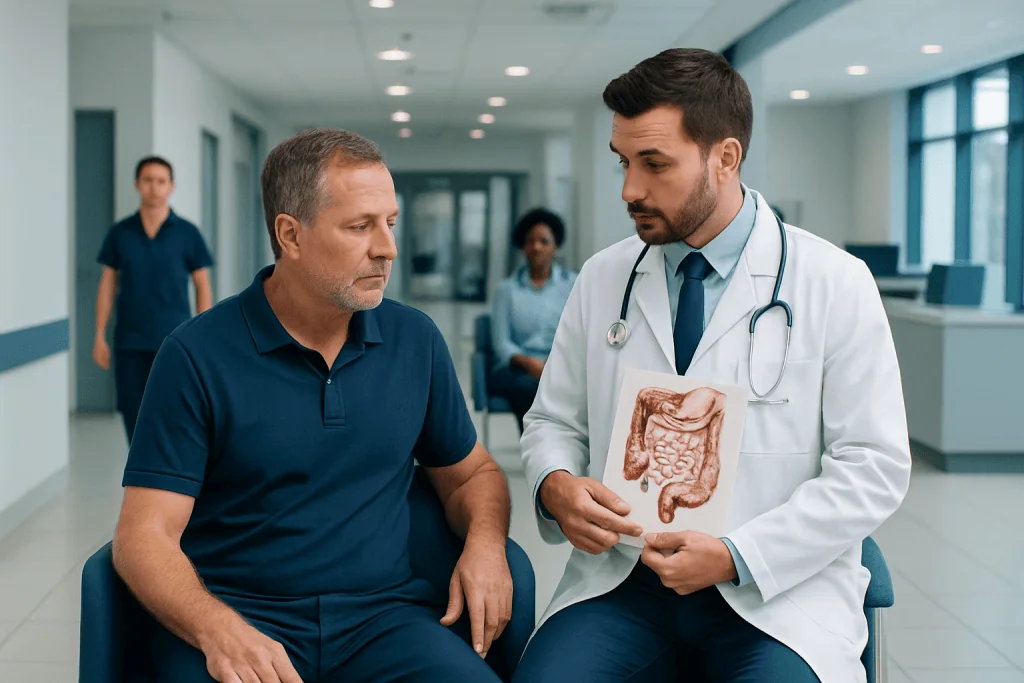
A loop colostomy usually has two openings: one drains stool and the other releases mucus from the inactive part of the bowel. It may be temporary or permanent, depending on the underlying condition and the amount of bowel that can safely be reconnected.
Key Takeaways
- A loop colostomy usually has two openings: one drains stool and the other releases mucus from the inactive part of the bowel.
- It may be temporary or permanent, depending on the underlying condition and the amount of bowel that can safely be reconnected.
- Learning pouch changes, skin protection and hydration is central to a comfortable recovery.
- A stoma should usually look moist and pink to red; major color changes, severe pain or no output with vomiting require prompt medical advice.
- Many people return to work, travel, exercise and social activities after recovery with appropriate support and planning.
A loop colostomy is a type of stoma in which a loop of colon is brought through the abdominal wall so stool can leave the body into a pouch. It is commonly temporary and may be created to protect a bowel connection while it heals, manage an obstruction, or allow inflamed or injured bowel to rest.
What Is a Loop Colostomy?
A loop colostomy is a surgically created opening, called a stoma, on the abdomen. During the procedure, a surgeon brings a loop of the large bowel (colon) to the skin surface and opens it so stool leaves the body through the stoma and is collected in an adhesive pouch.
Unlike an end colostomy, where one end of the colon forms the stoma, a loop colostomy generally has two visible openings. The larger opening carries stool, while the smaller opening drains mucus produced by the section of bowel below the stoma. This arrangement can make it easier to restore bowel continuity later when a temporary diversion is appropriate.
The output from a colostomy is usually more formed than output from an ileostomy because the colon absorbs water. However, consistency can vary according to the location of the stoma, diet, medicines, hydration and the reason for surgery.
Why a Loop Colostomy May Be Needed
A surgeon may recommend a loop colostomy when stool needs to be diverted away from a part of the bowel that is healing, inflamed, narrowed or injured. It can reduce the passage of stool through a newly created bowel connection, known as an anastomosis, while the tissues recover.
Possible reasons include colorectal cancer surgery, complicated diverticular disease, bowel injury, infection, pelvic surgery, certain birth conditions, or bowel obstruction. In some situations, diversion helps relieve symptoms caused by a blockage. People with colorectal cancer may need individualized planning that considers the tumor, treatment sequence and overall health; colorectal cancer care typically involves a multidisciplinary team.
A loop colostomy is often described as temporary, but this does not guarantee reversal. Whether it can be closed depends on healing, bowel function, the original condition, cancer treatment if needed, and a person’s general health.
What to Expect Before and After Surgery
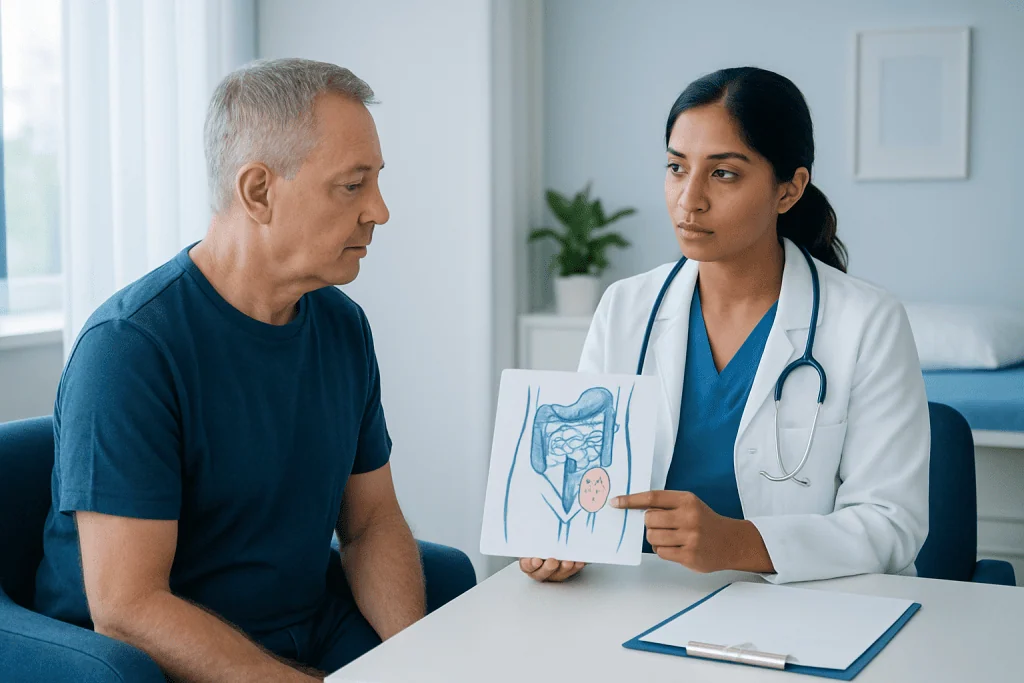
Before surgery, the care team reviews medical history, medicines, nutritional status and relevant imaging or blood tests. When possible, a stoma nurse marks the most suitable position on the abdomen while the person sits, stands and bends. Careful placement can improve comfort and make pouch care easier.
Loop colostomy surgery may be performed as part of another bowel operation or as a separate procedure. It can be done through open surgery or minimally invasive techniques when clinically suitable. The approach depends on the reason for surgery, prior operations, anatomy and whether urgent treatment is needed.
After surgery, the stoma is commonly swollen and may begin working within a few days. Hospital staff monitor pain, bowel activity, fluid balance and wound healing. A stoma nurse teaches practical skills such as emptying the pouch, measuring the stoma, cutting the skin barrier and recognizing when leakage or skin irritation needs attention.
Recovery times vary. Fatigue and changes in appetite are common early on, and activity is increased gradually according to the surgeon’s advice. Patients should ask their team about lifting restrictions, driving, return to work and follow-up appointments.
Daily Loop Colostomy Care
Colostomy care becomes more manageable with routine and practice. The pouch is generally emptied when it is about one-third to one-half full, which may help prevent pulling, leakage and odor. The pouching system is changed on a schedule that suits the individual product, skin condition and stoma shape.
The skin around the stoma should be cleaned gently with warm water and dried thoroughly before applying a new barrier. A correctly fitted opening is important: it should sit close to the stoma without cutting into it or leaving too much exposed skin. Persistent itching, burning, broken skin or frequent leakage should be assessed by a stoma nurse or clinician.
Most people do not require a highly restrictive diet after recovery. Reintroducing foods gradually and keeping a food-and-symptom record can identify personal triggers for gas, odor, loose stool or constipation. Regular fluids and balanced meals support recovery, while the surgical team may give individual dietary guidance after an obstruction or other bowel problem.
- Carry spare pouches, barriers and disposal supplies when away from home.
- Check the stoma and surrounding skin during each pouch change.
- Wear clothing that feels comfortable and does not tightly compress the stoma.
- Discuss belts, support garments or irrigation only with a qualified stoma professional.
Living With a Loop Colostomy
Having a stoma can bring practical and emotional adjustments. Concerns about body image, odor, intimacy, returning to work or leaving home are understandable. Modern pouch systems are designed to be discreet and odor-resistant when sealed correctly, and stoma nurses can offer tailored strategies for daily routines.
Once the surgical team confirms it is safe, many people can resume walking, travel, hobbies and sexual activity. Gradual exercise supports recovery, but heavy lifting should be avoided until cleared because abdominal surgery can increase the risk of a parastomal hernia. A support garment may be helpful for selected individuals, but should be chosen with clinical guidance.
Long journeys are possible with advance preparation, including extra supplies in hand luggage and awareness of where to obtain support. Emotional support from family, counseling services or ostomy peer groups can also help people adjust with confidence.
Possible Problems and Colostomy Reversal
Common early issues include temporary swelling, leakage, skin irritation, constipation, diarrhea or increased gas. Some people develop a bulge around the stoma (parastomal hernia), narrowing of the stoma, prolapse where bowel protrudes farther than expected, or retraction where the stoma sits below skin level. These concerns should be discussed with the surgical or stoma care team rather than managed alone.
If the loop colostomy was created as a temporary diversion, the team may assess whether reversal is safe after the underlying bowel has healed. This can involve clinical examination, blood tests, imaging or an endoscopic assessment, depending on the original operation. Timing differs widely and is based on recovery rather than a fixed schedule.
Reversal surgery reconnects the bowel and closes the stoma site. Bowel habits can take time to settle afterward, with possible urgency, frequency, loose stool or constipation during recovery. The surgeon can explain the expected benefits, limitations and risks for the individual situation.
For patients seeking coordinated evaluation, Acibadem International’s multidisciplinary specialists and JCI-accredited hospitals diagnose and treat bowel conditions for international patients, including surgical planning and stoma care support.
When to Seek Medical Care
Contact the surgical team or stoma nurse promptly for repeated leakage, worsening skin soreness, new bleeding from the skin around the stoma, a stoma that changes shape, or output that is persistently much looser or harder than usual. It is also important to seek advice if pouch care has become difficult or supplies no longer fit well.
Urgent medical assessment is needed for severe or increasing abdominal pain, repeated vomiting, fever, a swollen abdomen, or little to no stoma output together with cramping or nausea. These symptoms can indicate a blockage or other complication and should not be ignored.
A stoma that becomes dark red, purple, gray, black, unusually pale, cold, or severely painful needs urgent assessment. Small amounts of bleeding from the stoma surface can occur during cleaning because it has a rich blood supply, but ongoing, heavy or unexplained bleeding requires medical attention.
Frequently asked questions
Is a loop colostomy always temporary?
A loop colostomy is commonly created as a temporary diversion, especially when a lower section of bowel needs time to heal. However, reversal depends on the underlying disease, healing, bowel function and a person’s overall health. The surgical team can explain whether reversal is likely in an individual case.
What does a loop colostomy look like?
A loop colostomy usually appears as a moist pink to red stoma on the abdomen. It often has two openings, with the larger opening passing stool and the smaller one passing mucus. Mild swelling is expected soon after surgery and usually improves during healing.
Can a person eat normally with a loop colostomy?
Many people return to a varied, balanced diet after recovery. Foods are usually reintroduced gradually, and individual responses can differ. Adequate fluids and a food diary may help identify foods that cause gas, odor, loose output or constipation.
How often should a colostomy pouch be changed?
The appropriate schedule depends on the pouching system, skin condition, stoma shape and amount of output. Many people empty the pouch when it is one-third to one-half full and change the barrier according to advice from their stoma nurse. Frequent leakage or skin irritation may mean the fit needs adjustment.
Can a person shower or swim with a loop colostomy?
In most cases, showering and swimming are possible once the surgical team confirms that healing allows it. The pouch can usually be worn in water, and some people may prefer additional waterproof tape or an ostomy-specific cover. It is sensible to carry spare supplies after swimming or travel.
What mucus comes from the second opening of a loop colostomy?
The inactive lower section of the bowel continues to make mucus, even when stool is diverted. Mucus may pass through the smaller stoma opening or through the rectum, and this can be normal. New pain, fever, bleeding or foul-smelling discharge should be discussed with a clinician.
References
- American Society of Colon and Rectal Surgeons
- United Ostomy Associations of America
- NHS
- National Institute of Diabetes and Digestive and Kidney Diseases
- World Health Organization
This article is for general information only and is not a substitute for professional medical advice. Please consult a qualified doctor about your individual situation.
Persistent digestive symptoms? Get evaluated in Turkey
JCI-accredited · board-certified surgeons · reply within 24h

More from the Health Library


Related Specialists

Prof. Dr. Arzu Akçay
Pathology
Prof. Dr. Meltem Serin
Radiation Oncology
Dr. Emre Çengelli
Oral Dental and Maxillofacial Surgery
Prof. Dr. Hakan Ağır
Aesthetic Plastic & Reconstructive Surgery