Private mri scan Recovery: Week-by-Week Timeline

A standard MRI scan usually requires no physical recovery time, and normal work, driving, and exercise can often resume straight afterwards. People who receive sedation need an adult to take them home and should avoid driving, alcohol, machinery, and important decisions for at least 24 hours.
Key Takeaways
- A standard MRI scan usually requires no physical recovery time, and normal work, driving, and exercise can often resume straight afterwards.
- People who receive sedation need an adult to take them home and should avoid driving, alcohol, machinery, and important decisions for at least 24 hours.
- MRI contrast is usually well tolerated; drinking fluids unless advised otherwise may help the body eliminate it naturally.
- Temporary tiredness, anxiety, or stiffness from lying still can occur, but persistent or severe symptoms should be assessed promptly.
- The scan result is interpreted by a radiologist and sent to the referring clinician, who explains what it means in the context of symptoms and medical history.
Private MRI scan recovery is generally quick because MRI uses magnetic fields and radio waves rather than surgery, needles into tissue, or ionising radiation. Most people can return to normal activities immediately; recovery needs may differ if contrast medicine or sedation is used.
Private MRI Scan Recovery: What to Expect
Private MRI scan recovery is usually immediate. For a routine scan without sedation, a person can generally get dressed, leave the imaging department, eat and drink normally, return to work, and resume usual daily activities on the same day. MRI does not use ionising radiation and does not create a wound that needs to heal.
The main factors that can change aftercare are whether contrast medicine was injected and whether sedative medicine was used to help with severe claustrophobia, pain, or difficulty remaining still. A scan may also leave someone briefly tired or stiff simply from travelling, waiting, or lying in one position. These effects are usually short-lived.
This article focuses on recovery and returning to everyday routines. For information on preparation, scan types, and arranging imaging, see private MRI scan information.
How MRI Works and Who May Need Extra Planning
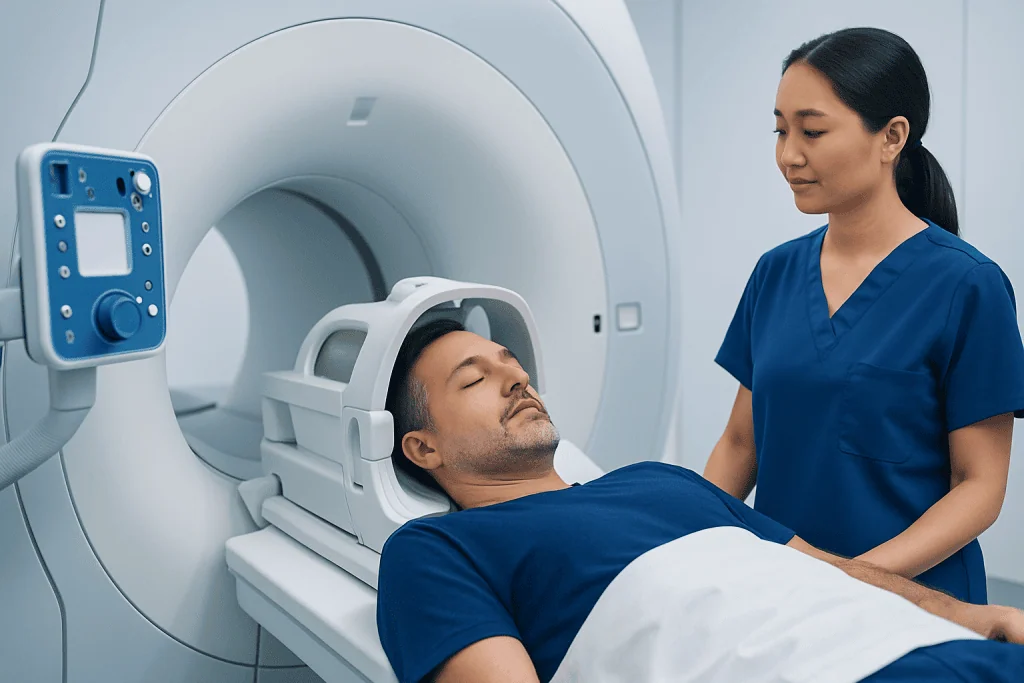
MRI, or magnetic resonance imaging, produces detailed pictures of organs, soft tissues, joints, blood vessels, and the brain or spine. The scanner uses a strong magnetic field and radio waves to create images. Unlike X-rays and CT scans, MRI does not use radiation.
A clinician may request MRI to investigate symptoms, assess an injury, monitor a known condition, or help plan treatment. The test is non-invasive, although some examinations involve a small injection of gadolinium-based contrast medicine to make certain tissues or blood vessels easier to see.
Before the appointment, the imaging team should know about implanted medical devices, previous operations, metal fragments, pregnancy, kidney problems, allergies or prior reactions to contrast, and anxiety in enclosed spaces. Many implants are MRI-compatible, but they must be checked carefully. People with significant kidney disease may need an individual assessment before receiving contrast.
Some people are offered adjustments rather than sedation, such as reassurance, ear protection, a call button, positioning supports, or scheduled breaks. Children and adults who cannot safely remain still may require a tailored sedation or anaesthesia plan, which changes the recovery arrangements.
What Happens During a Private MRI Scan

On arrival, the person is usually asked to complete a safety questionnaire and remove items that may contain metal, including jewellery, watches, hearing aids, and some clothing with metallic fastenings. Staff may provide a gown. The radiographer reviews the process and answers questions before the scan begins.
The person lies on a moving table, which slides into the scanner. A body part may be supported with cushions or placed within a special imaging coil. The machine makes loud tapping or knocking sounds, so earplugs or headphones are provided. It is important to lie still while images are taken, but the radiographer can communicate throughout the examination.
If contrast is needed, a small cannula is placed into a vein. A cool sensation at the injection site or a temporary unusual taste can occur, but serious reactions are uncommon. Scan length varies according to the body area and the images required.
After the images are complete, the table moves out and the radiographer removes any cannula. Unless sedative medicine has been used, there is typically no observation period. The person may leave once staff confirm that the examination is finished.
Recovery Timeline: Same Day to the Following Weeks
Immediately after the scan: Most people feel exactly as they did before the appointment. They can usually walk, eat, drink, use public transport, drive, work, and care for themselves as normal. Mild stiffness from remaining still or feeling mentally tired after an unfamiliar test can settle with rest and gentle movement.
First 24 hours: If contrast was used, usual hydration is sensible unless a clinician has advised fluid restriction for another health reason. Normal activity can generally continue. If sedation was used, the person should be collected by a responsible adult and avoid driving, cycling on roads, operating machinery, alcohol, cooking over open flames, signing important documents, or making major decisions for at least 24 hours.
Days 2 to 7: There is normally no ongoing recovery from MRI itself. Work and sport can continue at the person’s usual level if they feel well. Any limits on exercise are more likely to relate to the symptom or injury being investigated, rather than the scan. For example, painful joint or spine symptoms may still need medical guidance even though the imaging appointment is over.
Weeks 1 to 2: The next stage is usually receiving and discussing the report rather than physical healing. A radiologist reviews the images, and the referring clinician explains the findings alongside the person’s symptoms, examination, and other tests. Further appointments, treatment, or monitoring depend on the reason for the MRI and the result.
Benefits, Possible Risks, and Contrast Aftercare
MRI can provide detailed images without exposing the person to ionising radiation. It is particularly valuable for evaluating many soft-tissue structures, including the brain, spinal cord, muscles, ligaments, joints, and some internal organs. The results can help clinicians clarify a diagnosis or decide whether further assessment is needed.
MRI is considered very safe when established screening procedures are followed. The most common challenges are noise, the need to lie still, and discomfort or anxiety in the scanner. Some people may experience temporary claustrophobia, but staff can provide communication and practical support throughout the examination.
Contrast medicine can occasionally cause side effects such as nausea, headache, dizziness, itching, or a rash. Severe allergic-like reactions are rare but need urgent assessment. Gadolinium contrast is used cautiously in people with severe kidney impairment, and the imaging team considers whether contrast is necessary for each individual.
Very rarely, an MRI safety issue can arise if an unreported metal object or device is exposed to the magnetic field. Accurate screening before the scan is therefore essential. The person should tell the team about any new implant, injury involving metal, or possible pregnancy, even if it has been mentioned at an earlier appointment.
Returning to Work, Sport, and Everyday Activities
After an MRI without sedation, most people can return to work immediately, including office-based and physically active roles. There is no recovery restriction from the magnetic field itself. If an individual feels tense, tired, or uncomfortable after the appointment, a brief period of rest and gentle activity may be more comfortable.
Sport and exercise can usually resume on the same day after a routine MRI. However, a person should follow any activity advice already given for the condition being assessed. For instance, someone awaiting assessment of severe back pain, a suspected fracture, or a recent sports injury should not use a normal MRI result timeline as a reason to push through pain.
Driving is permitted after an MRI if no sedative medicine was given and the person feels well. Following sedation, driving should be avoided for at least 24 hours or longer if the treating team advises it. The same precaution applies to returning to safety-critical work.
A healthy routine of regular meals, fluids as appropriate, sleep, and gentle movement can support comfort after the appointment. No special detoxification diet, supplement, or treatment is needed after an MRI or standard MRI contrast injection.
When to Seek Medical Care
Medical advice should be sought urgently if symptoms of a serious allergic-like reaction develop after contrast, such as trouble breathing, swelling of the face, lips, tongue, or throat, widespread hives, fainting, or rapidly worsening illness. These symptoms are uncommon, but they should not be managed at home.
A person should contact the imaging department, referring clinician, or another qualified healthcare professional if they develop a persistent rash, worsening pain or swelling around the injection site, ongoing vomiting, marked dizziness, or any symptom that concerns them after the scan. Those who received sedation should seek advice if unusual drowsiness, confusion, or breathing difficulties persist beyond the expected recovery period.
It is also important to seek medical care for the original symptoms if they worsen, even while waiting for MRI results. New weakness, loss of bladder or bowel control, sudden severe headache, chest pain, or stroke-like symptoms require urgent medical assessment. Acibadem International’s multidisciplinary specialists and JCI-accredited hospitals diagnose and treat patients travelling internationally when further evaluation is needed.
Frequently asked questions
How long does private MRI scan recovery take?
For an MRI performed without sedation, recovery is usually immediate. Most people can return to normal daily activities, work, driving, and exercise on the same day. Sedation changes this timeline and commonly requires precautions for at least 24 hours.
Can a person go back to work after an MRI scan?
Yes, most people can return to work immediately after a standard MRI. There is no radiation exposure or surgical recovery period. If sedation was used, the person should take the rest of the day off and follow the care team’s instructions.
When can someone exercise after an MRI scan?
Normal exercise is usually safe immediately after an MRI without sedation. Any exercise restriction is generally related to the injury or symptoms being investigated, not the MRI itself. A person should stop activity and seek advice if exercise worsens pain or causes new symptoms.
Is it safe to drive after MRI contrast?
MRI contrast alone does not usually prevent driving, provided the person feels well. Sedative medication, however, can impair alertness and coordination, so driving should be avoided for at least 24 hours after sedation. The imaging team may give individual instructions based on the medicines used.
What should someone do after an MRI with contrast?
Most people can eat, drink, and continue normal activities. Drinking fluids as normally tolerated may be helpful unless there is a medical reason to restrict fluids. Any concerning symptoms, including a rash, breathing difficulty, or significant swelling, should be reported promptly.
When will MRI results be available?
A radiologist reviews the images and prepares a report for the referring clinician. The timing varies by service and by the urgency and complexity of the scan. The referring clinician is best placed to explain what the findings mean for the individual’s health and next steps.
References
- RadiologyInfo.org
- American College of Radiology
- National Health Service
- U.S. Food and Drug Administration
- European Society of Radiology
This article is for general information only and is not a substitute for professional medical advice. Please consult a qualified doctor about your individual situation.
Explore treatments in Turkey — costs, top hospitals & a free quote
JCI-accredited · board-certified surgeons · reply within 24h