Passy Muir Valve: An Evidence-Based Patient Guide

A Passy Muir valve is used only with a tracheostomy tube and requires a trained clinical assessment before use. The tracheostomy cuff must be completely deflated before valve placement; a speaking valve must never be used with an inflated cuff.
Key Takeaways
- A Passy Muir valve is used only with a tracheostomy tube and requires a trained clinical assessment before use.
- The tracheostomy cuff must be completely deflated before valve placement; a speaking valve must never be used with an inflated cuff.
- Exhaled air passes around the tracheostomy tube and through the vocal cords, allowing many patients to produce voice.
- Tolerance varies, so use commonly begins with monitored, short trials and progresses according to the care team’s plan.
- Breathing difficulty, persistent coughing, distress or voice changes during use require prompt valve removal and clinical review.
A Passy Muir valve is a type of one-way speaking valve used with a tracheostomy tube in appropriately selected patients. It redirects exhaled air through the upper airway, which can enable voice and may support swallowing, cough and communication when used under clinical guidance.
Overview: what is a Passy Muir valve?
A Passy Muir valve is a one-way, closed-position speaking valve fitted to the outside of a tracheostomy tube. It opens when a person breathes in through the tracheostomy tube, then closes during exhalation. This closure redirects exhaled air upward around the tube and through the voice box, nose and mouth, allowing many people to speak.
The valve is not suitable for every person with a tracheostomy. A respiratory therapist, speech-language pathologist, physician and nursing team may work together to determine whether it can be used safely. The decision depends on breathing status, airway anatomy, secretions, tube type and the person’s ability to exhale adequately through the upper airway.
Although it is commonly called a speaking valve, its potential effects may extend beyond voice. Restoring airflow through the upper airway may improve sensation in the throat and help support cough, secretion management, swallowing assessment and everyday communication. These possible benefits should be considered individually rather than assumed for every patient.
How the valve works in the airway
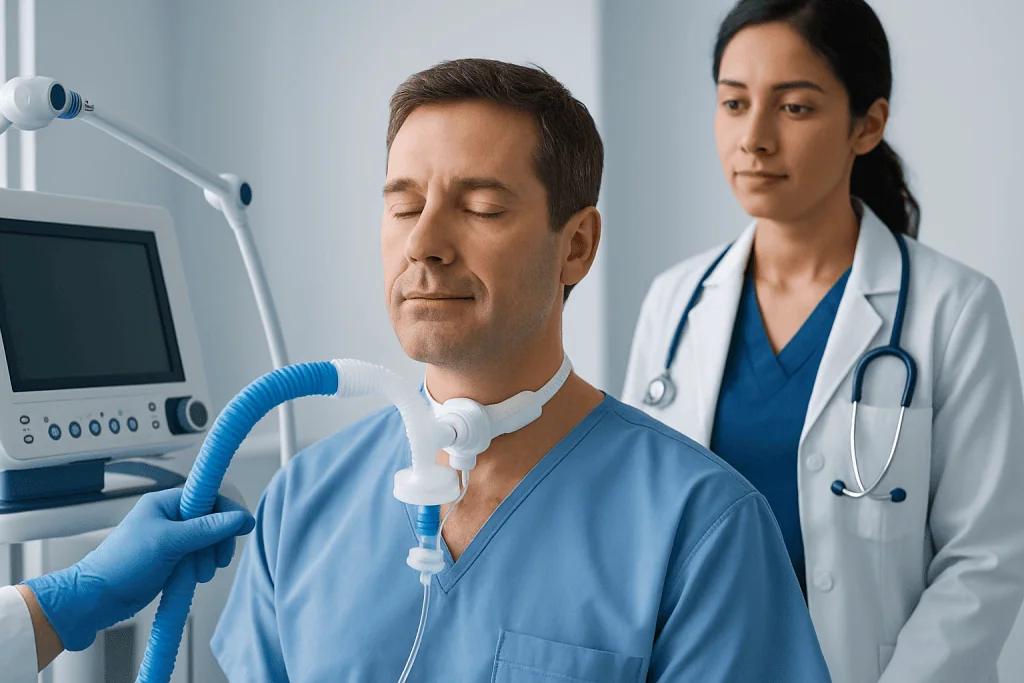
With an open tracheostomy tube and no valve in place, both inhaled and exhaled air generally move through the tube. Because exhaled air does not routinely pass through the vocal cords, the person cannot usually produce a normal voice. Airflow through the nose and mouth is also reduced, which can affect smell, taste and upper-airway sensation.
When a Passy Muir valve is in place, inhaled air enters through the valve and tracheostomy tube. During exhalation, the valve closes. Air is then directed around the outside of the tracheostomy tube, through the larynx and into the mouth and nose. If this pathway is sufficiently open, the vocal cords can vibrate and produce sound.
For this reason, the tracheostomy cuff must be fully deflated before the valve is attached. An inflated cuff blocks the route for exhaled air around the tube and can create a dangerous obstruction. A valve should also never be used while a person is asleep unless the responsible clinical team has specifically determined that this is appropriate.
Who may be a candidate for a Passy Muir valve?

Potential candidates include children and adults with a tracheostomy who are medically stable and can move enough exhaled air around the tube and through the upper airway. People may be considered during recovery from critical illness, neurological conditions, head and neck surgery, trauma or other situations requiring prolonged airway support. The underlying condition, respiratory needs and treatment goals all matter.
A formal passy muir valve assessment may include checking the tracheostomy tube and cuff, listening to breath sounds, reviewing oxygen and ventilator needs, assessing the amount and thickness of secretions, and observing the person’s comfort and work of breathing. Some patients need suctioning, humidification, tube adjustment or further airway evaluation before a trial is appropriate.
Use may be delayed or avoided when there is substantial upper-airway blockage, an inability to deflate the cuff safely, severe respiratory instability, uncontrolled secretions, marked air trapping or poor tolerance during testing. These issues do not necessarily mean a valve will never be possible, but they require individualized review. People with complex swallowing or voice concerns may also benefit from assessment by an ear, nose and throat specialist and a speech-language pathologist.
Tracheostomy care is part of a wider recovery plan. Depending on the reason for the tracheostomy, clinicians may also address related needs such as stroke recovery or traumatic brain injury rehabilitation.
Passy Muir valve policy and procedure: what happens during a trial?
Hospitals and rehabilitation programs use a passy muir valve policy and procedure to standardize safe practice. Local steps differ, but the process usually starts with confirmation of the medical order or care plan, review of the tracheostomy tube, and an assessment by appropriately trained clinicians. The patient and family should be told what the valve does, what sensations to expect and how to signal discomfort.
Before placement, the team commonly checks positioning, oxygen requirements, airway patency and secretion burden. If the tube has a cuff, it is completely deflated. Secretions may be cleared when needed. The clinician then attaches the valve and observes breathing closely, including respiratory effort, comfort, voice quality, cough and oxygenation when monitoring is indicated.
The first trial may be brief. If the person is comfortable and can exhale effectively, use may gradually increase according to the team’s plan. The valve is removed before suctioning through the tracheostomy tube and whenever breathing is not comfortable. It should not be modified, blocked, or used in a way that differs from the manufacturer’s instructions and the care team’s guidance.
For patients who need coordinated airway rehabilitation, tracheostomy care and follow-up can include input from respiratory, ENT, speech and swallowing specialists. Clear documentation helps every caregiver understand when and how the valve may be used.
Benefits, limitations and possible risks
The most immediate potential benefit is the ability to communicate using voice. Being able to speak can support participation in care, connection with family and emotional wellbeing. Redirected exhalation through the mouth and nose may also make cough feel more effective and may improve awareness of secretions in the throat for some people.
Research and clinical experience suggest that one-way speaking valves can support swallowing evaluation and management in selected patients, but they are not a treatment for swallowing problems by themselves. A valve does not eliminate aspiration risk. If there are concerns about food, drink or saliva entering the airway, a qualified swallowing assessment remains important.
Possible problems include coughing, a feeling of pressure, increased work of breathing, low oxygen levels, anxiety or inability to produce voice. These may occur if the upper airway is too narrow, the tube is relatively large, secretions are present, the cuff is not fully deflated or the patient is not ready for use. Rarely, unsafe application can cause serious breathing compromise, which is why assessment and supervision are essential.
A person should not push through discomfort. If breathing becomes difficult, the valve should be removed and the clinical team should evaluate the cause. Sometimes simple changes in positioning, secretion management or tracheostomy tube selection improve tolerance; in other cases, further airway investigation is needed.
Recovery timeline, daily use and patient education
There is no single recovery timeline for Passy Muir valve use. Some people can tolerate a supervised trial soon after their condition stabilizes, while others need days or weeks of respiratory recovery, secretion management or airway treatment first. The duration of use is increased only when the person remains comfortable and the care team considers it safe.
Passy Muir valve patient education should include practical safety points: the valve is for one person only, should be handled with clean hands, and must be used according to the specific product instructions. The patient and caregivers should understand cuff deflation requirements, when to remove the valve, how to obtain help and whether the valve can be used with oxygen or a ventilator setup. These details must be prescribed and checked by the treating team.
A passy muir valve patient handout may be useful for home transitions, particularly when it lists the patient’s tracheostomy tube type, cuff plan, approved wear schedule, cleaning instructions and emergency contacts. Some families search for a passy muir valve PDF online, but general documents cannot replace a personalized plan from the hospital team. Product-specific instructions should come from the manufacturer and the patient’s clinicians.
Speech-language therapy may help a person build confidence with voice, communication strategies and swallowing rehabilitation. If swallowing is affected, swallowing disorders treatment may include individualized assessment, therapy and recommendations about food and drink consistency when appropriate.
When to seek medical care
Urgent medical help is needed if a person with a tracheostomy has severe or worsening breathing difficulty, bluish lips or face, loss of consciousness, major bleeding, a dislodged tracheostomy tube, or signs that the airway is blocked. In these situations, follow the established tracheostomy emergency plan and contact local emergency services.
During valve use, remove the valve promptly if there is distress, persistent inability to exhale, marked noisy breathing, new chest tightness, worsening oxygen levels when monitored, or a sudden change in alertness. Do not replace the valve until a clinician has reviewed the situation. If the person cannot clear secretions or has repeated coughing or choking during meals, the care team should be contacted promptly.
Non-urgent review is also appropriate for reduced voice, increased secretions, skin irritation around the tracheostomy, recurrent respiratory infections, discomfort with cuff deflation or questions about the wear schedule. Acibadem International’s multidisciplinary specialists at JCI-accredited hospitals can assess tracheostomy, speech and swallowing needs for international patients as part of an individualized care plan.
Frequently asked questions
Can a person breathe with a Passy Muir valve on?
Yes, when the valve has been properly assessed and fitted, the person breathes in through the tracheostomy tube and valve. They breathe out around the tracheostomy tube through the upper airway. This requires an adequately open upper airway and a fully deflated cuff when a cuffed tube is used.
Can a Passy Muir valve be used with an inflated cuff?
No. A one-way speaking valve must not be used with an inflated tracheostomy cuff because exhaled air may not be able to escape through the upper airway. The cuff should only be deflated according to the treating team’s instructions, as some patients have clinical reasons for cuff inflation at certain times.
Does a Passy Muir valve help with swallowing?
It may support swallowing function in some appropriately selected patients by restoring exhaled airflow through the upper airway and improving sensation. However, it does not guarantee safe swallowing or prevent aspiration. A speech-language pathologist or other qualified clinician should assess swallowing when there are concerns.
How long can a Passy Muir valve be worn?
Wear time is individualized. It may begin with short, supervised periods and increase as the patient’s breathing, secretion management and comfort allow. The treating team should provide a clear schedule and advise when the valve should be removed.
Why does coughing happen when the valve is first placed?
Coughing can occur because air is again moving through the throat and upper airway, which may improve awareness of secretions. It can also signal secretions, incomplete cuff deflation, limited space around the tube or poor tolerance. Persistent coughing or any breathing difficulty should prompt valve removal and clinical review.
Can family members put on a Passy Muir valve at home?
Family members may be taught to help with valve use after the patient has undergone a professional assessment and they have received hands-on education. They should follow the personalized tracheostomy care plan exactly. If there is uncertainty about cuff status, airway safety or the patient’s tolerance, they should contact the clinical team before applying the valve.
References
- Passy-Muir, Inc.
- American Speech-Language-Hearing Association
- American Association for Respiratory Care
- National Tracheostomy Safety Project
- American Thoracic Society
This article is for general information only and is not a substitute for professional medical advice. Please consult a qualified doctor about your individual situation.
Explore treatments in Turkey — costs, top hospitals & a free quote
JCI-accredited · board-certified surgeons · reply within 24h