Hamstring Strain Treatment: How It Works, Results and What to Expect

Early treatment focuses on protecting the injured muscle while maintaining gentle, pain-limited movement. Progressive strengthening, particularly eccentric hamstring exercises, is central to a durable recovery.
Key Takeaways
- Early treatment focuses on protecting the injured muscle while maintaining gentle, pain-limited movement.
- Progressive strengthening, particularly eccentric hamstring exercises, is central to a durable recovery.
- A person should return to running or sport only when strength, flexibility and functional movement have recovered.
- A grade 2 hamstring strain is a partial muscle tear and commonly needs several weeks of structured rehabilitation.
- Sudden severe pain, extensive bruising, weakness or inability to walk normally should be medically assessed.
Hamstring strain treatment usually starts with relative rest and symptom control, then progresses to carefully planned mobility, strengthening and sport-specific rehabilitation. Most people recover without surgery, but the safest timeline depends on the strain severity, tendon involvement, activity demands and response to rehab.
Hamstring Strain Treatment: How It Works
Hamstring strain treatment is a staged rehabilitation plan used for overstretching or tearing of one or more muscles at the back of the thigh. It aims to settle pain and swelling, protect healing tissue, restore normal movement, rebuild strength and prepare the person for daily activities, work, running or sport. Treatment is adjusted to the injury grade and the person’s goals rather than following one fixed timetable.
In the first days, relative rest from painful activities is usually more helpful than complete inactivity. A clinician may recommend ice for short periods to ease discomfort, compression if it is comfortable, elevation when resting and simple pain relief when appropriate for the individual. Early gentle movement can help prevent stiffness, but forceful stretching, sprinting and exercises that reproduce sharp pain should be avoided.
As symptoms improve, rehabilitation shifts toward progressively loading the hamstring and the surrounding hip, pelvis and trunk muscles. Physiotherapy may include range-of-motion work, gradual strengthening, balance and movement retraining, followed by running drills or job-specific tasks. The goal is not only to feel pain-free at rest, but also to tolerate the movements that caused or may challenge the muscle.
Most hamstring strains do not require an operation. Surgery may be considered for an uncommon complete tendon avulsion, particularly when the tendon has pulled away from the bone, or for selected severe tears. A sports medicine, orthopedics or rehabilitation assessment can clarify the most suitable plan.
Assessment, Candidacy and Diagnosis
A rehabilitation-based approach is appropriate for most people with a suspected hamstring strain, including recreational exercisers and athletes. It is especially useful when pain began suddenly during sprinting, kicking, lunging or a slip, and there is tenderness or tightness at the back of the thigh. Treatment intensity should be tailored for older adults, people returning to physically demanding work and those with a previous hamstring injury.
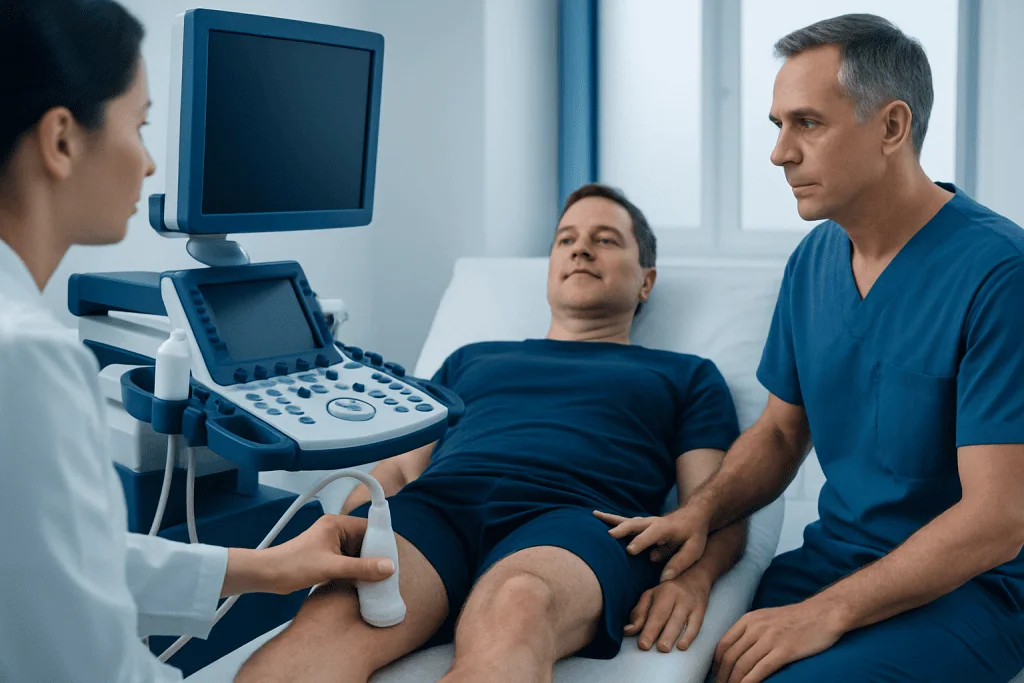
A clinician usually diagnoses a hamstring strain through the history and physical examination. They assess where pain is located, bruising, swelling, walking pattern, flexibility, strength and pain during resisted knee bending or hip extension. They also consider other causes of posterior thigh pain, such as referred pain from the lower back, hip conditions or a tendon injury near the buttock.
Imaging is not needed for every strain. Ultrasound or magnetic resonance imaging (MRI) may be considered when the injury appears severe, there is a possible tendon avulsion, the diagnosis is uncertain, recovery is slower than expected or imaging will influence a return-to-sport decision. X-rays can help identify a bone avulsion in younger people or after certain traumatic injuries.
People with recurrent symptoms may benefit from evaluation of movement patterns, training load, flexibility, muscle strength and contributing conditions. Related concerns involving the hip, knee or spine should be addressed rather than treating the hamstring in isolation.
What Happens During Hamstring Rehabilitation?

Hamstring rehabilitation is usually delivered through home exercises, often guided by a physiotherapist or sports medicine clinician. The exact sequence depends on pain, walking ability, strength and the type of tear. Exercises should create manageable effort, not a sudden increase in pain, limp or swelling afterward.
Early phase: The person protects the injured area and maintains comfortable movement. This may include gentle knee and hip motion, light isometric muscle contractions and walking within a tolerable range. If walking causes marked limping, reducing distance, pace or weight bearing for a short time may be necessary; crutches are occasionally used for more painful injuries.
Strength and control phase: Once daily movement is easier, the program commonly adds progressive hamstring, gluteal and core strengthening. Exercises may advance from bridges and controlled knee-flexion work to lengthening, or eccentric, exercises. Eccentric training trains the muscle while it lengthens and is particularly relevant because hamstring strains often occur at longer muscle lengths during fast movement.
Function and return-to-activity phase: The final stage includes faster walking, jogging, acceleration, deceleration, cutting, jumping or sport-specific drills as appropriate. A clinician may compare both legs and assess confidence, movement quality and fatigue tolerance. For complex injuries, coordinated care involving orthopedics, physiotherapy and sports medicine can support safe decisions about activity progression.
What Are the Stages of Hamstring Rehab?
The stages of hamstring rehab are best understood as milestones rather than calendar dates. Healing rates vary, so advancement is based on reduced pain, restored movement, improved strength and the ability to complete the current level of activity without a significant symptom flare afterward.
- Protect and settle symptoms: Reduce activities that strain the hamstring while keeping gentle, pain-limited movement.
- Restore motion and normal walking: Gradually regain comfortable hip and knee movement and walk without a meaningful limp.
- Build strength and capacity: Progress hamstring, hip and trunk exercises, including controlled lengthening work when tolerated.
- Rebuild speed and function: Add running, agility, lifting or work-specific tasks in a planned sequence.
- Return and maintain: Resume full activity after meeting functional goals, while continuing strength work and managing training load.
Skipping the strengthening and functional stages can leave the hamstring underprepared even if pain has settled. This is one reason reinjury can occur when a person returns abruptly to sprinting or high-demand activity. A gradual increase in volume and speed is generally safer than testing maximum effort too early.
A home program may be enough for a mild strain, provided symptoms steadily improve. Supervised rehabilitation is particularly helpful for athletes, recurrent strains, physically demanding occupations, a suspected grade 2 or 3 injury, or uncertainty about when to restart running and sport.
What Is a Grade 2 Hamstring Strain?
A grade 2 hamstring strain is a partial tear of muscle fibers. It is more significant than a mild grade 1 strain, in which the muscle is stretched or has a small number of damaged fibers, but it is not a complete rupture. Grade 2 injuries often cause sudden sharp pain, tenderness, reduced strength, difficulty walking normally and sometimes swelling or bruising.
Recovery from a grade 2 strain generally requires a structured progression rather than a few days of rest. Pain may improve before muscle strength and tolerance for fast movement have fully returned. Rehabilitation therefore focuses on restoring flexibility, strength at longer muscle lengths, pelvic control and confidence with running or other demanding activities.
Grading provides a useful clinical description, but it does not predict recovery perfectly. The location of the injury, extent of tendon involvement, prior injury history, age, overall health and activity requirements also matter. A clinician may use imaging in selected cases when it will help assess a more severe tear or guide management.
A sudden pop, rapidly developing bruising, a visible change in the back of the thigh or weakness that makes walking difficult may indicate a more extensive injury. These symptoms warrant timely medical assessment.
How Long Does It Take to Fully Recover From a Hamstring Strain?
Full recovery from a hamstring strain can range from days to several months. Mild grade 1 strains may improve enough for everyday activity within one to three weeks, while many grade 2 strains take several weeks or longer. Severe tears, tendon injuries and injuries requiring surgery can need months of rehabilitation. These are general ranges, not a substitute for an individual assessment.
“Fully recovered” means more than having no pain while sitting or walking. Before returning to sprinting, competitive sport or heavy physical work, the person should have near-normal movement, strength and control, and be able to complete progressively demanding tasks without pain, apprehension or a next-day symptom increase.
Trying to meet a fixed deadline can increase reinjury risk. A measured return is especially important after a previous hamstring injury, as prior injury is a recognized risk factor for another strain. Continuing a maintenance strengthening program after return to activity may help support long-term resilience.
If symptoms are not improving as expected, worsen during rehabilitation or repeatedly return with activity, the diagnosis and plan should be reviewed. Persistent posterior thigh pain may have a cause other than a straightforward muscle strain.
Is It Good to Walk on a Pulled Hamstring?
Gentle walking is often appropriate for a pulled hamstring if it can be done without sharp pain or a pronounced limp. In the early stage, short, comfortable walks may help maintain mobility and circulation. However, walking should not be used to push through pain, and hills, fast pace and long distances may aggravate the injury before it has settled.
If walking causes substantial pain, limping or worsening symptoms afterward, the person should reduce the distance and seek clinical advice. More severe strains may temporarily require crutches or other support to avoid overloading the injured tissue. Return to normal walking should be gradual.
A useful guide is symptom response. Mild discomfort that settles quickly may be acceptable during some rehabilitation exercises, but sharp pain, increasing pain, new bruising or loss of function suggests that the activity is too demanding. A physiotherapist can provide individualized guidance on walking, stretching and exercise progression.
Walking alone does not restore the strength needed for running or sport. Once comfortable walking has returned, progressive strengthening and functional training remain important parts of hamstring strain treatment.
Benefits, Risks and When to Seek Medical Care
The main benefits of structured hamstring strain treatment are pain reduction, recovery of normal mobility, restoration of muscle capacity and a more confident return to meaningful activity. Gradual loading is designed to help healing tissue adapt without unnecessarily prolonged rest. The program can also identify training, strength or movement factors that may contribute to repeated injury.
The main risk is doing too much too soon, particularly with aggressive stretching, sprinting or heavy loading. This can prolong symptoms or contribute to reinjury. Conversely, prolonged inactivity may lead to stiffness, weakness and delayed return to function. A paced plan balances protection with progressive activity.
When to seek medical care: A person should arrange prompt assessment after a severe injury, a popping sensation, inability to walk normally, marked weakness, extensive bruising or swelling, numbness, or pain near the buttock after a forceful movement. Medical review is also advisable if pain does not steadily improve, symptoms recur, or there is concern about returning to sport or strenuous work.
Acibadem International’s multidisciplinary specialists and JCI-accredited hospitals assess and treat musculoskeletal injuries for international patients, including coordinated orthopedic and rehabilitation care when needed. A qualified clinician can determine whether a suspected hamstring strain requires imaging, supervised rehabilitation or specialist referral.
Frequently asked questions
What is the best treatment for a hamstring strain?
The best treatment depends on the severity and location of the injury, but most strains improve with relative rest followed by gradual mobility, strengthening and functional rehabilitation. Early aggressive stretching or a rapid return to sprinting can delay recovery. A physiotherapist or clinician can tailor the progression to the person’s symptoms and activity goals.
Should a hamstring strain be massaged?
Massage may feel soothing for some people after the acute phase, but it does not replace progressive rehabilitation. Deep pressure directly over a fresh tear or significant bruising may be uncomfortable and is best avoided until a clinician advises it is appropriate. Gentle soft-tissue work may be included later as part of a broader treatment plan.
Should heat or ice be used for a pulled hamstring?
Ice can be used briefly in the early phase for comfort, especially if there is pain or swelling. Heat may help some people feel less stiff later in recovery, but it should not be used to push through pain or permit overly demanding exercise. Neither heat nor ice repairs the tear; gradual rehabilitation is the key treatment.
Can a hamstring strain heal without physiotherapy?
A mild strain may recover with a carefully followed home program and sensible activity modification. However, physiotherapy can be valuable for grade 2 injuries, recurrent strains, athletes and anyone unsure how to progress safely. Guidance can help ensure strength and function are restored before return to demanding activity.
When can a person run after a hamstring strain?
Running should begin only after comfortable walking and basic strength exercises are possible without meaningful pain or limping. It usually starts with an easy, controlled progression rather than fast running. Higher-speed work should be added only when earlier stages are tolerated and functional strength has improved.
Can a hamstring strain become chronic?
Symptoms can persist or recur if the injury is not fully rehabilitated, if activity is increased too quickly or if another condition is causing posterior thigh pain. Ongoing pain, repeated strains or difficulty returning to usual activity should be assessed by a healthcare professional. Reviewing the diagnosis and rehabilitation plan can identify factors that need attention.
References
- American Academy of Orthopaedic Surgeons
- American College of Sports Medicine
- National Institute of Arthritis and Musculoskeletal and Skin Diseases
- British Journal of Sports Medicine
- Mayo Clinic
This article is for general information only and is not a substitute for professional medical advice. Please consult a qualified doctor about your individual situation.
Joint and spine care in Turkey — expert assessment & treatment
JCI-accredited · board-certified surgeons · reply within 24h
Add us as a Preferred Source to see more of our trusted health content across Google Search, AI Overviews and Discover.