Chin Up vs Pull Up: Key Differences and How Doctors Tell Them Apart
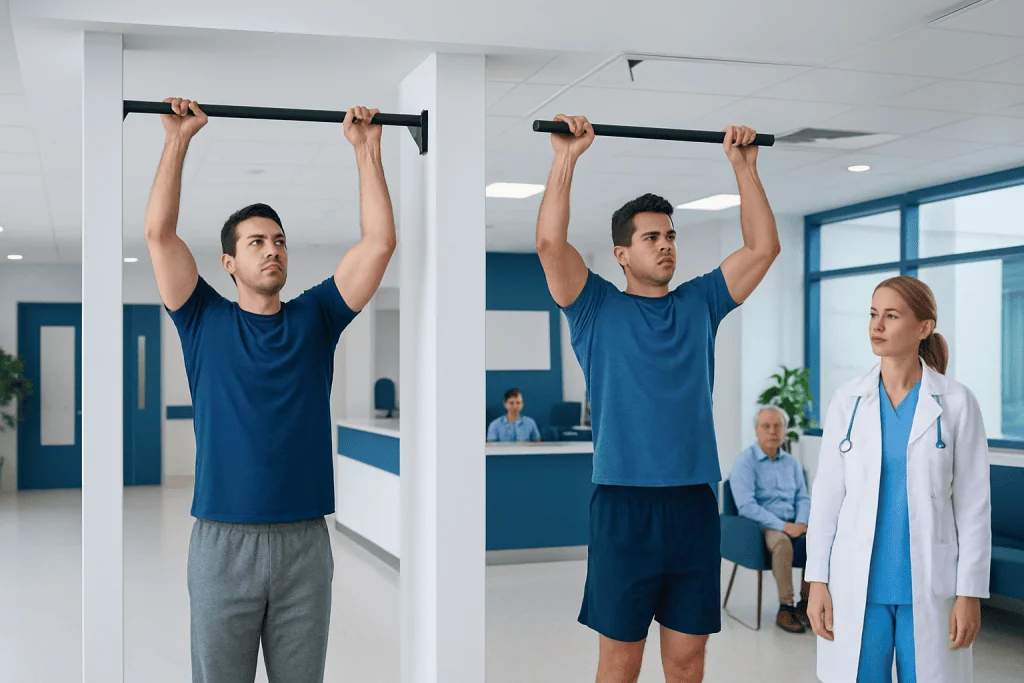
A chin-up usually uses an underhand grip and often places more emphasis on the biceps and easier elbow flexion. A pull-up usually uses an overhand grip and often demands more from the upper back, shoulder stabilizers, and grip.
Key Takeaways
- A chin-up usually uses an underhand grip and often places more emphasis on the biceps and easier elbow flexion.
- A pull-up usually uses an overhand grip and often demands more from the upper back, shoulder stabilizers, and grip.
- Doctors tell them apart by asking about grip, observing shoulder-blade movement, and checking where pain appears during the exercise.
- Pain with either exercise can come from technique, overuse, poor mobility, tendon irritation, or shoulder impingement rather than the movement name alone.
- Management depends on the problem pattern and may include rest, load modification, physical therapy, and evaluation for persistent weakness, numbness, or joint instability.
Medically reviewed by the Acıbadem International Medical Board — July 24, 2026
Chin-ups and pull-ups are both bodyweight pulling exercises, but they are not the same movement. The main difference is hand position: chin-ups use a supinated, underhand grip, while pull-ups use a pronated, overhand grip, which changes which muscles are emphasized and how the joints are loaded.
At a glance: chin-up vs pull-up
In simple terms, a chin-up is usually performed with the palms facing toward the body or toward each other, while a pull-up is usually performed with the palms facing away. That grip difference changes arm rotation, shoulder position, and how much help comes from the biceps, which is why many people find chin-ups easier than pull-ups.
From a medical and movement perspective, the names matter less than the mechanics. A clinician focuses on grip, range of motion, control of the shoulder blades, and where symptoms occur. Two people may both say they have pain with “pull-ups,” but one may actually be doing chin-ups, and the likely source of pain can differ.
The table below gives a side-by-side view of the main differences.
- Grip: Chin-up = underhand/supinated most commonly; Pull-up = overhand/pronated most commonly
- Typical difficulty: Chin-up often feels easier; Pull-up often feels harder
- Muscle emphasis: Chin-up often uses more biceps assistance; Pull-up often emphasizes upper back and shoulder stabilizers more
- Joint position: Chin-up places the forearm and shoulder in a different rotation pattern than a pull-up
- Common symptom locations: Chin-up may provoke front-of-elbow or biceps tendon discomfort; Pull-up may more often aggravate the shoulder, upper back, or outer elbow depending on form
- Clinical question: Doctors ask not only “which exercise?” but also “which grip, how wide, how heavy, and exactly where does it hurt?”
How a clinician tells them apart

Doctors, sports medicine specialists, and physiotherapists do not rely only on the exercise name. They begin by asking the person to describe or demonstrate the movement. Useful details include whether the palms face in or out, how wide the hands are placed, whether the chin must clear the bar, whether kipping or strict form is used, and whether symptoms start at the bottom, middle, or top of the motion.
Next, the clinician observes how the shoulder blades move. A healthy pulling pattern usually includes controlled scapular depression and retraction, without excessive shrugging, winging, or twisting. If the shoulders rise toward the ears, the elbows flare, or the neck strains, the exercise may overload tissues in a way that has less to do with “chin-up vs pull-up” and more to do with mechanics.
The physical examination then focuses on symptom location and provocation. Front-of-shoulder pain may suggest biceps tendon irritation or shoulder impingement syndrome, while pain over the outer elbow can reflect tendon overload. Tingling, numbness, or weakness raises different concerns, including nerve irritation. By combining movement history with examination, a clinician can usually determine whether the issue is related to grip choice, training volume, technique, or an underlying shoulder or elbow condition.
What muscles and joints each exercise challenges
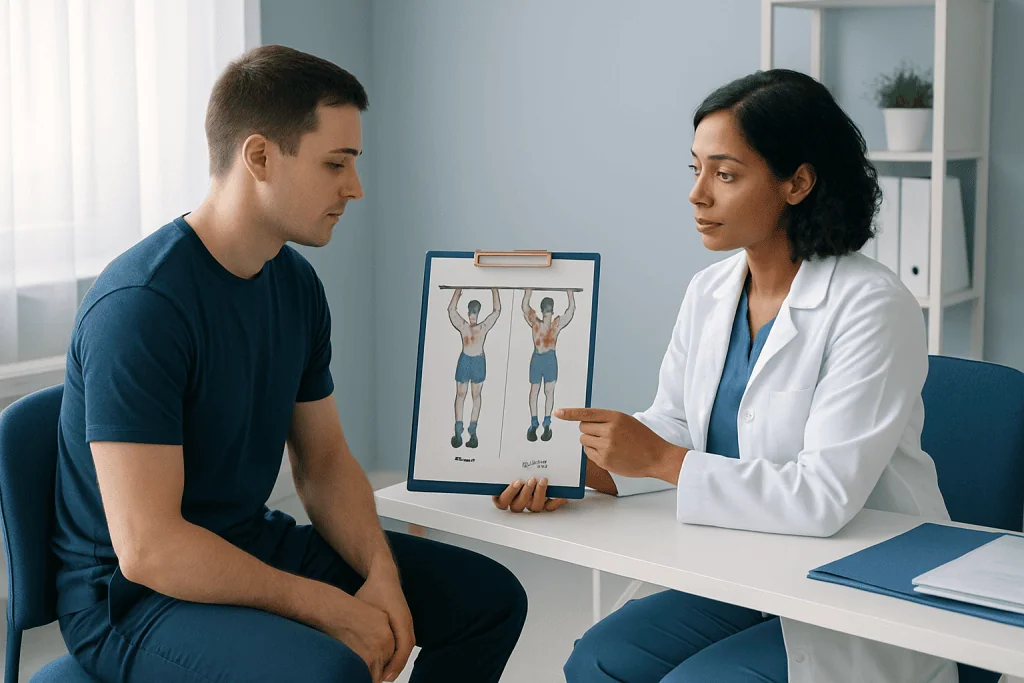
Both exercises train the latissimus dorsi, scapular stabilizers, forearms, and upper arms, but not in exactly the same way. Chin-ups generally allow the biceps to contribute more because the underhand grip places the forearm in supination and often makes elbow flexion feel stronger and more efficient. Pull-ups, especially with a wider overhand grip, often feel more demanding through the lats, lower trapezius, rhomboids, and rotator cuff support system.
The shoulder joint also experiences different rotational demands. In some people, the overhand pull-up position is well tolerated and stable. In others, especially those with limited shoulder mobility, poor scapular control, or a history of overhead pain, it may narrow the comfortable space for the tendons at the top of the shoulder and lead to irritation. A very wide grip can increase stress without adding meaningful benefit for many exercisers.
The elbow and wrist can also react differently. Chin-ups may aggravate the biceps tendon or the inner elbow in people who do a high volume of repetitions or train close to failure. Pull-ups may challenge grip and forearm extensors more strongly, which can contribute to lateral elbow discomfort. These patterns are not rules, but they help explain why two similar-looking exercises can cause different symptoms.
When symptoms persist, clinicians may assess for nearby problems such as rotator cuff problems or overuse around the elbow and shoulder complex. The goal is to identify which tissue is irritated and which movement variables need to change.
Common problems linked to chin-ups and pull-ups
Most discomfort related to these exercises is caused by overuse, rapid increases in training load, poor recovery, or technique errors rather than serious injury. Common examples include tendon irritation around the biceps, rotator cuff, or elbow; muscle strain in the upper back or arm; and shoulder impingement symptoms with overhead pulling. People who return to training after a break are especially vulnerable if they resume high volume too quickly.
Certain technical patterns increase stress. These include swinging or kipping without adequate control, using an excessively wide grip, repeatedly training through pain, dropping abruptly from the top position, and starting from a dead hang without sufficient shoulder stability. Limited thoracic mobility and weak scapular control can also shift force toward smaller tissues that fatigue more quickly.
Less commonly, a more significant problem may be present, such as a partial tendon tear, labral irritation, nerve entrapment, or joint instability. Symptoms that are more concerning include sudden sharp pain with a popping sensation, visible deformity, persistent night pain, major loss of strength, or symptoms that spread below the elbow with numbness or burning. These findings deserve timely medical evaluation.
What to do for each case
If chin-ups feel uncomfortable but pull-ups do not, the issue may be related to the underhand position, the biceps tendon, or the inner elbow. A clinician may suggest reducing volume, shortening the range temporarily, using neutral-grip handles if available, and rebuilding strength gradually with rows, assisted pulls, and controlled eccentric work. If the front of the shoulder is irritated, modifying overhead pulling while the tissue settles may help.
If pull-ups cause pain but chin-ups are tolerated, the overhand grip, shoulder rotation, or scapular control may be the key factor. Management often includes technique review, avoiding very wide grips, improving thoracic and shoulder mobility, and strengthening the rotator cuff and lower trapezius. For persistent symptoms, structured physical therapy and rehabilitation can help restore mechanics and guide a safe return to training.
If both exercises cause discomfort, the problem is more likely to involve overall load, poor pulling mechanics, an underlying shoulder or elbow condition, or training through fatigue. In this situation, clinicians often recommend a temporary reduction in aggravating movements, evaluation of the full kinetic chain, and a gradual return plan rather than pushing through pain. When there is concern for more significant tissue damage, further assessment may include orthopedic rehabilitation and, in selected cases, imaging.
Self-care should stay general and safe: warm up well, progress slowly, prioritize controlled repetitions, and stop if pain sharpens or technique breaks down. Persistent or worsening symptoms should be reviewed by a qualified clinician rather than self-diagnosed from exercise labels alone.
How doctors evaluate pain during these exercises
The diagnosis starts with a detailed history. A doctor asks when the symptoms began, whether they followed a sudden event or gradual overload, what type of grip was used, how many sets and repetitions were done, and whether there is any neck pain, numbness, or hand weakness. Previous shoulder dislocation, tendon injury, or surgery can also change the likely explanation.
The physical exam usually includes inspection, range-of-motion testing, strength testing, and specific maneuvers for the shoulder, elbow, and sometimes the neck. Doctors may look for pain with resisted elbow flexion, shoulder abduction, external rotation, or overhead motion. They also assess tenderness over the biceps tendon, rotator cuff, acromion, and elbow tendons to narrow the diagnosis.
Imaging is not always needed. X-rays may help if there was trauma or concern about bone and joint alignment, while ultrasound or MRI may be considered if there is persistent weakness, suspected tendon tearing, recurrent instability, or pain that does not improve with conservative care. In some cases, MRI helps clarify whether the problem is tendon irritation, a tear, or another cause of persistent pain.
When to seek medical care
Medical advice is appropriate if pain lasts more than a few days despite rest and load reduction, returns every time the exercise is attempted, or interferes with daily activities such as reaching, dressing, or sleeping. A clinician should also review symptoms if there is swelling, reduced range of motion, or a noticeable drop in strength on one side.
Urgent evaluation is important after a sudden injury with a pop, visible deformity, inability to lift the arm, severe weakness, or significant numbness and tingling. These features can suggest a tear, dislocation, or nerve-related problem that should not be ignored.
For international patients who need assessment or rehabilitation, Acibadem International’s multidisciplinary specialists in JCI-accredited hospitals diagnose and treat exercise-related shoulder and elbow conditions, including evaluation with imaging and individualized recovery plans when appropriate.
Frequently asked questions
Which is easier, a chin-up or a pull-up?
Many people find chin-ups easier because the underhand grip often allows the biceps to assist more. However, the easier exercise can vary depending on shoulder mobility, training experience, grip strength, and body proportions.
Do chin-ups and pull-ups work completely different muscles?
No. Both exercises train many of the same pulling muscles, including the lats, upper back, forearms, and arms. The main difference is emphasis: chin-ups often involve more biceps contribution, while pull-ups may place relatively more demand on the upper back and shoulder stabilizers.
Why does the front of the shoulder hurt during chin-ups?
Front-of-shoulder pain may happen when the biceps tendon or nearby shoulder tissues become irritated. This can be related to overuse, limited mobility, poor scapular control, or continuing to train through pain. A clinician can help determine whether the problem is tendon irritation, impingement, or another shoulder issue.
Can pull-ups cause elbow pain?
Yes. Pull-ups can stress the forearm and elbow tendons, especially if training volume increases quickly or grip mechanics are poor. Pain on the outer or inner elbow may reflect tendon overload and should be assessed if it keeps returning.
Should a person stop training if chin-ups or pull-ups hurt?
They do not always need to stop all exercise, but they should usually stop or modify the painful movement until the cause is clearer. Continuing through pain can prolong recovery. Lower-load alternatives and guided rehabilitation are often safer while symptoms settle.
When is imaging needed for pain with pulling exercises?
Imaging is not necessary for every case of exercise-related pain. It is more likely to be helpful when there is trauma, major weakness, suspected tendon tear, instability, or pain that does not improve with conservative care.
References
- American Academy of Orthopaedic Surgeons
- National Institute of Arthritis and Musculoskeletal and Skin Diseases
- American College of Sports Medicine
- American Academy of Family Physicians
- National Library of Medicine
This article is for general information only and is not a substitute for professional medical advice. Please consult a qualified doctor about your individual situation.
Explore treatments in Turkey — costs, top hospitals & a free quote
JCI-accredited · board-certified surgeons · reply within 24h