Forehead Acne Cause: What Patients Need to Know

Forehead acne often develops when oil, dead skin cells, and bacteria block pores. Hair products, hats, helmets, bangs, and sweating can worsen forehead breakouts.
Key Takeaways
- Forehead acne often develops when oil, dead skin cells, and bacteria block pores.
- Hair products, hats, helmets, bangs, and sweating can worsen forehead breakouts.
- Hormones, stress, sleep habits, and some medicines may also contribute.
- Gentle cleansing and non-comedogenic skin and hair products can help prevent flares.
- Persistent, painful, or scarring acne should be assessed by a doctor or dermatologist.
Forehead acne cause is most often linked to excess oil, clogged pores, sweat, friction, hair products, and hormonal shifts rather than one single problem. Understanding the pattern of breakouts can help patients choose practical skin care steps and know when medical treatment may be useful.
Overview: what forehead acne cause usually means
The most common forehead acne cause is a combination of excess sebum production, clogged pores, and inflammation. On the forehead, breakouts are also frequently influenced by sweat, friction from headwear, and hair care products that come into contact with the skin. In many people, it is not one single cause but several small triggers acting together.
The forehead is part of the face’s so-called oilier zone, where sebaceous glands can be more active. When oil mixes with dead skin cells, pores may become blocked. This can lead to whiteheads, blackheads, red bumps, or inflamed pimples. Normal skin bacteria can contribute to this process and make lesions more noticeable.
Forehead acne can affect teenagers and adults. In adolescents, hormonal changes often play a major role. In adults, patterns may be more complex and can involve cosmetics, sunscreen, styling products, stress, or skin irritation. A careful review of daily routines often helps explain why the forehead is the main area involved.
How forehead breakouts can look and feel
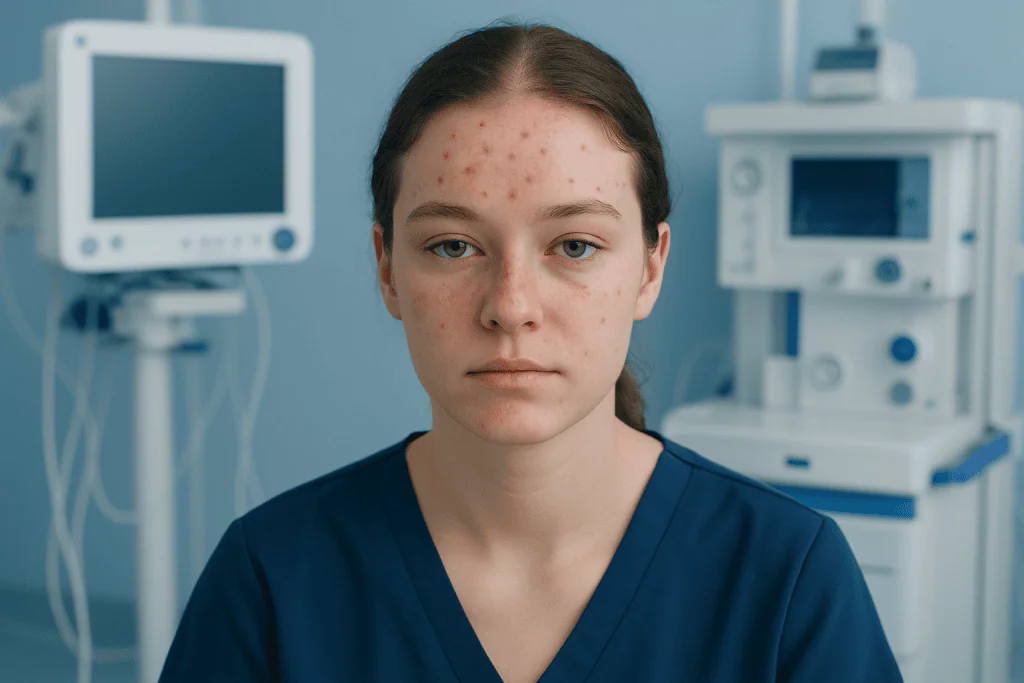
Forehead acne does not always appear the same in every patient. Some people mainly notice tiny rough bumps or skin-colored comedones, while others develop larger inflamed pimples. The appearance can offer clues about what may be contributing and how treatment should be approached.
Common types of forehead breakouts include:
- Whiteheads: closed clogged pores that look like small pale bumps
- Blackheads: open clogged pores with a dark surface
- Papules and pustules: red or tender bumps, sometimes with visible pus
- Deeper nodules or cyst-like lesions: more painful spots that may leave marks or scars
Some people also have acne-like bumps that are actually irritation or a different skin condition. For example, clusters of very similar itchy bumps after sweating may suggest folliculitis rather than typical acne. If breakouts are persistent, widespread, or difficult to identify, professional evaluation can help distinguish acne from other skin problems.
Common causes and triggers on the forehead

A key forehead acne cause is increased oil production. Sebaceous glands naturally make oil to protect the skin, but when oil production rises, pores are more likely to become blocked. Hormonal fluctuations around puberty, menstrual cycles, pregnancy, or certain endocrine conditions can influence this process.
Hair and scalp products are another common but often overlooked trigger. Pomades, oils, leave-in conditioners, waxes, and heavy styling creams can transfer to the forehead and clog pores, especially near the hairline. This pattern is sometimes described as pomade acne. Shampoo residue, infrequent washing after exercise, or long bangs resting on the skin may have a similar effect.
Sweat and friction can also worsen forehead breakouts. Tight hats, helmets, headbands, sports gear, and frequent face touching may irritate follicles and trap heat and moisture. This can contribute to acne mechanica, in which repetitive rubbing and occlusion aggravate the skin.
Other possible contributors include emotional stress, lack of sleep, high-humidity environments, and some medications such as corticosteroids or certain hormonal therapies. Diet does not cause acne in everyone, but in some patients, high-glycemic foods or dairy may be associated with flares. Because triggers vary, it is often helpful to look for patterns over several weeks rather than assuming a single universal cause.
Skin care, hair care, and lifestyle factors that matter
Many forehead breakouts are shaped by daily habits. Over-cleansing, harsh scrubs, and frequent picking can damage the skin barrier and worsen inflammation. On the other hand, not removing sweat, makeup, or sunscreen at the end of the day may allow pores to stay congested. A balanced routine is usually more effective than aggressive washing.
Product choice matters. Non-comedogenic moisturizers, sunscreen, and makeup are less likely to block pores. Hair sprays, gels, and oils should be kept away from the forehead when possible. Patients with frequent hairline acne may benefit from changing styling products, washing after exercise, and keeping hair off the face, especially overnight.
Lifestyle factors can also influence acne severity. Stress may increase hormonal signals that affect oil production and inflammation. Poor sleep can make breakouts feel harder to control. While no single food plan works for everyone, some patients improve by noticing whether certain foods seem linked to flares and discussing this with a clinician rather than following restrictive diets on their own.
How doctors identify the cause
Doctors diagnose forehead acne mainly by examining the skin and reviewing the patient’s history. The location of lesions, the types of bumps present, and the timing of flares can all offer useful clues. A clinician may ask about menstrual cycles, stress, sports equipment, work conditions, cosmetics, and hair products because these details often explain why the forehead is affected.
In many cases, no special tests are needed. However, if acne begins suddenly, is unusually severe, or is associated with symptoms such as irregular periods, excess facial hair, or unexplained weight changes, a doctor may consider whether a hormonal issue is contributing. This may lead to further evaluation by a dermatologist or another specialist.
It is also important to distinguish acne from conditions that can mimic it, such as folliculitis, rosacea, contact dermatitis, or irritation from skin products. If there is uncertainty, a dermatologist can recommend a more targeted plan. Patients with recurring or treatment-resistant breakouts may benefit from consultation in dermatology care to refine both diagnosis and treatment.
Treatment options for forehead acne
Treatment depends on the type and severity of acne as well as the likely trigger. Mild forehead acne often improves with a gentle cleanser, non-comedogenic moisturizer, and topical acne ingredients. Common options include benzoyl peroxide, salicylic acid, adapalene, or other retinoid-based products. These treatments help reduce clogged pores and inflammation, but they usually need consistent use over several weeks.
If irritation develops, simplifying the routine can help. Using too many active products at once may lead to redness, peeling, and more sensitivity. Patients often do better with a stepwise approach and guidance on how frequently to apply treatment. Sunscreen remains important, especially when using ingredients that can increase sun sensitivity.
For moderate or more inflamed acne, doctors may prescribe stronger topical medicines, combination treatments, or oral therapies. In some patients, hormonal treatment is considered, particularly when breakouts follow a clear hormonal pattern. More persistent or widespread acne may need specialist review, and some patients also seek support through medical dermatology services for individualized care.
When acne leaves marks, dark spots, or scars, treatment may extend beyond active pimples. Depending on skin type and timing, options such as chemical peel may be discussed as part of a broader plan after inflammation is under better control. If breakouts are linked to another medical issue, doctors may also evaluate related conditions such as hormonal imbalance.
Prevention and self-care strategies
Prevention focuses on reducing pore blockage and limiting triggers that keep the forehead irritated. Washing the face gently twice daily and after sweating is usually enough. Scrubbing harder does not clear acne faster and may worsen redness. It is also wise to avoid squeezing pimples, which can increase inflammation and raise the risk of scarring.
Useful self-care steps include:
- Choose non-comedogenic skin care, sunscreen, and makeup
- Keep hair products away from the forehead and wash the hairline well
- Shower or cleanse soon after exercise or sweating
- Clean hats, helmet liners, pillowcases, and phone screens regularly
- Avoid picking, popping, or using harsh alcohol-based products
- Introduce new acne products slowly to reduce irritation
Patients may find it helpful to keep a simple record of products, menstrual timing, exercise habits, and flare patterns. This can make hidden triggers easier to identify. If self-care measures are not enough after several weeks, professional advice can prevent prolonged inflammation and unnecessary trial and error.
When to seek medical care
Medical care is a good idea if forehead acne is painful, leaving scars, causing dark marks, or not improving with routine nonprescription treatment. A doctor should also assess frequent deep cyst-like lesions, widespread inflammation, or breakouts that are affecting self-confidence and daily life. Earlier treatment can sometimes reduce the chance of long-term skin changes.
Patients should also seek evaluation if acne appears together with symptoms that may suggest a hormonal or medication-related cause, such as irregular periods, sudden severe flares, increased facial hair, or changes after starting a new medicine. In these cases, treatment may need to address more than the skin surface alone.
Acibadem International’s multidisciplinary specialists and JCI-accredited hospitals evaluate and treat skin concerns for international patients, including persistent acne and related dermatologic conditions. A professional assessment can help confirm the forehead acne cause and guide a safe treatment plan tailored to the patient’s skin and overall health.
Frequently asked questions
Why is acne only on the forehead?
Forehead-only acne is often related to local factors such as oily skin, hair products, bangs, sweat, or friction from hats and helmets. The forehead also has many oil glands, which can make pores more likely to clog in that area.
Can dandruff or an oily scalp cause forehead acne?
They can contribute in some patients, especially when scalp oil, flakes, or hair products reach the hairline and forehead. While dandruff itself does not directly cause acne, the associated oils and irritation can make breakouts more likely.
Does stress cause forehead acne?
Stress is not the only cause, but it can worsen acne by influencing hormones and inflammation. Many patients notice flares during stressful periods, especially when sleep is also disrupted.
How long does it take forehead acne to improve?
Most acne treatments need time, and visible improvement often takes several weeks of regular use. If there is no meaningful change after about 6 to 8 weeks, or if acne is getting worse, medical advice is sensible.
Are forehead bumps always acne?
No. Some bumps may be folliculitis, irritation from products, heat rash, or another skin condition. If bumps are itchy, all look very similar, or do not respond to standard acne care, a doctor can help identify the cause.
What should patients avoid if they get forehead acne?
It usually helps to avoid heavy oily hair products, harsh scrubs, frequent touching, and squeezing pimples. Patients should also be cautious about tight headwear and should cleanse the skin after sweating.
This article is for general information only and is not a substitute for professional medical advice. Please consult a qualified doctor about your individual situation.
Acne in Turkey — costs, top hospitals & a free quote
JCI-accredited · board-certified surgeons · reply within 24h
Add us as a Preferred Source to see more of our trusted health content across Google Search, AI Overviews and Discover.

More from the Health Library

Poison Sumac: A Complete Medical Overview

Jaw Is Wired Shut: What Patients Need to Know

Urethral Prolapse: What Patients Need to Know

Protease Inhibitors: A Complete Medical Overview

Eye Exam Machine: An Evidence-Based Guide for Patients