Huber Needle: An Evidence-Based Guide for Patients

A huber needle is made to access implanted ports safely while reducing damage to the port septum. It is different from a standard needle because its angled tip parts the silicone instead of cutting out a core.
Key Takeaways
- A huber needle is made to access implanted ports safely while reducing damage to the port septum.
- It is different from a standard needle because its angled tip parts the silicone instead of cutting out a core.
- It may be used for chemotherapy, blood draws, IV medications, hydration, and other repeated treatments.
- Proper sterile technique helps lower the risk of infection, blockage, and skin irritation.
- Patients should seek medical advice for fever, redness, swelling, pain, leakage, or trouble flushing the port.
A huber needle is a specially designed non-coring needle used to access an implanted port under the skin without damaging its silicone top. It is commonly used for chemotherapy, IV medicines, fluids, nutrition, and blood sampling when long-term vein access is needed.
What Is a Huber Needle?
A huber needle is a special type of non-coring needle used to access an implanted venous port, sometimes called a port-a-cath or simply a port. Its tip is shaped to pass through the port’s silicone septum without cutting out a small piece of material. This matters because repeated access is often needed over weeks or months, and preserving the port helps it work properly over time.
Implanted ports are commonly placed under the skin of the chest or, less often, the arm. They connect to a catheter that leads into a large vein, allowing medicines or fluids to be given more comfortably than repeated standard IV insertions. A huber needle is inserted through the skin into the center of the port when treatment is needed, then removed when access is no longer required unless a short period of ongoing access is planned.
Patients most often hear about a huber needle during cancer treatment, but it is not limited to oncology care. It may also be used for long-term antibiotics, intravenous nutrition, frequent blood sampling, or other therapies that require reliable vein access. In this sense, the needle is part of a broader approach to safer, more practical long-term infusion care rather than a treatment by itself.
How a Huber Needle Is Different From a Standard Needle
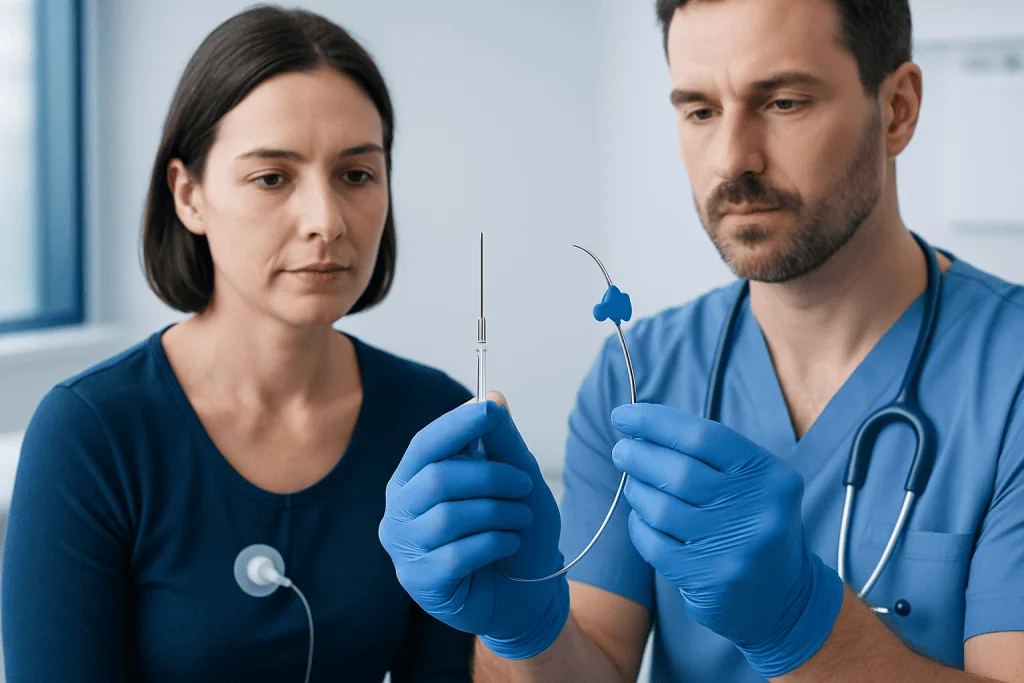
The main difference is the tip. A standard needle can remove a tiny core of silicone when repeatedly inserted into an implanted port. A huber needle has a deflected or angled non-coring tip that separates the silicone septum instead of punching out a piece of it. This helps protect the port and supports repeated access.
Huber needles also come in different lengths and gauges so the clinician can choose the right fit for the patient’s body type, port location, and type of infusion. Some versions include extension tubing or safety features that help reduce accidental needle-stick injuries and make dressing changes easier when the port needs to stay accessed for a period of time.
For patients, this design difference usually means the process is focused on preserving the port and making treatment more dependable. Although insertion may still cause brief discomfort, many people find port access easier than repeated peripheral IV attempts. If treatment is expected to continue for some time, doctors may discuss port catheter insertion as one of the options for reliable vascular access.
Why It Is Used and What to Expect During Port Access

A huber needle is used whenever a clinician needs to access an implanted port for care. Common reasons include giving chemotherapy, immunotherapy, IV fluids, antibiotics, pain medicines, blood products, or total parenteral nutrition. It can also be used for drawing blood, depending on the type of testing needed and local clinical protocols.
Before the needle is inserted, the skin over the port is cleaned carefully using sterile technique. The clinician feels for the edges of the port, stabilizes it, and inserts the huber needle through the skin into the septum. Once placement is confirmed, the line is flushed and checked for blood return when appropriate. A transparent dressing may be applied if the needle will remain in place for ongoing therapy.
Some patients feel a quick pinch or pressure during access. If the area is sensitive, the care team may suggest a numbing cream or other comfort measures before the appointment. During longer treatment courses such as cancer care, consistent port access technique and routine maintenance help support comfort, safety, and dependable delivery of therapy, including chemotherapy when prescribed.
Benefits, Risks, and Safety Considerations
The main benefit of a huber needle is that it allows repeated access to an implanted port while reducing wear on the port’s silicone seal. For many patients, this means fewer needle sticks in the arms or hands and more reliable access for medicines that may irritate smaller veins. It can also make blood sampling and infusion scheduling more practical.
Like any medical device, however, port access has risks. Possible problems include pain at the site, skin irritation from dressings, bruising, difficulty flushing, catheter blockage, accidental dislodgement of the needle, and infection. Rarely, there may be issues with the port or catheter itself, such as malposition or damage that affects flow.
Safety depends heavily on correct technique, proper dressing care, and timely maintenance. Patients can help by keeping the dressing clean and dry, avoiding pulling on tubing, and reporting any changes promptly. If there is concern about port function or access problems, the care team may reassess the device and, in some cases, recommend further evaluation or interventional radiology support.
- Tell the care team if the access site feels unusually painful.
- Report burning, swelling, or leaking during infusion right away.
- Ask how long the needle will stay in place and how to protect it at home.
- Follow instructions for flushing, dressing changes, and activity limits.
Common Problems Patients May Notice
Many questions about huber needles are not about the needle itself, but about what a patient may notice while a port is being used. Mild tenderness just after access can happen, especially if the skin is sensitive. A small amount of bruising may also occur. These issues are often temporary, but worsening pain is not expected and should be checked.
Another concern is poor flow. Sometimes blood return is difficult to obtain, or the line may feel resistant when flushing. This can happen for several reasons, including patient position, a temporary blockage, or a problem with the port or catheter. The care team may ask the patient to change position, cough, raise an arm, or undergo further assessment if the issue continues.
Skin changes matter too. Redness, warmth, drainage, swelling, or an unpleasant odor around the dressing can suggest irritation or infection. If fluid leaks under the skin during infusion, the medicine may not be entering the port correctly, and treatment should be stopped until the site is checked. In patients receiving immunotherapy or other ongoing infusion treatments, prompt reporting of these signs helps avoid delays and complications.
Care, Maintenance, and Everyday Self-Care
When a port is not being used continuously, it still needs routine maintenance based on the advice of the treating team. This usually includes periodic flushing to help keep the line open. Patients should not try to access the port themselves unless they have been specifically trained and instructed to do so by qualified professionals.
If the huber needle remains in place between treatments, keeping the dressing intact is important. The site should stay clean and dry, and the tubing should be secured to avoid tugging. Clothing that rubs directly over the area may cause discomfort, so looser garments are often more comfortable. Showering or bathing instructions can vary depending on whether the port is currently accessed.
Good communication also helps. Patients should know who to contact if the dressing loosens, the needle appears to shift, or the line stops working. For complex long-term treatment plans, multidisciplinary teams at centers such as Acibadem International’s JCI-accredited hospitals diagnose and treat patients who need port-based therapies as part of coordinated care.
When to Seek Medical Care
Medical advice should be sought promptly if there is fever, chills, increasing redness, warmth, swelling, pus, bleeding that does not stop, or moderate to severe pain around the port site. These symptoms can point to infection or another complication and should not be ignored. The same applies if an infusion causes burning, stinging, swelling, or leaking at the site.
Patients should also contact their doctor or infusion team if the port will not flush, blood return suddenly changes, the needle seems dislodged, or the dressing repeatedly comes off. Shortness of breath, chest pain, marked swelling of the neck or arm, or feeling faint requires urgent medical assessment. These symptoms can have several causes, and a qualified clinician should evaluate them promptly.
In general, a huber needle is a well-established tool for safe access to implanted ports, but it should always be handled by trained healthcare professionals using sterile technique. If a patient is unsure whether a symptom is normal, it is safest to ask their doctor, nurse, or infusion center for guidance.
Frequently asked questions
What is a huber needle used for?
A huber needle is used to access an implanted port under the skin. It allows healthcare professionals to give IV medicines, chemotherapy, fluids, nutrition, or draw blood when long-term vein access is needed.
Why can’t a regular needle be used in an implanted port?
A regular needle can damage the silicone top of the port by cutting out a small piece of material. A huber needle has a non-coring tip designed to enter the port more safely and help preserve it for repeated use.
Does a huber needle hurt?
Many patients feel a brief pinch, pressure, or mild discomfort when the port is accessed. Sensitivity varies from person to person, and some care teams recommend numbing cream or other comfort measures before the procedure.
How long can a huber needle stay in place?
The answer depends on the treatment plan, the type of needle and dressing used, and the healthcare team’s protocol. If it needs to remain in place for ongoing therapy, the site should be monitored carefully and cared for using sterile technique.
What are the signs of a problem with a port or huber needle?
Warning signs include redness, swelling, warmth, drainage, fever, increasing pain, leaking fluid during infusion, or trouble flushing the line. If any of these happen, the patient should contact their doctor or infusion team promptly.
Can blood be drawn through a port with a huber needle?
Yes, blood can often be drawn through a port using a huber needle. Whether this is done depends on the type of test, the port’s function, and local clinical practice.
References
- Centers for Disease Control and Prevention
- National Cancer Institute
- Infusion Nurses Society
- American Society of Clinical Oncology
- MedlinePlus
This article is for general information only and is not a substitute for professional medical advice. Please consult a qualified doctor about your individual situation.
Oncology care in Turkey — second opinion and treatment plan
JCI-accredited · board-certified surgeons · reply within 24h
Add us as a Preferred Source to see more of our trusted health content across Google Search, AI Overviews and Discover.