Ingrown Toenail Treatment: Diagnosis, Outlook, and Modern Treatment Approaches

Ingrown toenail treatment can include soaking, footwear changes, gentle nail care, medicines, or a minor procedure. Pain, redness, swelling, drainage, or difficulty walking can suggest the nail edge is irritating or infecting nearby skin.
Key Takeaways
- Ingrown toenail treatment can include soaking, footwear changes, gentle nail care, medicines, or a minor procedure.
- Pain, redness, swelling, drainage, or difficulty walking can suggest the nail edge is irritating or infecting nearby skin.
- People with diabetes, poor circulation, nerve problems, or weak immune systems should seek medical advice early.
- Recurring ingrown nails may be treated by removing part of the nail, sometimes with treatment to prevent that edge from growing back.
- Avoid digging into the nail corners or cutting nails too short, as this can worsen the condition.
- Prompt care usually leads to good healing and helps prevent infection and recurrence.
Medically reviewed by the Acıbadem International Medical Board — July 24, 2026
Ingrown toenail treatment depends on how severe the problem is. Mild cases may improve with careful home care, while recurrent, painful, or infected ingrown nails often need medical treatment to relieve pressure, prevent complications, and reduce the chance of the nail growing in again.
Overview: what ingrown toenail treatment involves
Ingrown toenail treatment aims to reduce pain, calm inflammation, treat any infection, and stop the nail edge from continuing to press into the surrounding skin. In many mild cases, the first step is conservative care such as warm soaks, protective measures, and changes in footwear. If the nail has become deeply embedded, repeatedly returns, or shows signs of infection, a doctor may recommend a minor in-office procedure.
An ingrown toenail most often affects the big toe. It happens when the side or corner of the nail grows into the soft skin beside it. This creates irritation, swelling, and tenderness. As the skin becomes more inflamed, the nail can press in further, making walking or wearing shoes uncomfortable.
Although many people think of it as a small foot problem, an ingrown toenail can become more complicated in certain situations. People with diabetes, reduced blood flow, nerve damage, or immune system problems may not heal as easily and can be at greater risk of infection. For these individuals, early medical evaluation is especially important.
Symptoms and how severity is judged
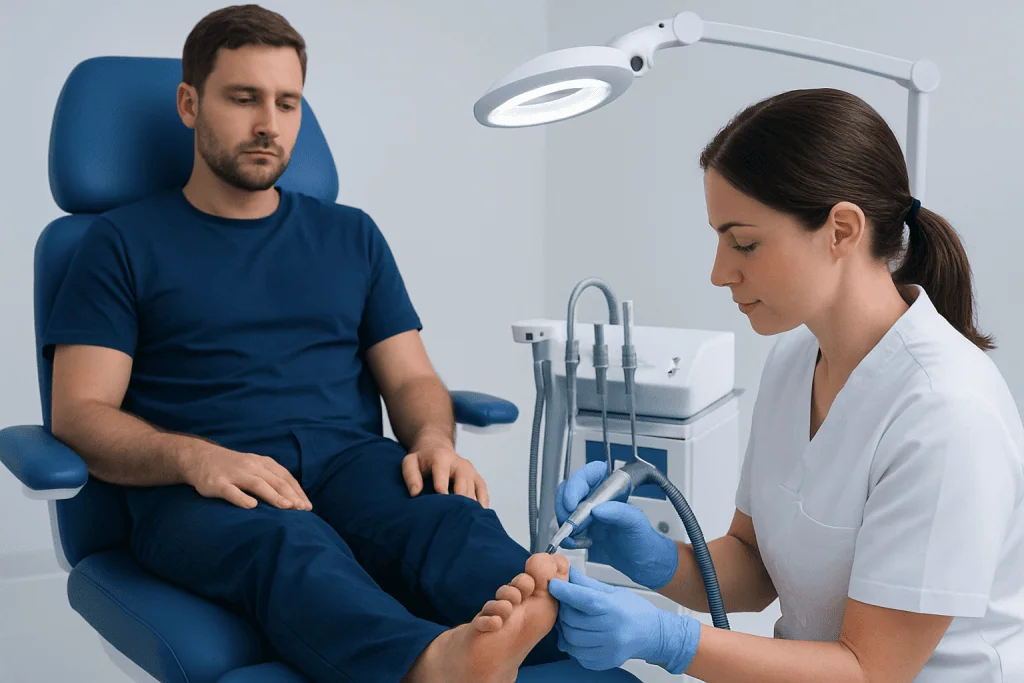
The earliest symptoms are usually tenderness along one side of the toenail and discomfort when pressure is applied, such as when putting on shoes. The skin at the nail edge may look pink or red and feel swollen. Some people notice that the problem started after trimming the nail very short or after repeated pressure from tight shoes.
As the condition progresses, the area may become increasingly painful and warm. The skin can thicken or start to grow over the nail edge. If bacteria enter the irritated skin, there may be drainage, a bad smell, increasing redness, or pus. This is often described as an infected ingrown toenail.
Doctors often consider both symptoms and physical findings when deciding on treatment. Mild cases involve redness and tenderness without drainage. Moderate cases may include more obvious swelling, skin overgrowth, or persistent pain. Severe cases can involve infection, repeated recurrence, or tissue that bleeds easily.
- Mild: tenderness, slight redness, pressure discomfort
- Moderate: swelling, ongoing pain, skin growing over the nail edge
- Severe: pus, spreading redness, significant swelling, recurrent episodes
Why ingrown toenails happen: causes and risk factors

Several everyday factors can lead to an ingrown toenail. A common cause is trimming nails too short or rounding the corners so the edge can curve into the skin as it grows. Tight shoes, narrow toe boxes, and repeated friction from sports or prolonged standing can also force the nail into the surrounding tissue.
Some people are more likely to develop the problem because of the natural shape of their nails or toes. Nails that are unusually curved, thick, or fan-shaped may be more prone to digging into the side of the toe. Sweaty feet can soften the skin and make irritation easier. Minor toe injuries, including stubbing the toe, can also change the way the nail grows.
Certain health conditions increase the importance of prompt assessment. Diabetes, poor circulation, and nerve damage can make foot problems harder to notice and slower to heal. Repeated fungal nail changes may also distort nail shape and contribute to ingrowing; in some cases, evaluation for related issues such as nail fungus may be helpful if the nail has become thickened or brittle.
How doctors diagnose an ingrown toenail
Diagnosis is usually straightforward and begins with a medical history and foot examination. A doctor will ask when symptoms began, whether the problem has happened before, how the nail is usually trimmed, and whether there is drainage, fever, or difficulty walking. The toe is then examined for nail shape, swelling, tenderness, and signs of infection.
Most people do not need blood tests or imaging. However, additional evaluation may be considered if the toe is severely infected, symptoms are not improving, or there is concern about another problem affecting the nail or nearby skin. The doctor may also check circulation, sensation, and general foot health, especially in people with diabetes or vascular disease.
The main goal of diagnosis is not only to confirm that the nail is ingrown, but also to identify whether treatment can remain conservative or should move to a minor procedure. Other conditions can occasionally resemble or accompany an ingrown toenail, such as inflamed skin around the nail, trauma, or a painful nail-bed disorder. If needed, a patient may be assessed by specialists in dermatology care or foot-related services to guide management.
Modern treatment approaches for ingrown toenail treatment
For a mild ingrown toenail without major infection, treatment often starts with practical measures. Warm water soaks may help soften the surrounding skin and reduce discomfort. Wearing open-toed or roomier shoes can decrease pressure on the toe. A doctor may also advise careful protection of the nail edge and surrounding skin while the area heals.
If the toe is more inflamed or infected, medical treatment may include cleaning the area, managing drainage, and deciding whether medicines are needed. Not every ingrown toenail requires antibiotics; the decision depends on whether there is a true skin infection, how extensive it is, and the patient’s overall health. Pain relief strategies may also be recommended.
When the nail edge continues to dig into the skin, a minor procedure is often the most effective treatment. This may involve lifting or removing only the part of the nail that is causing pressure. In recurrent cases, the doctor may treat the nail root on that side so the problem edge does not grow back. These procedures are generally done with local anesthesia and are commonly referred to as partial nail avulsion or ingrown toenail surgery.
For people with repeated episodes, marked nail curvature, or chronic inflammation, a more durable approach can reduce the chance of recurrence. The exact method depends on the nail shape, severity, and presence of infection. If needed, care may involve orthopedic evaluation or podiatry care where available, particularly when walking is affected or the problem has become longstanding.
Recovery, outlook, and recurrence prevention
The outlook for an ingrown toenail is usually very good, especially when treatment is started before infection becomes advanced. Mild cases may settle over days to a few weeks with appropriate care. After a minor nail procedure, tenderness often improves quickly, though complete healing of the skin and nail area can take longer.
Recurrence is one of the main concerns, which is why prevention matters. Nails should usually be trimmed straight across rather than deeply rounded at the corners. The nail should not be cut extremely short. Shoes should allow enough room in the toe box so the toes are not compressed during walking, work, or sport.
People who have repeated episodes may need further assessment of foot mechanics, nail shape, or contributing conditions such as fungal nail disease, excessive sweating, or repeated sports trauma. Addressing these factors can make long-term control more successful. In international settings, Acibadem International’s multidisciplinary specialists in JCI-accredited hospitals diagnose and treat ingrown toenails and related foot and nail conditions for patients seeking coordinated care.
Self-care do's and don'ts at home
Home care can be useful for a very mild ingrown toenail, but it should be gentle. Soaking the foot in warm water may reduce discomfort and help keep the area clean. Afterward, the toe should be dried carefully, and footwear should be chosen to avoid pressure. Good foot hygiene supports healing and lowers irritation.
Some home practices can make the problem worse. Digging into the nail corner, cutting away skin, or attempting to remove the nail edge at home can increase injury and infection risk. Strong chemicals, unverified internet remedies, and aggressive pedicures should also be avoided, especially if the skin is broken.
- Do wear comfortable shoes with a wide toe area
- Do keep the toe clean and dry between soaks
- Do trim nails straight across once the area has healed
- Do not cut deep into the corners of the nail
- Do not ignore worsening redness, drainage, or severe pain
- Do not delay medical advice if there is diabetes, numbness, or poor circulation
If foot shape, recurrent nail pain, or walking discomfort is part of the problem, assessment may also overlap with care for other foot conditions, sometimes involving foot pain evaluation to identify pressure-related causes.
When to seek medical care
Medical care is recommended if the pain is significant, symptoms are not improving, or the toe shows signs of infection such as pus, spreading redness, warmth, or increasing swelling. A doctor should also assess an ingrown toenail that keeps returning, interferes with walking, or causes skin that bleeds or grows over the nail edge.
Prompt evaluation is especially important for anyone with diabetes, reduced circulation, nerve problems, or a weakened immune system. In these situations, even a small nail injury can become more serious if left untreated. Fever, red streaking, or rapidly worsening symptoms should be assessed urgently.
Early treatment can often prevent a more painful stage and may reduce the need for more extensive intervention later. A qualified healthcare professional can determine whether simple care is enough or whether a procedure is the safest and most effective next step.
Frequently asked questions
What is the best ingrown toenail treatment?
The best ingrown toenail treatment depends on how severe the problem is. Mild cases may improve with warm soaks, footwear changes, and careful nail care, while painful, infected, or recurrent cases often need a doctor’s treatment or a minor procedure.
Can an ingrown toenail heal on its own?
A very mild ingrown toenail can sometimes improve if pressure on the toe is reduced and the area is cared for properly. However, if pain, swelling, or redness continues, medical advice is important because the nail may keep pressing into the skin.
When do I need surgery for an ingrown toenail?
A minor procedure may be recommended if the nail is deeply embedded, repeatedly comes back, or is causing significant pain or infection. This often involves removing the part of the nail causing the problem, and sometimes treating the nail root to prevent recurrence.
Do all ingrown toenails need antibiotics?
No. Antibiotics are not always needed because inflammation can occur even without a true bacterial infection. A doctor decides based on the appearance of the toe, whether there is pus or spreading skin infection, and the person’s overall health.
How long does recovery take after ingrown toenail treatment?
Recovery time varies with the type of treatment and severity of the condition. Mild cases may improve within days to a couple of weeks, while healing after a minor nail procedure can take longer even though pain often improves sooner.
How can ingrown toenails be prevented?
Prevention focuses on trimming nails straight across, avoiding very short cuts, and wearing shoes with enough room in the toe area. Good foot hygiene and early attention to nail changes, injury, or fungal thickening can also help.
References
- American Academy of Dermatology
- American College of Foot and Ankle Surgeons
- National Health Service
- Mayo Clinic
This article is for general information only and is not a substitute for professional medical advice. Please consult a qualified doctor about your individual situation.
Explore treatments in Turkey — costs, top hospitals & a free quote
JCI-accredited · board-certified surgeons · reply within 24h