Proton Therapy Equipment: How It Works, Results and What to Expect
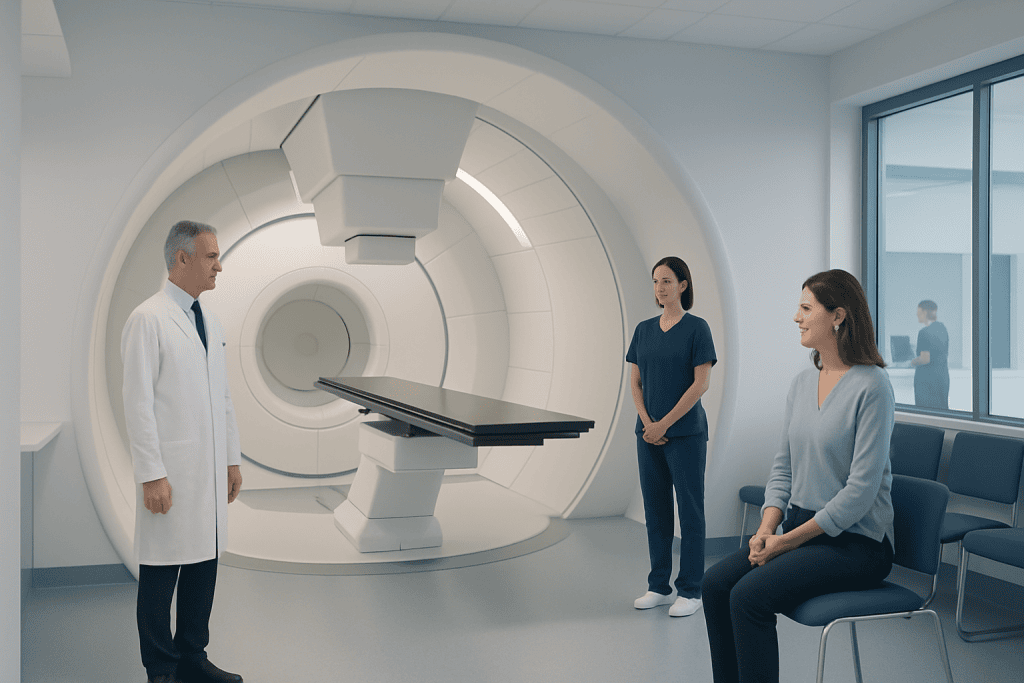
Proton therapy uses a particle accelerator, beam-delivery system and detailed imaging to direct radiation at a tumor. Its main potential advantage is reduced radiation dose to some nearby healthy tissues compared with conventional photon radiation.
Key Takeaways
- Proton therapy uses a particle accelerator, beam-delivery system and detailed imaging to direct radiation at a tumor.
- Its main potential advantage is reduced radiation dose to some nearby healthy tissues compared with conventional photon radiation.
- It is not automatically better for every cancer; a radiation oncology team compares expected benefits, risks and practical needs.
- Treatment is usually given in multiple outpatient sessions, with the number of sessions tailored to the diagnosis and treatment goal.
- Side effects vary by the body area treated and can develop during treatment or gradually afterward.
- A new or changing cancer-related symptom, or concerning symptoms during treatment, should be discussed promptly with the care team.
Proton therapy equipment is an advanced radiation treatment system that uses charged particles called protons to deliver radiation to a tumor with high precision. It may reduce radiation exposure beyond the tumor in selected situations, but suitability, results and side effects depend on the cancer type, location and individual treatment plan.
Overview: What proton therapy equipment does
Proton therapy equipment is used to provide a form of external-beam radiation therapy for cancer. Instead of using X-rays (photons), it accelerates positively charged particles called protons and guides them toward a precisely planned target. Protons release most of their energy at a chosen depth inside the body, then deliver little to no dose beyond that point.
This physical property can help doctors reduce radiation exposure to selected nearby organs and tissues. It may be particularly valuable when a tumor lies close to structures that are sensitive to radiation, such as the brain, spinal cord, eyes, heart or reproductive organs. However, proton therapy is one radiation option among several, and the most appropriate approach depends on an individual clinical assessment.
A proton treatment center includes a particle accelerator, systems that shape and steer the beam, imaging and patient-positioning tools, radiation planning software, and extensive safety checks. Patients do not feel the proton beam itself. The equipment is operated by a specialized team that includes radiation oncologists, medical physicists, dosimetrists, radiation therapists and imaging professionals.
How does proton therapy work?
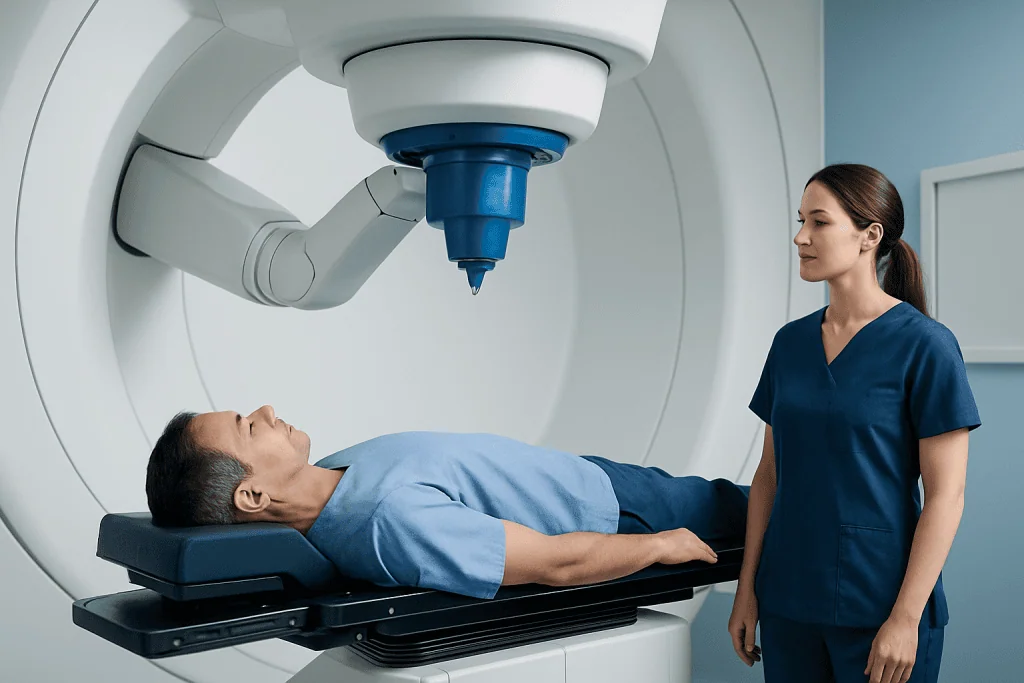
For people asking, “proton therapy how does it work?”, the basic process has two parts: planning and delivery. First, imaging scans such as CT, MRI or PET are used to define the tumor and the organs that should be protected. A medical physicist and dosimetrist then create a computer-based plan that calculates the beam angles, energy and dose distribution.
During treatment, proton therapy equipment creates and accelerates protons, usually within a large circular or linear accelerator. Magnets guide the particles through a beamline toward the treatment room. Modern systems can use pencil-beam scanning, which paints the planned radiation dose across the tumor in many small, controlled spots.
The treatment team verifies the patient’s position before each session, sometimes using image guidance. The beam is then delivered according to the approved plan. The treatment itself is painless and does not make a person radioactive, so it is safe to be around family members, including children and pregnant people, after a session.
Proton therapy may be used alone or combined with surgery, chemotherapy, immunotherapy or other treatments. The order and combination depend on the cancer diagnosis, stage, overall health and goals of care.
Candidacy and cancers that may benefit

Proton therapy is considered when its ability to limit radiation beyond the tumor could make a meaningful clinical difference. A radiation oncologist reviews pathology reports, scans, previous treatment, tumor location, potential alternatives and the person’s overall health. Access to a proton center and the time needed for planning and daily visits are also practical considerations.
What cancers respond best to proton therapy? Proton therapy is often considered for tumors close to critical structures, including certain brain and spinal tumors, skull-base tumors, eye cancers, head and neck cancers, some lung cancers, liver tumors, prostate cancer, breast cancer in selected circumstances, and cancers in children. It may also be considered when a tumor has returned near a previously irradiated area. A favorable location does not guarantee that proton therapy is the best choice; tumor biology and the overall treatment strategy remain important.
Children and young adults may be evaluated carefully because reducing radiation exposure to developing tissue can be important for long-term health. For related information on cancer assessment and coordinated care, patients may explore cancer care.
The radiation oncology team commonly compares proton and photon treatment plans directly. This comparison helps show whether proton therapy would protect normal tissue enough to justify choosing it over well-established conventional radiation techniques.
What to expect: planning, treatment and recovery
Before treatment begins, the patient attends a planning appointment known as simulation. This usually includes a CT scan in the treatment position. A customized mask, headrest, vacuum cushion or other immobilization device may be made to help the patient remain comfortably still and reproduce the same position each day. Small skin marks may be used for alignment when appropriate.
After simulation, the team develops and checks the treatment plan. This preparation can take days to a few weeks, depending on the complexity of the case. At each treatment visit, the patient changes position as needed, is aligned carefully, and receives imaging checks. The beam delivery itself is usually brief, though the full appointment may take longer because accurate setup is essential.
How often is proton therapy given? Proton therapy is commonly delivered once a day, Monday through Friday, over several weeks. Some cancers may be treated in fewer, larger-dose sessions, while others require a longer course. The schedule is based on the cancer type, treatment purpose, nearby organs and whether other treatments are being given.
Most people return home after each session and can continue many usual activities. Tiredness may build gradually during a course of radiation. Recovery after the final session differs by treatment area: short-term effects often improve over several weeks, while the full response of a tumor and some later effects are assessed through scheduled follow-up visits and imaging.
Benefits, limitations and possible side effects
The key potential benefit of proton therapy is its dose distribution. By reducing radiation that exits beyond the target, it may lower exposure to nearby healthy structures in selected cases. This can be particularly relevant when protecting sensitive organs is important or when treating children, although the expected benefit should be assessed individually.
What is the downside of proton therapy? Proton therapy is not suitable or superior for every person or every tumor. It requires complex planning, specialized facilities and daily positioning accuracy. It may not be available near a patient’s home, and travel or treatment scheduling can be demanding. Not all cancers have strong comparative evidence showing better long-term outcomes with protons than with advanced photon radiation.
Side effects are generally related to the body area receiving radiation, not simply to the use of protons. They can include fatigue, skin redness or sensitivity in the treatment area, hair loss where radiation enters, and temporary inflammation of nearby tissues. Depending on the site treated, symptoms may include mouth soreness, swallowing difficulty, nausea, bowel or bladder changes, cough, or changes in appetite.
Long-term effects are less common but can occur months or years after radiation. They may include tissue scarring, hormonal changes, fertility effects, changes in organ function, or a small risk of a later radiation-related cancer. The care team explains the risks most relevant to the proposed treatment field and helps patients weigh them against the expected benefits.
Results, repeat treatment and technology considerations
What is the success rate of proton therapy? There is no single success rate for proton therapy. Outcomes depend mainly on the specific cancer, its stage, grade and biology, whether it has spread, the treatments used alongside radiation, and the person’s general health. Proton therapy can provide tumor control comparable to other high-quality radiation methods for many appropriate indications; its main goal is often to maintain effective treatment while reducing unnecessary dose to normal tissues.
How many times can you have proton therapy? A person may receive one planned course consisting of many sessions. A second course, sometimes called re-irradiation, may be possible in carefully selected cases if cancer returns or a new cancer develops, but it requires detailed review of the earlier radiation plan, the time since treatment and the tolerance of nearby organs. It is not automatically safe or appropriate, and decisions are made by an experienced multidisciplinary team.
People may encounter information about proton therapy equipment manufacturers or proton therapy equipment cost while researching care. Manufacturers design different accelerator and delivery platforms, but the patient-focused question is whether a center can create a safe, high-quality plan for the individual cancer. Personal treatment costs vary widely according to country, insurance or funding arrangements, travel needs, planning complexity and the full course of care; the treating center’s financial counseling team can provide individualized information.
For international patients, Acibadem International’s multidisciplinary specialists and JCI-accredited hospitals can assess radiation treatment needs and coordinate cancer care. Discussions about radiation may be part of a wider radiotherapy treatment plan that considers all suitable techniques.
When to seek medical care
Anyone with a known cancer diagnosis should discuss radiation options with their oncology team rather than delaying recommended care while researching technologies. A radiation oncologist can explain whether proton therapy is medically appropriate and whether another treatment may offer similar expected results with fewer practical burdens.
During proton therapy, patients should contact the treatment team if they develop severe or rapidly worsening pain, difficulty breathing, fever, inability to drink enough fluids, repeated vomiting, new confusion, marked weakness, significant bleeding, or any symptom that feels urgent. The team can advise whether same-day assessment or emergency care is needed.
After treatment, follow-up appointments are important even if a person feels well. These visits monitor treatment response, support recovery, identify side effects early and coordinate care with surgeons, medical oncologists and primary care clinicians.
Frequently asked questions
Is proton therapy painful?
No. Proton beam delivery is painless, and the patient does not feel the radiation entering the body. Some people may find it uncomfortable to stay in one position, but positioning supports are designed to improve comfort and accuracy.
How long does a proton therapy session take?
The beam is often delivered within minutes, but each appointment commonly takes longer because the team must position the patient precisely and complete imaging checks. The exact time varies with the treatment site, technology used and complexity of the plan.
Does proton therapy cause hair loss?
Hair loss can occur only in areas where radiation passes through or is delivered, such as the scalp during treatment for some brain tumors. It does not usually cause whole-body hair loss in the way that some chemotherapy medicines can. The care team can explain whether hair loss is likely for a specific treatment plan.
Can proton therapy be used after previous radiation?
In selected cases, proton therapy may be considered after previous radiation because it can potentially reduce dose to nearby tissues. This requires a careful review of prior radiation records, current imaging and the tolerance of critical organs. Re-irradiation is a specialized decision and is not appropriate for every recurrence.
Will proton therapy cure cancer?
Proton therapy can be part of curative treatment for certain cancers, but it cannot guarantee a cure. The likelihood of cancer control depends on the diagnosis, stage, tumor features and whether surgery or systemic treatments are also needed. The oncology team can discuss realistic treatment goals for the individual situation.
Can a person work during proton therapy?
Many people are able to work or maintain daily routines during treatment, particularly early in the course. Fatigue and site-specific side effects can increase over time, so temporary schedule changes may be helpful. Patients should discuss work, travel and caregiving needs with their treatment team.
References
- National Cancer Institute
- American Society for Radiation Oncology
- American Cancer Society
- European Society for Radiotherapy and Oncology
- International Atomic Energy Agency
This article is for general information only and is not a substitute for professional medical advice. Please consult a qualified doctor about your individual situation.
Joint and spine care in Turkey — expert assessment & treatment
JCI-accredited · board-certified surgeons · reply within 24h
Add us as a Preferred Source to see more of our trusted health content across Google Search, AI Overviews and Discover.