Speech Disorders: Diagnosis, Outlook, and Modern Treatment Approaches
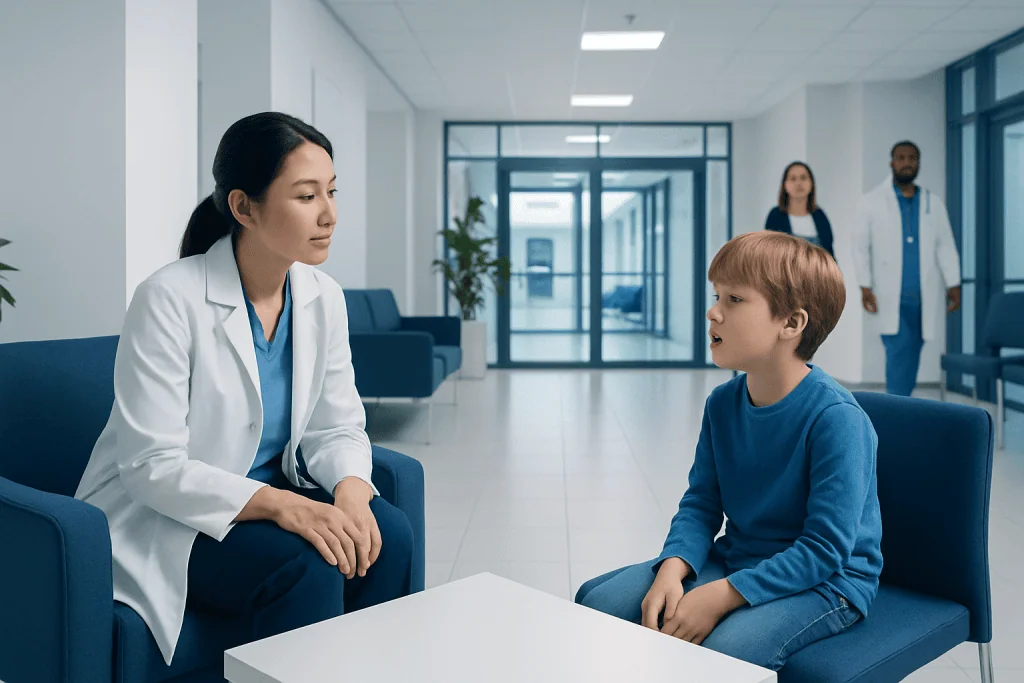
Speech disorders affect speech sound production, fluency, voice, or motor planning for speaking. They can occur in children or adults and may be developmental or caused by illness, injury, or neurological conditions.
Key Takeaways
- Speech disorders affect speech sound production, fluency, voice, or motor planning for speaking.
- They can occur in children or adults and may be developmental or caused by illness, injury, or neurological conditions.
- A careful evaluation by a speech-language pathologist and, when needed, other specialists helps guide treatment.
- Many people improve with speech therapy, treatment of the underlying cause, and regular practice.
- Early assessment is especially important when speech changes suddenly or begins to affect daily life.
Medically reviewed by the Acıbadem International Medical Board — July 24, 2026
Speech disorders are conditions that affect how a person produces sounds, speaks clearly, or uses the muscles needed for speech. Diagnosis focuses on finding the underlying cause, and treatment often includes speech-language therapy, medical care for related conditions, and ongoing support at home and school or work.
Overview: what speech disorders are
Speech disorders are conditions that make it hard to produce sounds correctly, speak fluently, or use the voice in a clear and coordinated way. In practical terms, a person may substitute sounds, leave sounds out, speak with noticeable effort, stutter, or have a voice that sounds hoarse, weak, nasal, or strained. These difficulties can range from mild to more severe and may affect communication at home, school, work, and in social situations.
Speech disorders are not the same as language disorders, although the two can happen together. A speech disorder mainly affects how words are spoken, while a language disorder affects understanding or using words and sentences to communicate ideas. Some people also have both speech and language difficulties after a developmental condition, hearing problem, neurological illness, or brain injury.
There are several main types of speech disorders. These include articulation and phonological disorders, fluency disorders such as stuttering, voice disorders, and motor speech disorders such as apraxia of speech and dysarthria. Each type has different causes and treatment needs, which is why a clear diagnosis is important rather than assuming all speech problems are the same.
Common signs and how speech disorders may appear
The signs of speech disorders depend on age and the type of problem. In children, parents may notice speech that is difficult to understand for age, frequent sound substitutions, frustration when trying to speak, or speech that develops more slowly than expected. Teachers may notice that a child avoids speaking in class or is harder to understand than classmates.
In adults, symptoms may include slurred speech, effortful speaking, trouble coordinating mouth movements, new stuttering, voice changes, or a sudden change in speech clarity after illness or injury. Some adults know exactly what they want to say but have trouble producing the words smoothly.
Common features can include:
- Difficulty making certain speech sounds
- Omitting, substituting, or distorting sounds
- Stuttering or repeating sounds, syllables, or words
- Speaking too fast, too slowly, or with unusual rhythm
- Hoarse, breathy, nasal, or strained voice quality
- Slurred or weak speech related to muscle control
- Trouble being understood by others
Some communication concerns overlap with hearing, developmental, or neurological conditions. For example, speech changes can appear with stroke, Parkinsonian syndromes, cerebral palsy, autism spectrum disorder, or after head and neck surgery. Because speech reflects several body systems working together, changes should be interpreted in context.
Causes and risk factors

Speech disorders can be developmental, meaning they begin as a child is learning to speak, or acquired later in life. Developmental speech disorders may relate to differences in speech sound learning, motor planning, hearing, oral structure, or broader neurodevelopmental conditions. In many children, the exact cause is not fully clear, but family history may play a role.
Acquired speech disorders can develop after stroke, traumatic brain injury, brain tumors, neurodegenerative diseases, infections affecting the nervous system, or conditions that weaken the muscles used for speech. Voice disorders may arise from overuse, vocal fold lesions, reflux, neurological disease, or structural changes in the larynx. Hearing loss can also affect the ability to monitor and produce speech sounds accurately.
Risk factors vary by diagnosis but may include:
- Family history of speech, language, or learning difficulties
- Premature birth or certain birth complications
- Hearing loss or frequent ear infections in childhood
- Neurological disease or brain injury
- Structural differences affecting the mouth, palate, or vocal tract
- Conditions involving muscle weakness or poor coordination
- High vocal demand or repeated strain on the voice
Because speech can be affected by many different medical issues, some people benefit from broader assessment. Depending on symptoms, doctors may evaluate the ears, throat, brain, nerves, or swallowing function. In selected cases, this can include specialist review and tests such as MRI to look for neurological or structural causes.
How diagnosis is made
Diagnosis begins with a detailed history. The clinician will ask when the problem started, whether it came on suddenly or gradually, whether it has changed over time, and how it affects daily communication. In children, the history may include pregnancy and birth details, developmental milestones, hearing history, and school observations. In adults, a sudden onset is especially important because it may point to a neurological event that needs prompt medical attention.
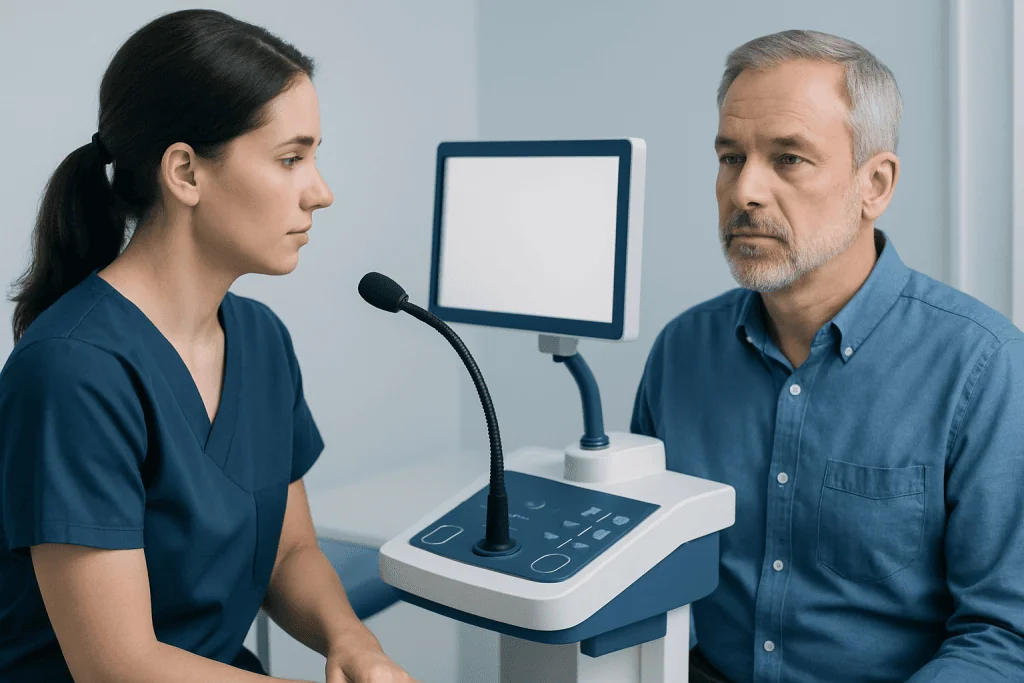
A speech-language pathologist usually performs the main communication assessment. This may include listening to speech in conversation, checking how specific sounds are produced, evaluating fluency and voice, and assessing the strength and coordination of the lips, tongue, and jaw. The clinician may also look at comprehension and language use, since speech and language often overlap.
Additional tests depend on the suspected cause. Hearing tests are commonly recommended, especially for children or for anyone with a history suggesting hearing loss. ENT evaluation may be needed for persistent hoarseness or suspected vocal fold problems. Neurological assessment can be important if there is slurred speech, facial weakness, swallowing difficulty, or other signs involving the nervous system. In some situations, doctors may use CT scan or other imaging to evaluate sudden or unexplained speech changes.
The goal of diagnosis is not only to name the speech disorder but also to identify contributing factors and a treatment plan. A clear diagnosis helps families understand what to expect, what type of therapy is most suitable, and whether other specialists should be involved.
Modern treatment approaches and outlook
Treatment for speech disorders is individualized. Speech-language therapy is the main approach for many children and adults. Therapy may target speech sound production, motor planning, breath support, voice use, rhythm, fluency techniques, or communication strategies for daily situations. Sessions are often paired with home practice so the person can build skills consistently over time.
If a medical condition is contributing, treatment also focuses on that cause. For example, a person may need care for a voice disorder, hearing problem, reflux, neurological disease, or recovery after brain injury. For some conditions, rehabilitation works best when several specialists coordinate care, such as speech-language pathologists, neurologists, ENTs, physiatrists, psychologists, and occupational or physical therapists. People recovering after neurological injury may also benefit from stroke rehabilitation or broader brain and nerve rehabilitation when speech problems are part of a larger recovery plan.
The outlook depends on the diagnosis, severity, age at onset, and whether there is an underlying medical condition. Many children improve significantly with early therapy and supportive practice. Adults may also make meaningful gains, especially when treatment starts promptly and addresses the cause. Some speech disorders resolve fully, while others can be managed so communication becomes easier, clearer, and less tiring.
Progress is not always linear. It is common to see improvement in some situations before others, such as doing well in therapy but still finding fast conversation difficult. Regular follow-up helps refine goals, track change, and support participation at school, work, and social events.
Daily support, prevention, and self-care
Not all speech disorders can be prevented, especially when they are linked to genetics, neurodevelopment, or neurological disease. Even so, supportive habits can reduce strain, encourage progress, and help communication feel more successful. Practical support often makes a meaningful difference alongside formal treatment.
Helpful self-care and family strategies may include:
- Following the home exercises recommended by the speech-language pathologist
- Giving the speaker time to finish without rushing or correcting every word
- Reducing background noise during important conversations
- Using short, calm turns in conversation, especially with children who stutter
- Protecting the voice with hydration and avoiding frequent shouting or throat clearing
- Attending hearing checks when recommended
- Supporting communication at school or work with reasonable accommodations
For children, a supportive environment matters more than pressure to speak perfectly. Caregivers can model clear speech, read aloud, pause to listen, and praise effort rather than focusing only on errors. For adults, fatigue, stress, and long speaking demands may worsen symptoms, so pacing and rest can be useful.
Near the end of the care pathway, some people need long-term monitoring rather than intensive treatment. This is common in chronic neurological conditions, after complex surgery, or when the main goal is maintaining safe, effective communication over time rather than full correction.
When to seek medical care
Medical evaluation is recommended if speech is suddenly slurred, hard to understand, or accompanied by facial drooping, weakness, confusion, severe headache, or trouble swallowing. These symptoms can signal an urgent neurological problem and should be assessed immediately. New speech difficulty after head injury also needs prompt medical care.
Parents should arrange an assessment if a child seems much harder to understand than expected for age, stops using sounds or words previously mastered, shows frustration when trying to speak, or has speech concerns together with hearing, feeding, or developmental issues. Persistent hoarseness, voice strain, or nasal-sounding speech also deserves evaluation.
Adults should seek care if speech becomes effortful, stuttering starts unexpectedly, the voice changes for more than a few weeks, or communication problems begin to interfere with work or daily life. Multidisciplinary assessment can be especially helpful when speech changes are part of a broader neurological or ENT picture. Acibadem International’s multidisciplinary specialists in JCI-accredited hospitals diagnose and treat speech-related conditions for international patients when specialist evaluation is needed.
Frequently asked questions
What is the difference between a speech disorder and a language disorder?
A speech disorder affects how sounds are produced or how speech is physically spoken, including clarity, voice, or fluency. A language disorder affects understanding or using words, sentences, and meaning. Some people have only one, while others have both.
Can speech disorders happen in adults as well as children?
Yes. Children often develop speech disorders as part of development, while adults may develop them after stroke, brain injury, neurological disease, or voice problems. Any sudden change in adult speech should be assessed promptly.
Do speech disorders always require speech therapy?
Speech therapy is a core treatment for many speech disorders, but not always the only one needed. Some people also need hearing care, ENT treatment, neurological evaluation, or rehabilitation for an underlying condition. The best plan depends on the diagnosis.
Can a child outgrow a speech disorder?
Some mild speech sound errors improve with development, but persistent or significant concerns should not be left to chance. Early assessment helps distinguish a temporary delay from a disorder that would benefit from treatment. Early support often leads to better communication outcomes.
Is stuttering the same as all other speech disorders?
No. Stuttering is a fluency disorder, while other speech disorders may involve sound production, voice, or motor control of speech. Because the causes and treatment methods differ, evaluation should identify the specific type of difficulty.
When should a hoarse or changed voice be checked?
A voice that remains hoarse, weak, strained, or different for more than a few weeks should be evaluated, especially if there is pain, swallowing difficulty, or high voice use. Persistent voice change can result from irritation, overuse, or conditions affecting the vocal folds. An ENT assessment may be recommended.
References
- American Speech-Language-Hearing Association
- National Institute on Deafness and Other Communication Disorders
- National Institute of Neurological Disorders and Stroke
- Centers for Disease Control and Prevention
- World Health Organization
This article is for general information only and is not a substitute for professional medical advice. Please consult a qualified doctor about your individual situation.
Explore treatments in Turkey — costs, top hospitals & a free quote
JCI-accredited · board-certified surgeons · reply within 24h

More from the Health Library


Related Specialists
Dr. Macit Dokur
Inpatient Clinic Physicians Clinical Service
Dr. Salahattin Okur
Pediatrics
Dr. Yasemin Dilek Soysal
Pediatric Gastroenterology
Dt. Ayşe İleyda Konya
Oral and Dental Health