Tpn IV Therapy: How It Works, Results and What to Expect

TPN bypasses the stomach and intestines by delivering nutrients through an intravenous catheter. It may be temporary during illness or surgery, or longer term when intestinal function is severely limited.
Key Takeaways
- TPN bypasses the stomach and intestines by delivering nutrients through an intravenous catheter.
- It may be temporary during illness or surgery, or longer term when intestinal function is severely limited.
- Blood tests, weight, fluid balance and catheter care are essential parts of safe TPN treatment.
- Weight change on TPN varies greatly and is guided by the person’s medical condition and nutrition goals.
- Potential complications include infection, blood sugar changes, liver problems and blood clots, but careful monitoring reduces risk.
TPN IV therapy, also called total parenteral nutrition, provides calories, protein, fluids, vitamins and minerals directly into the bloodstream when a person cannot obtain enough nutrition through the digestive tract. It is carefully individualized and monitored by a clinical nutrition team to support recovery, growth or long-term health needs.
TPN IV Therapy: Meaning, Purpose and Results
TPN IV therapy means total parenteral nutrition delivered intravenously. It supplies nutrients directly into a vein, bypassing the stomach and intestines. A customized solution can contain carbohydrate for energy, amino acids for protein, fats, electrolytes, vitamins, minerals and fluids.
TPN is used when the digestive system cannot be used safely, cannot absorb enough nutrition, or needs time to rest and heal. It is not simply an IV fluid or a routine vitamin infusion. TPN IV treatment is a specialized form of nutrition support planned by doctors, dietitians, pharmacists and nursing teams.
The expected result is improved or maintained nutritional status while the underlying condition is treated or assessed. For some people, TPN is a short bridge back to eating or tube feeding. Others with severe intestinal failure may need it for a longer period, sometimes at home with close follow-up.
How TPN IV Therapy Works
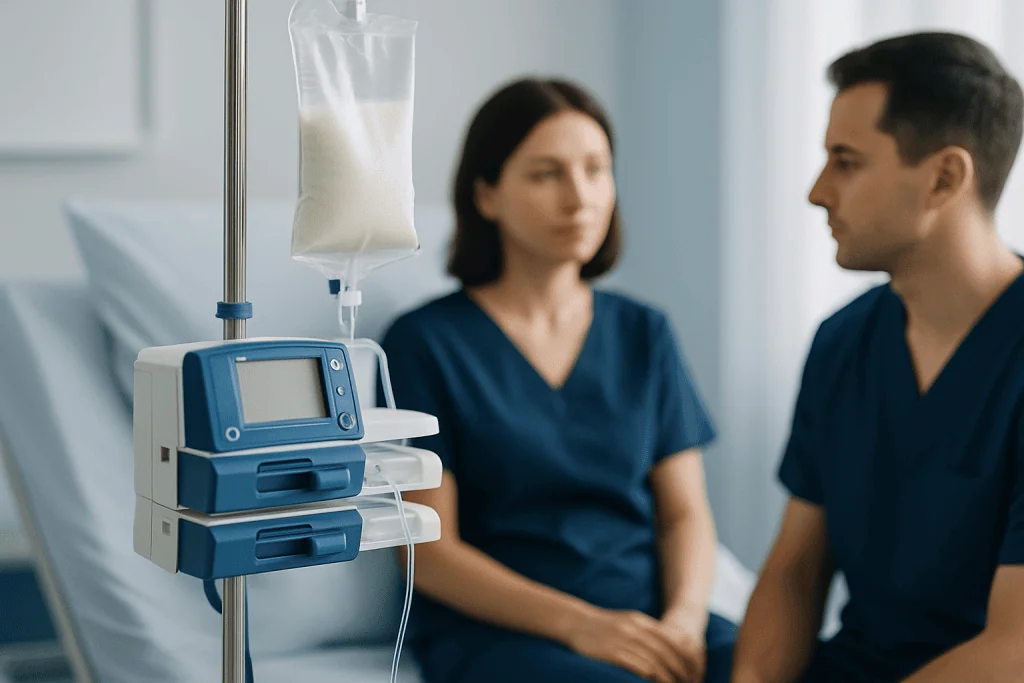
Digested food normally enters the bloodstream through the small intestine. In TPN, nutrients are prepared as a sterile solution and infused directly into the bloodstream through an intravenous catheter. This allows the body to receive nutrition even when eating, digestion or intestinal absorption is not adequate.
Most full TPN formulas are administered through a central venous catheter, such as a peripherally inserted central catheter (PICC), tunneled catheter or implanted port. These lines reach a large vein, where the concentrated solution is diluted quickly by blood flow. In some short-term situations, a less concentrated form of parenteral nutrition may be given through a smaller peripheral IV.
The prescription is individualized. The team considers age, weight, medical diagnosis, organ function, laboratory findings, fluid needs, ability to eat or use tube feeding, and goals such as maintaining weight, healing after surgery or supporting development in children.
Whenever the digestive tract is working safely, oral nutrition or enteral feeding is generally preferred because it supports normal gut function. TPN may be reduced and stopped gradually or promptly according to the clinical situation as food or tube feeding becomes sufficient.
Who May Need TPN and What Are the Requirements?

TPN may be considered for people with bowel obstruction, severe inflammation of the digestive tract, a very short bowel after surgery, intestinal fistulas, prolonged inability to eat, severe malabsorption, or complications of cancer treatment or major surgery. The decision depends on the individual’s nutrition status, expected duration of inadequate intake and whether the gut can be used.
TPN IV requirements include a clear medical reason, safe venous access, a tailored prescription and the ability to monitor treatment. Before and during therapy, clinicians commonly assess body weight, hydration, blood glucose, kidney and liver function, electrolytes, triglycerides and signs of infection.
Some people need TPN while hospitalized because their condition is changing quickly. Others may transition to home parenteral nutrition once they and their caregivers have been trained in equipment use, aseptic technique, storage, infusion setup and when to contact the care team.
TPN can be part of care for complex digestive disorders, including conditions affecting absorption and intestinal length. The underlying cause should always be investigated and treated alongside nutritional support.
What Happens During TPN Infusion: Step by Step
First, a healthcare team confirms the indication for parenteral nutrition and selects the appropriate IV access. If a central line is needed, it is placed using sterile technique. The line position may be checked according to the device type and local clinical protocol before use.
A hospital or home-infusion pharmacy prepares the nutrition bag specifically for the patient. Before an infusion begins, trained staff or a trained patient or caregiver checks the bag label, appearance, expiration information and pump settings. The line hub is disinfected, the infusion is connected using sterile technique, and the pump delivers the solution at the prescribed rate.
During the infusion, the team monitors how the person feels and checks relevant blood results. The prescription may be adjusted as nutritional needs, fluid balance, glucose levels or organ function change. TPN is not a one-size-fits-all therapy, and frequent adjustment is common early in treatment.
TPN IV line maintenance is central to safety. This includes hand hygiene, keeping the dressing clean and dry, using proper line disinfection, changing supplies on schedule and never using the catheter for non-prescribed purposes unless the clinical team advises otherwise.
How Long Does a TPN Infusion Last?
How long a TPN infusion lasts depends on the prescription, the person’s fluid needs, tolerance and setting of care. In hospital, TPN may run continuously over 24 hours, especially when treatment is newly started or close monitoring is needed.
For stable patients receiving long-term treatment at home, the infusion is often cycled over fewer hours, commonly overnight, so daytime activities may be easier. The exact schedule is individualized and should not be changed without guidance from the prescribing team.
The total duration of TPN therapy can range from days to weeks during recovery from an acute illness or surgery. In people with chronic intestinal failure, it may continue for months or longer. Regular reassessment helps identify when oral intake or tube feeding can be increased.
Benefits, Risks and Recovery Timeline
The main benefit of TPN is that it can prevent or correct inadequate nutrition when feeding through the digestive tract is not possible or does not meet needs. Adequate nutrition may support energy, wound healing, immune function, strength and recovery, while clinicians address the condition that caused nutritional difficulties.
TPN is a valuable therapy but requires careful oversight. Possible complications include catheter-related bloodstream infection, catheter blockage or clotting, blood sugar changes, electrolyte abnormalities, fluid overload or dehydration, and changes in liver function. Long-term TPN can also affect the liver, gallbladder and bones in some people.
Recovery does not follow one fixed timeline. Some people feel more energetic as hydration and nutrition stabilize, while changes in strength, weight and laboratory values may take longer. The clinical team reviews progress and adjusts the plan to avoid both underfeeding and overfeeding.
Is TPN hard on your body? TPN can place demands on metabolism and requires a central line in many cases, which is why monitoring is essential. However, when it is appropriately prescribed and carefully managed, it can be an important and well-established way to provide nutrition when the gut cannot meet the body’s needs.
How Fast Do You Gain Weight on TPN?
Weight gain on TPN varies widely and cannot be predicted by a standard weekly amount. It depends on the reason TPN is needed, starting nutritional status, inflammation or infection, fluid balance, activity level, organ function and the amount of nutrition the body can use.
Early changes on the scale may partly reflect fluid shifts rather than true gain in muscle or body tissue. For this reason, clinicians assess more than weight alone. They may review physical strength, symptoms, intake and output, laboratory results, body composition when appropriate, and progress toward the overall medical goal.
TPN is usually designed to maintain nutrition or promote gradual restoration rather than produce rapid weight gain. A doctor and dietitian can explain the expected goals for the individual and adjust the prescription safely if weight or nutrition markers are not progressing as intended.
Do You Still Pee on TPN? When to Seek Medical Care
Yes, most people still urinate while receiving TPN. The kidneys continue to filter blood and make urine, and urine output reflects fluid intake, kidney function, medicines and the body’s overall fluid balance. The care team may ask patients to track urine output, especially during inpatient treatment or early home therapy.
A marked reduction in urine, very dark urine, sudden swelling, rapid changes in weight, persistent vomiting, fever or chills should be reported promptly. These signs can have different causes, including dehydration, fluid overload, infection or changes in kidney function, and need professional assessment.
Urgent medical care is appropriate for fever with a central line, shaking chills, redness, pain, drainage or swelling around the catheter site, sudden shortness of breath, chest pain, confusion, fainting, or a damaged or dislodged catheter. Patients should follow the emergency instructions provided by their TPN team rather than attempting to repair or flush a line themselves.
Acibadem International’s multidisciplinary specialists and JCI-accredited hospitals support diagnosis and nutrition care for international patients who may require complex parenteral nutrition planning and monitoring.
Frequently asked questions
What is TPN IV therapy?
TPN IV therapy is total parenteral nutrition given through a vein. It provides nutrients directly into the bloodstream when a person cannot safely eat, digest or absorb enough nutrition through the gastrointestinal tract. The formula and infusion schedule are tailored to the individual.
Is TPN the same as an IV vitamin drip?
No. TPN is a complete and medically supervised nutrition treatment that may include calories, protein, fats, fluids, vitamins, minerals and electrolytes. IV vitamin products alone do not provide the full nutritional support offered by TPN.
Can someone eat while receiving TPN?
Some people can eat or drink small amounts while receiving TPN, while others cannot use their digestive system at all for a period of time. The medical team decides what is safe based on the underlying condition. As gut function improves, food or tube feeding is usually increased when possible.
How fast do you gain weight on TPN?
The rate of weight change differs from person to person and depends on illness, inflammation, fluid balance and the nutrition plan. Early scale changes may be related to fluids rather than tissue gain. Care teams monitor several nutrition measures and aim for safe, individualized progress.
How long does a TPN infusion last?
An infusion may run continuously over 24 hours in hospital or over a shorter scheduled period, often overnight, for stable home patients. The duration and rate are prescribed individually. Patients should not adjust the pump settings or schedule without medical advice.
Do you still pee on TPN?
Yes, most people continue to urinate while on TPN because the kidneys continue to remove waste and regulate fluid balance. Changes in urine amount or color can be important and should be reported to the care team. Very low urine output, sudden swelling or symptoms of dehydration need prompt assessment.
References
- American Society for Parenteral and Enteral Nutrition
- National Institute of Diabetes and Digestive and Kidney Diseases
- National Health Service
- Merck Manual Consumer Version
This article is for general information only and is not a substitute for professional medical advice. Please consult a qualified doctor about your individual situation.
Medical weight-loss options in Turkey — costs & eligibility
JCI-accredited · board-certified surgeons · reply within 24h
Add us as a Preferred Source to see more of our trusted health content across Google Search, AI Overviews and Discover.