What Is a Dangerous PSA Level after Prostate Removal: Procedure, Recovery and Results

PSA should usually fall to an undetectable or very low level within weeks after complete prostate removal. A confirmed PSA level of 0.2 ng/mL or higher after prostatectomy is commonly used to define biochemical recurrence.
Key Takeaways
- PSA should usually fall to an undetectable or very low level within weeks after complete prostate removal.
- A confirmed PSA level of 0.2 ng/mL or higher after prostatectomy is commonly used to define biochemical recurrence.
- One isolated low detectable result is interpreted in context; the PSA trend and laboratory method matter.
- PSA recurrence can often be managed, particularly when identified early through regular follow-up.
- Lifestyle changes support overall health but cannot reliably lower PSA caused by recurrent prostate cancer.
After a radical prostatectomy, PSA is generally expected to become very low or undetectable. A detectable PSA does not always mean cancer has returned, but a rising result—especially a confirmed level of 0.2 ng/mL or higher—should be assessed by the treating urology and oncology team.
Overview: What Does PSA Mean After Prostate Removal?
What is a dangerous PSA level after prostate removal? After a radical prostatectomy, PSA is expected to fall to an undetectable or very low level because most PSA-producing prostate tissue has been removed. A PSA result that reaches 0.2 ng/mL or higher and is confirmed on a repeat test is commonly considered biochemical recurrence, meaning there is laboratory evidence that prostate cancer may have returned or persisted.
PSA, or prostate-specific antigen, is a protein made mainly by prostate cells. It is useful for monitoring after surgery, but it cannot on its own show where cancer may be or predict exactly what will happen. Doctors consider the PSA pattern over time, the original pathology report, surgical margins, lymph node findings, imaging results, and a person’s general health before recommending next steps.
Some modern laboratory tests can measure extremely small PSA values. Therefore, a low but detectable result below 0.2 ng/mL is not automatically dangerous. It may reflect assay sensitivity, a small amount of remaining benign tissue in uncommon situations, or early recurrence. Repeat testing with the same laboratory and timely discussion with a specialist are important.
How Radical Prostatectomy Works: Candidacy and Procedure
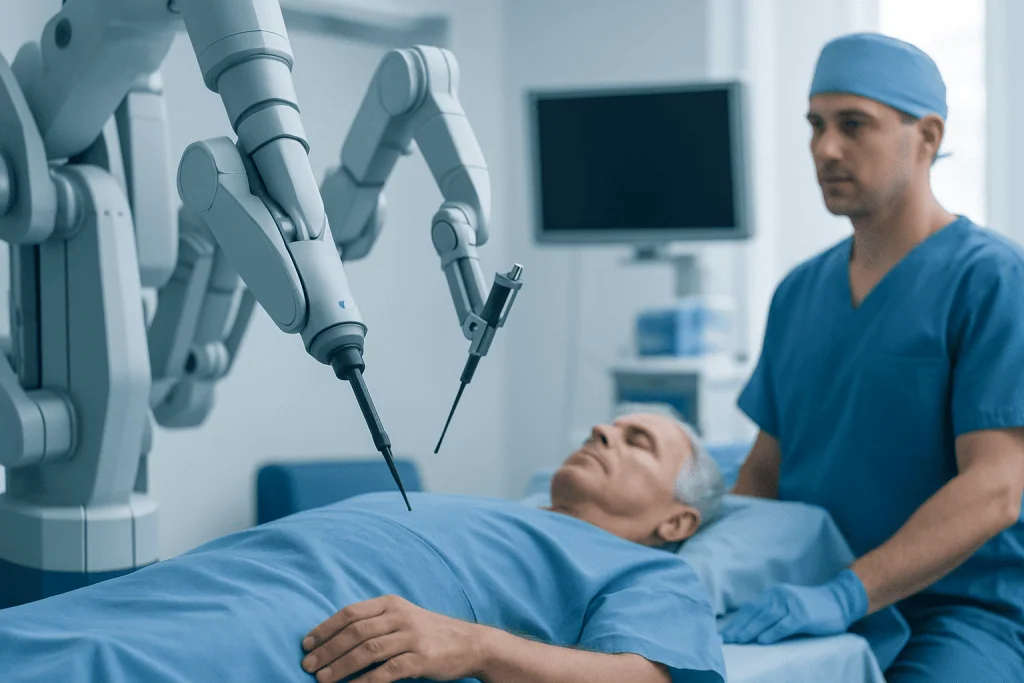
Radical prostatectomy is surgery to remove the entire prostate gland, usually along with the seminal vesicles. It is a standard treatment option for prostate cancer that appears confined to the prostate and may also be considered in selected people with locally advanced disease as part of a broader treatment plan. The aim is to remove the cancer while preserving urinary control and sexual function whenever safely possible.
Candidacy depends on cancer grade and stage, PSA before treatment, imaging, biopsy findings, age, other health conditions, life expectancy, and personal priorities. A urologist may discuss surgery alongside active surveillance, radiation therapy, hormone therapy, or combined approaches. The appropriate choice is individualized, and treatment decisions should be made after a full discussion of potential benefits and side effects.
The operation may be performed through open surgery or minimally invasive laparoscopic or robotic-assisted techniques. During the procedure, the surgeon removes the prostate and reconnects the bladder to the urethra. Pelvic lymph nodes may also be removed when there is a meaningful risk that cancer has spread there. More information about radical prostatectomy can help patients understand the surgical pathway.
When it is oncologically appropriate, nerve-sparing surgery may be used to reduce the likelihood of erectile dysfunction. However, preserving nerves is not always possible, especially when doing so could leave cancer behind. The final pathology examination of the removed tissue helps guide follow-up planning.
PSA Testing and Recovery After Prostatectomy

PSA is not usually checked immediately after surgery because PSA already circulating in the bloodstream needs time to clear. The first post-operative PSA test is often performed about 6 to 12 weeks after surgery, although the exact schedule varies by care team. Thereafter, PSA may be measured every few months initially and less often over time if results remain stable.
Recovery includes healing from surgery, catheter care for a short period, and gradual return to usual activity. Many people experience urinary leakage at first, which often improves over weeks to months with pelvic-floor rehabilitation. Erectile function can take longer to recover and depends on age, erections before surgery, nerve preservation, and whether additional treatments are needed.
Follow-up visits also review the pathology report. Important findings include the cancer grade group, whether cancer extended beyond the prostate, whether surgical margins contained cancer cells, seminal vesicle involvement, and lymph node status. These features help estimate recurrence risk but do not mean recurrence will definitely occur.
A rising PSA may prompt more frequent testing and, in some cases, advanced imaging. Imaging may not identify disease when PSA is very low, so the timing of scans is decided individually. Early evaluation matters because treatment may be most effective before a recurrence becomes visible or causes symptoms.
What Is an Alarming PSA Level After Prostatectomy?
For many clinical guidelines and research studies, biochemical recurrence after radical prostatectomy is defined as a PSA level of 0.2 ng/mL or higher, confirmed by a second PSA test. This threshold is a practical standard rather than a sudden biological dividing line. A PSA below 0.2 ng/mL can still deserve follow-up if it rises steadily on repeated tests.
A PSA that never becomes undetectable after surgery is sometimes called PSA persistence. It can occur when microscopic cancer remains in the body, although interpretation depends on when the test was taken and how sensitive the assay is. Persistent or rising PSA should be reviewed promptly by a urologist, often with input from a radiation oncologist and medical oncologist.
Doctors also look at PSA doubling time, which is how quickly the result increases. A rapidly rising PSA may require more urgent assessment than a slowly changing value. Conversely, a single unexpected result should usually be repeated before major treatment decisions are made, provided there is no reason for immediate intervention.
Salvage radiation therapy to the prostate bed, sometimes combined with hormone therapy, may be considered when recurrence is suspected. The best approach depends on the individual situation, including pathology, PSA trend, previous treatment, imaging, and possible treatment effects on bladder, bowel, and sexual health.
How Often Does Prostate Cancer Come Back After Prostate Removal?
Prostate cancer can return after prostate removal, but the likelihood varies widely. It is influenced by the cancer’s grade, stage, PSA before surgery, surgical margin status, lymph node results, and whether the cancer had spread beyond the prostate. People with lower-risk, organ-confined cancer generally have a lower risk of recurrence than those with higher-risk disease.
When PSA rises after surgery, it is called biochemical recurrence. This does not necessarily mean that cancer will cause symptoms, appear on a scan immediately, or spread to distant organs. Some PSA recurrences develop slowly, while others need earlier treatment. Regular PSA monitoring is the most reliable way to identify a possible recurrence before symptoms occur.
Recurrence may occur within the first few years after surgery or much later. For this reason, long-term follow-up remains important even after many stable results. The care team may use pathology findings and PSA kinetics to estimate risk and decide whether observation, imaging, radiation, hormone therapy, or another strategy is appropriate.
People who need further assessment can benefit from a multidisciplinary review. Acibadem International’s multidisciplinary specialists and JCI-accredited hospitals diagnose and treat prostate cancer for international patients, coordinating urology, radiation oncology, medical oncology, pathology, and supportive care where needed.
What Is an Average PSA Score for a 70 Year Old?
For a 70-year-old man who still has a prostate, PSA naturally varies and may increase with age, prostate enlargement, inflammation, urinary infection, recent ejaculation, or certain procedures. Some age-adjusted reference ranges use a higher upper limit for men in their seventies than for younger men, but there is no single “average” PSA score that can diagnose or exclude prostate cancer.
After complete prostate removal, age-based PSA ranges do not apply in the same way. Regardless of whether a person is 50, 70, or older, PSA should generally be undetectable or very low after surgery. Therefore, a new detectable or rising value should be interpreted in relation to the surgery and previous PSA results rather than age alone.
It is also important to distinguish total PSA screening before diagnosis from PSA surveillance after treatment. A PSA result should never be interpreted alone. A clinician may repeat the test, check for laboratory variation, review medications and medical history, and determine whether further tests are useful.
How to Lower PSA After Prostate Removal
There is no proven home remedy, supplement, diet, or exercise plan that can reliably lower PSA when it is rising because of recurrent prostate cancer. Attempting to reduce the number without identifying its cause may delay appropriate care. If PSA is detectable after surgery, the safest next step is repeat testing and review with the treating specialist.
A balanced eating pattern, maintaining a healthy weight, regular physical activity, not smoking, and limiting alcohol where appropriate can support recovery and overall cardiovascular health. These measures may also help a person tolerate cancer treatment and improve wellbeing, but they should complement—not replace—medical follow-up.
When recurrence is confirmed, treatment may include close surveillance, salvage radiotherapy, androgen-deprivation therapy, or other therapies based on the location and risk profile of the recurrence. radiotherapy may be used after surgery to target cancer cells in the prostate bed or nearby pelvic area when clinically appropriate.
Patients should tell their doctor about vitamins, herbal products, and over-the-counter treatments they are taking. Some products can interact with prescribed medicines, affect liver function, or create false reassurance without addressing the reason PSA is rising.
When to Seek Medical Care
Anyone with a detectable, rising, or unexpected PSA result after prostatectomy should contact their urologist or oncology team to discuss when the test should be repeated and whether additional evaluation is needed. A confirmed PSA of 0.2 ng/mL or higher warrants medical review, but lower values can also require follow-up when there is a consistent upward trend.
Urgent medical advice is appropriate after surgery for fever, worsening pain, inability to pass urine, heavy bleeding, chest pain, shortness of breath, leg swelling, or signs of infection. These symptoms are not typical indicators of PSA recurrence, but they may signal a surgical or medical complication that needs timely care.
New persistent bone pain, unexplained weight loss, marked fatigue, or neurological symptoms should also be reported to a doctor. These symptoms have many possible causes and do not by themselves prove cancer has returned, but prompt assessment is appropriate—particularly in someone with a history of prostate cancer.
Keeping scheduled PSA appointments, retaining copies of pathology and PSA results, and asking about the trend over time can help patients take an informed role in follow-up care. Decisions about further treatment should be made with a qualified clinical team that understands the individual’s complete medical history.
Frequently asked questions
What is a dangerous PSA level after prostate removal?
After radical prostatectomy, a PSA of 0.2 ng/mL or higher that is confirmed on a repeat test is commonly considered biochemical recurrence. However, doctors also assess whether PSA is rising over time, how quickly it is increasing, and the original cancer pathology.
Can PSA be detectable after prostatectomy without cancer recurrence?
A very low detectable PSA result does not always confirm recurrence. Differences in laboratory sensitivity, timing of the test, and rarely small amounts of remaining benign tissue can affect results. Repeat testing and assessment of the PSA trend are usually needed.
How soon should PSA become undetectable after prostate removal?
PSA is commonly checked around 6 to 12 weeks after surgery because it takes time for PSA in the bloodstream to clear. It is generally expected to become undetectable or very low after complete removal of the prostate. The exact test schedule may differ between treatment teams.
How often does prostate cancer come back after prostate removal?
The risk varies substantially according to cancer grade, stage, pre-treatment PSA, surgical margins, lymph node findings, and other pathology details. A PSA rise after surgery does not always lead to symptoms or distant spread, especially when it is detected and managed early. Long-term PSA follow-up is important.
What is an average PSA score for a 70 year old?
For men who still have a prostate, PSA levels can rise with age, but there is no single average value that reliably defines cancer risk. After prostate removal, age-adjusted screening ranges are not used in the same way because PSA should usually be very low regardless of age.
How can PSA be lowered after prostate removal?
There is no reliable diet, supplement, or lifestyle method that lowers PSA caused by recurrent prostate cancer. Healthy habits can support general health and recovery, but a rising PSA needs medical assessment. Treatment may be recommended based on repeat PSA tests, pathology, and imaging.
References
- American Urological Association
- European Association of Urology
- National Cancer Institute
- American Cancer Society
- National Comprehensive Cancer Network
This article is for general information only and is not a substitute for professional medical advice. Please consult a qualified doctor about your individual situation.
Oncology care in Turkey — second opinion and treatment plan
JCI-accredited · board-certified surgeons · reply within 24h