24-Hour EEG Monitoring: When Seizure Symptoms Need Extended Testing
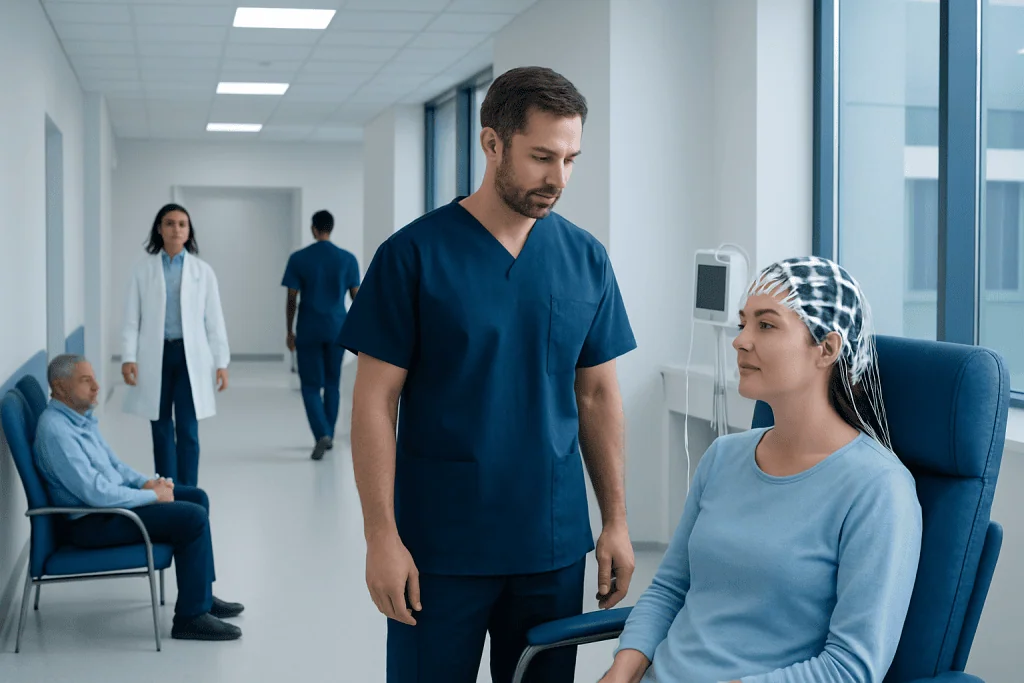
24-hour EEG monitoring records brain activity continuously over an extended period, often during normal daily activities and sleep. It is commonly used when standard EEG results are normal but seizure symptoms or unexplained spells continue.
Key Takeaways
- 24-hour EEG monitoring records brain activity continuously over an extended period, often during normal daily activities and sleep.
- It is commonly used when standard EEG results are normal but seizure symptoms or unexplained spells continue.
- The test can help doctors distinguish epileptic seizures from other conditions that may look similar.
- Patients are usually asked to keep a symptom diary and press an event button if symptoms occur during recording.
- Results are interpreted together with medical history, symptoms, and sometimes brain imaging or other neurological tests.
Medically reviewed by the Acıbadem International Medical Board — July 18, 2026
24-hour EEG monitoring is an extended brain-wave test used when brief EEG studies do not fully explain seizure-like symptoms or unexplained episodes. It can improve the chance of capturing abnormal electrical activity during everyday routines, sleep, or symptoms that happen only occasionally.
Overview
24-hour EEG monitoring is a longer form of electroencephalography, a test that records the brain’s electrical activity through small sensors placed on the scalp. While a routine EEG may last only 20 to 60 minutes, extended monitoring continues for a full day or longer, which gives doctors more time to detect changes that may not appear during a short visit.
This type of testing is especially helpful when a person has suspected seizures, brief episodes of staring, unusual movements, fainting-like spells, or periods of confusion that happen unpredictably. Because some events occur only during sleep or at certain times of day, extended recording can provide a more complete picture of brain activity.
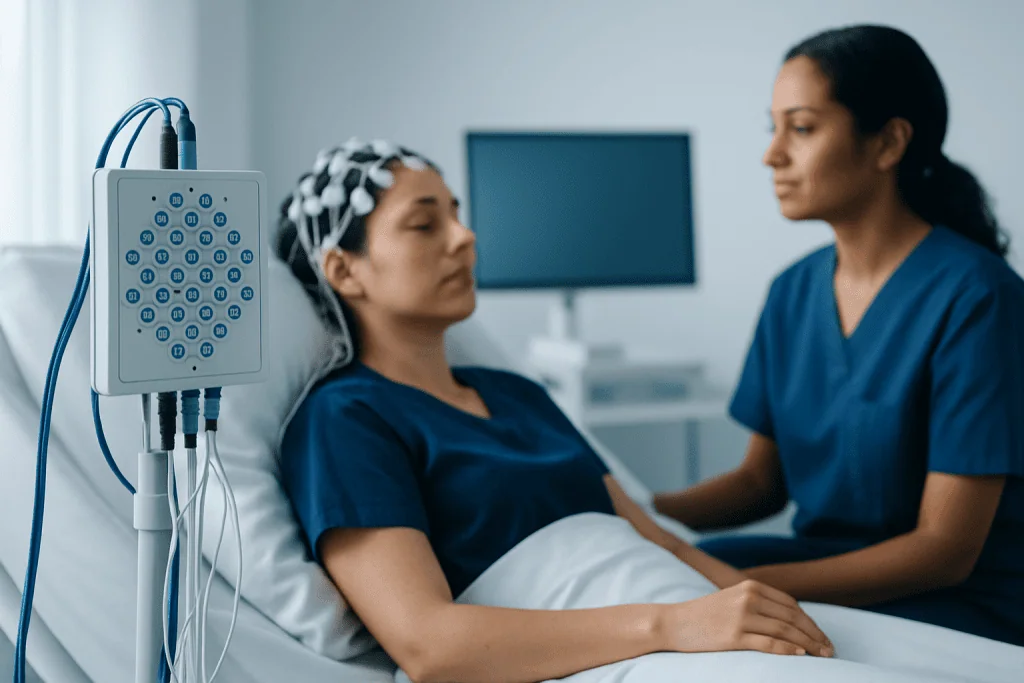
24-hour EEG monitoring may be done at home as ambulatory EEG or in a hospital setting, depending on the person’s symptoms and the level of observation needed. In both settings, the goal is to match any symptoms with what the brain is doing at that exact time. This helps guide diagnosis and treatment planning in a safer, more precise way.
When Extended EEG Testing Is Needed
Doctors may recommend 24-hour EEG monitoring when symptoms strongly suggest seizures but a routine EEG has been normal or inconclusive. A normal short EEG does not rule out epilepsy, because abnormal electrical activity may not happen during the limited testing window. Longer monitoring increases the likelihood of capturing meaningful changes.
It may also be used when doctors need to clarify whether repeated episodes are truly epileptic seizures or another condition with similar symptoms. Examples include fainting, sleep disorders, migraine-related events, movement disorders, panic attacks, or psychogenic nonepileptic seizures. In this context, the test is one important part of a careful evaluation.
Extended EEG can also help after a diagnosis has already been made. It may be used to classify seizure type, assess how often silent seizures occur, monitor possible nighttime seizures, or evaluate whether treatment seems to be controlling abnormal brain activity. In some cases, it helps determine whether further tests, such as epilepsy evaluation or imaging, are needed.
Symptoms That May Prompt a 24-Hour EEG
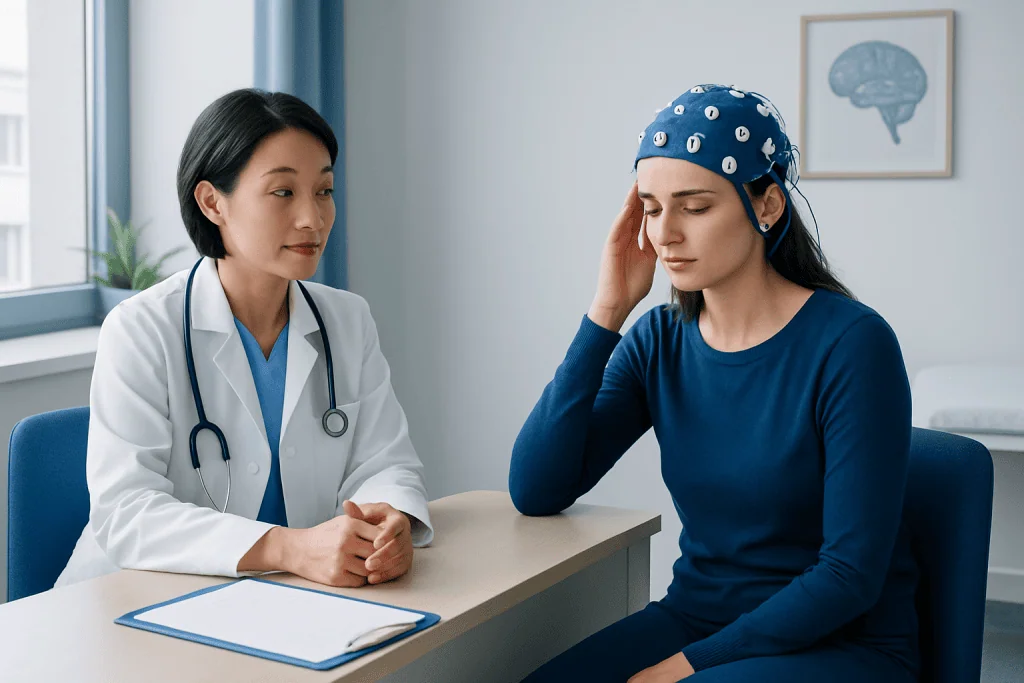
Seizure symptoms can vary widely from person to person. Some people have convulsions that are easy to recognize, while others have subtle events that may be mistaken for daydreaming, sleep problems, dizziness, or anxiety. Because symptoms can be brief and unpredictable, it is not always possible to identify the cause based on description alone.
A doctor may consider extended EEG testing if a person has repeated episodes such as staring spells, unresponsiveness, sudden confusion, unusual smells or sensations, involuntary jerking, lip smacking, sudden falls, loss of awareness, or waking with unexplained injuries or tongue biting. Nocturnal events, in particular, may be difficult to assess without overnight recording.
Children and older adults may show symptoms differently. In children, teachers or parents may notice frequent blank spells or unusual movements. In older adults, seizures may appear as confusion, memory lapses, or unexplained episodes that resemble fainting or stroke-like symptoms. These differences are one reason specialized neurological assessment is important.
- Brief blackouts or loss of awareness
- Recurrent episodes of unexplained shaking or stiffening
- Nighttime events or possible sleep-related seizures
- Unusual behaviors, repetitive movements, or confusion spells
- Symptoms continuing despite a normal routine EEG
How the Test Works and What to Expect
Before the test begins, a technologist places small electrodes on the scalp using adhesive or a special paste. These electrodes are connected to a portable recording device worn on a belt or shoulder strap, or to equipment used in a hospital room. The setup is designed to be secure enough to continue recording during regular activities and sleep.
During the monitoring period, the person is usually asked to go about normal daily routines as much as possible, unless the doctor gives different instructions. A symptom diary is often used to note the time of any event, what happened, how long it lasted, and how the person felt before and after. Many devices also include an event button that can be pressed when symptoms occur.
Preparation instructions may include arriving with clean, dry hair and avoiding hair sprays, oils, or gels. In some cases, a doctor may adjust sleep, medication, or caffeine instructions depending on the reason for testing, but this should only be done under medical guidance. Patients should not stop seizure medicines on their own.
Some people worry that the test is painful, but EEG itself is noninvasive and does not deliver electricity into the body. The main inconvenience is wearing the equipment for an extended time and taking care not to disturb the electrodes. If more detailed monitoring is needed, a specialist may recommend EEG testing in a supervised setting.
What Doctors Look For in the Results
When interpreting a 24-hour EEG, neurologists look for abnormal brain-wave patterns that may suggest epilepsy or another neurological issue. They pay special attention to whether electrical changes appear between symptoms, during sleep, or at the exact moment when a person reports an event. Capturing this timing is one of the greatest advantages of longer monitoring.
The test can show epileptiform discharges, focal abnormalities, generalized changes, or other patterns that help classify seizure type. It may also show that an episode happened without EEG changes typical of epilepsy, which can guide doctors to look for other explanations. This does not mean symptoms are not real; it means further evaluation may be needed to understand their cause.
EEG findings are rarely interpreted in isolation. Doctors combine the results with the person’s history, witness descriptions, examination findings, and other tests such as blood work or brain imaging. If needed, brain MRI or more advanced monitoring may be recommended to build a clearer diagnosis.
Treatment Decisions After 24-Hour EEG Monitoring
Treatment depends on what the monitoring shows. If the recording supports a diagnosis of epilepsy, the doctor may discuss antiseizure medication, lifestyle adjustments, safety planning, and follow-up testing. The exact treatment approach depends on seizure type, frequency, age, other health conditions, and whether there is an identifiable cause.
If results suggest a different condition, management focuses on that diagnosis instead. For example, a person may need assessment for a sleep disorder, heart rhythm problem, fainting tendency, or another neurological condition. In this way, 24-hour EEG monitoring can help avoid unnecessary treatment and support a more targeted care plan.
Some people need more than one test. If episodes are very infrequent, if the diagnosis remains uncertain, or if surgery is being considered, a doctor may advise longer inpatient video EEG monitoring. This can provide continuous brain-wave recording along with video observation to better match physical symptoms with electrical activity. In selected cases, specialist evaluation for epilepsy may follow.
Self-Care, Safety, and When to Seek Medical Advice
While waiting for testing or results, it is sensible to focus on safety. People with possible seizures should talk with a doctor about driving, swimming alone, climbing heights, operating machinery, and bathing unsupervised if episodes involve loss of awareness. Getting regular sleep and taking prescribed medicines consistently can also be important, as sleep deprivation may trigger seizures in some individuals.
Keeping a symptom diary can be very helpful. Notes from family members or other witnesses may add details that the person does not remember, such as changes in breathing, body movements, eye position, or how long the event lasted. Videos taken safely on a phone, when appropriate and respectful, may also support diagnosis.
Medical advice should be sought promptly for repeated unexplained episodes, new seizure-like symptoms, worsening frequency, injuries during events, or confusion afterward. Emergency care is important if a seizure lasts several minutes, repeated seizures happen without recovery in between, breathing seems impaired, or the event occurs in water or causes major trauma.
For patients who need expert assessment, Acibadem International’s multidisciplinary specialists in JCI-accredited hospitals diagnose and treat seizure-related conditions for international patients, including advanced neurophysiological testing when appropriate.
Frequently asked questions
What is the difference between a routine EEG and 24-hour EEG monitoring?
A routine EEG records brain activity for a short period, often less than an hour. A 24-hour EEG monitoring study records for much longer, which increases the chance of capturing abnormal activity or symptoms that happen only occasionally or during sleep.
Can a 24-hour EEG diagnose epilepsy?
It can strongly support or help clarify a diagnosis of epilepsy, especially if seizure-like events or epileptiform patterns are recorded. However, doctors usually make the diagnosis by combining EEG findings with symptoms, medical history, and sometimes imaging or other tests.
Is 24-hour EEG monitoring painful or dangerous?
The test is generally safe and noninvasive. The electrodes only record electrical activity from the scalp and do not send electricity into the body, so most people experience only mild inconvenience from wearing the equipment.
Do patients need to stay in the hospital for a 24-hour EEG?
Not always. Many people have ambulatory EEG monitoring at home, while others need hospital-based monitoring if symptoms are complex, safety is a concern, or video observation is especially important.
What should a patient do during the test if symptoms happen?
They should follow the instructions given by the care team, which often include pressing an event button and noting the time and details in a symptom diary. If a family member witnesses the event, their observations can also be useful for interpretation.
Can 24-hour EEG monitoring be normal even if a person has seizures?
Yes. If no seizure or abnormal electrical activity happens during the recording, the test may appear normal. In that situation, the doctor may recommend repeat testing, longer monitoring, or other evaluations based on the overall clinical picture.
References
- World Health Organization
- International League Against Epilepsy
- National Institute of Neurological Disorders and Stroke
- NHS
- American Clinical Neurophysiology Society
This article is for general information only and is not a substitute for professional medical advice. Please consult a qualified doctor about your individual situation.
Explore treatments in Turkey — costs, top hospitals & a free quote
JCI-accredited · board-certified surgeons · reply within 24h