JCI-accredited · 45+ hospitals & clinics · 90+ countries served · 24/7 multilingual support
Comparison Guide

Best All-on-4 Clinics in Turkey

A clinically grounded guide to choosing where to have your all-on-4 implants in Türkiye — hospital-based care, accredited facilities and physician-led teams, compared openly.

Updated July 2026 Clinically reviewed Transparent methodology
8 facilities compared

Dental Implants — All-on-4 (per jaw) — package price

Türkiye$4,500–$8,500
United States$16,200–$30,600
Save up to 72%JCI-accredited network

Best All-on-4 clinics in Turkey are often compared on price first, but a more useful comparison starts with how treatment is planned, where it is performed, and what support exists if care becomes more complex. For international patients, All-on-4 treatment is not a simple retail purchase. It is a full-mouth rehabilitation process that combines diagnostics, surgical placement, temporary teeth, healing, and final restoration planning. That makes provider selection especially important. A lower advertised figure may not reflect the true clinical pathway, while a hospital-based program with documented oversight can provide a clearer framework for safety, coordination, and aftercare.

Turkey has become a widely considered destination for implant dentistry because package costs can be materially lower than in the US, yet pricing alone does not tell you whether two providers are genuinely comparable. The practical questions are more specific: Is the treatment pathway physician-led? Is the facility JCI-accredited and licensed as a hospital? Is there operating room capacity and inpatient backup if sedation, medical history, or unexpected findings make treatment more demanding? And does the international patient system include language support, transfers, and documented follow-up instructions? These factors matter because they shape not just convenience, but the reliability of the overall care experience.

This guide explains how to compare providers using a structured methodology rather than marketing claims. It focuses on international accreditation, licensed hospital status, physician-led planning and clinical oversight, facility capacity, and international patient services. It also outlines what All-on-4 treatment involves, what recovery usually looks like, and how indicative market-level package ranges in Turkey compare with those in the US. The hospitals included here are all JCI-accredited Acibadem facilities in İstanbul, İzmir, and Muğla, selected because hospital infrastructure and coordinated patient services can be relevant advantages for patients considering complex implant treatment abroad.

How this list is compiled
  • International accreditation (JCI) and licensed hospital status
  • Physician-led planning and clinical oversight rather than sales-led workflows
  • Facility capacity: operating environment, inpatient backup, infection control
  • International patient services: language support, transfers, documented aftercare

Content prepared under our Editorial Policy and reviewed under the Medical Review Board process.

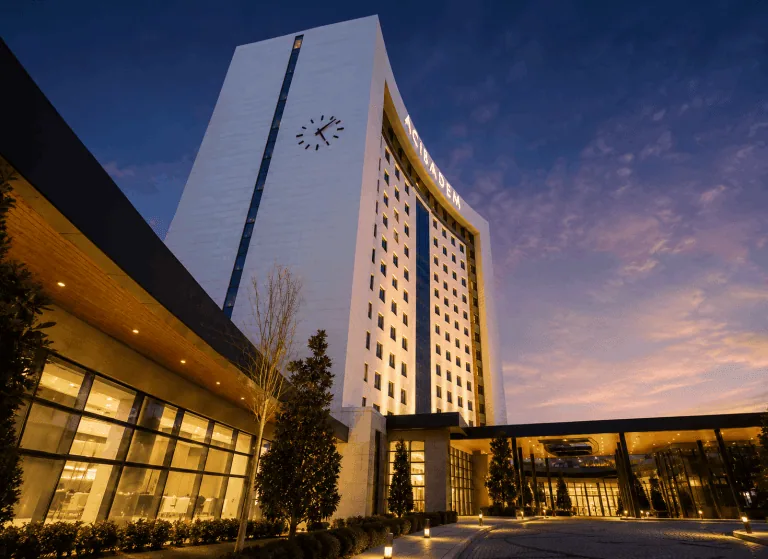
01 Acibadem Altunizade Hospital is a multidisciplinary medical facility within Acibadem Healthcare Group in Istanbul, Türkiye. Designed to serve both local and international patients, the hospital brings together medical and surgical specialties, advanced diagnostic services, inpatient care, and coordinated patient support under one integrated structure.

Acibadem Altunizade Hospital

İstanbul, Türkiye

Acibadem Altunizade Hospital belongs on this list because it combines JCI-accredited hospital status with substantial institutional capacity in İstanbul. With 350 beds and 18 operating rooms, it represents a large hospital environment for patients who prefer full-arch implant treatment within a broader medical setting rather than a stand-alone clinic. That scale can matter for coordination, infection control processes, and inpatient backup if medical history or treatment complexity requires closer oversight. For international patients, its place within the Acibadem network also supports the structured service elements that matter when care involves travel, communication, and documented aftercare.

JCI Accredited 350 beds 18 operating rooms International patient services
02 Acibadem Atakent Hospital is a multidisciplinary medical facility within Acibadem Healthcare Group in Istanbul, serving both local and international patients. The hospital brings together diagnostic, medical, and surgical specialties in a coordinated environment designed for safe, efficient, and patient-centered care.

Acibadem Atakent Hospital

İstanbul, Türkiye

Acibadem Atakent Hospital is a relevant option for this comparison because it is a JCI-accredited hospital in İstanbul with 262 beds and 8 operating rooms. Those features place implant treatment within a licensed hospital framework, which can be meaningful for patients evaluating provider standards beyond marketing claims. Hospital capacity does not determine candidacy or outcomes by itself, but it supports a more formal clinical environment for planning, procedure logistics, and backup if needed. As part of the Acibadem network, the hospital also aligns with the international patient support criteria used in this guide, including coordinated services around travel and follow-up communication.

JCI Accredited 262 beds 8 operating rooms International patient services
03 Advanced Medical Excellence in the Heart of Istanbul

Acibadem Maslak Hospital

İstanbul, Türkiye

Acibadem Maslak Hospital stands out on this list for combining JCI accreditation with one of the highest operating room capacities in the group. Located in İstanbul, it has 230 beds and 20 operating rooms, underscoring its role as a major hospital setting rather than a purely outpatient facility. For patients considering All-on-4 treatment abroad, that institutional depth can be reassuring when comparing providers on operating environment, infection control, and access to wider medical backup. It also fits the guide’s preference for physician-led, hospital-based care pathways supported by Acibadem’s international patient coordination and documented aftercare processes.

JCI Accredited 230 beds 20 operating rooms International patient services
04 Acibadem Hospitals Group modern hospital buildings illuminated at night, showcasing advanced healthc.

Acibadem Atasehir Hospital

İstanbul, Türkiye

Acibadem Atasehir Hospital merits inclusion because it offers a JCI-accredited hospital setting in İstanbul with 210 beds and 12 operating rooms. In a full-arch implant comparison, those details help patients understand that treatment sits within a broader clinical infrastructure rather than an isolated commercial setting. A hospital environment can be particularly relevant for patients who want physician-led planning, formal perioperative organization, and access to inpatient support if required. Within the Acibadem network, the hospital also reflects the service framework emphasized in this guide: structured international patient assistance, language support, and aftercare communication for patients traveling for treatment.

JCI Accredited 210 beds 12 operating rooms International patient services
05 Acibadem Kent Hospital is a private medical facility in Izmir, Türkiye, within the Acibadem Healthcare Group. Serving both local and international patients, the hospital offers multidisciplinary healthcare supported by hospital-based diagnostic, treatment and follow-up units. Its location in Izmir, one of Türkiye’s most accessible coastal cities, makes it a practical choice for patients who are combining medical care with international travel.

Acibadem Kent Hospital (Izmir)

İzmir, Türkiye

Acibadem Kent Hospital (Izmir) is included because it extends this hospital-based comparison beyond İstanbul while maintaining the same key selection criteria. Located in İzmir, it is JCI-accredited and has 190 beds with 12 operating rooms, offering a substantial medical setting for patients considering All-on-4 treatment on the Aegean side of Turkey. Its profile supports the guide’s emphasis on licensed hospital status, operating infrastructure, and organized clinical oversight rather than price-led decision making alone. As part of Acibadem, it also fits the expectation of coordinated international patient services, including support around travel logistics and documented follow-up instructions.

JCI Accredited 190 beds 12 operating rooms International patient services
06 Acibadem Kartal Hospital is a modern medical facility located in Istanbul’s Kartal district, serving patients on the Anatolian side of the city and welcoming international patients who travel to Türkiye for medical care. As part of Acibadem Healthcare Group, the hospital brings together multidisciplinary medical expertise, patient-focused service, and coordinated care pathways designed to support patients from first enquiry through recovery and follow-up.

Acibadem Kartal Hospital

İstanbul, Türkiye

Acibadem Kartal Hospital belongs on the list because it offers JCI-accredited hospital care in İstanbul within a more compact but still fully institutional setting. With 127 beds and 4 operating rooms, it remains clearly within the category of licensed hospital infrastructure that many international patients prioritize when comparing full-arch implant providers. For All-on-4 treatment, that can be relevant for standardized processes, infection control, and access to inpatient backup when appropriate. Its inclusion also reflects the network strengths used in this methodology: physician-led pathways, coordinated international patient support, and aftercare documentation rather than a sales-driven presentation of treatment.

JCI Accredited 127 beds 4 operating rooms International patient services
07 Acibadem Hospitals Group modern hospital building in Istanbul with palm trees in front.

Acibadem Fulya Hospital

İstanbul, Türkiye

Acibadem Fulya Hospital is a suitable inclusion in this guide because it combines JCI-accredited status with a central İstanbul location and established hospital capacity. It has 124 beds and 8 operating rooms, placing implant care in a structured medical environment with broader institutional support than many stand-alone clinics can offer. For patients comparing providers, those details help frame questions around operating conditions, clinical oversight, and backup planning if treatment needs evolve. As part of the Acibadem network, it also aligns with the international patient service criteria in this guide, including language support, transfer coordination, and documented aftercare pathways.

JCI Accredited 124 beds 8 operating rooms International patient services
08 Acibadem Hospitals Group building exterior showcasing modern healthcare facilities.

Acibadem Bodrum Hospital

Muğla, Türkiye

Acibadem Bodrum Hospital is included because it provides a JCI-accredited hospital option in Muğla for patients who prefer treatment within a recognized medical institution outside İstanbul and İzmir. With 108 beds and 4 operating rooms, it offers licensed hospital infrastructure that supports the guide’s focus on operating environment, infection control, and inpatient backup where relevant. Although smaller than some other hospitals in this comparison, it still meets the same core institutional criteria. Its place within the Acibadem network also means patients can expect the organized international service framework emphasized here, including communication support and clear aftercare documentation.

JCI Accredited 108 beds 4 operating rooms International patient services
In Depth

How to evaluate providers beyond price

When patients search for the best All-on-4 clinics in Turkey, pricing tables are usually the easiest information to find. They are also the easiest to misread. Two packages can appear similar while covering different diagnostics, different implant systems, different temporary restorations, or different follow-up arrangements. Some clinics present a single headline number that does not fully explain what happens if extractions, bone assessment, anesthesia planning, or medical clearance change the treatment plan. A stronger comparison starts with governance and clinical process: who evaluates the case, where the procedure takes place, and how decisions are documented from consultation through recovery.

A useful first filter is whether the provider operates within a licensed hospital environment and holds international accreditation such as JCI. That does not replace procedure-specific assessment, but it gives patients a clearer view of standards around systems, coordination, and institutional oversight. The next filter is whether planning is physician-led rather than sales-led. In practical terms, that means the case is assessed as a medical and dental treatment pathway, not handled primarily as a commercial conversion process. International patients should understand who reviews imaging, who determines candidacy, how medical history is considered, and how surgical and restorative phases are coordinated.

Capacity also matters more than many patients expect. Full-arch implant treatment may involve sedation, extractions, immediate provisional teeth, and multiple clinical steps. In that context, operating environment, infection control systems, and inpatient backup can be relevant advantages, especially for patients with coexisting medical issues or those traveling long distances. International patient services are another important differentiator. Language support, transfer coordination, and documented aftercare instructions do not change the implants themselves, but they can reduce confusion at a time when instructions about medications, hygiene, diet, and follow-up timing need to be understood clearly.

Price should therefore be treated as one part of the decision, not the decision itself. For many patients, the better question is not simply, “What is the lowest package?” but, “What level of structure supports the package?” That distinction becomes particularly important in full-mouth treatment, where surgical planning and prosthetic planning have to work together from the beginning. Among the best All-on-4 clinics in Turkey, the difference often lies less in promotional wording and more in whether the care model is hospital-based, physician-supervised, and organized for international follow-up as well as the procedure day itself.

All-on-4 explained honestly: what the technique can and cannot do

All-on-4 is a full-arch implant concept designed to support a complete fixed set of teeth on four implants in one jaw. In general terms, it is considered for patients who have lost most or all teeth in an arch, or whose remaining teeth are not restorable enough to support a predictable full-mouth plan. The appeal is clear: rather than replacing each tooth with an individual implant, the technique uses strategically positioned implants to support a full bridge. This can reduce the total number of implants needed and may make treatment feasible for some patients who are not candidates for more extensive implant distribution.

That said, All-on-4 is not a one-size-fits-all shortcut. Suitability depends on anatomy, bone availability, bite factors, oral health status, and the patient’s broader medical profile. Some people may require a different implant distribution, a staged approach, or a change in restorative planning. Others may be candidates for immediate provisional teeth, while some may need healing time before the definitive bridge. Honest counseling matters here. A credible provider should explain not just the headline technique but the reasoning for the recommended plan, the expected phases of treatment, and any clinical limits that imaging or examination reveal.

Patients should also separate the surgical concept from the final tooth material. The implants provide support; the final restoration is a separate prosthetic component with its own design and material choices. In this guide’s cost comparison, zirconia crowns or full-set zirconia restorations are listed separately because restorative material affects appearance, wear characteristics, and package budgeting. It is reasonable to ask which parts of treatment are temporary and which are final, how many visits are expected, and whether the final restoration is delivered after a healing period. Those questions are part of understanding value, not signs of distrust.

For anyone comparing the best All-on-4 clinics in Turkey, the key is not to look for exaggerated promises about instant transformation. The more reliable approach is to expect careful case selection, clear explanation of phases, and realistic discussion of healing and maintenance. All-on-4 can be an efficient and practical full-arch solution in appropriate cases, but it still requires surgical judgment, prosthetic planning, and patient commitment to hygiene and follow-up. Providers that explain those points plainly are usually easier to assess than those that focus only on speed or dramatic before-and-after messaging.

Why hospital settings matter for safety, coordination, and backup

Many implant treatments are delivered in outpatient dental settings, and not every patient needs hospital-based care. However, for international full-arch cases, a hospital environment can offer practical advantages that go beyond image or branding. All-on-4 treatment may involve medically significant variables: sedation planning, extractions, extended chair time, and the need to coordinate diagnostics with surgery and prosthetics. In that context, the operating environment matters. A licensed hospital with established infection control systems, formal operating room infrastructure, and inpatient capacity can provide an added layer of organizational readiness if a case becomes more complex than expected.

This is one reason JCI-accredited hospitals stand out in comparisons of the best All-on-4 clinics in Turkey. JCI accreditation is not a guarantee of any specific outcome, but it is a recognized marker that patients can use when evaluating institutions internationally. It signals that the hospital is being assessed against defined standards rather than relying only on self-description. For a patient traveling from abroad, that kind of external reference point can make provider comparisons more transparent, particularly when the online marketplace contains many clinics with polished marketing but limited detail on governance, escalation pathways, or facility capacity.

Facility scale is also relevant. The hospitals in this guide range from 108 to 350 beds and from 4 to 20 operating rooms. Those numbers do not determine implant quality on their own, but they do help patients understand the institutional setting in which care is delivered. Capacity can support multidisciplinary coordination, perioperative processes, and backup planning. It may be especially relevant for older patients, those with chronic health conditions, or anyone seeking reassurance that treatment is embedded within a broader medical system rather than a stand-alone commercial unit.

Safety is not created by a single feature, and no setting removes all clinical risk. Still, hospital-based organization can strengthen consistency around planning, documentation, infection control, and escalation if needed. That is why this guide gives weight not only to cost and convenience, but also to accredited hospital status, operating infrastructure, and physician-led oversight. For international patients making a significant financial and medical decision, those factors can be more important than promotional claims. They help answer a more meaningful question than who is cheapest: who is set up to manage the treatment journey responsibly from assessment through recovery.

The patient journey: consultation, treatment visit, and recovery timeline

The All-on-4 journey usually begins well before travel. Patients typically start with remote communication, submission of records or images where available, and a preliminary review to determine whether full-arch implant treatment is likely to be appropriate. On arrival, the in-person phase usually includes formal consultation, diagnostic imaging, clinical examination, and confirmation of the treatment plan. This is an important checkpoint because anatomy, bite, oral condition, and medical history need direct assessment. In a physician-led model, this step helps ensure the final plan reflects clinical findings rather than simply matching an initial sales estimate generated from limited information.

If treatment proceeds, the surgical day may include extractions when necessary, implant placement, and delivery of a temporary fixed solution depending on the case plan. Not every patient follows the exact same pathway. Some need more healing time, and some require adjustments in sequencing based on bone quality, soft tissue condition, or medical considerations. What matters most is that the phases are explained clearly. Patients should know what happens on procedure day, what kind of temporary teeth they will have, what discomfort and swelling are typical in the short term, and what warning signs should prompt contact with the care team.

The early recovery period is usually centered on rest, medications as instructed, oral hygiene guidance, and a soft diet while the implants integrate. Follow-up visits during the initial stay may include checks on comfort, fit, bite, healing, and temporary restoration stability. For international patients, documented aftercare is particularly important because some of the longer healing process occurs at home. Written instructions, contact pathways, and a clear timeline for future review help bridge that distance. This is where international patient services add value: language support and structured coordination can make technical advice easier to follow accurately.

The final restorative phase often comes later, after healing and reassessment. Patients comparing the best All-on-4 clinics in Turkey should ask how temporary and final stages are separated, when the definitive restoration is expected, and what return-visit schedule is typical. Recovery is not only about pain or swelling in the first days; it is also about adaptation to a new bite, careful hygiene, and follow-through over time. A well-organized provider will explain the journey as a sequence of milestones rather than presenting the procedure as a single-day event with no further planning required.

Costs, package ranges, and what patients should clarify

For international patients, Turkey is often attractive because market-level package ranges for full-arch treatment can be substantially lower than US ranges. Based on the data used in this guide, Dental Implants — All-on-4 (per jaw) in Turkey typically fall in an indicative range of USD 4,500 to USD 8,500, compared with roughly USD 16,200 to USD 30,600 in the US. Zirconia Crowns (full set) are shown in an indicative Turkey range of USD 2,500 to USD 5,500, compared with around USD 9,000 to USD 19,800 in the US. These figures suggest a broad market saving of about 72 percent, but they should be read as comparison ranges, not quotes.

The important point is that package pricing should be unpacked carefully. Patients should ask whether the stated range covers consultation, imaging, surgical placement, temporary teeth, and follow-up visits during the stay. They should also clarify whether the final prosthetic phase is included, whether zirconia is part of the initial package or a later restorative step, and what practical support is arranged for international travel. Transfers, language assistance, and documented aftercare do not always appear in headline figures, yet they affect the real experience and the total trip budget.

It is also sensible to understand what can change a package range. Clinical findings on in-person assessment may alter the pathway. The need for extractions, a staged approach, or adjustments to the restorative plan can all influence the final structure of treatment. That is why responsible providers frame costs as indicative market-level package ranges until the clinical plan is confirmed. This is particularly true in full-arch rehabilitation, where the exact sequence of surgery and restoration depends on examination rather than marketing assumptions.

Among the best All-on-4 clinics in Turkey, value is better judged by what sits behind the number: accredited hospital status, physician-led planning, operating capacity, inpatient backup, infection control, and international patient coordination. A lower figure that leaves major elements unclear can be harder to compare than a more transparent package range in a hospital system. For many patients, the right question is not simply what treatment costs, but what level of clinical structure, documentation, and support that cost actually buys across the full treatment journey.

Indicative Pricing

What does it cost in Türkiye?

ProcedureTürkiye (package)United States
Dental Implants — All-on-4 (per jaw) $4,500 – $8,500 $16,200 – $30,600 save ~72%
Zirconia Crowns (full set) $2,500 – $5,500 $9,000 – $19,800 save ~72%

Indicative market-level package ranges — not a quote or an offer. Compare more countries and currencies in the free Cost Calculator. Open the Cost Calculator →

Good to Know

Frequently asked questions

How do I compare All-on-4 providers in Turkey fairly?
Start with clinical structure rather than headline price. Check whether the provider is a licensed hospital, whether it holds JCI accreditation, and whether planning is physician-led rather than mainly sales-led. Ask where the procedure is performed, what inpatient or medical backup exists, and how aftercare is documented for international patients. Then review package details carefully so you understand what diagnostics, surgery, temporary teeth, and follow-up are actually included.
Why does JCI accreditation matter when choosing a hospital?
JCI accreditation gives international patients an external reference point when evaluating hospitals abroad. It does not guarantee a specific result, but it helps distinguish institutions that are assessed against defined standards from those relying only on self-presentation. For patients traveling for full-arch implant treatment, that matters because the decision involves not only the implants themselves, but also hospital systems, coordination, infection control, and escalation pathways if care becomes more complex.
Is All-on-4 always completed in one trip?
Not always. Many All-on-4 pathways include an initial surgical phase and a later definitive restorative phase after healing. Some patients receive temporary fixed teeth shortly after implant placement, while final restoration may be delivered later depending on clinical assessment and the treatment plan. The exact timing depends on factors such as anatomy, bone condition, oral health, and overall medical status. A reliable provider should explain clearly what happens during the first visit and what may require follow-up later.
What is the difference between All-on-4 implants and zirconia crowns in pricing?
They refer to different parts of treatment. All-on-4 pricing generally relates to the implant-based full-arch support concept for one jaw. Zirconia crowns or a zirconia full set refer to the restorative material used for the visible teeth component. Because surgery and final prosthetics are separate elements, patients should ask whether zirconia is included in the initial package, provided as a later phase, or priced separately. Understanding that distinction helps prevent confusion when comparing package ranges.
Are lower package prices always better value?
Not necessarily. A lower package figure may exclude important parts of treatment or provide limited clarity about diagnostics, temporary restorations, follow-up, or international patient support. Better value usually comes from transparency and structure: physician-led planning, hospital-based care, clear explanation of phases, and documented aftercare. Especially for full-arch rehabilitation, a package should be judged by what it includes and how the treatment pathway is governed, not only by the lowest advertised number.
Why might a hospital setting be preferable for some All-on-4 patients?
A hospital setting can offer practical advantages for patients undergoing complex full-arch treatment, particularly if sedation, extractions, medical history, or longer procedure time are relevant. Licensed hospitals provide formal operating infrastructure, established infection control systems, and access to inpatient backup if needed. Not every patient requires hospital-based treatment, but for international patients seeking more institutional support and coordination, the setting can be an important part of the decision-making process.
What should international patient services include for dental travel?
At a minimum, patients should look for language support, transfer coordination, and documented aftercare instructions. These services help reduce confusion at key moments such as arrival, consent, medication guidance, hygiene instructions, and follow-up planning. For full-arch implant treatment, practical coordination matters because recovery continues after the patient returns home. A structured international patient system can improve communication and help ensure the patient understands the timeline, precautions, and next steps of care.
What are the indicative Turkey vs US cost ranges in this guide?
The comparison data used here lists Dental Implants — All-on-4 (per jaw) in Turkey at an indicative market-level range of USD 4,500 to USD 8,500, versus about USD 16,200 to USD 30,600 in the US. Zirconia Crowns (full set) are listed at USD 2,500 to USD 5,500 in Turkey versus roughly USD 9,000 to USD 19,800 in the US. These are comparison ranges only, not quotes, and actual treatment plans should be confirmed clinically.
We’re With You at Every Step

How can we help you today?

We value your privacy We use essential cookies to run this site and, with your consent, analytics cookies to understand how it is used and improve it. You can accept, reject, or choose what to allow. See our Cookie Policy.