Foods That Are Rich in Water: Benefits, Risks, and Safe Use

Foods that are rich in water can contribute meaningfully to daily fluid intake. Fruit, vegetables, soups, milk, and yogurt are common examples of water-rich foods.
Key Takeaways
- Foods that are rich in water can contribute meaningfully to daily fluid intake.
- Fruit, vegetables, soups, milk, and yogurt are common examples of water-rich foods.
- These foods may support hydration, digestion, fullness, and nutrient intake when used as part of a balanced diet.
- They do not replace oral rehydration or medical treatment for significant dehydration or illness.
- Some people need individualized advice, especially those with kidney, heart, digestive, or blood sugar concerns.
Medically reviewed by the Acıbadem International Medical Board — July 23, 2026
Foods that are rich in water include fruits, vegetables, soups, yogurt, and similar foods with a high fluid content. They can support daily hydration and overall nutrition, but they are best understood as part of a balanced diet rather than a substitute for drinking fluids or treating dehydration.
Overview
Foods that are rich in water are foods with a naturally high fluid content, often above 80% to 90% by weight. Common examples include cucumber, lettuce, tomatoes, watermelon, strawberries, oranges, zucchini, broth-based soups, milk, and plain yogurt. These foods can help the body take in both water and nutrients at the same time.
Clinical nutrition guidance supports the idea that total hydration comes from both drinks and foods. For many people, water-rich foods are a practical way to support fluid intake across the day, especially in hot weather, during illness with reduced appetite, or for people who find it difficult to drink enough fluids. However, hydration needs vary with age, activity level, medications, climate, and health conditions.
It is also important to separate evidence-based benefits from common overstatements. Water-rich foods may help support hydration, satiety, and digestive health, but they do not “detox” the body in a medical sense, and they cannot reliably correct moderate or severe dehydration on their own. In those situations, targeted rehydration and medical evaluation may be needed.
Common Examples of Water-Rich Foods
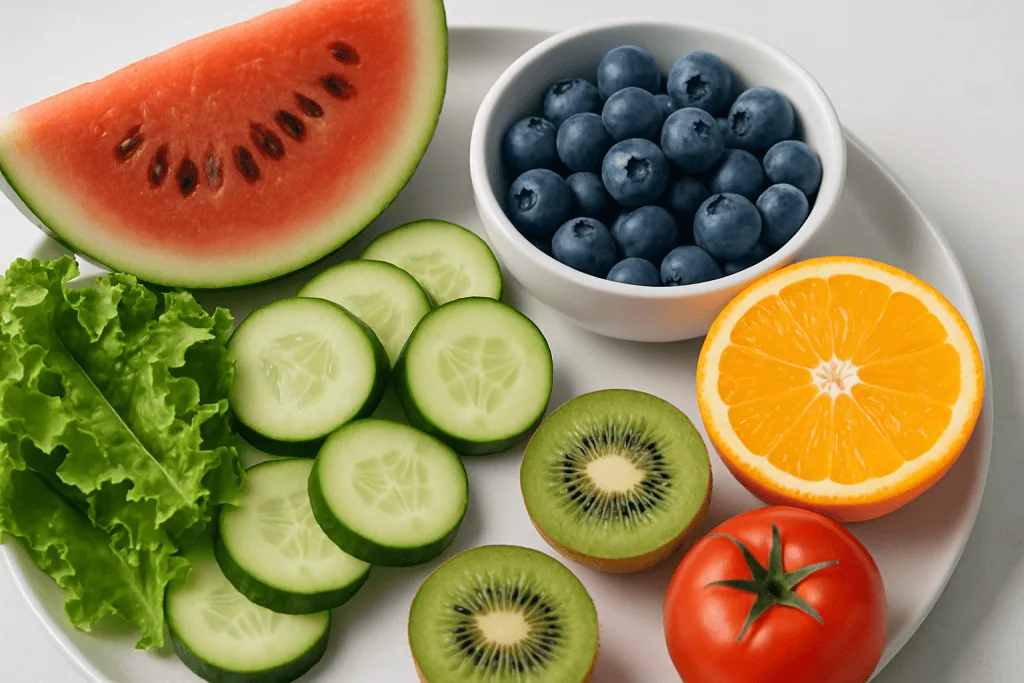
Many plant foods are naturally high in water. Non-starchy vegetables are especially notable because they combine high water content with relatively low calorie density. Fruits often provide water along with fiber, vitamins, and natural sugars, making them useful as snacks or parts of meals.
Examples of foods that are rich in water include:
- Cucumber, celery, lettuce, spinach, zucchini, tomatoes, bell peppers, and cauliflower
- Watermelon, strawberries, oranges, grapefruit, peaches, cantaloupe, and pineapple
- Broth-based soups and vegetable soups
- Plain yogurt, milk, kefir, and cottage cheese
- Cooked grains or legumes prepared with extra fluid, such as oatmeal or soups with beans
Not all hydrating foods are the same nutritionally. Some are lower in calories and higher in fiber, while others provide more protein, sodium, potassium, or carbohydrates. For example, yogurt may be a good option when hydration is needed alongside protein, while fruit may be easier to tolerate during a light meal or snack.
Preparation matters as well. Fresh, frozen, and lightly cooked foods often retain their fluid content well. In contrast, dried fruit, chips, and heavily processed snacks contain far less water, even if they come from a fruit or vegetable source originally.
What the Evidence Supports

The clearest benefit of water-rich foods is that they contribute to daily fluid intake. The body does not distinguish sharply between water consumed in a beverage and water consumed in food once both are absorbed. For this reason, nutrition experts recognize food moisture as a normal and useful part of hydration.
Research also supports related benefits in some settings. Water-rich foods can help increase feelings of fullness, which may support balanced eating patterns. Many of these foods also contain fiber, potassium, vitamin C, folate, and other nutrients that support general health. Broth-based soups, fruits, and vegetables can be especially helpful for people who need lighter meals during warm weather or reduced appetite.
At the same time, some claims go beyond available evidence. Water-rich foods are not proven treatments for fatigue, headaches, or skin problems when those symptoms have other causes. They are also not a replacement for evidence-based care in conditions such as severe vomiting, diarrhea, heat illness, or clinically significant dehydration. If there are symptoms such as dizziness, confusion, very dark urine, fainting, or inability to keep fluids down, medical advice is important.
Benefits in Daily Use
In everyday life, foods that are rich in water may be most helpful when they are used consistently rather than occasionally. Adding a fruit or vegetable to each meal, choosing broth-based soups, or using yogurt as a snack can gently improve hydration over time. This can be useful for children, older adults, and busy adults who do not always notice thirst early.
These foods may also support digestion. Fiber-rich fruits and vegetables can help bowel regularity when paired with adequate fluid intake. People with constipation may benefit from hydration-focused eating, although long-term or severe symptoms can have other causes and may need medical evaluation, including assessment for constipation.
For people trying to manage appetite or body weight, water-rich foods can increase meal volume without adding excessive calories. This does not make them a weight-loss treatment by themselves, but they can be part of a structured, balanced eating pattern. If weight concerns are complex or tied to medical conditions, a clinician or dietitian may recommend broader support, and some individuals may eventually discuss options such as obesity surgery when appropriate.
Risks, Side Effects, and Who Should Be Careful
For most healthy people, water-rich foods are safe and beneficial. The main concerns are usually not the water itself, but the person’s medical context and the type of food chosen. Some fruits may be high in natural sugars, some soups may be high in sodium, and some dairy foods may cause symptoms in people with lactose intolerance.
People with kidney disease, heart failure, advanced liver disease, or conditions requiring fluid restriction should not assume that “healthy” high-water foods are always appropriate in large amounts. Their total fluid intake may need to include water from both beverages and food. Anyone with these conditions should follow individualized advice from a doctor or dietitian.
Certain digestive disorders may also affect food choice. Raw produce can worsen bloating, abdominal pain, or diarrhea in some people, especially during active symptoms. People who have recurrent abdominal discomfort may need evaluation for causes such as irritable bowel syndrome, and they may tolerate cooked vegetables, peeled fruit, or lower-fiber options better during flares.
Food safety is another practical issue. Cut fruit, prepared salads, dairy products, and chilled soups should be stored correctly to reduce the risk of foodborne illness. This is especially important for children, older adults, pregnant people, and anyone with a weakened immune system.
How to Use Water-Rich Foods Safely and Effectively
The most reliable approach is to use water-rich foods to complement, not replace, regular fluid intake. A simple pattern may include fruit at breakfast, vegetables at lunch and dinner, a bowl of soup, and plain yogurt or milk as tolerated. This helps distribute both fluids and nutrients through the day.
During exercise, hot weather, fever, vomiting, or diarrhea, the body may lose fluid and electrolytes more quickly. In those situations, food alone may not be enough. Oral fluids, and sometimes oral rehydration solutions, are usually more effective than relying only on fruits or vegetables. If dehydration becomes significant, medical care is more appropriate than self-treatment with food.
Choice should also match the person’s needs. Examples include lower-sodium soups for people monitoring salt intake, lower-acid fruit for those with reflux, and lower-potassium choices for people with certain kidney conditions. People with diabetes can still include water-rich fruit, but portion size and overall carbohydrate intake matter, especially if blood sugar is difficult to control.
For people with swallowing problems, jaw issues, or poor appetite, softer hydrating foods may be easier to manage. Options such as yogurt, smoothies, pureed soups, or medically guided nutrition support can help. In selected cases of severe nutritional difficulty, clinicians may discuss more intensive care, including PEG insertion for long-term feeding support.
When to Seek Medical Care
Medical care should be sought if there are signs that suggest dehydration or illness is more than mild. These signs may include confusion, fainting, very little urination, inability to keep fluids down, severe weakness, persistent vomiting, severe diarrhea, rapid breathing, or signs of heat illness. Infants, older adults, and people with chronic diseases may need earlier evaluation because dehydration can progress more quickly.
It is also reasonable to seek advice if eating water-rich foods repeatedly causes pain, bloating, diarrhea, reflux, or large blood sugar swings. Symptoms may reflect a food intolerance, medication effect, or an underlying condition rather than a problem with hydration itself. A doctor can help identify the cause and suggest safer alternatives.
If a person has chest symptoms, severe abdominal pain, high fever, or signs of a stroke or heart problem, urgent medical assessment is needed rather than self-care at home. In some situations, symptoms that seem related to poor intake may actually be linked to other conditions, including severe infection, bowel disease, or cardiovascular illness.
Near the end of the care pathway, patients who need specialist support may benefit from a multidisciplinary approach. Acibadem International’s multidisciplinary specialists and JCI-accredited hospitals diagnose and treat a wide range of digestive, nutritional, and hydration-related concerns for international patients, including supportive procedures such as endoscopy when clinically indicated.
Frequently asked questions
What are the best foods that are rich in water?
Common examples include cucumber, lettuce, celery, tomatoes, watermelon, strawberries, oranges, broth-based soups, milk, and plain yogurt. The best choice depends on a person’s needs, preferences, and any medical conditions that affect fluid, sugar, sodium, or potassium intake.
Can water-rich foods replace drinking water?
No. They can support hydration, but they usually should not replace drinking water or other appropriate fluids. In exercise, heat exposure, vomiting, diarrhea, or illness, direct fluid intake is often more important.
Do foods with high water content help with dehydration?
They may help with mild day-to-day hydration, but they are not a reliable treatment for moderate or severe dehydration. If there are concerning symptoms such as dizziness, confusion, fainting, or inability to keep fluids down, medical care is needed.
Are water-rich foods good for weight management?
They can be helpful because they add volume and may increase fullness without adding many calories, especially fruits, vegetables, and broth-based soups. Still, weight management is influenced by overall diet, activity, sleep, medications, and health conditions, so these foods are only one part of the picture.
Who should be careful with foods that are rich in water?
People with kidney disease, heart failure, liver disease, or doctor-directed fluid restriction may need to count fluids from food as well as drinks. Others may need caution because of sugar, sodium, potassium, lactose, or digestive tolerance issues.
Are there any side effects from eating too many water-rich foods?
Possible side effects depend on the food and the person. Some people may experience bloating, loose stools, reflux, or blood sugar changes, and very large amounts of high-fiber produce can be uncomfortable for sensitive digestive systems.
References
- World Health Organization
- U.S. Centers for Disease Control and Prevention
- Academy of Nutrition and Dietetics
- National Institute of Diabetes and Digestive and Kidney Diseases
- European Food Safety Authority
This article is for general information only and is not a substitute for professional medical advice. Please consult a qualified doctor about your individual situation.
Explore treatments in Turkey — costs, top hospitals & a free quote
JCI-accredited · board-certified surgeons · reply within 24h