How to Stop Hair Loss? Here Is What the Evidence Says

There is no single way to stop hair loss because treatment depends on the underlying cause. Many cases are not dangerous, but sudden patchy loss, scalp inflammation, or hair loss with other symptoms should be medically assessed.
Key Takeaways
- There is no single way to stop hair loss because treatment depends on the underlying cause.
- Many cases are not dangerous, but sudden patchy loss, scalp inflammation, or hair loss with other symptoms should be medically assessed.
- Doctors usually diagnose hair loss through a history, scalp examination, pull test, and sometimes blood tests or a scalp biopsy.
- Evidence-based options may include minoxidil, prescription medicines for specific types of hair loss, treatment of nutrient deficiencies, and changes in hair-care habits.
- Early evaluation matters because some forms of hair loss can become permanent if inflammation scars the hair follicles.
Medically reviewed by the Acıbadem International Medical Board — July 23, 2026
Hair loss is common, and in many people it is temporary, mild, or linked to treatable triggers such as stress, illness, nutrition, or styling habits. The best way to stop hair loss is to identify the cause first, then use evidence-based treatment and scalp-friendly self-care rather than relying on one-size-fits-all remedies.
Overview: what actually helps stop hair loss?
For many people, hair loss is upsetting but not a sign of serious disease. Hair commonly sheds more after stress, fever, childbirth, weight change, or changes in routine, and this often improves once the trigger settles. In other cases, hair thinning develops gradually with age or family history and can often be slowed with the right treatment.
The evidence-based answer to how to stop hair loss is simple: first identify the type of hair loss, then match treatment to the cause. Treatments that help one person may do very little for another. For example, pattern hair loss, stress-related shedding, autoimmune patchy loss, and hair breakage from styling all need different approaches.
It is also important to separate true hair loss from hair breakage. Hair loss means the hair is shedding from the root or follicles are producing less hair. Breakage means the hair shaft is damaged by heat, chemicals, friction, or tight hairstyles. Both can make the hair look thinner, but the solution is not the same.
Because some conditions can scar the scalp and permanently damage follicles, early medical review is important if the pattern is unusual, rapid, painful, or associated with redness, scaling, or bald patches. A dermatologist or hair specialist can help determine whether the issue is temporary shedding, pattern hair loss, or another scalp condition such as alopecia areata.
Common signs and patterns of hair loss
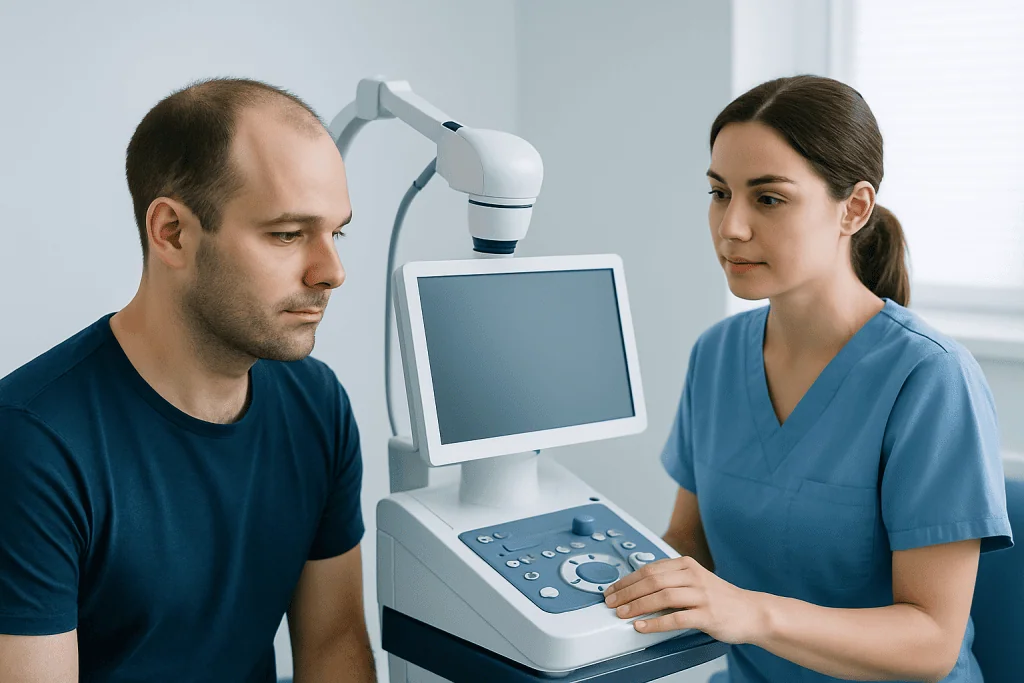
Hair loss does not always look the same. Some people notice extra strands on the pillow, in the shower, or in the hairbrush. Others see a wider parting, a receding hairline, thinning at the crown, or bald patches. The pattern often gives useful clues about the cause.
Gradual thinning on the top of the scalp is often linked to hereditary pattern hair loss. Increased shedding from all over the scalp after a stressful event or illness may suggest telogen effluvium, a temporary shift of more hairs into the shedding phase. Round, smooth patches may point to an autoimmune condition, while broken hairs and thinning around the temples may suggest traction from tight hairstyles.
Symptoms involving the scalp itself are especially important. Itching, burning, tenderness, flaking, pustules, or redness can indicate inflammation or infection rather than simple shedding. If these signs are present, self-treatment alone may delay the right diagnosis.
- Gradual thinning at the crown or part line
- Sudden increased daily shedding
- Round or oval bald patches
- Receding hairline
- Hair breakage and shorter uneven hairs
- Scalp itching, redness, scale, or pain
Why hair loss happens: causes and risk factors

The most common cause of ongoing thinning is androgenetic alopecia, also called hereditary or pattern hair loss. This happens when genetically sensitive follicles gradually shrink over time. It can affect both men and women, though the pattern may differ. In this form, treatment aims to slow progression and support regrowth where possible.
Temporary shedding can follow physical or emotional stressors. Common triggers include high fever, surgery, major illness, childbirth, rapid weight loss, restrictive dieting, and significant psychological stress. Some medicines can also increase shedding. In these cases, hair often begins to recover after the trigger is removed, but improvement may take several months because hair grows slowly.
Nutritional and hormonal problems can also contribute. Low iron, thyroid disorders, low protein intake, and some vitamin or mineral deficiencies may lead to diffuse thinning. Hair loss can also occur with polycystic ovary syndrome, menopause-related hormonal changes, or chronic inflammatory illness. A doctor may investigate these if the history suggests them.
Scalp disease is another important category. Fungal infection, inflammatory skin disorders, and scarring alopecias can damage follicles if untreated. Hairstyling practices matter too. Frequent bleaching, chemical straightening, high heat, or tight braids and ponytails can weaken the hair shaft or cause traction-related loss. This is why clinicians often assess both general health and grooming habits before recommending treatment.
Red flags and when to seek medical care
Most hair shedding is not an emergency, but certain features make medical evaluation more important. Hair loss should be assessed promptly if it starts suddenly, appears in distinct patches, or is accompanied by scalp pain, redness, pustules, crusting, or heavy scaling. These signs may suggest inflammation, infection, or an autoimmune condition that needs targeted treatment.
Medical review is also sensible if hair loss occurs together with fatigue, weight change, menstrual changes, excess facial hair growth, anemia, or other symptoms that could point to thyroid, hormonal, or nutritional problems. In children, hair loss should always be evaluated because the causes and treatment approach can differ from those in adults.
People should also seek help if they notice thinning that keeps progressing over months, if eyelashes or eyebrows are affected, or if they are tempted to try multiple supplements or online remedies without knowing the cause. Some popular products are unlikely to help, and some may interfere with other medicines or health conditions.
If diagnosis confirms a treatable scalp disorder, early care can protect the follicles. For example, inflammatory hair and scalp conditions may be managed alongside evaluation by specialists in dermatology to reduce the risk of lasting damage.
How doctors diagnose hair loss
Diagnosis usually begins with a careful history. The doctor may ask when the hair loss started, whether it is shedding or breakage, whether there was a trigger such as illness or stress, and whether there is a family history of thinning. Hair-care routines, recent diets, medications, and scalp symptoms are also important because they help narrow the possibilities.
A scalp and hair examination often provides major clues. The clinician may look at the pattern of thinning, inspect the scalp for inflammation or scale, and perform a gentle hair-pull test to see how easily hairs shed. In some clinics, magnified scalp examination can help distinguish between different forms of alopecia.
Blood tests are not always needed, but they may be useful if there is concern about iron deficiency, thyroid disease, hormone imbalance, or another underlying condition. In selected cases, a fungal test or scalp biopsy may be recommended. A biopsy is usually reserved for situations where the diagnosis is uncertain or scarring hair loss is suspected.
This step-by-step evaluation matters because correct diagnosis avoids unnecessary treatment. Someone with temporary stress-related shedding may need reassurance and monitoring, while a person with hereditary thinning may benefit from longer-term treatment. If a procedure-based plan is being considered later, doctors may discuss options such as hair transplant only after the cause and stability of hair loss are clear.
Evidence-based treatment options
The most effective treatment depends on the diagnosis. For hereditary pattern hair loss, topical minoxidil is one of the best-studied options and is available for many adults under medical guidance. It can help some people slow shedding and improve density, but it usually needs consistent use over time. Doctors may also prescribe other medicines for selected patients, especially when hormonal factors or male pattern hair loss are involved.
For telogen effluvium, treatment focuses on correcting the trigger rather than forcing rapid regrowth. Hair often improves after recovery from illness, stress reduction, better nutrition, or adjustment of a triggering medicine if a doctor considers that appropriate. Patience is important because visible regrowth can lag behind recovery by several months.
Patchy autoimmune hair loss, inflammatory scalp disorders, or scarring alopecias often need specialist treatment. Depending on the condition, this may include anti-inflammatory medicines, injections into affected areas, or treatment of infection. These should be guided by a qualified clinician because the correct therapy depends on what is happening at the follicle level.
Procedural options can help in selected cases. People with established pattern hair loss and enough donor hair may be assessed for hair transplantation after medical evaluation. If hair loss is related to broader hormonal imbalance, assessment in endocrinology may also be relevant. In general, unproven oils, high-dose supplements, or internet “miracle cures” should not replace a proper diagnosis.
Self-care, prevention, and what not to expect
Gentle hair and scalp care can support recovery, especially when breakage or traction contributes to thinning. This includes avoiding very tight hairstyles, limiting repeated bleaching or chemical processing, reducing high-heat styling, and handling wet hair carefully. A mild cleansing routine and good scalp hygiene are usually enough unless a doctor recommends medicated products.
Healthy habits help the hair growth cycle, but they are not instant cures. A balanced diet with enough protein, iron, and overall calories is important. Crash diets and severe restriction can worsen shedding. Good sleep, stress management, and treatment of underlying medical conditions can also improve the chances of recovery when hair loss is linked to internal triggers.
It is equally important to set realistic expectations. Hair grows slowly, so even effective treatment usually takes months to show visible change. Some treatments mainly slow further loss rather than restoring all previous density. Taking progress photos in consistent lighting can be more useful than judging day to day.
People should be cautious with home remedies marketed online. “Natural” does not always mean effective or safe, especially for inflamed or sensitive scalps. If a person is unsure which products are suitable, professional advice is safer than layering multiple treatments at once. Near the end of the care pathway, patients seeking international evaluation may choose centers such as Acibadem International, where multidisciplinary specialists in JCI-accredited hospitals diagnose and treat hair and scalp conditions for international patients.
Frequently asked questions
Can hair loss stop on its own?
Yes, some types can improve without specific hair-growth treatment. Temporary shedding after stress, illness, childbirth, or weight change often settles once the trigger has passed, although regrowth may take several months.
What is the most effective way to stop hair loss?
The most effective way is to identify the cause first. Pattern hair loss, autoimmune patchy loss, nutritional deficiency, and hair breakage all need different management, so a treatment that helps one person may not help another.
Does washing hair too often cause hair loss?
Regular washing does not usually cause true hair loss. Shampooing may make shedding more noticeable because loose hairs come out during washing, but the washing itself is not typically the cause.
When should someone worry about hair loss?
Medical review is more important if hair loss is sudden, patchy, painful, or associated with redness, scale, crusting, or pustules. It should also be assessed if it comes with fatigue, weight change, menstrual changes, or ongoing progressive thinning.
Can vitamins stop hair loss?
Vitamins only help if a deficiency is contributing to the problem. Taking supplements without evidence of deficiency is unlikely to stop hair loss and may sometimes be unnecessary or unhelpful.
How long does it take to see improvement after treatment?
Hair responds slowly, so visible improvement often takes several months. Even effective treatment may first reduce shedding before noticeable regrowth or thickening appears.
References
- American Academy of Dermatology
- National Institute of Arthritis and Musculoskeletal and Skin Diseases
- National Health Service
- Mayo Clinic
- British Association of Dermatologists
This article is for general information only and is not a substitute for professional medical advice. Please consult a qualified doctor about your individual situation.
Explore treatments in Turkey — costs, top hospitals & a free quote
JCI-accredited · board-certified surgeons · reply within 24h

More from the Health Library



Related Specialists

Prof. Dr. Alper Fındıkcioğlu
Thoracic Surgery
Dr. Kamran Alıyev
Thoracic Surgery
Assoc. Prof. Dr. Yeşim Sağlıcan
Pathology
Prof. Dr. Akin Sabanci
Neurosurgery