Penile Implants: How It Works, Recovery, and What to Expect

Penile implants are a long-term treatment option for erectile dysfunction when other therapies are unsuccessful or unsuitable. Most implants are either inflatable devices or bendable rods, and both are fully concealed inside the body.
Key Takeaways
- Penile implants are a long-term treatment option for erectile dysfunction when other therapies are unsuccessful or unsuitable.
- Most implants are either inflatable devices or bendable rods, and both are fully concealed inside the body.
- The procedure is planned carefully, with evaluation of health conditions, expectations, and possible causes of erectile dysfunction.
- Recovery takes several weeks, and the implant is usually activated only after healing is confirmed by the surgeon.
- Benefits can include reliable erections and high satisfaction, but surgery also carries risks such as infection, pain, and mechanical problems.
Medically reviewed by the Acıbadem International Medical Board — July 24, 2026
Penile implants are devices placed inside the penis to help a person with erectile dysfunction achieve an erection suitable for sexual activity. They are usually considered when medicines or other treatments have not worked well, are not tolerated, or are not appropriate.
Overview: what penile implants are and how they help
Penile implants are surgically placed medical devices that help create an erection for sexual activity. They are used most often for people with erectile dysfunction (ED) when tablets, injections, vacuum devices, or other options have not provided reliable results. The goal is not to increase sexual desire or sensation, but to improve the ability to have penetrative intercourse.
The implant is placed entirely inside the body, so it is not visible from the outside. Depending on the type, the device is either inflated when needed or positioned manually. In general, penile implants allow more control over timing and firmness of erections than many non-surgical treatments.
Penile implants are sometimes called penile prostheses. They may be recommended as part of a broader treatment plan for erectile dysfunction, especially when there is a clear physical cause such as diabetes, nerve injury, blood vessel disease, or scarring of the penis. For some people, they can also be considered after prostate or pelvic surgery.
Because this is surgery, careful counseling matters. A specialist will usually discuss expected benefits, possible limitations, recovery, and long-term device use before a decision is made. For readers seeking an overview of the procedure itself, penile prosthesis surgery is the most directly relevant treatment page.
How penile implants work
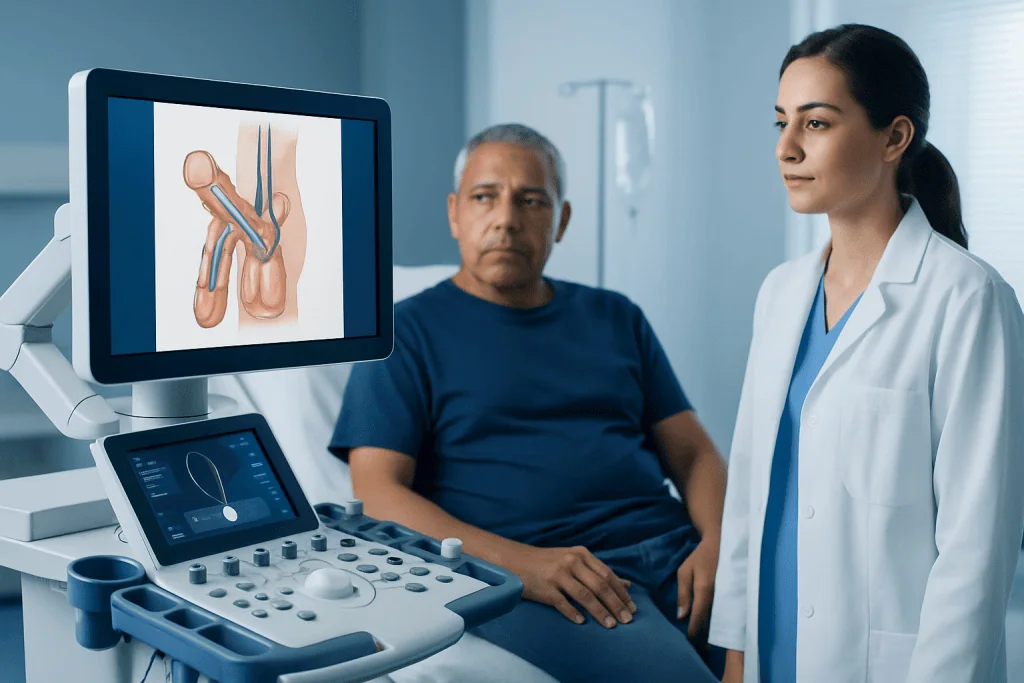
There are two main types of penile implants: inflatable devices and malleable, or bendable, rods. Inflatable implants are the most commonly used in many centers because they can create a more natural-looking erection and a more natural flaccid state when not in use. Malleable implants keep the penis firm but bendable, allowing it to be positioned up for sex and down at other times.
An inflatable implant usually has two cylinders placed inside the penis, a small pump placed in the scrotum, and a fluid reservoir placed inside the lower abdomen or pelvis. When the pump is squeezed, fluid moves into the cylinders and creates an erection. After intercourse, the release mechanism allows fluid to return, and the penis becomes soft again.
A malleable implant has paired rods inserted into the penis. These do not inflate or deflate. Instead, the person manually adjusts the penis into the desired position. This design is mechanically simpler, which may be helpful in selected cases, though it does not offer the same flaccid-soft state as an inflatable device.
Penile implants do not usually change orgasm, ejaculation, or sexual desire directly. Those aspects depend on the person’s underlying health, hormone status, nerve function, and prior sexual function. If erectile difficulties are linked to other urologic concerns, a doctor may also evaluate conditions such as Peyronie’s disease or low testosterone as part of the overall assessment.
Who may be a candidate

A penile implant may be considered for adults with persistent erectile dysfunction that has not improved with less invasive treatments. Many candidates have already tried oral medicines, self-injection therapy, or vacuum erection devices without adequate success. Others may not be able to use those treatments because of side effects, drug interactions, or specific medical conditions.
Good candidates are usually people who understand that the procedure is intended to restore erection function, not cure every aspect of sexual health. They should be willing to have surgery, complete recovery, and learn how to use the implant correctly. Realistic expectations are important, including understanding that penile length may feel different from memory after years of ED or after prostate surgery.
Some conditions can increase the need for careful planning. These include poorly controlled diabetes, spinal cord injury, prior pelvic surgery, penile scarring, and active urinary or skin infection. Men with severe penile curvature may need additional assessment, and in some cases an implant can help both rigidity and curvature management.
Evaluation typically includes a medical history, sexual history, physical examination, and review of previous ED treatments. The urologist may also look for contributing problems such as blood vessel disease, nerve injury, hormone imbalance, or medication effects. In some situations, related treatment options such as erectile dysfunction treatment are reviewed again before surgery is chosen.
What happens before and during penile implant surgery
Before surgery, the care team usually confirms the diagnosis, reviews overall health, and screens for infection risk. This often includes blood tests, a urine test, and a discussion of current medicines, especially blood thinners or diabetes medications. Patients are usually advised about fasting, bathing instructions, and when to stop or continue certain drugs based on the surgeon’s guidance.
On the day of surgery, anesthesia is given so the patient is comfortable. The surgeon makes a small incision, often at the base of the penis or in the lower abdomen or scrotal area, depending on the device and surgical approach. The internal erectile chambers are prepared, and the implant cylinders are carefully positioned inside the penis.
If an inflatable device is used, the surgeon places the pump in the scrotum and the fluid reservoir in the lower abdomen or pelvis. The device is then tested during surgery to confirm correct placement and function. The incision is closed, and a dressing is applied. Some patients go home the same day, while others stay overnight depending on overall health and the surgical plan.
The procedure itself is typically structured and standardized, but details vary from one patient to another. Previous abdominal or pelvic surgery, scarring, or anatomy can influence the exact technique. For men who have complex urologic histories, the surgeon may also coordinate with teams experienced in urology care to support safe planning and follow-up.
Recovery timeline and what to expect after surgery
After surgery, some pain, bruising, swelling, and tenderness are expected for a period of time. These symptoms often improve gradually over days to weeks. The doctor may recommend pain relief, supportive underwear, limited activity, and careful wound care. It is common to be advised to avoid heavy lifting and sexual activity until healing is confirmed.
Many people can walk the same day or the next day, but should take recovery slowly. Returning to desk work may be possible within a short time for some patients, while physically demanding jobs may require longer. The exact timeline depends on the person’s health, the type of implant, and how healing progresses.
Inflatable implants are not usually used immediately after surgery. Instead, the surgeon waits until swelling has settled and the tissues have healed enough for device teaching. At a follow-up visit, the patient is shown how to inflate and deflate the implant. Sexual activity is often resumed only after the surgeon confirms that healing is adequate.
It is normal to need some practice before the device feels easy to use. Follow-up visits help address comfort, function, and any concerns about appearance or performance. Recovery is not only physical; adjustment and confidence can also improve with time and communication between partners.
Benefits, risks, and possible complications
The main benefit of penile implants is reliability. Unlike medications that may work inconsistently, an implant can provide an erection when desired once healing is complete. Many patients value the spontaneity, firmness, and control that this option can offer. It can also be helpful for those who want a one-time procedural solution rather than ongoing ED treatments.
Another potential benefit is satisfaction for both the patient and partner when expectations are realistic and the device is functioning well. Because the implant is concealed inside the body, there are no external parts to wear during daily life. Inflatable devices in particular can provide a more natural change between flaccid and erect states.
Like any operation, penile implant surgery has risks. These include infection, bleeding, pain, device malfunction, erosion of the device into surrounding tissue, injury to nearby structures, or the need for revision surgery later. Infection is especially important because it may require device removal in some cases. People with certain medical conditions may have a higher risk of complications.
Another common area of concern is penile size. Implants restore rigidity, but they do not usually increase natural penile length beyond what is present at the time of surgery. A careful preoperative discussion helps reduce disappointment and supports informed decision-making. If a patient has persistent questions about anatomy or expectations, the surgeon can explain what changes are realistic in that individual case.
Self-care, long-term use, and follow-up
Good self-care after surgery includes following wound-care instructions, keeping follow-up appointments, and contacting the medical team if symptoms seem unusual. Once the surgeon approves use of the device, regular practice with inflation and deflation can help build confidence. Patients should ask for a repeat demonstration if any step feels unclear.
Long-term, most people can return to normal daily activities and sexual activity after recovery. Routine hygiene remains important, and any future urologic procedures should be discussed with healthcare professionals who know the patient has an implant. If the device ever becomes difficult to operate, painful, or seems not to function as expected, medical review is appropriate.
Sexual health also includes emotional and relationship factors. Some people benefit from counseling or open discussion with a partner before and after surgery. This can help align expectations, reduce anxiety, and support adjustment to the device.
In specialized centers, follow-up may involve a multidisciplinary team that includes urologists, anesthesiologists, and rehabilitation support as needed. Acibadem International’s multidisciplinary specialists and JCI-accredited hospitals diagnose and treat this condition for international patients, with individualized planning and aftercare.
When to seek medical care
Medical care should be sought for erectile dysfunction that is persistent, distressing, or affecting quality of life or relationships. ED can sometimes be an early sign of broader health issues such as diabetes, vascular disease, or nerve problems, so it is worth discussing with a qualified doctor rather than assuming it is only a normal part of aging.
After penile implant surgery, urgent medical advice is important if there is fever, worsening redness, increasing swelling, pus or drainage from the incision, severe pain that is not improving, difficulty urinating, or sudden inability to use the device after it had been working. These symptoms do not always mean a serious complication, but they should be assessed promptly.
A doctor should also be consulted if the implant feels uncomfortable during use, if the penis develops new curvature, or if there are concerns about partner discomfort. Follow-up visits are a routine part of care and help ensure the device is functioning well and recovery is on track.
Anyone considering penile implants should have a detailed consultation with an experienced urologist. Shared decision-making helps match the treatment to the person’s goals, overall health, and previous response to other ED therapies.
Frequently asked questions
Are penile implants permanent?
Penile implants are designed as a long-term treatment, and the device remains inside the body unless it needs revision or removal. While many implants work well for years, they are mechanical devices and may eventually require maintenance or replacement.
Will a penile implant affect sensation or orgasm?
A penile implant usually does not directly change penile skin sensation, orgasm, or sexual desire. However, sexual experience can still be influenced by the person’s underlying health, prior surgery, nerve function, and emotional factors.
How long does recovery from penile implant surgery take?
Early healing often takes a few weeks, but complete recovery and comfortable device use may take longer. The surgeon usually advises waiting until follow-up confirms proper healing before activating the implant and resuming sex.
Can penile implants be felt or seen from the outside?
The implant is fully internal, so it is not visibly attached outside the body. Some parts, such as the pump in the scrotum for inflatable devices, can be felt by the patient, but they are typically discreet under the skin.
Who should not have a penile implant right away?
People with an active infection, uncontrolled medical problems, or uncertainty about their expectations may need treatment or further evaluation first. A urologist will assess whether surgery is safe and whether other options should be tried before moving ahead.
What is the difference between inflatable and malleable penile implants?
Inflatable implants create an erection by moving fluid into cylinders inside the penis and then deflate afterward. Malleable implants use bendable rods that stay firm but can be positioned manually, which makes them simpler but less natural in day-to-day flaccidity.
References
- American Urological Association
- European Association of Urology
- National Institute of Diabetes and Digestive and Kidney Diseases
- Urology Care Foundation
- National Health Service
This article is for general information only and is not a substitute for professional medical advice. Please consult a qualified doctor about your individual situation.
Explore treatments in Turkey — costs, top hospitals & a free quote
JCI-accredited · board-certified surgeons · reply within 24h