Plantar Fibroma and Plantar Fibromatosis: Diagnosis, Outlook, and Modern Treatment Approaches
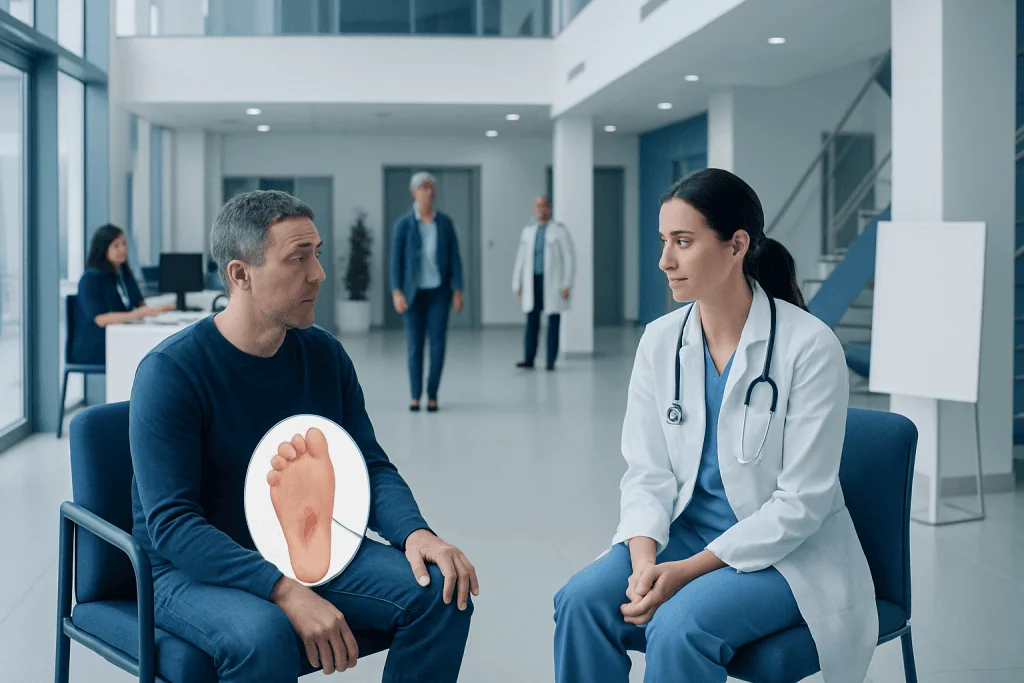
Plantar fibroma is usually a single firm nodule in the arch, while plantar fibromatosis often refers to multiple or more extensive nodules in the plantar fascia. These growths are noncancerous, but they can become uncomfortable when pressure from standing, walking, or shoes irritates them.
Key Takeaways
- Plantar fibroma is usually a single firm nodule in the arch, while plantar fibromatosis often refers to multiple or more extensive nodules in the plantar fascia.
- These growths are noncancerous, but they can become uncomfortable when pressure from standing, walking, or shoes irritates them.
- Diagnosis is often based on a physical exam, with ultrasound or MRI used when the diagnosis is unclear or treatment planning is needed.
- Many people improve with padding, supportive footwear, orthotics, activity changes, and symptom-focused treatments.
- Surgery is not the first choice for everyone because recurrence and scar-related discomfort can occur.
- Medical review is important if a foot lump grows, becomes painful, changes quickly, or affects walking.
Medically reviewed by the Acıbadem International Medical Board — July 25, 2026
Plantar fibroma and plantar fibromatosis are benign growths that develop within the plantar fascia, the strong band of tissue along the sole of the foot. They are often manageable with observation, footwear changes, and other conservative care, while procedures or surgery may be considered when symptoms interfere with walking or daily life.
Overview: what plantar fibroma and plantar fibromatosis mean
Plantar fibroma and plantar fibromatosis describe benign fibrous growths that arise in the plantar fascia, the thick connective tissue that supports the arch of the foot. A plantar fibroma usually refers to a single small nodule, while plantar fibromatosis often describes multiple nodules or a more diffuse thickening pattern. Although these terms are related and may overlap in everyday use, the main practical issue for patients is whether the growth is causing pain, pressure, or changes in walking.
These nodules are not cancer. In many people, they remain small and stable for long periods. Others notice gradual enlargement, increasing firmness, or discomfort when the lump is pressed by the ground or by footwear. Symptoms vary widely, so treatment is based less on the name itself and more on how much the condition affects mobility, comfort, and quality of life.
Unlike plantar fasciitis, which typically causes heel pain due to inflammation or degeneration near the heel insertion of the fascia, plantar fibroma involves a distinct lump within the fascia, often in the arch. Some people have no pain at all and discover the nodule by chance. Others feel a sensation similar to stepping on a pebble, especially during prolonged standing or exercise.
Symptoms and how it may feel day to day

The most common sign is a firm lump in the arch of the foot. It may be round or slightly elongated and can feel attached to the tissue under the skin rather than moving freely. The nodule may be present in one foot or both, and more than one lump can develop over time.
Pain is not always present early on. When symptoms do occur, they are often linked to pressure rather than constant pain. Standing for long periods, walking barefoot on hard floors, or wearing shoes that press on the arch can make the area more sensitive. Some people describe soreness, tenderness, burning, or a feeling that there is an object under the foot.
As symptoms progress, walking patterns may change. A person may unconsciously shift weight away from the painful area, which can lead to strain elsewhere in the foot, ankle, knee, or hip. In some cases, the surrounding skin can become irritated from friction. If the diagnosis is uncertain or symptoms suggest another type of lump, a specialist may also consider other soft tissue masses during evaluation.
- Firm nodule or nodules in the arch
- Pressure pain with walking or standing
- Discomfort in certain shoes
- Sensation of stepping on a small object
- Changes in gait because of tenderness
Causes and risk factors

The exact cause of plantar fibroma and plantar fibromatosis is not fully understood. The condition involves an overgrowth of fibrous tissue within the plantar fascia, but experts do not always know why this process begins in a particular person. It does not appear to be caused by a single injury alone, though repeated stress on the foot may contribute in some cases.
Several factors have been associated with a higher likelihood of developing these nodules. They are seen more often in adults and may be more common in men. A family tendency is reported in some patients, suggesting a genetic component. Plantar fibromatosis is also sometimes discussed alongside other fibrous tissue conditions, such as Dupuytren’s contracture in the hand or Peyronie’s disease, because they share some biological features.
Other associated factors may include diabetes, seizure disorders treated with certain long-term medications, alcohol overuse, and chronic liver disease, although associations do not mean the condition will develop or worsen in every person with these factors. Most importantly, patients should know that a benign foot lump still deserves proper assessment, especially if it is changing, painful, or affecting mobility.
How doctors diagnose it
Diagnosis usually begins with a medical history and a careful foot examination. A doctor assesses where the lump is located, whether it is tender, how firmly it is attached to deeper tissue, and whether one or both feet are involved. The pattern is often characteristic enough that experienced clinicians can suspect plantar fibroma during the first visit.
Imaging may be helpful when the diagnosis is uncertain, when symptoms are severe, or when treatment planning is needed. Ultrasound can show a fibrous nodule within the plantar fascia and is useful because it is quick and does not involve radiation. MRI gives a more detailed picture of the fascia and nearby structures and may be requested if the lesion is unusually large, if surgery is being considered, or if there is concern about an alternative diagnosis.
Biopsy is not routinely needed for a typical plantar fibroma. However, if the mass has unusual features, grows rapidly, or does not match the expected appearance on examination or imaging, a specialist may recommend further testing. In some cases, coordinated evaluation by orthopedics and traumatology or foot and ankle specialists helps confirm the diagnosis and guide next steps.
Modern treatment approaches
Treatment depends on symptoms rather than the mere presence of a nodule. If the lump is small and not painful, observation may be the best option. Many people do well with regular follow-up, supportive shoes, and simple measures to reduce pressure on the area. The goal is to improve comfort and function while avoiding unnecessary intervention.
Conservative treatment is usually tried first. This may include cushioned insoles, custom orthotics, pads that offload pressure from the nodule, stretching of the foot and calf, and changes in footwear. Anti-inflammatory medicines may help with discomfort in some patients, and physical therapy can support gait, flexibility, and symptom management. If symptoms overlap with other common foot problems, a broader foot pain plan may be needed, especially when a patient also has issues such as heel spur-related pain.
For persistent symptoms, some specialists may discuss injections or other localized therapies to reduce discomfort or soften the tissue, though results can vary and recurrence is possible. When daily walking remains significantly limited despite nonsurgical care, surgery may be considered. Surgical planning may involve foot and ankle surgery to remove the nodule or a wider segment of affected fascia in selected cases.
Surgery can help certain patients, but it is not a simple decision. Recurrence can happen, and surgery itself may lead to scar tenderness, arch discomfort, numbness, or prolonged recovery. For this reason, treatment is individualized. The most suitable approach depends on the nodule’s size and location, symptom severity, activity level, and the patient’s goals and preferences.
Outlook and living with the condition
The outlook for plantar fibroma and plantar fibromatosis is generally good in the sense that these are benign conditions. However, they can be long-lasting. Some nodules remain stable for years with little change, while others enlarge slowly or become more troublesome when pressure on the arch increases. The course is often gradual rather than sudden.
Many people are able to stay active with practical adjustments. Well-cushioned, supportive shoes, avoiding direct pressure on the lump, and pacing high-impact activities can make a meaningful difference. People who spend long hours standing may benefit from alternating footwear, adding arch support, or using soft floor mats when possible.
Recurrence or persistent symptoms are part of the long-term discussion, especially after procedures. This does not mean treatment has failed; rather, it reflects the biology of fibrous tissue disorders. Ongoing follow-up helps the care team adjust treatment over time. In complex or persistent cases, multidisciplinary assessment, including imaging and rehabilitation support such as physical therapy and rehabilitation, can be useful.
Self-care and prevention strategies
There is no guaranteed way to prevent plantar fibroma or plantar fibromatosis, because the exact cause is not fully known. Still, symptom prevention is often possible. The most helpful everyday steps focus on reducing repeated pressure and supporting the arch.
Supportive footwear with enough room through the midfoot is often preferable to flat, unsupportive shoes or shoes with rigid seams pressing directly on the arch. Insoles or custom orthotics may help distribute weight more evenly. Maintaining flexibility in the calf and foot can also reduce strain during walking.
- Choose cushioned shoes that do not press on the arch
- Use pads or orthotics if recommended by a clinician
- Avoid walking barefoot on hard surfaces if it increases pain
- Modify high-impact activity during painful periods
- Monitor the size, firmness, and symptoms of any foot lump
Self-care should not replace medical assessment if a new lump appears. A foot mass is often benign, but only proper evaluation can confirm this. Acibadem International’s multidisciplinary specialists in JCI-accredited hospitals diagnose and treat foot conditions for international patients when further assessment or treatment is needed.
When to seek medical care
Medical review is advisable if a lump develops in the arch of the foot and does not go away, especially if it becomes painful or starts affecting walking. It is also sensible to seek care if the nodule increases in size, if multiple nodules appear, or if shoes become difficult to wear because of pressure.
Prompt evaluation is particularly important when the diagnosis is uncertain. A doctor should assess any lump that grows quickly, causes night pain, is associated with redness or skin breakdown, or comes with numbness or weakness. These features do not necessarily indicate a serious problem, but they deserve timely attention.
People with diabetes, poor circulation, or reduced sensation in the feet should be especially cautious because pressure areas can lead to skin injury more easily. Early assessment helps clarify the diagnosis and allows treatment to begin before the condition has a larger effect on mobility and daily comfort.
Frequently asked questions
What is the difference between plantar fibroma and plantar fibromatosis?
Plantar fibroma usually refers to a single benign fibrous nodule in the plantar fascia. Plantar fibromatosis often describes multiple nodules or a more extensive fibrous overgrowth in the same tissue. In practice, the terms are closely related and treatment decisions depend mainly on symptoms.
Is plantar fibromatosis cancer?
No, plantar fibromatosis is a benign condition and is not cancer. Even so, any new or changing lump in the foot should be assessed by a qualified doctor to confirm the diagnosis and rule out other causes.
Can a plantar fibroma go away on its own?
Some nodules remain stable for long periods and may cause little or no trouble, but they do not always disappear completely. Symptoms can often be controlled with supportive shoes, padding, and other conservative measures even if the lump remains present.
Is surgery always needed for plantar fibroma?
No. Surgery is usually considered only when pain or walking difficulty continues despite conservative treatment. Because recurrence and scar-related discomfort can occur, doctors often begin with nonoperative options first.
How is plantar fibroma diagnosed?
Diagnosis often starts with a physical examination of the foot and a discussion of symptoms. If needed, imaging such as ultrasound or MRI can help confirm that the nodule is arising from the plantar fascia and can rule out other causes of a foot lump.
What shoes are best for plantar fibromatosis?
Many people feel better in cushioned, supportive shoes with enough room through the arch and midfoot. Shoes that press directly on the lump or provide little shock absorption may worsen symptoms. A doctor or podiatry professional may also recommend pads or orthotics.
References
- American Academy of Orthopaedic Surgeons
- American Orthopaedic Foot & Ankle Society
- National Institute of Arthritis and Musculoskeletal and Skin Diseases
- NHS
- Merck Manual
This article is for general information only and is not a substitute for professional medical advice. Please consult a qualified doctor about your individual situation.
Explore treatments in Turkey — costs, top hospitals & a free quote
JCI-accredited · board-certified surgeons · reply within 24h