Serology: A Complete Medical Overview

Serology studies immune substances in blood, especially antibodies and antigens. A serology test may help show current or past infection, vaccination response, or immune activity.
Key Takeaways
- Serology studies immune substances in blood, especially antibodies and antigens.
- A serology test may help show current or past infection, vaccination response, or immune activity.
- Results need medical interpretation because timing, cross-reactivity, and underlying conditions can affect accuracy.
- Serology usually complements symptoms, examination, and other tests rather than replacing them.
- Not every positive antibody test means active disease, and not every negative result rules it out.
Serology is a branch of laboratory medicine that examines antibodies, antigens, and related immune markers in blood. It helps doctors investigate infections, check past exposure or immunity, and support the diagnosis of some autoimmune and inflammatory conditions.
Overview: What serology means in medicine
Serology is the study of substances in blood serum, especially antibodies and antigens that reflect how the immune system responds to infection, vaccination, or certain diseases. In everyday practice, the term often refers to a blood test that looks for these markers to help answer a clinical question. For example, a doctor may order serology to check whether a person has been exposed to a virus, has developed immunity after vaccination, or shows signs of an autoimmune disorder.
Unlike tests that directly detect a bacterium, virus, or parasite itself, serology usually measures the body’s immune response to that trigger. This difference is important. A serology result may suggest recent infection, past infection, immunity, or immune activation, but the meaning depends on the timing of the test and the person’s symptoms and medical history.
Serology is used across many areas of medicine, including infectious diseases, rheumatology, prenatal care, transfusion medicine, and transplant evaluation. It can be very informative, but it works best when interpreted alongside other information such as physical examination, imaging, and direct laboratory testing when needed.
How serology works
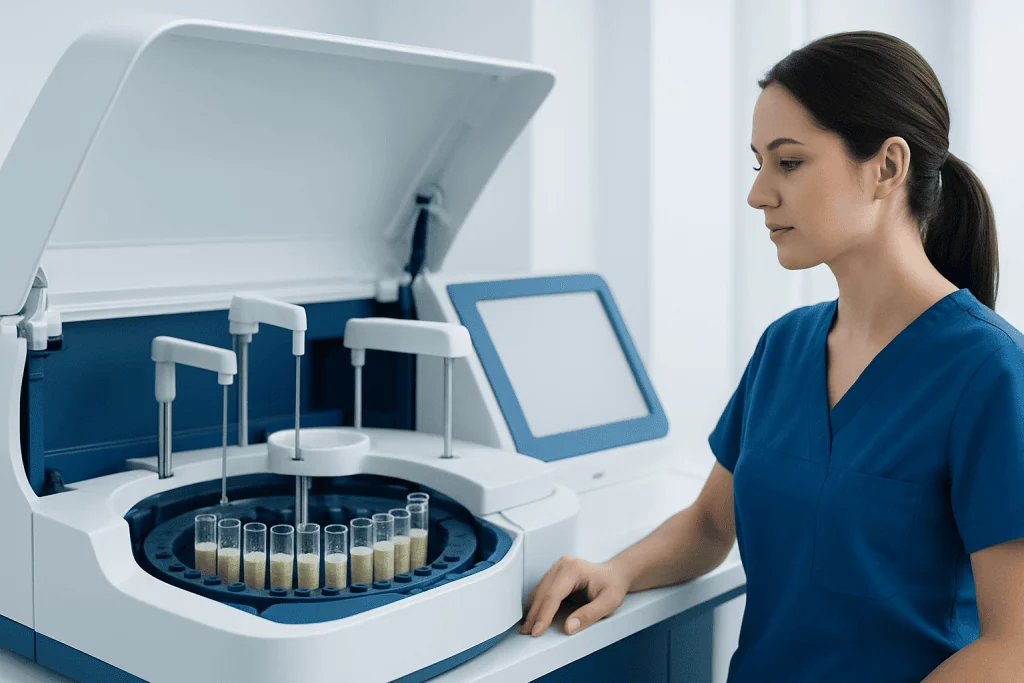
The immune system makes proteins called antibodies when it recognizes a substance as foreign. These antibodies can target bacteria, viruses, parasites, or even the body’s own tissues in autoimmune disease. Serological testing looks for these antibodies, for antigens from the organism itself, or for other blood markers that show immune activity.
Several antibody types may be measured. IgM antibodies often appear earlier in an infection, while IgG antibodies commonly develop later and may remain for months or years. This pattern can help doctors estimate whether exposure was recent or happened in the past, although there are important exceptions and timing varies by disease.
Common laboratory methods include enzyme immunoassays, chemiluminescent immunoassays, agglutination tests, immunofluorescence, and confirmatory assays such as immunoblotting. Some tests report results simply as positive or negative, while others provide a numerical value called a titer or index. A higher value does not always mean more severe disease, so results should not be interpreted in isolation.
Because antibodies take time to form, testing too early can produce a negative result even when infection is present. For the same reason, a positive antibody result may reflect past exposure rather than active illness. This is why clinicians often combine serology with other methods such as molecular testing, cultures, or imaging, especially when a quick or precise diagnosis is needed.
When doctors use serology

Serology is commonly used to evaluate suspected infections. It may help diagnose or support the diagnosis of illnesses caused by viruses, bacteria, or parasites, especially when direct detection is difficult or when doctors want to know whether a person had previous exposure. Depending on the situation, serology may also be used to assess immunity after infection or vaccination.
Another important use is in autoimmune and inflammatory diseases. Some serology tests look for autoantibodies, which are antibodies that react against the body’s own tissues. These tests can support the evaluation of conditions affecting joints, skin, thyroid, liver, blood vessels, or connective tissue, although a positive result alone does not confirm a diagnosis.
Serology also plays a role in blood compatibility and pregnancy care. Blood group serology helps identify blood types and certain antibodies that matter for transfusions and pregnancy monitoring. In selected cases, doctors may use serological testing when investigating conditions related to the liver or chronic viral infection, sometimes alongside care pathways such as hepatitis evaluation.
Examples of why a doctor might order serology include:
- Checking for evidence of a recent or past infection
- Assessing immune response after vaccination
- Supporting the diagnosis of an autoimmune condition
- Screening in pregnancy or before transfusion
- Monitoring certain chronic infections or immune-related disorders
Understanding serology results
Serology results are not always straightforward. A positive result generally means the tested antibody or antigen was detected, but it does not automatically tell whether a person is currently ill. In many infections, antibodies can remain in the blood long after recovery. In autoimmune testing, low-level positivity can occasionally appear in people without symptoms.
A negative result may mean there has been no exposure, but it can also occur if the test was done too early, if the immune system has not made detectable antibodies yet, or if the person has a weakened immune response. For this reason, doctors may repeat testing after a period of time if suspicion remains high.
One key concept is the “window period,” the time between exposure and the point when a test becomes reliably positive. Different diseases have different windows. Another issue is cross-reactivity, where antibodies made against one condition react with a related test target and create a misleading result. Confirmatory testing may be needed in these situations.
Doctors interpret serology by combining the result with symptoms, travel history, vaccination history, medications, immune status, and other investigations. In some cases, additional blood work, cultures, or check-up and diagnostic evaluation may provide a clearer picture. This careful approach helps avoid overdiagnosis and unnecessary worry.
Limitations and factors that affect accuracy
Serology is useful, but it has limits. It does not always distinguish between past and present infection, and it may not identify exactly when exposure happened. In some diseases, antibodies persist for years. In others, they decline over time, so a previously infected person may later test negative.
Accuracy can also be influenced by the person’s immune system. People who are very young, older, taking immunosuppressive medicines, or living with certain chronic illnesses may produce weaker antibody responses. This can make interpretation more difficult and sometimes lowers the sensitivity of testing.
False-positive results can occur because of cross-reactivity, technical issues, or nonspecific immune activation. False-negative results may happen when testing is performed too soon or when the sample is taken during a period when antibodies are not yet detectable. Laboratory quality standards reduce these risks, but no test is perfect.
For these reasons, serology is often one piece of the diagnostic process rather than the whole answer. When evaluating a suspected infectious disease, clinicians may combine serology with direct pathogen detection, specialist review, or imaging. If symptoms suggest a broader issue, care may involve services such as infectious diseases assessment or autoimmune workup.
How a serology test is done and how to prepare
A serology test is usually simple for the patient. A healthcare professional takes a blood sample from a vein, typically from the arm, and sends it to the laboratory. The procedure is quick, and most people can return to normal activities immediately afterward.
Preparation depends on the specific test. Many serology tests do not require fasting, but some may be ordered along with other blood work that does. Patients should tell their clinician about recent infections, vaccinations, travel, pregnancy, and all medicines they take, because these details can affect interpretation.
Results may be available within hours or take several days, depending on the complexity of the analysis and whether confirmatory testing is needed. If the result is unclear, the doctor may recommend repeating the test later or adding other investigations. Patients should avoid trying to diagnose themselves based on laboratory terminology alone.
When a result raises questions about a chronic or complex condition, multidisciplinary evaluation can be helpful. Near the end of the care pathway, some people may benefit from broader assessments involving internal medicine, microbiology, radiology, or, where appropriate, specialized blood testing.
Related care, follow-up, and self-care
Serology itself is not a treatment; it is a tool that helps guide care. What happens next depends on why the test was ordered. If the result suggests infection, the doctor may recommend observation, further testing, or treatment based on the suspected cause. If it points toward an autoimmune process, referral to the appropriate specialist may be advised.
Patients can support good follow-up by keeping records of prior infections, vaccines, chronic conditions, and earlier test results. Sharing the timeline of symptoms is especially useful because it helps doctors decide whether the antibody pattern fits a recent event or a past exposure. This is one reason serology is most helpful when it is linked to a clear clinical question.
General self-care remains important: staying up to date with recommended vaccines, practicing hand hygiene, managing long-term conditions, and attending follow-up appointments. People should not start, stop, or change medicines based only on a serology result unless a qualified clinician advises it.
For international patients who need coordinated evaluation, Acibadem International’s multidisciplinary specialists and JCI-accredited hospitals diagnose and treat a wide range of conditions in which serology may be part of the assessment, including pathways related to infectious diseases and immune disorders.
When to seek medical care
Medical advice is appropriate when symptoms suggest infection or inflammation, when a doctor recommends screening, or when a laboratory report is difficult to understand. People should seek professional guidance rather than relying on an isolated positive or negative result, especially if symptoms are ongoing or worsening.
Urgent assessment may be needed for high fever, shortness of breath, confusion, chest pain, severe dehydration, a rapidly spreading rash, fainting, or symptoms after known high-risk exposure. Pregnant individuals, people with weakened immune systems, and those with serious chronic illnesses should contact a clinician promptly if they are concerned about possible infection.
It is also sensible to seek medical care if repeat infections, unexplained fatigue, swollen joints, jaundice, persistent swollen glands, or prolonged fever are present. In these situations, serology may be only one part of a larger evaluation, and a clinician can determine whether further testing or specialist referral is needed.
Frequently asked questions
What is serology in simple terms?
Serology is the study of antibodies, antigens, and related immune markers in blood. Doctors use it to learn whether the body has responded to an infection, vaccination, or certain immune-related conditions.
Does a positive serology test mean someone has an active infection?
Not always. A positive result may show current infection, recent infection, past exposure, or immunity, depending on the disease and the type of antibody detected. This is why doctors interpret serology together with symptoms and other tests.
Can a serology test be negative even if someone is sick?
Yes. If testing is done too early, the body may not have produced enough antibodies to detect yet. Some people with weakened immune systems may also have lower antibody responses, which can affect results.
What is the difference between serology and a PCR test?
Serology usually looks for the immune response to an infection, while PCR looks for genetic material from the organism itself. PCR is often more useful for detecting active infection early, whereas serology can help show past exposure or later immune response.
Do serology tests require fasting?
Many do not require fasting. However, if the blood sample is being taken together with other tests, a doctor or laboratory may give specific preparation instructions. It is best to follow the guidance provided for the exact test being ordered.
Are serology tests used only for infections?
No. They are also used in autoimmune disease evaluation, blood group testing, pregnancy-related screening, and transfusion medicine. In each setting, the goal is to detect immune-related markers that can support diagnosis or monitoring.
References
- World Health Organization
- Centers for Disease Control and Prevention
- MedlinePlus
- Mayo Clinic
- National Institutes of Health
This article is for general information only and is not a substitute for professional medical advice. Please consult a qualified doctor about your individual situation.
Explore treatments in Turkey — costs, top hospitals & a free quote
JCI-accredited · board-certified surgeons · reply within 24h